Quick Answer: How Much Does Roof Cleaning Cost?
Professional roof cleaning in the UK typically costs £300 to £800 for an average semi detached house, depending on roof size, pitch, and how much moss or algae has built up. Larger detached properties or roofs with heavy moss growth can cost £800 to £1,500. Regular cleaning every few years is significantly cheaper than the tile damage and gutter blockages that neglected moss growth can eventually cause.
Why Roof Moss and Algae Growth Matters
Moss on a roof is not just a cosmetic issue, and left unchecked it can shorten the life of even well-fitted roof tiles. As moss grows, it retains moisture against the tile surface for longer periods, which accelerates weathering and, in cold weather, increases the risk of frost damage as trapped water expands. Moss and debris that washes into gutters during rain is also one of the leading causes of blocked gutters and subsequent water damage to fascias and soffits.
Roof Cleaning Methods Compared
| Method | How It Works | Best For | Considerations |
|---|---|---|---|
| Soft washing | Low pressure chemical treatment that kills moss and algae, left to weather off naturally | Most residential roofs | Gentler on tiles, results appear gradually |
| Pressure washing | High pressure water physically removes moss and debris | Heavily soiled roofs | Can strip protective coating from concrete tiles if used incorrectly |
| Manual scraping and brushing | Physical removal of moss by hand from the roof surface | Small areas, spot treatment | Labour intensive, risk of tile damage if done carelessly |
| Roof moss killer treatment | Chemical application that kills moss at the root without full cleaning | Preventative maintenance | Slower acting, best combined with periodic cleaning |
Should You Pressure Wash Your Roof?
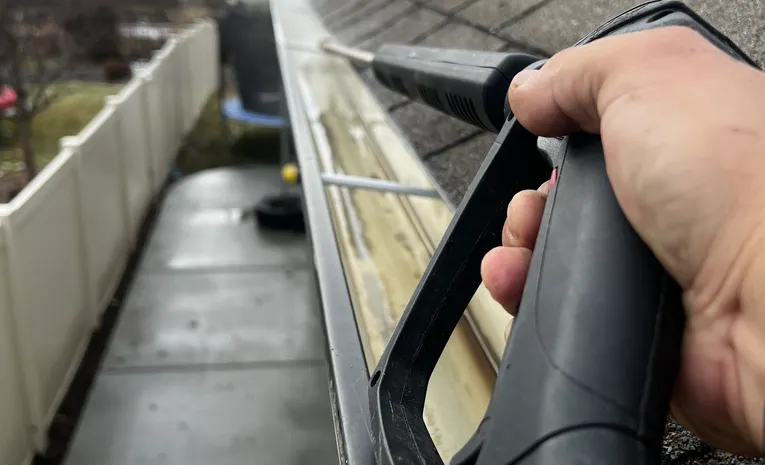
Pressure washing can be effective but carries real risk if used incorrectly. Excessive pressure can strip the protective granule coating from concrete tiles, force water beneath tiles and into the roof structure, or dislodge tiles entirely on an older roof. Soft washing, which uses a biocide treatment at low pressure and allows the dead moss to weather off naturally over several weeks, is generally the safer choice recommended by most roofing professionals.
DIY Roof Cleaning: What Is Safe to Do Yourself
- Clearing visible moss from gutters at ground level using a ladder, without walking on the roof itself
- Applying a roof moss killer treatment via a hose end sprayer from ground level where the roof pitch allows safe access
- Brushing loose moss from lower, easily reached sections using an extendable roof brush
Walking on roof tiles to clean them yourself is not recommended. Tiles can crack under foot traffic even when they look solid, and working at height without proper safety equipment carries serious risk. Full roof cleaning is best left to a professional with appropriate access equipment and insurance.
How Often Should a Roof Be Cleaned?
Most UK roofs benefit from a full clean every three to five years as part of a broader seasonal home maintenance routine, though this varies significantly based on surrounding trees, roof orientation, and local climate. Roofs shaded by trees or facing north, where sunlight does not dry the surface quickly after rain, tend to develop moss faster and may need cleaning more frequently.
Roof Cleaning Cost Factors
- Roof size: Larger roofs naturally cost more to clean than smaller ones
- Pitch and access: Steep roofs or those with restricted access require additional safety equipment, raising cost
- Extent of moss growth: A roof with years of buildup takes longer to treat than one cleaned regularly
- Method chosen: Soft washing and pressure washing are typically priced differently by contractors
- Additional gutter clearing: Often bundled with roof cleaning and priced as a combined service
Roof Cleaning Cost Per Square Metre by Method (UK)
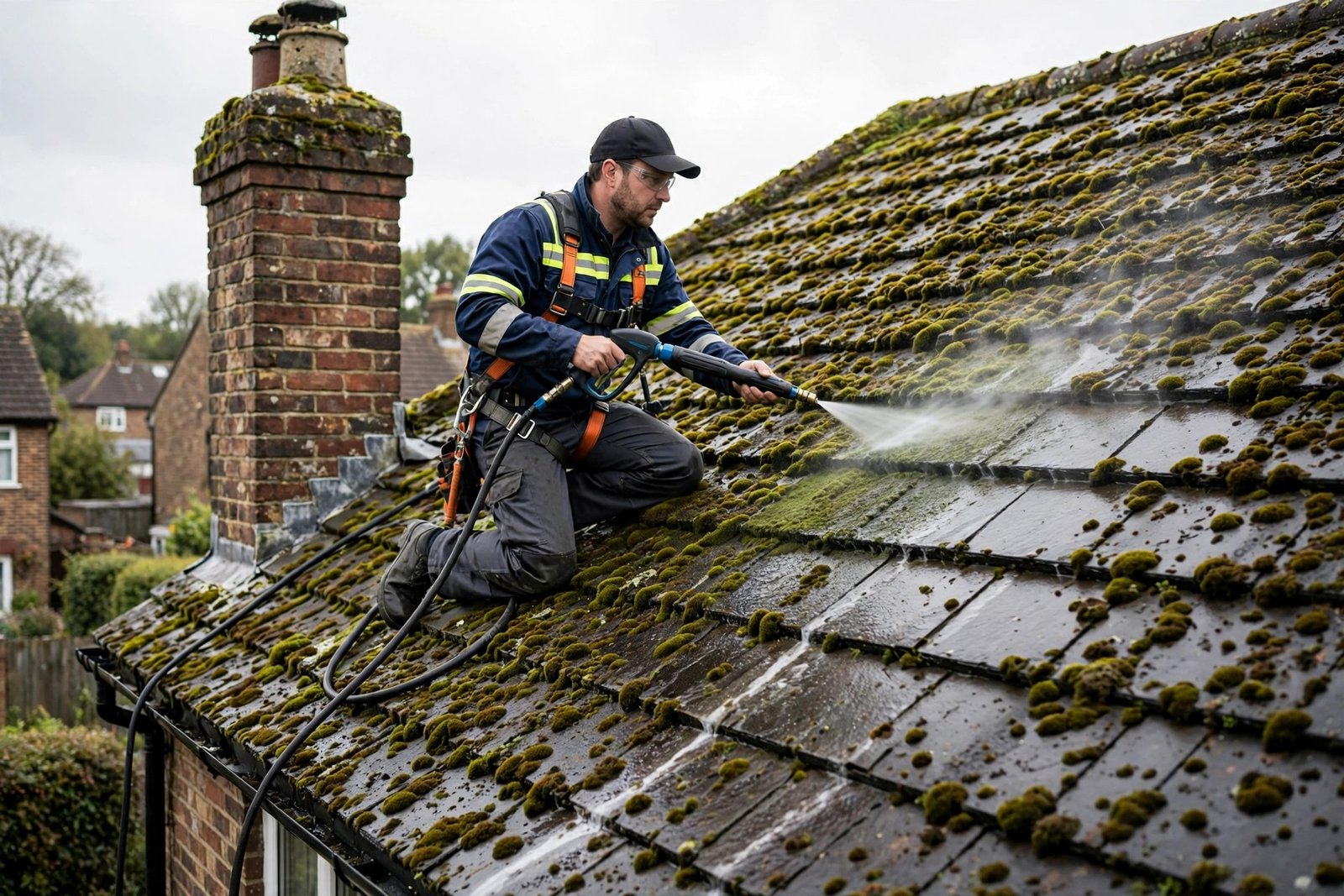
Most UK contractors price roof cleaning per square metre, and the method makes the biggest difference to the rate. Typical 2026 ranges are:
| Cleaning method | Typical cost per m2 | Best for |
|---|---|---|
| Manual scrape + biocide treatment | £5 to £12 | Older or fragile tiles; cheapest safe option |
| Pressure washing | £8 to £15 | Sturdy concrete tiles with heavy soiling |
| Soft washing | £15 to £20 | Most residential roofs; slate and clay tiles |
| Steam cleaning | £20 to £25 | Chemical-free clean on delicate roofs |
These are typical contractor rates reported across UK price guides: always get itemised quotes. The per-m2 rate usually includes moss removal and a biocide treatment to slow regrowth, but check this explicitly. What it often excludes: gutter clearing (frequently bundled as a combined service), replacing broken tiles found during the clean, scaffolding or access equipment on difficult roofs, and roof sealant, which is priced separately at around £25 to £40 per m2.
What the total looks like by property type
| Property type | Typical total (soft wash) | Typical total (manual + biocide) |
|---|---|---|
| Small terraced house | £350 to £500 | £300 to £450 |
| Semi-detached house | £500 to £750 | £450 to £600 |
| Detached house | £650 to £950 | £600 to £800 |
London and the South East sit at the top of these ranges; the North and Midlands typically 10 to 20 percent lower. A roof cleaned every three to five years costs far less per visit than one tackled after a decade of neglect, because heavy build-up pushes the job into the slowest, most labour-intensive methods.
Roof Cleaning Cost FAQs
How much does it cost to clean roof moss per m2 in the UK?
Typically £5 to £25 per m2 depending on method: manual scraping with biocide £5 to £12, pressure washing £8 to £15, soft washing £15 to £20, and steam cleaning £20 to £25. Most contractors quote per square metre after inspecting the roof.
Is soft washing cheaper than pressure washing a roof?
No, soft washing usually costs more per m2 (£15 to £20 versus £8 to £15). The premium buys safety: soft washing uses low-pressure biocide treatment that will not strip tile coatings or force water under tiles, making it the recommended method for slate, clay and older roofs.
How much does it cost to seal a roof after cleaning?
Roof sealant application typically costs £25 to £40 per m2 on top of the cleaning price. It is optional and best suited to porous concrete tiles; it extends the time before moss returns but is not essential on every roof.
Does roof cleaning include gutter clearing?
Often yes as a bundled service, since dislodged moss washes straight into gutters. Confirm before booking: some contractors list it separately, and a combined clean-and-clear price is usually cheaper than two visits.
How long does professional roof cleaning take?
Pressure washing typically takes one to two days for an average house; manual scraping can take two to three days. Adding tile repairs or sealant application can add another day. Your contractor should give a timeframe after the initial inspection.
Preventing Moss Regrowth
After cleaning, some contractors offer a preventative treatment or recommend fitting copper or zinc strips near the ridge, since rainwater running over these metals releases trace ions that inhibit moss growth over subsequent years. This is not a permanent solution but can meaningfully extend the time between full cleans.
Frequently Asked Questions
Is roof cleaning worth the cost?
Regular roof cleaning is generally worth the cost, since it reduces the risk of moss related tile damage and gutter blockages that can lead to far more expensive repairs later.
Can pressure washing damage roof tiles?
Yes, if used at too high a pressure or too close to the surface, pressure washing can strip the protective coating from concrete tiles or dislodge tiles on an older roof, which is why many professionals prefer soft washing.
How long does roof moss killer take to work?
Most roof moss killer treatments take several weeks to fully kill and weather off the moss, with visible improvement typically noticeable within a month depending on weather conditions.
Does homeowners insurance cover roof cleaning?
Routine roof cleaning is considered maintenance and is not typically covered by home insurance, though sudden storm damage requiring repair usually is, subject to policy terms.
Is it safe to clean my own roof?
Ground level treatments and gutter clearing with a stable ladder can be done safely by most confident homeowners, but walking on the roof itself is not recommended without proper safety equipment and experience.
Expert Insight
Roofing contractors report that the roofs requiring the most extensive, costly cleaning are almost always ones that have never been cleaned at all, rather than roofs on a regular maintenance schedule. A modest cleaning cost every few years is consistently cheaper than a single deep clean after a decade of untreated moss growth.
Final Thoughts
Roof cleaning is a straightforward piece of preventative maintenance that protects both your tiles and your gutters from the long term effects of moss and algae buildup. Soft washing every three to five years, combined with basic ground level maintenance in between, is a sensible schedule for most UK homes.
Booking a roof clean? Ask contractors specifically whether they use soft washing or pressure washing, and request references from jobs on a similar tile type to yours.
Related Guides
- New Roof Cost UK: Complete Price Breakdown
- Roof Battens: A Complete Guide
- Types of Roof Tiles: A Complete Buyer’s Guide
Written by the HometoWorld editorial team, covering home improvement, renovation, and property maintenance across the UK.
About the Author