Quick Answer: How Much Does a New Roof Cost in the UK?
A new roof in the UK typically costs between £4,500 and £13,000 for an average three bedroom semi detached house, depending on roof size, pitch, and material. A small flat roof extension can start from around £1,500, while a large detached property with natural slate can run to £20,000 or more. Most homeowners pay somewhere between £70 and £120 per square metre once labour, materials, scaffolding, and waste removal are included.
Below we break that figure down by roof type, material, property size, and region, and set out exactly what pushes a quote up or down.
Average New Roof Cost by Property Size
| Property Type | Typical Roof Area | Estimated Cost Range |
|---|---|---|
| Terraced house | 40 to 60 sqm | £3,500 to £7,000 |
| Semi detached house | 60 to 90 sqm | £4,500 to £13,000 |
| Detached house | 90 to 150 sqm | £9,000 to £20,000 |
| Bungalow | 70 to 100 sqm | £6,000 to £14,000 |
| Garage or extension roof | 10 to 25 sqm | £1,500 to £4,500 |
These figures assume a straightforward re-roof with no significant timber decay, no scaffolding complications, and standard access. Complex roof lines with dormers, valleys, or multiple pitches will sit at the higher end or above it.
New Roof Cost by Roofing Material
Material choice is the single biggest factor in your final price. Here is how the main UK roofing materials compare.
Concrete Tiles
The most common and most affordable option for pitched roofs, concrete tiles typically cost £35 to £55 per square metre installed. They are durable, widely available, and easy for most roofing contractors to source and fit.
Clay and Redland Tiles
Clay tiles, including popular ranges such as Redland tiles, cost more at around £55 to £90 per square metre. They hold colour better over time and are often specified for period properties or conservation areas.
Natural Slate
Natural slate is the premium option, typically £70 to £120 per square metre. It can last well over a century with proper maintenance, which is why many listed buildings and heritage properties are required to use it.
GRP and Fibreglass Flat Roofing
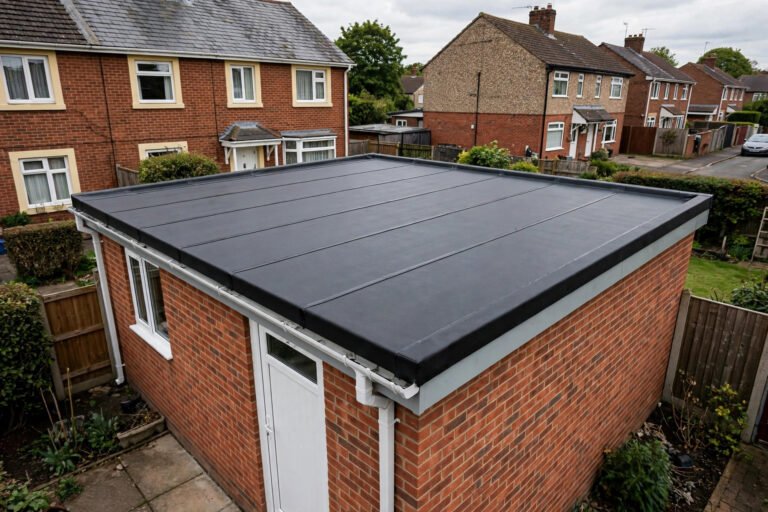
For flat roofs, GRP (glass reinforced plastic) has largely replaced traditional felt because it forms a single seamless membrane with no joints to fail. Expect to pay £60 to £90 per square metre, including trims and edging.
EPDM Rubber and Roofing Felt
Roofing felt remains the budget flat roof option at £40 to £70 per square metre, though it has a shorter lifespan than GRP. EPDM rubber membranes sit in between on cost and durability.
Labour vs Material Cost Breakdown
On a typical re-roof, materials account for roughly 40 to 50 percent of the total cost, with labour making up the remainder. A rough breakdown for a £7,000 semi detached re-roof might look like this.
- Materials (tiles, battens, membrane, flashing): £2,800 to £3,200
- Labour: £2,500 to £3,000
- Scaffolding hire: £600 to £1,200
- Waste removal and skip hire: £250 to £450
Factors That Affect Your Roof Replacement Cost
Roof Pitch and Complexity
A simple gable roof is quicker and cheaper to work on than a hip roof, a mono pitch roof, or a design with multiple dormers and valleys, since each junction needs additional flashing and labour time.
Access and Scaffolding
Terraced houses with no side access, or properties on a slope, often need more extensive scaffolding, which adds directly to the final bill.
Timber and Structural Repairs
If the survey uncovers rotten battens, sagging trusses, or damp timber underneath the existing covering, this adds cost that will not appear in an initial quote based on a visual inspection alone.
Roof Insulation Upgrades
Many homeowners choose to upgrade roof insulation at the same time as a re-roof, since the structure is already exposed. This is more cost effective than doing it as a separate job later, though it adds to the upfront figure.
Building Regulations and Planning
A like for like re-roof does not usually need planning permission, but it must still meet current Building Regulations for insulation values. If you live in a conservation area or the property is listed, you may be restricted to specific materials such as natural slate or clay tiles.
Signs You Need a New Roof
- Slipped, cracked, or missing tiles visible from ground level
- Daylight showing through the roof timbers in the loft
- Sagging roofline when viewed from the street
- Damp patches or staining on ceilings after rain
- Granules from asphalt or felt collecting in gutters
- A roof that is approaching or past its expected lifespan (20 to 25 years for felt, 40 to 60 years for concrete tiles, over 100 years for slate)
DIY vs Hiring a Professional Roofer
Re-roofing is not a realistic DIY project for most homeowners. It involves working at height, handling heavy materials, and meeting Building Regulations for weatherproofing and insulation. Poor workmanship can invalidate your buildings insurance and cause much larger repair bills later. Small jobs such as replacing a handful of slipped tiles may be manageable for a confident, safety conscious homeowner with the right ladder access, but a full re-roof should be left to a qualified roofer.
How to Reduce the Cost of a New Roof
- Get at least three itemised quotes so you can compare labour and material costs separately
- Time the work outside peak summer months when roofers are less booked up
- Combine the re-roof with other work needing scaffolding, such as gutter replacement or chimney repointing
- Ask whether reclaimed or reused tiles are suitable for part of the job, particularly for period properties
- Check whether your roofer is registered with a competent person scheme, which can reduce the need for separate building control sign off fees
Choosing a Roofing Contractor
Look for a roofer registered with a recognised trade body such as the NFRC (National Federation of Roofing Contractors) or a competent person scheme. Ask for references from jobs completed in the last twelve months, confirm they carry public liability insurance, and get any guarantee in writing before work begins. A guarantee of 10 to 25 years on workmanship is common for a full re-roof.
New Roof Cost UK: Comparison Table
| Material | Cost per sqm | Typical Lifespan | Best For |
|---|---|---|---|
| Concrete tiles | £35 to £55 | 40 to 60 years | Most UK homes, budget friendly |
| Clay tiles | £55 to £90 | 60 to 100 years | Period properties, conservation areas |
| Natural slate | £70 to £120 | 100+ years | Listed buildings, premium finish |
| GRP flat roofing | £60 to £90 | 25 to 30 years | Extensions, garages, flat roofs |
| Roofing felt | £40 to £70 | 15 to 20 years | Budget flat roof jobs, sheds |
Frequently Asked Questions
How long does a new roof take to fit?
Most domestic re-roofs take between three and seven working days, depending on roof size, pitch complexity, and weather conditions.
Do I need planning permission for a new roof?
A like for like replacement using similar materials rarely needs planning permission. You may need permission if you are changing the roof shape, raising its height, or if the property is listed or in a conservation area.
Is roof replacement covered by home insurance?
Standard wear and tear is not covered. Sudden damage from storms, falling trees, or fire usually is, subject to your policy terms, which is one reason it pays to review your home protection strategy alongside any major roof work.
What is the cheapest type of new roof?
Concrete tiles remain the most cost effective covering for pitched roofs, while roofing felt is the cheapest option for flat roofs, though both come with shorter lifespans than premium alternatives.
Can I get VAT relief on a new roof?
Standard VAT of 20 percent usually applies. Reduced rates may apply for certain energy saving materials fitted at the same time, such as insulation, so it is worth asking your contractor whether your job qualifies.
Expert Insight
Roofing contractors consistently report that the biggest cost overruns come from timber decay discovered once the old covering is stripped away, not from the visible tiles or felt themselves. Budgeting an additional 10 to 15 percent contingency on top of your quote is sensible practice for any re-roof on a property over 30 years old.
Final Thoughts
A new roof is one of the largest single expenses a homeowner will face, but it is also one of the most important, protecting everything beneath it. Getting multiple itemised quotes, understanding what drives the price up, and choosing a properly accredited contractor will help you avoid surprises and get a roof that lasts for decades.
Ready to start planning your roof replacement? Get at least three quotes from NFRC registered roofers in your area before committing, and always confirm the guarantee in writing.
Related Guides
- Types of Roof Tiles: A Complete Buyer’s Guide
- Flat Roof Insulation: Complete Guide
- Roof Battens: A Complete Guide
- Roof Cleaning Cost UK: Complete Guide
Written by the HometoWorld editorial team, covering home improvement, renovation, and property maintenance across the UK.
About the Author