How Much Does Fascia and Soffit Replacement Cost?
Full fascia and soffit replacement on a typical UK house costs £1,500 to £4,000. Per-metre rates run £60 to £120 for uPVC, more for timber or aluminium. Capping over (covering existing boards rather than replacing) costs roughly half: £800 to £2,000. Scaffolding, where needed, can add £500 to £1,000.
| Property type | Full replacement (uPVC) | Cap-over |
|---|---|---|
| 2-bed terrace | £1,200 to £2,000 | £700 to £1,200 |
| 3-bed semi | £1,800 to £2,800 | £900 to £1,600 |
| 4-bed detached | £2,500 to £4,000 | £1,200 to £2,200 |
| Bungalow (large roofline) | £2,000 to £3,500 | £1,000 to £1,800 |
Full Replacement vs Capping Over: The Decision
This is the most commercially important question in the whole topic, and almost no guide addresses it properly.
| Full replacement | Cap-over (over-cladding) | |
|---|---|---|
| What happens | Old boards stripped back to rafters; new boards fitted | New uPVC boards fixed over the old ones |
| Cost | £1,500 to £4,000 typical | Roughly half of full replacement |
| When it suits | Rotten rafter feet, perished boards, ventilation upgrades needed | Boards structurally sound but weathered; budget priority |
| Watch out | Reveals hidden rot (budget 10% contingency) | Traps existing rot; reduces ventilation if done badly |
Rule of thumb: if a screwdriver pushes easily into the existing timber, replacement is the honest answer. Capping over rot just hides a problem that returns worse in five years.
Fascia and Soffit Materials Compared
uPVC dominates the UK replacement market for good reason, but it is not the only option. Here is how the three main materials stack up:
| Material | Cost (per metre, fitted) | Lifespan | Maintenance |
|---|---|---|---|
| uPVC | £60 to £120 | 20 to 30 years | None, occasional wash |
| Timber (softwood) | £80 to £150 | 10 to 15 years | Repaint every 3 to 5 years |
| Aluminium | £120 to £200 | 30 to 40 years | None, powder-coated finish |
Timber is sometimes required on listed buildings or in conservation areas where the council insists on like-for-like materials. Check before assuming uPVC is acceptable. Aluminium is the premium choice: it will not warp, crack or discolour, and the powder coating comes in any RAL colour, but it roughly doubles the material bill. For most homeowners, 18mm uPVC replacement boards hit the sweet spot of cost, lifespan and zero maintenance.
Colours and Finishes: Beyond White uPVC
White remains the default and the cheapest option, but coloured boards have become mainstream. Anthracite grey and black are the most popular upgrades, typically adding 10 to 20 percent to the material cost. Woodgrain foils (rosewood, golden oak) mimic timber without the maintenance and suit period properties where the council resists plain white plastic.
Two practical notes: dark colours absorb more heat, so on long south-facing runs make sure your installer uses boards rated for thermal expansion. Cheap dark boards can bow. And if you are matching existing windows, bring a RAL colour reference: “anthracite grey” varies between manufacturers, and a mismatch at the eaves is visible from the street.
Maintenance: Making New Boards Last 30 Years
uPVC fascias are sold as maintenance-free, which is almost true. Almost. Three small jobs protect your investment:
- Clear gutters twice a year. Overflowing gutters are the number one killer of fascia boards. Water cascades behind the board and rots the rafter feet it is fixed to. Autumn leaves and spring blossom are the two clearances that matter.
- Wash boards annually. A bucket of warm soapy water and a soft brush removes algae and traffic film. Avoid pressure washers on joints and seals.
- Check seals and joints every couple of years. Look for gaps opening at board joints or where the gutter meets the downpipe. A £5 tube of sealant now beats a £500 repair later.
What Drives the Price?
- Material: uPVC is cheapest and now standard; timber costs more and needs painting; aluminium sits at the top for premium finishes.
- Scaffolding: full scaffold for a detached house can be a third of the bill. Terraces with good access sometimes manage with towers.
- Guttering bundle: replacing gutters at the same time typically adds £400 to £800 but saves a second scaffold hire later.
- Hidden rot: once boards come off, rotten rafter feet or felt need fixing. Keep a 10 percent contingency.
- Region: London and the South East run 20 to 30 percent above the Midlands and North.
Signs Yours Need Replacing
- Flaking paint or visible rot on timber boards
- Sagging or leaking gutters pulling away from the fascia
- Birds or squirrels getting into the loft (gaps at the eaves)
- Damp patches on upstairs walls near the roofline
- Asbestos-cement soffits (pre-1980s): do not disturb; get a survey
Asbestos Warning
Homes built before the 1980s may have asbestos-cement soffit boards. These are safe if undisturbed, but cutting or breaking them releases fibres. Never DIY them: check the HSE asbestos guidance. A licensed assessment comes first, and removal adds to the project cost. Mention the property age when getting quotes so contractors price accordingly.
Ventilation Matters
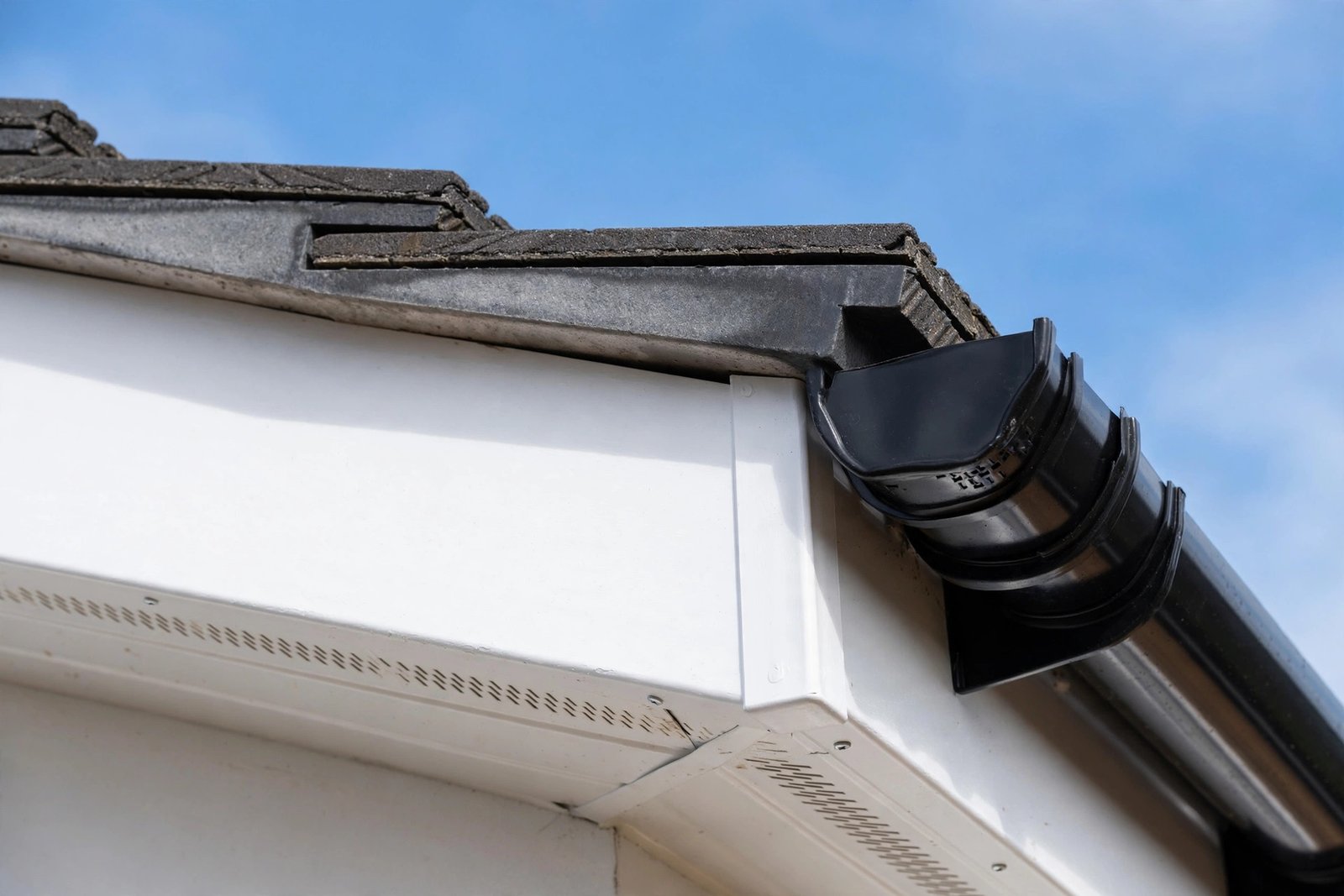
Soffits do a real job: vented soffits let air into the loft, preventing condensation and timber decay. When replacing, specify vented soffit boards (or separate disc vents) to at least current standards. Unvented cap-overs are a common cause of later loft condensation problems. For related roofline work, see our new roof costs guide and flat roof insulation guide.
Guttering: Replace It at the Same Time
The short answer is almost always yes. Gutters clip directly to the fascia boards, so they have to come off during replacement anyway. Refitting 15-year-old gutters onto brand-new boards is false economy: the brackets rarely survive removal cleanly, the seals are perished, and you will pay for scaffold access a second time when they fail two years later.
Budget £400 to £800 extra for new half-round uPVC guttering on a typical semi, or £800 to £1,500 for deep-flow or aluminium systems. Deep-flow gutters are worth considering if your roof has a large catchment area or you have had overflow problems. They handle roughly twice the water volume of standard half-round for a modest premium.
Quote Comparison Checklist
- Full replacement or cap-over: which, and why?
- Material and board thickness specified (18mm replacement board vs 9mm cap-over)
- Scaffolding included or extra?
- Guttering: replaced, refixed, or untouched?
- Vented soffits specified?
- Waste removal included?
- Guarantee length in writing (10 years typical for uPVC work)
- Asbestos check for pre-1980s properties
What the Job Looks Like: Typical Timeline
For a standard 3-bed semi, expect the following sequence:
- Day 0: scaffolding erected (half to one day)
- Day 1: old gutters removed, boards stripped back, rafter feet and felt inspected
- Day 2: any timber repairs completed, new fascia and vented soffit boards fitted
- Day 3: new guttering hung and aligned, eaves trays and felt support fitted
- Day 4: snagging, waste removal, scaffold struck (often the following day)
Hidden rot is the main schedule risk: if rafter feet need splicing or the felt is perished, add a day and a few hundred pounds. A reputable contractor flags this possibility in the quote rather than surprising you mid-job.
When Replacement Isn’t Enough: Rafter and Felt Repairs
Stripping old boards sometimes reveals problems beyond the boards themselves. The two common ones:
- Rotten rafter feet. The ends of the roof timbers sit right behind the fascia and catch every drip from failed gutters. Minor rot can be cut back and spliced with new timber (£150 to £400 per rafter); widespread rot may need the roof covering lifted locally, a much bigger job.
- Perished felt. Old bitumen felt crumbles with age. Replacing the eaves course of felt (and fitting eaves trays so water drips into the gutter, not behind the fascia) typically adds £200 to £500.
A good installer inspects and photographs these areas once the boards are off and agrees any extra work with you before proceeding. It should never appear as a surprise on the final invoice. This is exactly why the 10 percent contingency exists, and why the cheapest quote that “includes everything” deserves the hardest questions.
Regional Price Differences
The pattern is the same as for most roofing work: London and the South East run 20 to 30 percent above the national figures, the Midlands sits around average, and the North, Scotland and Wales come in 10 to 15 percent below. On a £2,500 semi-detached replacement, that means roughly £1,900 in the North East versus £3,200 in London for equivalent work. Scaffolding hire follows the same regional curve.
How We Researched These Prices
Figures in this guide were compiled in October 2026 from UK trade pricing guides, roofer and fascia installer quote data and merchant material prices, then cross-checked across multiple sources for consistency. Prices are guides for budgeting, not quotes. Always get itemised written quotes from at least three local installers before committing. Last reviewed: October 2026.
Fascia and Soffit FAQs
How much does it cost to replace fascias and soffits in the UK?
Typically £1,500 to £4,000 for full uPVC replacement on an average house, or £800 to £2,000 for capping over. Scaffolding can add £500 to £1,000.
Is it better to cap over or replace fascias?
Replace if there is any rot or structural doubt; cap over only when boards are sound and budget is the priority. Capping over rot hides a worsening problem.
How long does fascia and soffit replacement take?
Usually 2 to 4 days for a typical house, plus scaffold erection and removal time.
Do I need scaffolding for fascias and soffits?
Usually yes for safe working at height. Some terraces manage with access towers, but budget for scaffold on detached and semi-detached homes.
Should I replace guttering at the same time?
Almost always yes. It adds £400 to £800 but avoids paying for scaffold access twice, and old gutters rarely survive refixing cleanly.
How long do uPVC fascias last?
20 to 30 years with minimal maintenance. Timber lasts 10 to 15 years even with regular painting.
Do fascias need planning permission?
No, like-for-like replacement is permitted development. Listed buildings need consent for material changes See the Planning Portal for when permission applies.
What are soffits for?
They close the gap under the eaves and, when vented, ventilate the loft space to prevent condensation and timber rot.
About the Author