How Much Does Coving Installation Cost?
Coving installation typically costs £25 to £70 per linear metre supplied and fitted, depending on material. For an average living room (around 16 metres of wall), that means £400 to £1,100 all in. Basic gypsum coving sits at the lower end; ornate plaster cornice at the top.
| Coving material | Typical per-metre fitted | Notes |
|---|---|---|
| Polystyrene (lightweight) | £25 to £35 | Cheapest; DIY-friendly; less crisp detail |
| Polyurethane / duropolymer | £30 to £50 | Sharp detail; moisture resistant; good for bathrooms |
| Gypsum / plaster | £40 to £70 | Traditional; best finish; needs a skilled fitter |
| Ornate cornice (plaster) | £60 to £100+ | Bespoke profiles for period properties |
Per-Room Worked Example
Take a typical living room, 4m x 4m. The perimeter is 16 metres. Add 10 percent wastage for mitre cuts and mistakes: 17.6 metres, round to 18.
- Polystyrene: 18m x £30 = £540 Polyurethane: 18m x £40 = £720
- Gypsum: 18m x £55 = £990
Measure your own room the same way: perimeter plus 10 percent, multiplied by the per-metre rate. That is the number to sanity-check quotes against.
Coving Sizes and Profiles: What Suits Your Ceiling
Coving is sold by its face size, the diagonal measurement across the installed profile. The right size depends on your ceiling height:
- 90–100mm: standard for modern rooms with 2.4m ceilings; subtle and tidy
- 127mm (5 inch): the most popular all-rounder; suits 2.4–2.7m ceilings and most room sizes
- 150mm+: for high ceilings (2.7m+) and large rooms; small coving in a grand room looks mean
- 200mm+ cornice: period properties with 3m+ ceilings; anything smaller disappears
As a rule of thumb, the coving should be roughly proportional to the room: undersized coving in a tall room looks like an afterthought, while oversized coving in a small box room crowds the ceiling. If you are replacing existing coving, measure the old profile before ordering. Matching it avoids an obvious step where new meets old on the same floor. For open-plan spaces, keep one profile throughout. Mixing sizes between the kitchen and living area of the same open space looks accidental.
Why Do Quotes Vary So Much?
Per-metre figures conflict wildly online (£25 to £100+) because they bundle different things. The honest breakdown:
- Material: the single biggest variable (see table above)
- Labour model: day rates (£150 to £250) vs per-metre pricing; small rooms cost more per metre
- Ceiling height and access: high ceilings need towers and take longer
- Preparation: stripping old coving, making good artex or damaged plaster adds time
- Region: London 20 to 30 percent above the national figures
- Finishing: caulking and priming included? Or left for your decorator?
DIY vs Professional: An Honest Framework
| DIY | Professional | |
|---|---|---|
| Suits | Polystyrene and lightweight polyurethane in square rooms | Gypsum, cornice, period profiles, high ceilings |
| Cost | Materials only (£5 to £15/m) + adhesive and tools | £25 to £70/m fitted |
| Hardest part | Internal and external mitre cuts | None for you; they do it daily |
| Realistic outcome | Good in simple rooms with practice pieces | Crisp joints and invisible mitres |
Lightweight coving is genuinely DIY-able: buy 10 percent extra, practise mitres on offcuts, and use a mitre box. Gypsum in a Victorian bay is not a first project.
7 Common DIY Coving Mistakes
- Skipping the practice cuts. Mitre cuts feel simple until you are holding a £15 length of gypsum at an awkward angle. Practise on offcuts first.
- Wrong adhesive. Lightweight coving needs coving adhesive, not general grab adhesive. The setting time and gap-filling properties differ.
- Not checking the ceiling is level. Old ceilings sag. Dry-fit each length and scribe or pack where needed rather than forcing it straight.
- Butt joints in the middle of a wall. Stagger joints and cut them at 45 degrees (scarf joints). They all but disappear after filling.
- Painting too soon. Let adhesive and filler cure fully (24–48 hours) or the paint will highlight every joint.
- Forgetting the room’s order of work. Coving goes up after plastering and before final decoration. See our home renovation checklist for the correct sequence.
- Measuring once. Bay windows, chimney breasts and alcoves all add perimeter. Measure twice, add 10 percent, then add a length for luck.
Coving vs Cornice: What Is the Difference?
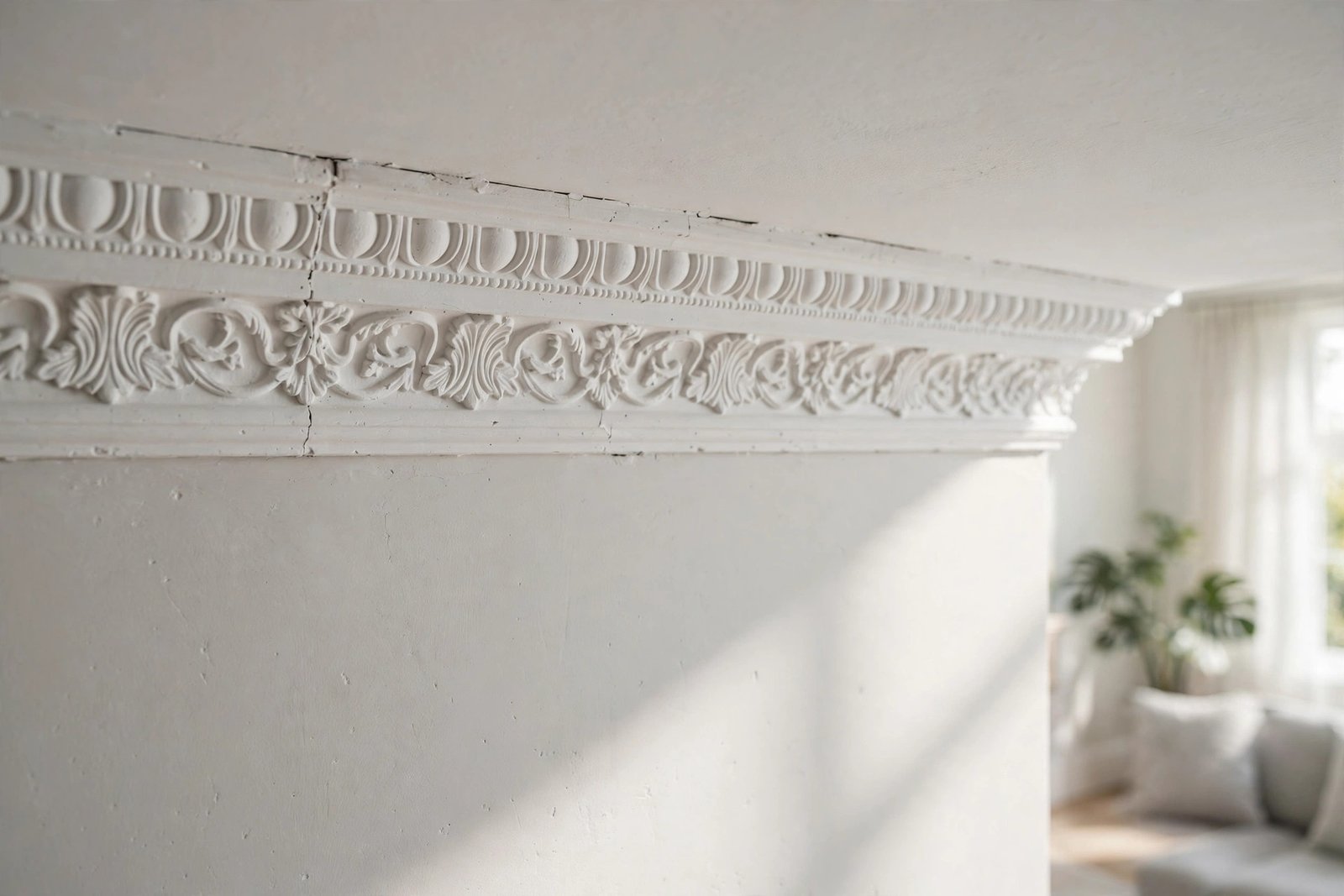
Coving is the simple concave strip covering the wall-ceiling joint. Cornice is larger, more ornate plasterwork with decorative profiles (dentil, egg-and-dart). Cornice costs more, suits period properties, and almost always needs a specialist fitter.
Period Properties: Matching Existing Cornice
In Victorian and Edwardian homes, the cornice is part of the room’s character, and often protected. If your property is listed, replacing or altering original plasterwork needs listed building consent, not just a good plasterer; the Planning Portal explains when consent applies. Even in unlisted period homes, ripping out original cornice for plain modern coving can reduce the property’s appeal to future buyers.
Where sections are damaged, a specialist can take a squeeze (a rubber or plaster impression) of the surviving profile and cast matching replacement. This is standard conservation practice and far cheaper than commissioning a new design. Historic England’s advice for owners of older homes is the best starting point for understanding what is appropriate. Expect to pay £80 to £150+ per metre for genuinely matched heritage cornice work, roughly double standard gypsum rates.
Quote Fairness Checklist
- Per-metre rate stated, with material named (not just “coving”)
- Room measured on perimeter + wastage, not guessed
- Old coving removal and making good included?
- Caulking, filling and priming included or extra?
- Access equipment for high ceilings allowed for?
- Written total, not just a day rate with open-ended days
Repair vs Replace: Fixing Damaged Coving
Not every tired-looking coving needs ripping out. Hairline cracks at joints are normal settlement and take 30 minutes with decorator’s caulk. Small chips fill and sand invisibly. Replacement earns its keep when: lengths are pulling away from the wall (failed adhesive), sections are water-damaged and soft, or the profile is so dated it drags the whole room down.
Partial replacement is perfectly viable: cut out the damaged length back to the nearest internal corner, fit the new piece, and fill the joint. The trick is matching the profile. Take a photo and measurements to the merchant, or better, a small cut-off sample. A single replacement length fitted by a pro typically costs £80 to £150 including making good.
Coving and Artex: Textured Ceilings
Millions of UK homes still have artexed ceilings meeting their coving, and the junction is a classic trouble spot. Two things to know: first, artex applied before the mid-1980s can contain asbestos. Do not sand or scrape it until it has been tested. An asbestos survey costs £150 to £300 and is money well spent.
Second, fitting new coving against artex rarely gives a crisp line. The professional approach is either to skim the ceiling flat first (around £250 to £400 per room) or to overboard it, then fit the coving to the fresh surface. Coving fitted directly over heavy artex almost always shows a wavy shadow line that no amount of caulk fully hides.
Regional Price Differences
The familiar pattern applies: London and the South East run 20 to 30 percent above national figures, the Midlands sits around average, and the North, Scotland and Wales come in 10 to 15 percent below. On an £800 living-room job, that is roughly £600 in the North East versus over £1,000 in London. Small-room minimum charges bite hardest in expensive regions. Some London fitters will not attend for less than a £400–£500 minimum.
How Long Does Coving Last?
Fitted well, coving is a fit-and-forget feature, but lifespan varies more than most people expect:
- Gypsum/plaster: 40+ years indoors; it is the building itself that usually fails first. Original Victorian cornice still survives in millions of homes.
- Polyurethane: 25–30 years; will not rot or warp, but cheap profiles can yellow if never painted.
- Polystyrene: 15–20 years; knocks and dents accumulate, and it is the least forgiving of movement cracks.
What shortens life in practice is not the material but the environment: persistent condensation (bathrooms without extraction), roof leaks tracking down behind the board, and structural movement in the wall-ceiling joint. Coving that cracks repeatedly in the same place is telling you about movement, not about coving. Get the cause checked before the third refill.
How We Researched These Prices
Figures in this guide were compiled in October 2026 from UK trade pricing guides, plasterer and coving installer quote data and merchant material prices, then cross-checked across multiple sources for consistency. Prices are guides for budgeting, not quotes. Always get itemised written quotes from at least three local installers before committing. Last reviewed: October 2026.
Coving Installation FAQs
How much does coving cost per metre in the UK?
Typically £25 to £70 per metre supplied and fitted: £25 to £35 polystyrene, £30 to £50 polyurethane, £40 to £70 gypsum, £60 to £100+ ornate cornice.
How much to put coving in a living room?
For a 4m x 4m room (about 18 metres with wastage): roughly £540 polystyrene, £720 polyurethane, or £990 gypsum.
Can I install coving myself?
Lightweight polystyrene and polyurethane coving, yes, with a mitre box and practice. Gypsum and cornice are best left to professionals.
What is the difference between coving and cornice?
Coving is a simple concave strip; cornice is larger ornate plasterwork with decorative profiles, costing more and needing specialist fitting.
How long does coving installation take?
A professional fits an average room in half a day to a day; DIY takes a weekend including learning the mitre cuts.
Do you paint coving?
Yes, after fitting and caulking. Use the ceiling paint carried down, or a contrasting colour for period drama. Prime bare gypsum first (see our painting new plaster guide).
Can coving go in bathrooms?
Yes, but use moisture-resistant polyurethane rather than gypsum or polystyrene, and ensure good ventilation.
How do you measure a room for coving?
Measure the full wall perimeter, add 10 percent for wastage and mitre cuts, and multiply by the per-metre rate.
About the Author