Quick Answer: What Are Roof Battens and Why Do They Matter?
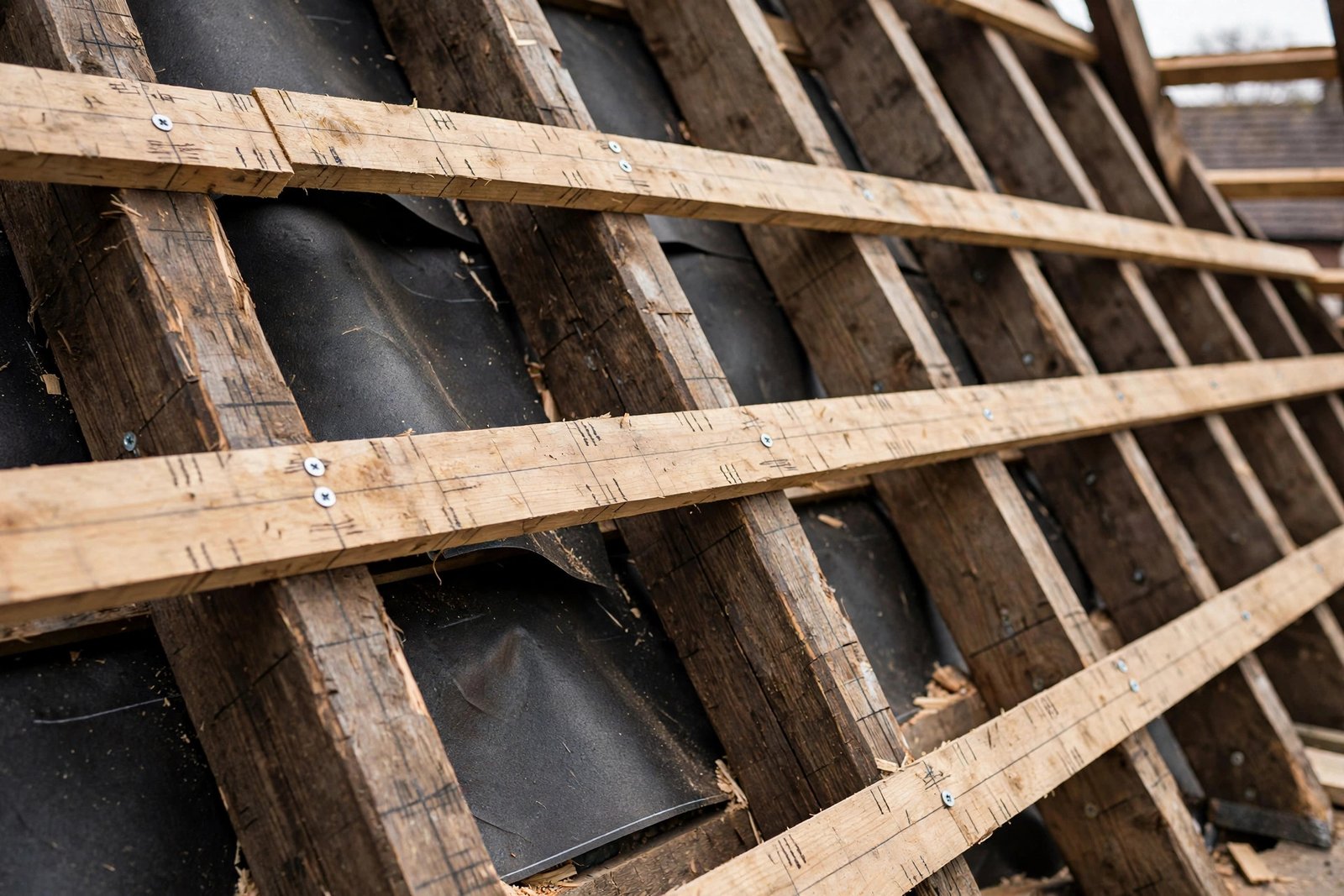
Roof battens are the horizontal timber or composite strips fixed across the roof rafters that roof tiles or slates are hung from. They transfer the weight of the roof covering down to the structural timbers, create the correct spacing for each tile course, and provide a fixing point that keeps the whole roof covering secure against wind uplift.
What Are Roof Battens Made From?
Traditional roof battens are pressure treated softwood timber, graded and sized specifically for roofing use rather than general construction. In recent years, composite and recycled plastic battens have also entered the market, offering resistance to rot and insect damage where timber would traditionally need replacing after several decades.
- Timber battens: The standard choice, pressure treated to BS 5534 for durability
- Composite battens: Rot proof and consistent in dimension, useful in high moisture environments
- Counter battens: Fitted vertically beneath the horizontal battens on some roof constructions to create a ventilated air gap above the membrane
How Roof Batten Spacing Works
Batten spacing, known as the gauge, is calculated based on the specific tile or slate being used, since each product has a manufacturer specified maximum and minimum gauge to ensure correct overlap between courses. Getting this measurement wrong is one of the most common roofing faults, since incorrect gauge can leave gaps that let water in or waste material through excessive overlap.
How to Calculate Roof Batten Spacing: A Worked Example
The section above explains what batten gauge is. Here is the practical method roofers use to set it out on a real roof, following standard UK trade practice.
- Set the eaves batten. Lay a sample tile unfixed at the eaves so its bottom edge overhangs the fascia by the amount in the manufacturer’s guidelines, with the tile edge stopping just short of the gutter centre. Fix the first batten to suit.
- Measure the first gauge. Measure the tile length and the nib length, then subtract the nib and the overhang from the tile length. This gives the distance from the first batten to the second. Worked example: 400mm tile minus 75mm overhang minus 25mm nib equals 300mm.
- Set the ridge batten. Fix a batten just below the ridge, positioned so the ridge tiles will overlap the top course of tiles by around 75mm.
- Count the courses. Measure from the top of the lowest batten to the top of the highest batten, divide by the manufacturer’s maximum gauge for your tile, and round up to the nearest whole number. This is the number of tile courses.
- Divide evenly. Divide the measured distance by the number of courses. The result is your even batten gauge for the whole roof slope.
For natural slates the formula is simpler: batten gauge equals slate length minus headlap, divided by two. With a 450mm slate and an 80mm headlap, that gives 370mm divided by two, which is a 185mm gauge.
| Covering | Example size | Calculation | Resulting gauge |
|---|---|---|---|
| Interlocking concrete tile | 400mm long | 400 minus 75 overhang minus 25 nib | 300mm |
| Natural slate | 450mm long, 80mm headlap | (450 minus 80) divided by 2 | 185mm |
To estimate quantities, battens are sold in packs of ten at 3.6 metres per length. Multiply the number of courses by the eaves length in metres for a single pitch, and double it for a dual pitch roof. For example, 11 courses on an 8 metre single pitch needs 88 metres, which is roughly three packs before allowing for cutting waste. Always confirm the final specification against the tile manufacturer’s fixing instructions and BS 5534 for your wind exposure zone.
Roofing Battens and Building Regulations
UK roof battens fitted since 2014 must comply with BS 5534, which sets minimum standards for batten strength, fixing methods, and wind resistance based on the roof’s location and exposure. This standard was introduced after research showed a significant number of roof failures during storms were linked to inadequate batten fixing rather than tile failure itself.
Signs of Roof Batten Failure
- Sagging or uneven tile lines visible from the ground
- Tiles slipping out of position more frequently than expected
- Soft or spongy feeling timber if accessible from the loft space, indicating rot
- Visible daylight or gaps between tiles that were not present when the roof was new
Batten failure is often only discovered once a re-roof begins and the existing tiles are stripped back, which is one of the reasons roofers recommend budgeting a contingency for a full re-roof, as covered in our new roof cost UK guide.
Roof Truss vs Roof Battens: What Is the Difference?
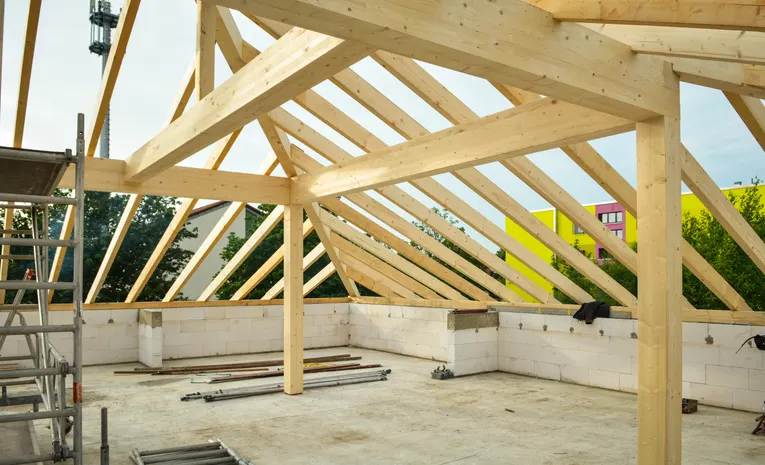
It is worth distinguishing between roof trusses and roof battens, since the terms are sometimes confused. Roof trusses are the main structural triangular frames that support the entire roof shape, spanning from wall to wall. Battens are a much smaller, secondary component fixed across the trusses or rafters, providing the direct fixing surface for tiles or slates.
Roof Batten Sizes and Specification
| Component | Typical Size | Purpose |
|---|---|---|
| Standard batten | 25mm x 50mm or 38mm x 25mm | Tile fixing, horizontal |
| Counter batten | 25mm x 38mm | Ventilation gap, vertical |
| Reinforced batten | 25mm x 50mm treated | High exposure sites, coastal areas |
Exact specification should always be confirmed against the tile manufacturer’s fixing instructions and the relevant British Standard for your roof’s wind exposure zone.
Replacing Roof Battens During a Re-Roof
Whenever a roof is stripped back to the deck for a full re-roof, it is standard practice to replace all battens rather than reuse the originals, since the cost difference is minor compared to the labour already involved, and reused battens may have nail holes in the wrong position for new tile gauges.
Frequently Asked Questions
How long do roof battens last?
Properly treated timber battens typically last as long as the roof covering itself, usually 40 to 60 years, provided the roof remains watertight and battens are not exposed to persistent damp.
Do roof battens need to be treated?
Yes, UK roof battens should be pressure treated to resist rot and insect damage, and compliant battens will carry a BS 5534 marking confirming this treatment.
Can you fit new tiles onto old battens?
It is possible if the existing battens are sound and correctly spaced for the new tile profile, but most roofers recommend replacing battens during any full re-roof given the relatively low additional cost.
What causes roof battens to fail?
The most common causes are long term water ingress from a failed membrane above, poor quality or untreated timber, and incorrect fixing that does not meet current wind resistance standards.
Are plastic roof battens as good as timber?
Composite and recycled plastic battens offer excellent rot resistance and consistent dimensions, though they are a newer product with a shorter track record than the many decades of performance data available for treated timber.
What is the formula for roof batten spacing?
For slates, gauge equals slate length minus headlap, divided by two. For tiles, set the eaves and ridge battens first, measure between them, divide by the manufacturer’s maximum gauge rounded up to get the course count, then divide the distance by that count for an even gauge.
What is the maximum batten gauge for roof tiles?
There is no single figure, since the maximum gauge is set by the tile manufacturer for each product and roof pitch. Always use the datasheet for your specific tile rather than a rule of thumb, as exceeding it leaves courses underlapped and prone to water ingress.
How many roof battens do I need?
Multiply the number of tile courses by the eaves length in metres, and double the result for a dual pitch roof. Battens are sold in packs of ten 3.6 metre lengths, so divide your total metres by 36 to get the pack count, then add a little extra for cutting waste.
Can I reuse the old batten spacing when re-tiling?
Only if the new tiles share the same profile and gauge requirements as the old ones. Different tiles need different gauges, so re-measure using the method above. Most roofers replace battens entirely during a re-roof anyway, since the extra cost is small against the labour involved.
How many rafters should a batten span?
Battens should be fixed to rafters set at centres of no more than 600mm and should span across at least three rafters. Use a gauge block cut to your calculated gauge minus the batten thickness to keep spacing consistent up the slope.
Expert Insight
Roofing surveyors report that batten failure is frequently misdiagnosed as a tile problem, since slipped or displaced tiles are the visible symptom even when the underlying cause is a failed or rotten batten beneath. A proper roof survey should always check batten condition, not just the tile surface, when investigating recurring tile slippage.
Final Thoughts
Roof battens are a small but critical part of any pitched roof, providing the fixing surface that keeps tiles secure against wind and weather. Correct spacing, BS 5534 compliant materials, and replacement during any full re-roof all help ensure the roof covering performs as designed for its full expected lifespan.
Getting quotes for re-roofing work? Ask whether battens are included as standard in the quoted price, since this is sometimes listed as an optional extra by less thorough contractors.
Related Guides
- New Roof Cost UK: Complete Price Breakdown
- Types of Roof Tiles: A Complete Buyer’s Guide
- Roof Cleaning Cost UK: Complete Guide
Written by the HometoWorld editorial team, covering home improvement, renovation, and property maintenance across the UK.
About the Author