
Quick Answer: What Is Paste the Wall Wallpaper?
Paste the wall wallpaper is a modern wallpaper type where adhesive paste is applied directly to the wall rather than the paper itself, and the dry paper is then hung straight onto the pasted surface. This makes hanging faster, less messy, and easier for beginners, since there is no need to book the paper or wait for soak time before hanging.
Paste the Wall vs Traditional Paste the Paper Wallpaper
| Feature | Paste the Wall | Traditional Paste the Paper |
|---|---|---|
| Where paste is applied | Directly to the wall | To the back of the paper |
| Booking/soak time needed | No | Yes, typically several minutes |
| Mess level | Lower, less paste handling | Higher, paper needs pasting and folding |
| Beginner friendliness | Easier for first timers | Requires more practice for even results |
| Removability | Generally easier to strip later | Varies by paper type |
What Happens If You Use the Wrong Paste Method?
The label on your wallpaper roll is not a suggestion: manufacturers test each paper with different methods and specify the one that works. Using the wrong method does not just make hanging harder, it causes specific failures as the paper dries.
| Mistake | What happens | Why |
|---|---|---|
| Paste the paper on a paste-the-wall paper | Gaps open between strips as it dries | The paper gets too wet, then shrinks back as it dries |
| Paste the wall on a paste-the-paper paper | Edges curl and peel away | The paper never absorbs paste properly, so it cannot bond |
| Pasting too far ahead of yourself | Paper will not stick; bubbles and lifting | The adhesive skins over or dries before the paper goes on |
The most common error is the third one, and it catches out even careful DIYers. With paste the wall, work one strip at a time: paste just over a single width, hang the drop, then move on. Paste several widths ahead and the adhesive will have started to dry by the time you position the paper, leaving you with lifting edges that no amount of smoothing will fix.
Two trade tips prevent most problems. First, run a small extra bead of adhesive along the edges of each pasted section: edges dry fastest and are where curling starts. Second, always wipe seams with a clean damp sponge as you go. Dried paste residue leaves a glossy shine on the finished paper that is very hard to remove later.
Can you ever swap methods deliberately? Sometimes. Many paste-the-wall papers can be pasted on the paper instead if you prefer working that way, and the instructions often say so. But the reverse is not true: a paper designed to be pasted and soaked should never be hung paste-the-wall, because it needs that soaking time to expand and become pliable. When in doubt, follow the roll.
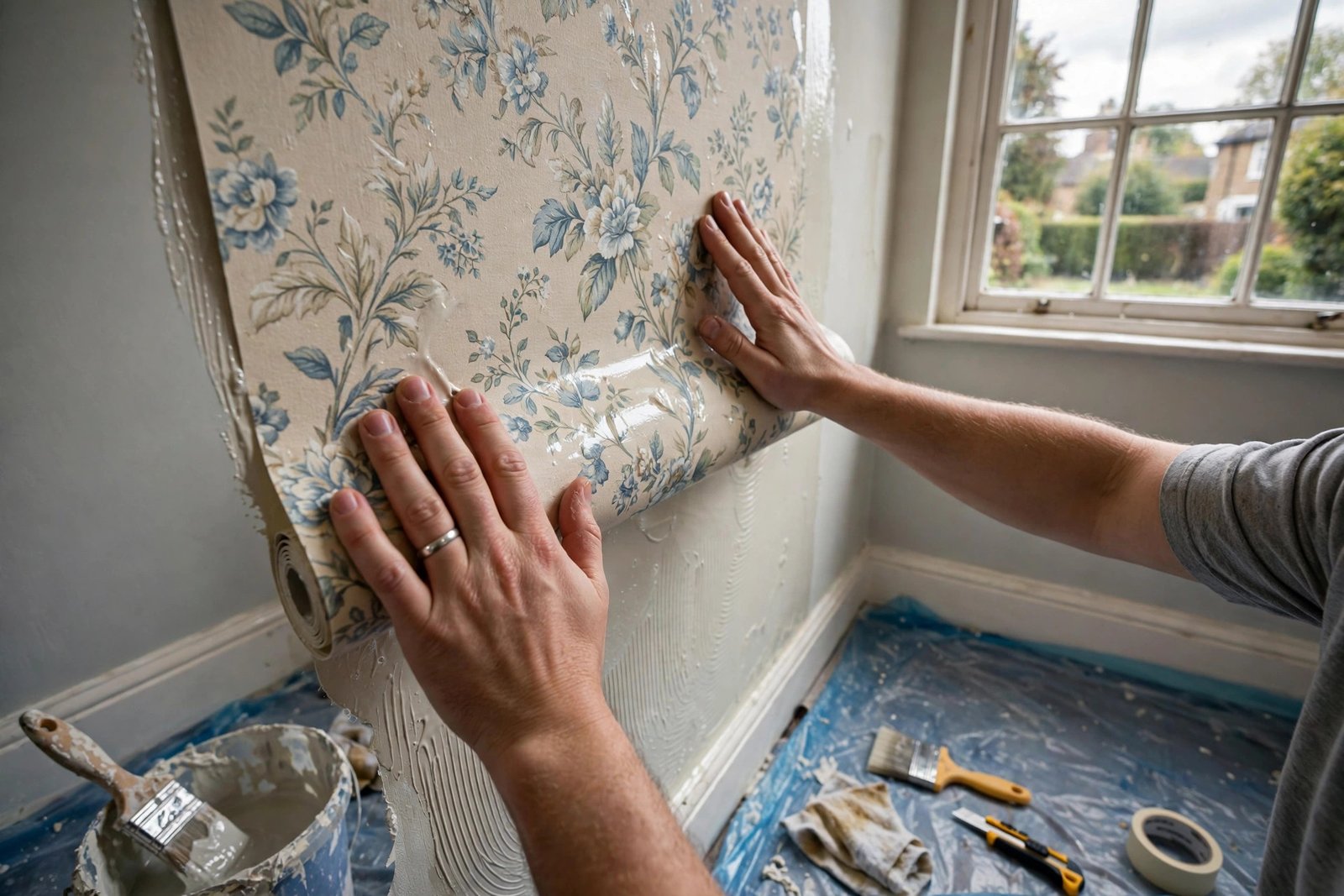
How to Hang Paste the Wall Wallpaper
- Prepare the wall surface, ensuring it is clean, smooth, and free of old wallpaper or flaking paint
- Measure and cut your paper lengths, adding a small allowance top and bottom for trimming
- Apply wallpaper paste evenly to the wall area using a roller, covering slightly more than one width of paper at a time
- Position the dry paper against the pasted wall, aligning it with your reference line, and smooth outward from the centre using a wallpaper brush or smoother
- Trim excess paper at the ceiling and skirting board line with a sharp trimming knife and straight edge
- Wipe away any paste residue from the surface immediately with a clean, damp sponge
Tools You Will Need
- Ready mixed or made up wallpaper adhesive suitable for paste the wall papers
- Paste roller and tray
- Wallpaper smoothing brush or plastic smoother
- Sharp trimming knife and metal straight edge
- Spirit level or plumb line to establish a true vertical starting line
- Clean sponge and bucket of water for wiping away excess paste
Choosing the Right Adhesive
Not all wallpaper paste suits every paper type. Paste the wall papers typically need a specific ready mixed or heavy duty paste designed for the purpose, and using the wrong adhesive strength for the paper weight can result in poor adhesion or bubbling. Always check the paper manufacturer’s specific paste recommendation rather than assuming any general purpose paste will do.
Can You Wallpaper Over Existing Paint?
In most cases yes, provided the paint is in good condition, matt or low sheen (see our matt vs silk paint guide if you are unsure which you have), and the wall surface is otherwise sound. Glossy painted surfaces should be lightly sanded first to help the paste adhere properly, since paste applied directly to a shiny surface can struggle to bond effectively.
Common Wallpaper Hanging Mistakes
- Not establishing a true vertical starting line, leading to a visibly crooked first drop that throws off the whole wall
- Applying paste unevenly, leaving dry patches that cause the paper to lift once hung
- Failing to match pattern repeats between drops, particularly noticeable with bold or geometric wallpaper designs
- Trimming too aggressively before the paper has settled, leaving visible gaps once it fully adheres
How Long Does Wallpaper Paste Take to Dry?
Most wallpaper paste takes 24 to 48 hours to fully dry and cure, during which time the room should be kept at a stable temperature without direct heat sources or draughts, both of which can cause the paper to dry unevenly or lift at the edges.
Peel and Stick Wallpaper: An Alternative Option
Peel and stick wallpaper offers an even more beginner friendly alternative, using a pre applied adhesive backing that simply needs peeling and pressing into place, with no paste required at all. It generally suits smaller feature walls or rental properties well, since it can often be removed and reapplied, though it may not achieve quite the same seamless, professional finish as pasted wallpaper on larger areas.
Frequently Asked Questions
Is paste the wall wallpaper easier than traditional wallpaper?
Yes, most people find paste the wall wallpaper easier and less messy to hang, since there is no need to paste and book the paper itself, and the dry paper is simpler to handle and position accurately.
Can you hang paste the wall wallpaper on any surface?
It works well on most sound, prepared wall surfaces, but very glossy paint should be lightly sanded first, and previously wallpapered walls should have the old paper fully removed for the best result.
Do you need special paste for paste the wall wallpaper?
Yes, always check the specific paper manufacturer’s recommended adhesive, since using the wrong strength paste can lead to poor adhesion or the paper failing to hang correctly.
How do you remove paste the wall wallpaper?
Paste the wall papers are generally designed to be dry stripped, meaning the paper can often be peeled away from the wall in one piece without soaking, leaving a cleaner wall surface behind compared to some traditional papers.
Can beginners hang wallpaper themselves?
Paste the wall wallpaper in particular is considered accessible for confident beginners, especially on a simple pattern without complex repeats, though taking time to establish a true vertical line and working carefully makes the biggest difference to the final result.
Paste Method FAQs
Can you paste the wall if the paper says paste the paper?
No, not safely. Paste-the-paper wallpapers need soaking time to expand and become pliable. Hung paste-the-wall, they never bond properly and the edges curl and peel as they dry.
Can you paste the paper if it says paste the wall?
Often yes: many paste-the-wall papers tolerate being pasted on the paper instead, and instructions sometimes say so. But it is slower and messier, and over-wetting can cause shrinkage gaps, so check the roll first.
Why is my paste the wall wallpaper curling at the edges?
Usually the adhesive dried before the paper went on, or the edges got too little paste. Work one strip at a time, add a small extra bead of adhesive along edges, and wipe seams with a damp sponge.
How far ahead can you paste the wall?
Only one strip width at a time. Pasting further ahead lets the adhesive skin over or dry, and the paper will not stick properly. Hang each drop before pasting the next section.
Do you need to book paste the wall wallpaper?
No. Booking (folding pasted paper to soak) only applies to paste-the-paper wallpapers. Paste-the-wall paper is hung dry straight onto the pasted wall, which is what makes it faster.
Expert Insight
Professional decorators often note that the single most important step in any wallpaper job, paste the wall or otherwise, is establishing an accurate vertical starting line with a spirit level or plumb line, since every subsequent drop depends on that first line being genuinely straight.
Final Thoughts
Paste the wall wallpaper has made DIY wallpapering significantly more accessible, removing much of the mess and technique previously needed with traditional paste the paper methods. Careful wall preparation, the correct adhesive, and an accurate starting line will give a professional looking result even for a first time DIYer.
Planning a wallpaper project? Buy slightly more paper than your calculated requirement to allow for pattern matching and any cutting errors, since running short partway through can mean ordering from a different batch with a slight colour variation.
Related Guides
- Matt vs Silk Paint: Which Should You Choose?
- How to Paint New Plaster and Plasterboard
- Skirting Board Paint: The Complete Guide
Written by the HometoWorld editorial team, covering home improvement, renovation, and property maintenance across the UK.
About the Author