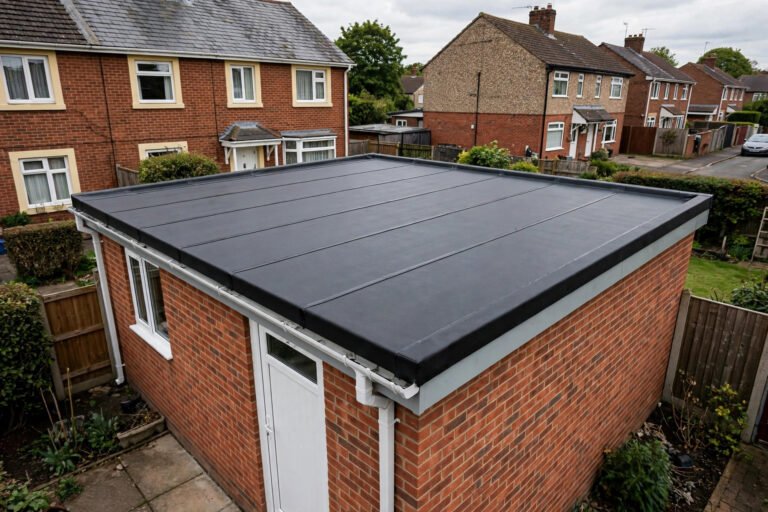

Quick Answer: What Is the Best Flat Roof Insulation?
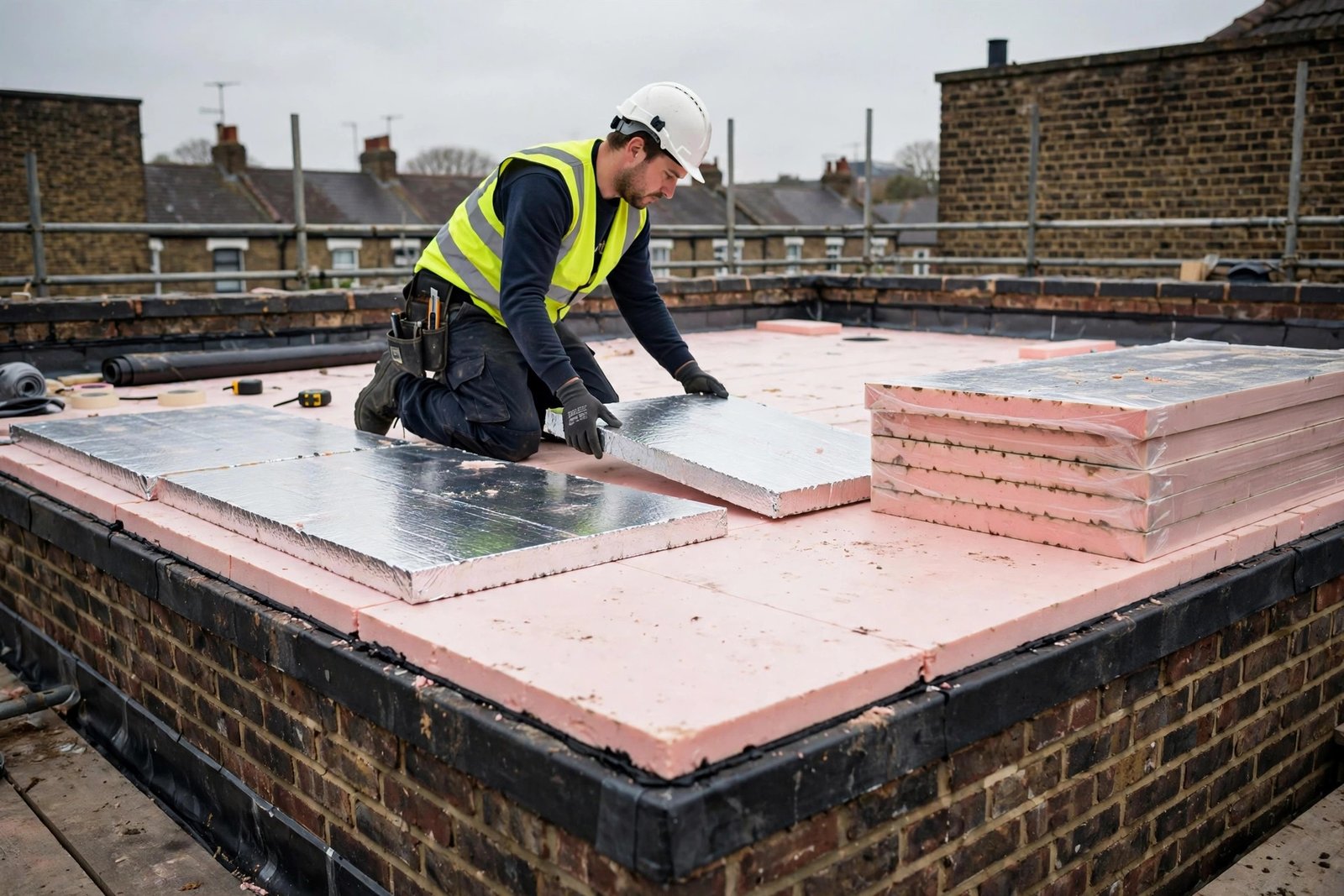
The best flat roof insulation for most UK properties is a warm roof build up, where rigid PIR insulation board sits above the structural deck and below the waterproof membrane. This keeps the timber structure warm and dry, avoids condensation risk, and typically achieves better thermal performance than older cold roof designs where insulation sits between the joists.
Warm Roof vs Cold Roof Insulation
A warm roof construction places continuous rigid insulation above the deck, so the structural timber stays on the warm, dry side of the insulation layer. A cold roof places insulation between the joists, leaving the deck and timber exposed to outside temperatures, which increases the risk of condensation forming within the roof void.
| Feature | Warm Roof | Cold Roof |
|---|---|---|
| Insulation position | Above the deck | Between the joists |
| Condensation risk | Low | Higher, needs ventilation |
| Thermal performance | Better, continuous layer | Reduced by thermal bridging at joists |
| Typical use | New builds, extensions, re-roofs | Older properties, retrofit |
Building Regulations now favour warm roof construction for new work, and most roofing contractors will recommend it by default for any flat roof extension or garage roof replacement.
Types of Flat Roof Insulation Material
PIR Insulation Board
Rigid PIR (polyisocyanurate) board is the most common flat roof insulation material in the UK, offering strong thermal performance for a relatively thin board thickness, which matters where roof height is restricted by boundary or planning rules.
Insulated Roof Panels
Insulated roof panels combine the insulation and the outer weatherproof layer in a single manufactured unit, often used on garden rooms, garages, and outbuildings where speed of installation is a priority.
Breathable Roof Membrane
A breathable roof membrane is fitted as part of the overall build up to manage any residual moisture vapour, allowing it to escape while still preventing water ingress from outside.
How Much Flat Roof Insulation Do You Need?
Current Building Regulations Part L generally require a U-value of 0.18 W/m²K or better for a new or replacement flat roof, which typically means at least 120mm to 150mm of PIR board, though the exact figure depends on the rest of the roof build up and should be confirmed with your roofer or a Building Control surveyor.
How Much Does Flat Roof Insulation Cost in the UK?
The article above explains the build-ups; here is what they cost. Typical 2026 UK ranges for the insulation component (always get itemised quotes, as access and deck condition move prices):
| Insulation approach | Typical cost per m2 | Notes |
|---|---|---|
| PIR board, materials only | £30 to £40 | 120 to 150mm boards; labour and membrane extra |
| Cold roof insulation from below (fitted) | £25 to £45 | Mineral wool between joists; least disruptive |
| Warm roof insulation upgrade during re-roof (fitted) | £50 to £90 | PIR above the deck; the cost-effective route |
The warm roof upgrade figure covers insulation supply and fitting as part of a re-roof, not the full new covering: combining the two jobs is far cheaper than insulating as a standalone project because the roof is already stripped to the deck. For the full re-roof figures, see our new roof cost UK guide.
Worked examples
Single garage (20m2), warm roof upgrade during re-roof: 20 x £65 = around £1,300 for the insulation portion, on top of the new membrane cost.
Kitchen extension (30m2), warm roof upgrade during re-roof: 30 x £65 = around £1,950 for insulation, bringing the extension up to the 0.18 W/m2K Part L requirement.
Same extension insulated from below instead: 30 x £35 = around £1,050, but with higher condensation risk, reduced ceiling height, and a result that still may not meet Part L. This is why contractors recommend the warm roof route wherever the covering is being replaced anyway.
Flat Roof Insulation Cost FAQs
How much does it cost to insulate a flat roof in the UK?
Typically £25 to £90 per m2 for the insulation component: £25 to £45 for cold roof insulation fitted from below, £50 to £90 for a warm roof insulation upgrade carried out during a re-roof. PIR boards cost £30 to £40 per m2 materials only.
Is it cheaper to insulate a flat roof from above or below?
From below is cheaper upfront (£25 to £45 per m2 versus £50 to £90), but it performs worse, risks condensation, and reduces ceiling height. If the roof covering is being replaced, insulating from above as a warm roof is the better value long term.
How much does it cost to insulate a flat garage roof?
For a typical 20m2 single garage, budget around £1,300 for the insulation portion of a warm roof upgrade during a re-roof, plus the cost of the new waterproof membrane itself.
Does flat roof insulation add much to the cost of a re-roof?
Relatively little. Since the roof is already stripped to the deck, adding PIR insulation typically adds £50 to £90 per m2: a fraction of doing it as a separate project later, and it brings the roof up to Part L standards.
Can I insulate my flat roof myself to save money?
It is not recommended. The work involves stripping the covering, checking the deck, and refitting a compliant membrane to Building Regulations standards. Poor installation risks condensation damage and can invalidate the roof covering warranty.
Signs Your Flat Roof Needs Better Insulation
- The room below feels noticeably colder than the rest of the house in winter
- Condensation or damp patches appear on the ceiling beneath the flat roof
- Higher than expected heating bills in a room with a flat roof extension
- Visible sagging or staining on the underside of the roof deck
Flat Roof Insulation and Re-Roofing
If your flat roof covering is due for replacement, upgrading the insulation at the same time is far more cost effective than doing it as a separate project, since the roof already needs to be stripped back to the deck. For a full cost breakdown of combining insulation upgrades with a re-roof, see our new roof cost UK guide.
DIY vs Professional Installation
Flat roof insulation work involves stripping the existing covering, checking the deck for damage, and refitting a compliant waterproof membrane, all of which needs to meet Building Regulations. This is not a realistic DIY project for most homeowners, both for safety reasons working at height and to avoid invalidating any warranty on the new roof covering.
Frequently Asked Questions
What is the minimum flat roof insulation thickness in the UK?
Most warm roof PIR build ups require at least 120mm to 150mm of insulation to meet current Part L requirements, though your roofer should confirm the exact figure for your specific roof build up.
Can you add insulation to an existing flat roof without replacing the covering?
In some cases insulation can be added from below, inside the room, though this is generally less effective than a warm roof upgrade from above and can reduce ceiling height noticeably.
Does flat roof insulation prevent condensation?
Correctly installed warm roof insulation significantly reduces condensation risk by keeping the deck warm, but it must be combined with a properly fitted vapour control layer and breathable membrane to work as intended.
How long does flat roof insulation last?
PIR insulation board typically lasts as long as the roof covering itself, usually 25 to 30 years for a GRP flat roof, provided the waterproof layer above it is maintained.
Expert Insight
Roofing contractors report that condensation related callouts on older cold roof flat extensions have dropped significantly on properties that have since been upgraded to a warm roof build up, underlining how much insulation position affects long term performance, not just thickness.
Final Thoughts
Warm roof construction with rigid PIR insulation is now the standard recommendation for flat roofs across the UK, offering better thermal performance and lower condensation risk than older cold roof designs. If your flat roof is due for replacement, upgrading the insulation at the same time is the most cost effective way to improve comfort and reduce heating bills.
Planning a flat roof upgrade? Ask your roofer for the calculated U-value of their proposed build up in writing, not just the insulation thickness, since performance depends on the full specification.
Related Guides
- New Roof Cost UK: Complete Price Breakdown
- Types of Roof Tiles: A Complete Buyer’s Guide
- Loft Insulation: Complete Guide
- Cavity Wall Insulation: Complete Guide
Written by the HometoWorld editorial team, covering home improvement, renovation, and property maintenance across the UK.
About the Author