How Much Does Lead Flashing Cost in the UK?
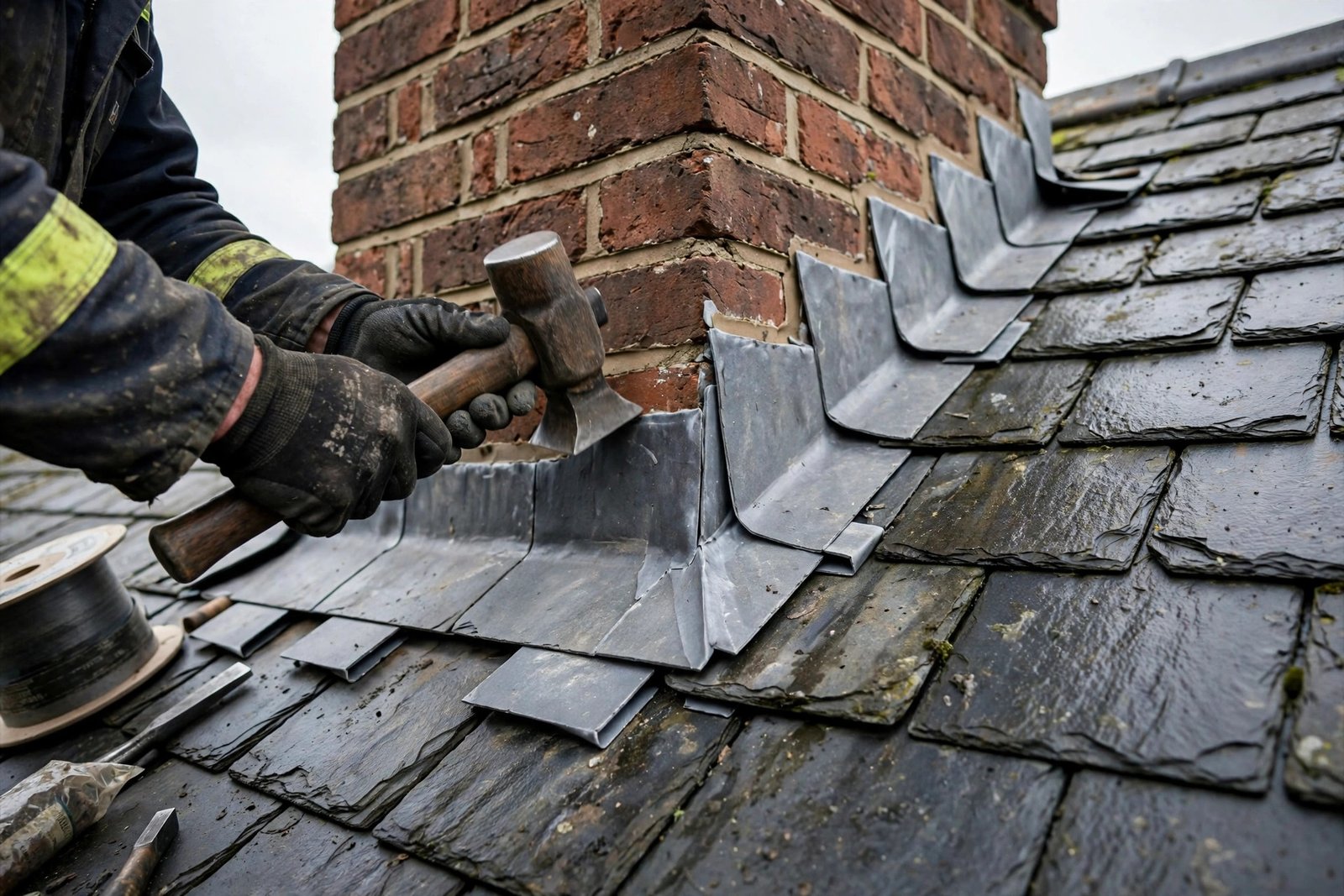
Lead flashing repair typically costs £200 to £600, while a full chimney flashing replacement averages £460 to £1,000 depending on whether scaffolding is needed. Scaffolding roughly doubles the bill, so access is the single biggest variable after the extent of the work.
| Job | Without scaffolding | With scaffolding |
|---|---|---|
| Patch repair (small section) | £200 to £300 | £500 to £700 |
| Full chimney flashing replacement | £460 to £600 | £800 to £1,100 |
| Lead apron flashing | £250 to £450 | £550 to £800 |
| Bay window leadwork | £550+ | £900+ |
| Valley lead lining | £500 to £900 | £900 to £1,500 |
Repair or Replace? The Decision
Small cracks, lifted edges or failed sealant can be repaired with lead sealant or by re-dressing the existing lead: a patch repair at £200 to £300. Full replacement is the honest answer when the lead has thinned through corrosion, there are multiple failure points, or this is the second or third repair in the same spot. Repeated patching of perished lead is money thrown at a roof that will leak again within a year or two.
What Drives the Price?
- Scaffolding: the biggest swing factor. Chimney and high-level work almost always needs it (£300 to £1,000).
- Lead code (thickness): Code 4 suits soakers and small flashings; Code 5 is standard for most flashing; Code 6 is used for valleys and parapet gutters. Thicker lead costs more but lasts longer.
- Extent of failure: a single lifted apron is a half-day job; perished chimney flashings with damaged soakers take a full day or more.
- Associated repairs: rotten battens, damaged tiles or repointing discovered during the work add cost. Keep a 10% contingency.
- Region: London and the South East run 20 to 30% above national figures.
Lead Codes Explained
Lead sheet is sold by “code”, which denotes thickness. Using the right code matters: undersized lead splits with thermal movement, which is one of the most common causes of premature failure.
| Code | Thickness | Used for |
|---|---|---|
| Code 4 | 1.8mm | Soakers, small flashings, dormer cheeks |
| Code 5 | 2.24mm | Standard chimney and abutment flashings |
| Code 6 | 2.65mm | Valleys, parapet gutters, large areas |
How Long Does Lead Flashing Last?
Correctly installed milled lead sheet lasts 50 to 100 years. Many Victorian properties still have original leadwork in serviceable condition. Failures are almost always installation faults (wrong code, poor detailing, no allowance for thermal movement) or failed mortar fillets rather than the lead itself wearing out. For the wider roof budget, see our new roof costs guide.
Signs Your Flashing Is Failing
- Damp patches on chimney breasts or upstairs ceilings
- Visible cracks, splits or lifted edges in the lead
- Daylight visible around the chimney in the loft
- Loose or missing mortar fillets where lead meets brickwork
- Staining on brickwork below the flashing line
Lead Flashing FAQs
How much does it cost to replace lead flashing in the UK?
Patch repairs cost £200 to £600; full chimney flashing replacement averages £460 to £1,000. Scaffolding roughly doubles the price.
Can lead flashing be repaired instead of replaced?
Yes, for small cracks or lifted edges. If the lead has thinned through corrosion or been patched repeatedly, replacement is more cost-effective.
How long does lead flashing last?
50 to 100 years when correctly installed with the right lead code. Most failures are installation faults, not wear.
What is the best lead code for chimney flashing?
Code 5 for standard chimney flashings; Code 4 for soakers; Code 6 for valleys and parapet gutters.
Do I need scaffolding for lead flashing work?
Usually yes for chimney and high-level work. Budget £300 to £1,000 for scaffold, which is often the largest single cost.
Is lead flashing still used on modern roofs?
Yes. Lead remains the standard for flashings, valleys and abutments thanks to its malleability and lifespan. Alternatives exist but rarely match its longevity.
Why does lead flashing fail?
Usually incorrect installation: wrong code, no allowance for thermal movement, or failed mortar fillets. See our flat roof insulation guide for related weathering issues.
How long does the job take?
Patch repairs take 1 to 3 hours; full chimney flashing replacement takes half a day to a full day, plus scaffold erection time.
About the Author