Quick Answer: Two Schemes, Two Doors, and Only One Still Open
If you are searching for the Great British Insulation Scheme versus ECO4, you are really asking which door to knock on for funded insulation. For most of their lives the answer was that there were two doors, and which one fitted you depended on your income, your EPC rating and your council tax band. In November 2026 the answer is simpler, and it is important to say it plainly at the top, because older pages, council leaflets and installer adverts still talk about both schemes as if both were open.
The Great British Insulation Scheme, usually shortened to GBIS, closed on 31 March 2026. It is no longer taking applications, and it cannot fund a new installation now. Anyone offering you GBIS funding for a new job in November 2026 should be treated with suspicion, and checked against the TrustMark register or your council before you let them into your home.
ECO4, the fourth phase of the Energy Company Obligation, runs to 31 December 2026 after a nine-month extension from its original March 2026 end date. It is now the only supplier-funded route left of the two. That does not mean it is open to everyone, and it does not mean a supplier will take a new project in the final weeks. Several 2026 guides describe ECO4 funding in this period as very limited, with suppliers working to meet existing targets, while some council pages describe ECO4 as closed to new applications. The honest position is that ECO4 is the route to check, urgently, and that you should get a straight answer from a participating supplier or your council about whether a new project will be accepted, rather than assuming the scheme will take you because it has not yet reached its end date.
So the comparison that matters in November 2026 is not really GBIS or ECO4, as if you could choose. It is: what did GBIS offer, so you can recognise whether an old quote or an old promise still means anything; what does ECO4 still offer, and who can still get it; and what comes next if neither door fits you, which for many households in England is the Warm Homes: Local Grant, delivered through councils. The rest of this guide works through those questions in that order, so you can stop chasing a closed scheme and spend your time on the route that is actually still open.
What GBIS Offered: Eligibility While It Was Open
GBIS ran from April 2023 until it closed on 31 March 2026. It was run as an obligation on medium and large energy suppliers, administered by Ofgem, and it was designed to reach the least energy-efficient homes in Great Britain. Its distinctive feature, and the reason many homeowners who did not qualify for ECO4 looked at it, was that it was not only for households on benefits.
Eligibility ran on two tracks. The low-income group covered households receiving qualifying benefits, with an EPC rating of D, E, F or G. The benefit list overlapped heavily with ECO4, including Child Benefit, Pension Guarantee Credit, income-related Employment and Support Allowance and income-based Jobseeker’s Allowance, among others. Households in this group usually received full funding for their measure.
The general group was the wider door, and it is the part of GBIS most people remember. It did not require benefits at all. It required a home with an EPC rating of D, E, F or G, in council tax band A to D in England, or A to E in Scotland and Wales. If your home met those two tests, and the property was suitable for the measure, you could be offered GBIS funding even if your income was comfortable. Funding in the general group was typically partial, not full: the scheme paid a contribution towards the installer’s quote, and the homeowner paid the balance. How much it paid varied with the measure, the property and the installer, which is why an old GBIS quote is the only reliable record of what a particular household was offered, and why two neighbours could be offered different amounts for the same measure.
It is worth being clear about what eligibility never meant, even while GBIS was open. Ofgem states that eligibility did not guarantee that an energy supplier or installer would decide to install measures in your home. The supplier still had to assess the property, and the measure still had to be suitable. That caveat matters now, because it explains why some households who were eligible on paper never got an installation before the scheme closed. Eligibility was a ticket to be considered, not a promise of work.
For reference, because older material still circulates, the general group test was EPC D to G plus council tax band A to D in England or A to E in Scotland and Wales, and the low-income group test was qualifying benefits plus EPC D to G. If you see a page, leaflet or advert that still presents those tests as a live application route, it is out of date. The tests are history now, useful for understanding an old quote, not for starting a new application.
What ECO4 Offers: Eligibility in Its Final Weeks
ECO4 is the supplier obligation that GBIS sat alongside. It applies to measures installed from 1 April 2022, it places a Home Heating Cost Reduction Obligation on medium and large energy suppliers, and after its nine-month extension it runs until 31 December 2026. There will be no successor supplier obligation after that date, so ECO4 is the last chapter of the ECO framework, not a scheme that will simply be renamed in January.
ECO4 eligibility is mainly means-tested, which is the first big difference from the GBIS general group. In private housing, you may qualify if you receive one of a list of benefits, including Universal Credit, Pension Guarantee Credit or Pension Savings Credit, Child Benefit, Income Support, income-based Jobseeker’s Allowance, income-related Employment and Support Allowance, or Housing Benefit. There is also a local authority flexible eligibility route, known as ECO Flex, under which a council can refer a household that does not receive a listed benefit but meets the council’s own criteria for low income or vulnerability. Contacting your council is therefore worthwhile even if you do not receive a listed benefit, because the council route is the one place where ECO4 eligibility can be wider than the benefit list alone.
The second test is the EPC rating, and it varies with tenure. If you own your home, it must have an EPC rating of D, E, F or G. If you rent from a private landlord, the rating must be E, F or G, and you need the owner’s permission. Social housing tenants may also get help if the home is rated E, F or G. Homes rated A to C are outside ECO4 for owner-occupiers, and homes rated A to D are outside it for private rented and social homes. If you do not have a current EPC, ask the installer whether one will be arranged as part of the assessment and whether you will be charged for it, before any work starts.
ECO4 also takes a whole-house approach, which is the second big difference from GBIS. Where GBIS mostly delivered a single insulation measure, ECO4 often funds a package of measures, designed around what will lift the home’s rating. In general, a band F or G home must reach at least band D, and a band D or E home at least band C, as a result of the work. That package logic is why ECO4 can cover heating as well as insulation, and why an ECO4 assessment looks at the home as a system rather than at one wall or one loft in isolation. It is also why an ECO4 project takes longer to arrange than a single-measure quote: survey, retrofit assessment, supplier approval and installer scheduling all have to happen before work starts, and in the final weeks of the scheme that timetable is tight.
A practical warning belongs here, from the ECO4 guidance itself. GOV.UK describes ECO4 as help with the cost of insulation work rather than a promise of free installation. If you qualify, works are often fully funded, but you can be asked to contribute, and Ofgem requires any amount the household pays towards an ECO4 measure to be recorded. Get any contribution in writing before work starts, and do not accept a verbal assurance that a job is free if the paperwork says otherwise.
Our ECO4 grant guide covers the benefit list, the EPC bands and the application steps in full, and it is the page to read next if you think you may qualify. The comparison in this article is about choosing between schemes; the ECO4 guide is about getting through the one that is still open.
GBIS vs ECO4 Side by Side
The table below compares the two schemes as they were designed, with their current status in November 2026 stated in the first row, so the comparison cannot be misread as two live choices.
| Question | Great British Insulation Scheme (GBIS) | ECO4 |
|---|---|---|
| Status in November 2026 | Closed. Ended 31 March 2026, no new applications | Open in name to 31 December 2026, after a nine-month extension, but funding very limited and new projects not guaranteed |
| Who ran it | Obligation on medium and large energy suppliers, administered by Ofgem | Obligation on medium and large energy suppliers, administered by Ofgem |
| Who could qualify without benefits | Yes, through the general group: EPC D to G plus council tax band A to D in England, A to E in Scotland and Wales | Only through a council flexible eligibility referral, not as a general right |
| Who qualified on benefits | Low-income group, EPC D to G, qualifying benefits | Main route: qualifying benefits, plus ECO Flex council referrals |
| EPC test | D, E, F or G for both groups | Owner-occupied D to G; private rented and social E to G |
| Council tax test | Yes, for the general group | No council tax band test |
| Approach | Mostly one insulation measure per home | Whole-house package, often several measures |
| Funding level | General group usually partial, homeowner paid the balance; low-income group usually full | Often fully funded if you qualify, but a contribution can be asked for and must be recorded |
| Heating measures | Insulation only, with some heating controls for the low-income group | Insulation plus heating upgrades, including heat pumps in some cases |
| What happens after it ends | No direct replacement scheme listed by Ofgem | No successor supplier obligation; grant funding continues through the Warm Homes Plan |
Read the table as a history lesson with one live row. The GBIS column explains what you may have been offered in the past. The ECO4 column is the only one that can still lead to work, and only until the end of December 2026. If you were in the GBIS general group, with no benefits, an EPC D to G home and a council tax band in range, and you never got an installation, the loss is real: that general door has closed, and ECO4 does not reopen it for you unless a council flexible eligibility referral applies.
Which Measures Each Scheme Pays For
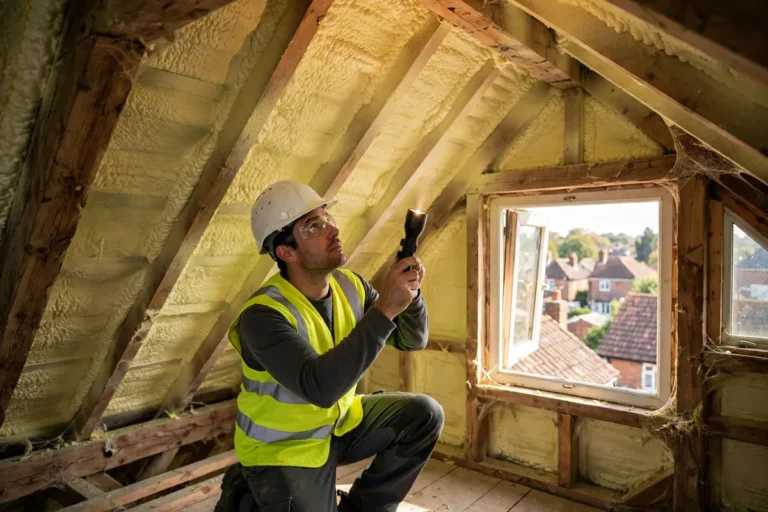
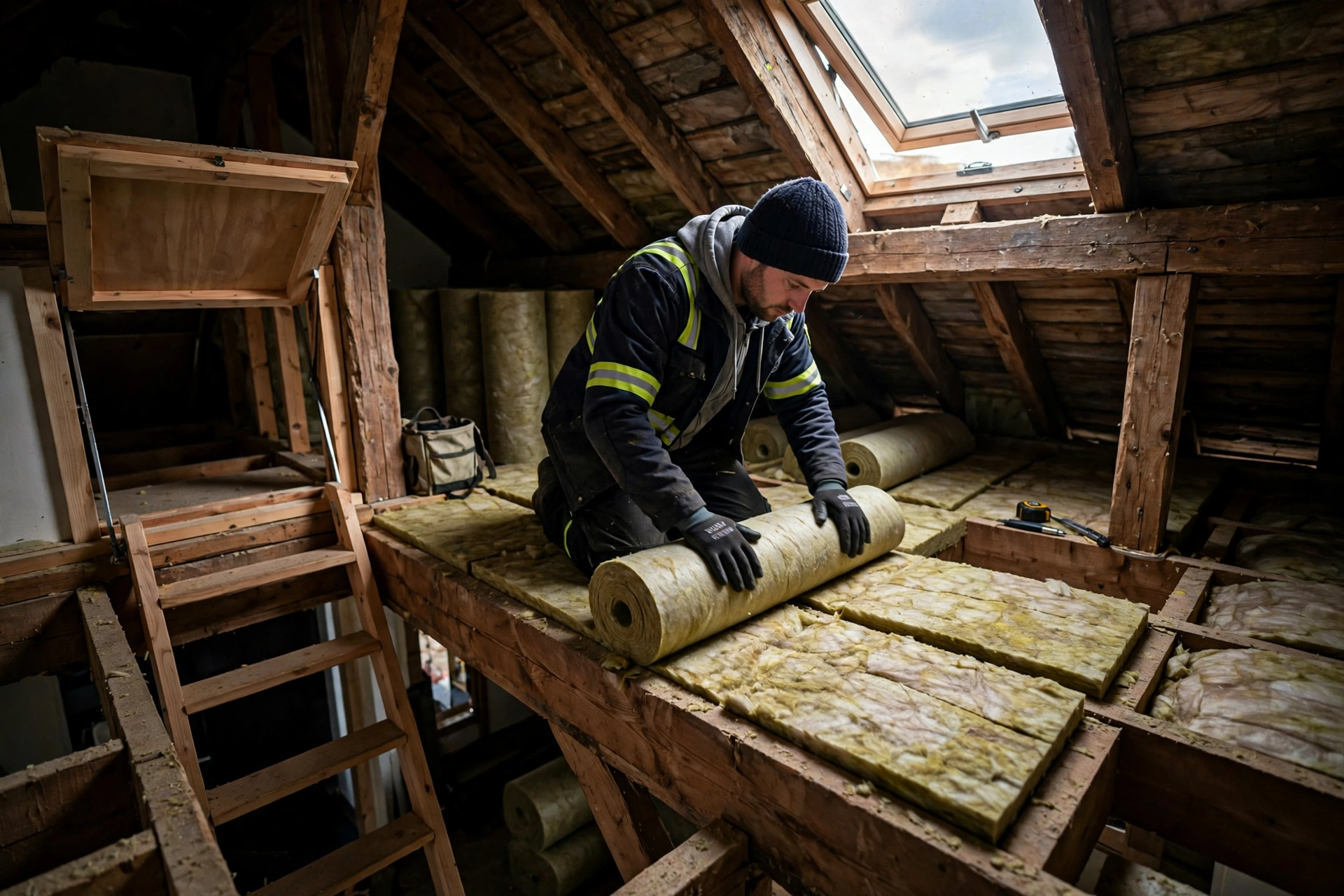
GBIS was an insulation scheme, and its measure list reflects that. Both groups were eligible for cavity wall insulation including party wall insulation, loft insulation, solid wall insulation, pitched roof insulation, flat roof insulation, under-floor insulation, solid floor insulation, park home insulation and room-in-roof insulation. In practice, the scheme mostly delivered a single measure per home, and most installations were the straightforward ones: cavity wall or loft insulation. Where an eligible measure was installed in an owner-occupied home in the low-income group, certain heating controls, such as room thermostats or boiler programmers, could also be included as secondary measures. The point of GBIS was to get one cost-effective insulation measure into a cold home quickly, not to rebuild the home’s whole heating system.
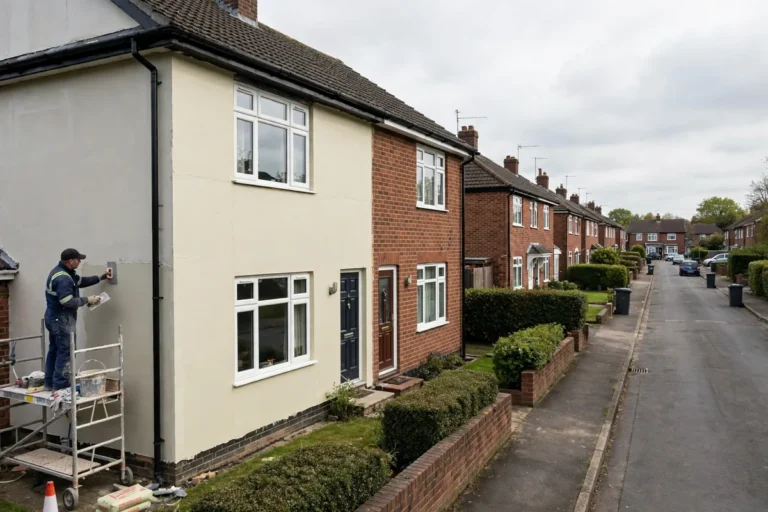
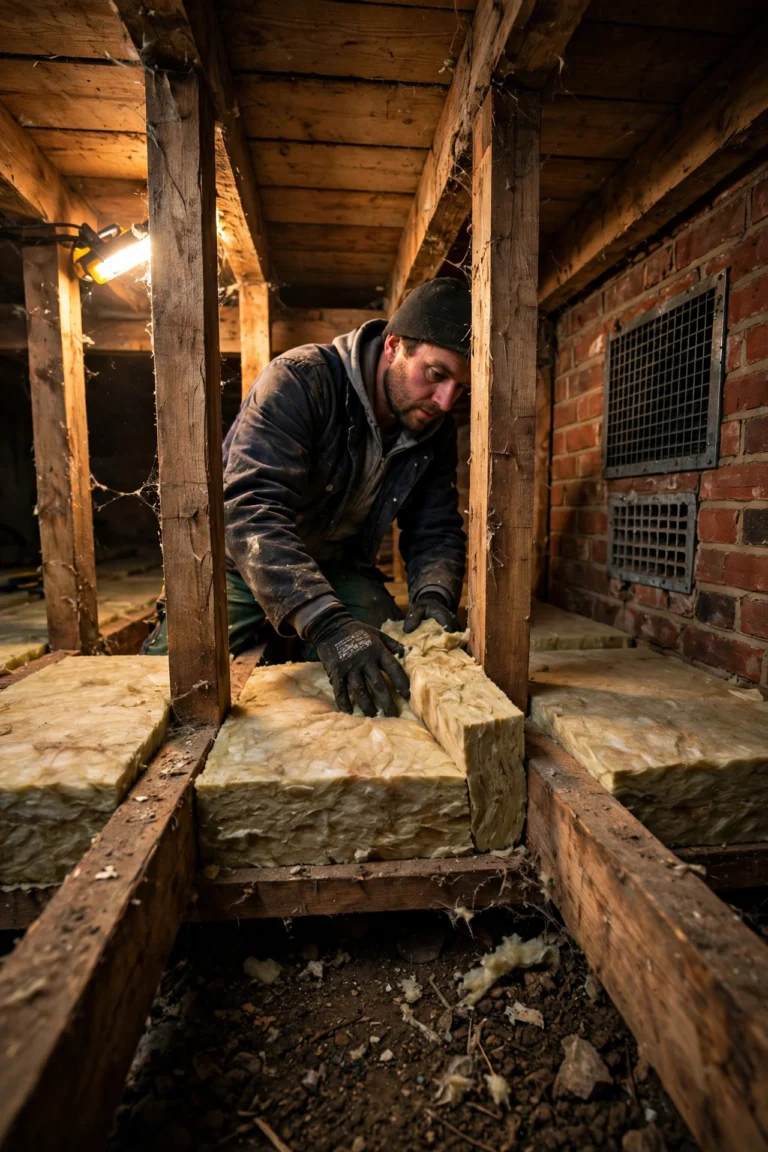
ECO4 covers a wider set. It funds loft insulation, top-up or first-time, cavity wall insulation, solid wall insulation in both internal and external forms, underfloor insulation, flat roof insulation and room-in-roof insulation, and it can also fund heating measures, including boiler and heat pump work in some cases, as part of a whole-house package. The installed costs behind that package give a sense of scale, from the RenovationNotes guide checked in October 2026: loft insulation for a semi-detached home at £300 to £600, cavity wall insulation at £500 to £1,500, underfloor insulation for a suspended floor at £800 to £2,000, and external wall insulation at £8,000 to £22,000. Those are average installed costs, not grant amounts, and ECO4 funding can be up to 100 percent where you qualify, but the figures show why the scheme matters most for the expensive measures. A loft top-up is a few hundred pounds; external wall insulation is a five-figure job, and it is the job where funded help changes the decision completely.
Two measures deserve a specific pointer, because they are the ones readers search for most. Loft insulation is the cheapest and quickest win in both schemes, and our loft insulation complete guide explains depths, top-ups and the cases where a loft cannot simply be filled. Cavity wall insulation is the other straightforward measure, and our cavity wall insulation complete guide covers suitability checks, because not every cavity should be filled. At the expensive end, our external wall insulation cost guide prices EWI at £90 to £180 per m2, which is why a funded EWI job through ECO4 is worth pursuing urgently if your home qualifies, and why paying for it privately needs a careful payback calculation.
The practical difference for a homeowner is this. Under GBIS, you would have been offered one measure, chosen through a retrofit assessment as the most cost-effective single improvement for your home. Under ECO4, the assessment looks at the home as a whole, and the package may combine insulation with heating and controls, because the scheme is judged on lifting the EPC band, not on installing one measure. If you are offered an ECO4 package, ask what band the package is designed to reach, and what happens if one measure in the package cannot be installed, because the package logic means the measures depend on each other.
Can You Get Both Schemes?
While both schemes were open, the short answer was that you would not normally get both for the same measure, and you would not need to, because the schemes were designed to complement each other rather than to stack. GBIS was described by Ofgem as complementing ECO4: ECO4 served lower-income and vulnerable households with a whole-house package, and GBIS served a wider group, including households who did not qualify for ECO4, with a single insulation measure. If you qualified for ECO4, that was usually the better route, because it could fund more work. If you did not qualify for ECO4 but met the GBIS general group tests, GBIS was the door that was open to you. Applying to both for the same insulation job would have meant two suppliers funding the same wall, which is not how either scheme worked.
In November 2026 the question has a different answer, because one scheme is closed. You cannot get both now, and you cannot start GBIS at all. The live question is whether you can combine ECO4 with anything else, and the answer there is to ask your council directly, because it depends on the scheme. Some councils run their own energy efficiency grants, and nearly every eligible council in England has been allocated Warm Homes: Local Grant funding. Whether council funding can be combined with ECO4 depends on the rules of the specific grant, so a general promise that grants can be stacked should not be trusted. Ask the council, in writing, before you sign for work that assumes two sources of funding.
One more combination is worth ruling out clearly. If you already had a measure installed under GBIS, that does not disqualify you from ECO4 for a different measure, but it does not reopen GBIS either. An ECO4 assessment will look at what is already in the home, including any GBIS insulation, and design a package around what is still missing. Bring any GBIS paperwork, including the measure reference and the installer details, to an ECO4 assessment, because it saves the assessor from surveying work that is already done, and it helps if there is ever a quality question about the earlier installation.
How to Apply Now: The Steps That Still Work
The application steps below are written for November 2026, not for 2023, so they start with the check that saves the most wasted time: confirming that the route you are applying to is still taking work.
First, check your EPC rating. Use the GOV.UK energy certificate register for England, Wales and Northern Ireland, and the Scottish EPC Register for Scotland. Your EPC band decides which schemes are even possible, and an EPC that is out of date or missing will hold up any assessment. Our EPC rating explained guide covers what the bands mean and how to find your certificate.
Second, use GOV.UK’s Find ways to save energy in your home service. It gives personalised recommendations for your property, and it cross-refers to the schemes that are currently available, which is more reliable in a period of scheme closures than a page written while GBIS was still open. It will not tell you whether a specific supplier has ECO4 funding left, but it will tell you which improvements suit your home, and that is the right starting point for a conversation with a supplier or council.
Third, contact a participating energy supplier or an approved installer about ECO4, and ask the direct question: are you still accepting new ECO4 projects, and will this project be completed by 31 December 2026? Do not accept a vague assurance. If the answer is that the supplier is only completing existing pipeline work, that is useful information, and it means you should move to the council route without delay. Look for TrustMark-registered contractors certified to PAS 2035 and PAS 2030, and check any installer against the TrustMark register before allowing access to your home.
Fourth, contact your council about the Warm Homes: Local Grant and any local energy efficiency grant it runs. In England, the Warm Homes: Local Grant is delivered through councils for privately owned homes with an EPC rating of D to G, usually where household income is £36,000 a year or less, with postcode and benefit-based exceptions, and it can pay in full for measures including insulation, heat pumps and solar panels, with the council organising and paying for the work. Funding depends on your council having money available, and delivery varies locally, so the council website is the authoritative source, not a national advert. In Scotland and Wales, council and devolved routes differ, so the same step applies: ask the council, rather than assuming an English scheme applies.
Fifth, get at least two quotes for any co-funded work, and get any household contribution in writing before work starts. This matters most for work that is only partly funded, which was the normal GBIS general group experience and can also happen under ECO4. A quote that does not state the measure, the funding source, the contribution and the guarantee is not a quote you should sign.
Finally, be wary of cold approaches. Installers and agents can legitimately contact you about ECO4, but check any unsolicited offer with your local council or the energy supplier they say they represent before allowing access. Anyone still offering GBIS funding for a new installation after its 31 March 2026 closure should be treated with suspicion. That single check, GBIS is closed, is the fastest way to spot a misleading pitch in November 2026.
Frequently Asked Questions
Is the Great British Insulation Scheme still open?
No. The Great British Insulation Scheme closed on 31 March 2026 and is no longer taking applications. It cannot fund a new installation now.
Is ECO4 still open?
ECO4 runs until 31 December 2026 after a nine-month extension, and it is the only remaining supplier-funded route of the two. Funding in the final weeks is described in 2026 guides as very limited, and some council pages describe it as closed to new applications, so check with a participating supplier or your council whether a new project will still be accepted.
Could I get GBIS if I do not claim benefits?
While GBIS was open, yes, through the general group: EPC D to G plus council tax band A to D in England or A to E in Scotland and Wales, with partial funding typical. That route closed on 31 March 2026, so it is no longer available. The council flexible eligibility route under ECO4, and the Warm Homes: Local Grant in England, are the routes to check instead.
What is the main difference between GBIS and ECO4?
GBIS mostly delivered a single insulation measure, and it was open to a wider group through its general group. ECO4 takes a whole-house approach, often funding a package of insulation and heating measures, and it is mainly for lower-income and vulnerable households on qualifying benefits or referred by a council.
Can I get both GBIS and ECO4?
No, not now, because GBIS is closed. While both were open, you would not normally get both for the same measure, because the schemes were designed to complement each other, not to fund the same work twice.
What should I do if I missed GBIS?
Check ECO4 urgently, before its 31 December 2026 end date, and contact your council about the Warm Homes: Local Grant in England or the local route in Scotland and Wales. Use GOV.UK’s Find ways to save energy in your home service to see which improvements suit your property, and get any contribution in writing before work starts.
Does ECO4 pay for the whole job?
Often, if you qualify, works are fully funded, but you can be asked to contribute, and any contribution must be recorded. GOV.UK describes ECO4 as help with the cost of insulation work rather than a promise of free installation, so ask the installer in writing whether you will be asked to contribute.
What if I already had insulation fitted under GBIS?
That does not disqualify you from ECO4 for a different measure. Bring your GBIS paperwork to an ECO4 assessment, so the assessor can design a package around what is already installed. If you have concerns about the quality of solid wall insulation fitted under ECO or GBIS, GOV.UK explains what to do, and there is a remediation route for affected households.
About the Author