Central Heating Installation Cost UK (2026): Full System Prices by House Size
Quick Answer: What a Full Central Heating System Costs by House Size
If you are pricing a full central heating installation in the UK, the honest short answer is that a gas system for a typical home usually falls between £3,500 and £8,500, and the exact figure depends far more on your house size and on how much pipework already exists than on the boiler brand you choose. That range is not one source disagreeing with another for no reason. It is what happens when different guides price different scopes: a boiler and radiators where pipework can be reused is a different job from heating a home that has never had central heating at all.
Use the table below as your starting budget, then read the rest of this guide to see which row actually matches your home.
| House size | Typical full gas system cost | What that usually covers |
|---|---|---|
| 1 to 2 bedroom flat or small house (4 to 5 radiators) | £2,500 to £4,000 | Combi boiler, radiators, pipework and controls |
| 2 to 3 bedroom home (around 8 to 10 radiators) | £3,500 to £6,500 | Combi or system boiler, radiators, pipework and controls |
| 3 to 4 bedroom home (up to 15 radiators) | £5,500 to £8,500 | Boiler, up to 15 radiators, pipework and controls |
| 4+ bedroom home (up to 20 radiators) | £7,000 to £9,800 | Larger boiler or system boiler, up to 20 radiators, pipework and controls |
Cross-checking the guides published in 2026 shows why the ranges overlap. MyJobQuote, using real quotes from UK tradespeople, puts the average central heating installation at around £4,250, with a typical range of £3,450 to £5,050. Checkatrade puts a gas system at around £5,250 on average, between £4,500 and £6,000. Boilerhut prices a 3 to 4 bedroom whole-house system at £6,500 to £7,900 and a 4+ bedroom home at up to £9,800. Boilers2Go gives £3,500 to £6,500 for a 2 to 3 bedroom home and £5,500 to £8,500 for a 3 to 4 bedroom home. None of these is wrong. They are pricing slightly different radiator counts, boiler types and amounts of new pipework, which is exactly why you should get written quotes for your own home rather than treating any table as a fixed price.
Two scope warnings belong at the top, because they change the budget more than anything else. First, if your home has no central heating at all, for example if it currently relies on electric storage heaters, expect closer to £6,500 to £11,000 or more, because pipework has to be run to every room from scratch. Second, a heat pump system is a different budget altogether: an air source heat pump with radiators for a 3 to 4 bedroom home typically costs £10,000 to £13,500 before any grant, and £8,000 to £14,000 on the wider guides, before the Boiler Upgrade Scheme grant of £7,500 is applied by an MCS-certified installer, rising to £9,000 for eligible oil and LPG homes between 21 July 2026 and 31 March 2027. This guide prices the gas system in full; the heat pump figures are here so you can compare the two routes honestly.
What a Full Central Heating System Includes
A full central heating installation is not just a boiler. When an installer quotes for a complete system, the price normally covers five things, and a quote that does not list them separately is a quote you should ask questions about.
First, the heat source: usually a gas boiler, sometimes an oil boiler or a heat pump. Second, the heat emitters: radiators in most homes, underfloor heating in some rooms or throughout. Third, the pipework that connects them: flow and return pipes, plus any new runs, radiator valves and fittings. Fourth, the controls: at minimum a programmer and room thermostat, and in many homes a smart thermostat and thermostatic radiator valves. Fifth, the commissioning work that makes the system safe and efficient: filling and testing, balancing the radiators, a system flush where needed, and the paperwork, including Building Regulations notification.
That last item matters more than it looks. Gas boiler and gas pipework work in the UK must legally be carried out by a Gas Safe registered engineer, and a new or replacement heating system falls under Building Regulations Part L. A Gas Safe registered installer can normally self-certify the work, so you should not need a separate visit from building control, but you should receive the certificate. If an installer cannot show Gas Safe registration, or cannot explain how the work will be notified, do not proceed.
One more item is often buried in the small print: making good. Running new pipework can mean lifting floorboards, chasing walls and touching up plaster and decoration afterwards. Some quotes include making good, some leave it to you, and the difference can be hundreds of pounds. Ask, in writing, whether making good is included before you accept a price.
The Boiler Share of the Cost
The boiler is the single biggest item in most full-system quotes, but it is not the whole quote, and confusing the two is the most common budgeting mistake in this market.
A like-for-like combi boiler replacement typically costs £2,000 to £3,500 installed, and one installer guide prices a fixed-price like-for-like combi swap from £2,196 including VAT. A system boiler typically costs £2,500 to £3,500 installed, and a regular boiler £2,500 to £4,000 or more, depending on whether a cylinder and tanks are involved. Those are replacement prices, where pipework, radiators and controls already exist. In a full system installation, the boiler share is roughly that same amount, and the rest of the quote is radiators, pipework, controls and labour.
That distinction also explains conversions. Switching boiler types, for example from a regular boiler with tanks to a combi, or moving the boiler to a new position, adds pipework, flue work and sometimes condensate routing, and it pushes the total well above a like-for-like swap. Our new boiler cost UK guide prices each boiler type, conversions and relocations separately, and it is the page to read if the boiler itself is your main question. This guide keeps the focus on the whole system, so the boiler figures here are the share of a larger total, not a standalone quote.
Boiler Plus rules also apply. New gas boiler installations in England must meet the Boiler Plus standard, which in practice means a minimum efficiency control package, such as a smart thermostat, load compensation or weather compensation, alongside the boiler. That is one reason controls appear as a separate line in this guide rather than as an afterthought: they are part of the compliant installation, not an optional extra.
Radiators and Pipework: Where the Rest of the Money Goes
Once the boiler is accounted for, radiators and pipework are where the rest of a full-system budget goes, and they are also where house size shows up most directly, because every extra room means another radiator and another pipe run.
Radiator replacement typically costs £150 to £450 per radiator supplied and fitted, and one 2026 installer guide narrows that to £200 to £350 each. The spread reflects radiator type: a standard panel radiator is at the lower end, while column, designer and cast iron radiators cost considerably more per unit, before any pipework move is added. For budgeting, count your radiators first. A three bedroom home usually needs around eight to ten radiators, so even at the middle of the range, radiators alone account for roughly £1,600 to £3,500 of a full-system quote. A larger home with fifteen to twenty radiators will see that share rise proportionally, which is why the house-size table at the top climbs as steeply as it does.
Our radiator replacement cost UK guide breaks this down by radiator count and by type, including whole-house tables and the oversizing question if you later switch to a heat pump. If you are planning a full system now but thinking about a heat pump later, radiator sizing is worth discussing with your installer at this stage, because heat pumps run at lower flow temperatures and often need larger radiators to deliver the same warmth.
Pipework is harder to price per item, because it depends on access. Guides put pipework and fittings at £500 to £3,000 depending on scale, and that range is honest: reusing existing pipe runs in a home that already has central heating keeps the figure low, while running new pipework to every room, lifting floors and working around solid floors pushes it high. Homes with concrete ground floors, or where pipes must be routed around extensions, cost more in labour and in making good. If your installer has not visited the property, treat any pipework figure as provisional until they have seen the access routes.
Labour is usually quoted as part of an all-in price rather than as a separate day rate, but the underlying rates explain the totals. A Gas Safe engineer is typically charged at £350 to £450 per day in one guide, while a plumber day rate of £170 to £310 appears in another, and full-job labour for a complete installation is put at £1,200 to £2,400. The difference reflects who is on the job: a Gas Safe engineer leading the boiler work, often with a second engineer or mate for radiators and pipework. A full system is a team job, not a one-person job, and that is reflected in the timescale below.
Controls: The Small Share That Decides Your Bills
Controls are the smallest share of a full-system quote, and the share most worth getting right, because they decide how much of your heating bill you actually control.
A traditional setup, a programmer plus a room thermostat, typically costs £200 to £300. A smart thermostat system can cost up to £800 including installation, depending on the model and on how many zones or radiator valves are included. Thermostatic radiator valves, which let you set different temperatures room by room, are often priced per radiator within the radiator total, so ask whether they are included or extra.
Under Boiler Plus, a new gas boiler in England needs a compliant control package, as noted above. Beyond compliance, the practical choice is between a single-zone system, where one thermostat controls the whole house, and a zoned or smart system, where living areas and bedrooms can run on different schedules. Zoning costs more up front and usually saves more over time in a larger home, because you stop heating empty rooms to the same temperature as occupied ones. It also pairs well with a future heat pump, which benefits from the same room-by-room control.
Do not judge controls by the unit price alone. Ask what the installer will set up on commissioning: heating schedules, hot water timing for system and regular boilers, and radiator balancing so that distant radiators actually get hot. A smart thermostat left on factory settings saves far less than a basic thermostat set up properly.
First Fit or Replacement: Why the Same System Costs Different Amounts
The brief for this guide draws a line that most cost guides blur: a first fit, heating a home that has never had central heating, is a different project from replacing an existing system, even if the boiler and radiator count look identical on paper.
A replacement system reuses what it can. Pipework routes exist, radiator positions are known, the gas supply and flue route are already established, and the job is mainly boiler, radiators, controls and commissioning, with targeted pipework changes. That is the job behind the £3,500 to £8,500 range for a typical gas system, and behind the 4 to 8 day timescales most guides quote.
A first fit starts from nothing. Every room needs a pipe run, floors and walls need to be opened and made good, the gas supply may need upgrading, and the flue and condensate routes have to be created rather than reused. That is why guides put a new system with no existing pipework at £6,500 to £11,000 or more, even for an average home, and why the timescale stretches towards the longer end of the range. If your home is currently heated by electric storage heaters, budget for the first-fit figure, not the replacement figure, and ask installers to quote the pipework and making good as explicit lines, because those are where first-fit quotes diverge most.
There is a third case worth naming: a partial replacement. Many homeowners replace the boiler and a few radiators but keep older pipework, or add radiators to an extension while keeping the existing system. Partial work is priced closer to the boiler and radiator guides than to a full system, and it carries its own risk: old pipework and sludge in an existing system can damage a new boiler if the system is not flushed and protected. That is where a power flush comes in, and our power flush guide explains when a flush is the right fix, when a chemical flush is enough, and when a flush is the wrong answer altogether. A full system replacement avoids that risk by renewing the pipework and radiators together, which is part of what the higher price buys.
Grants can change the first-fit maths, but only for eligible households. ECO4, which runs to 31 December 2026, can fund heating as part of a whole-house package for qualifying homes, and our ECO4 grant guide covers who qualifies and how to apply before it ends. For most homeowners, though, a full central heating installation is a private purchase, and the grant question is a check to make before you budget, not a figure to assume in the budget.
How Long a Full Installation Takes
Most full central heating installations take 4 to 8 days, according to tradespeople quotes, with other guides giving 3 to 5 days for a straightforward replacement and 4 to 10 working days where extensive new pipework is involved. Treat 4 to 8 days as the planning figure for a typical gas system replacement, and allow longer for a first fit or a larger home.
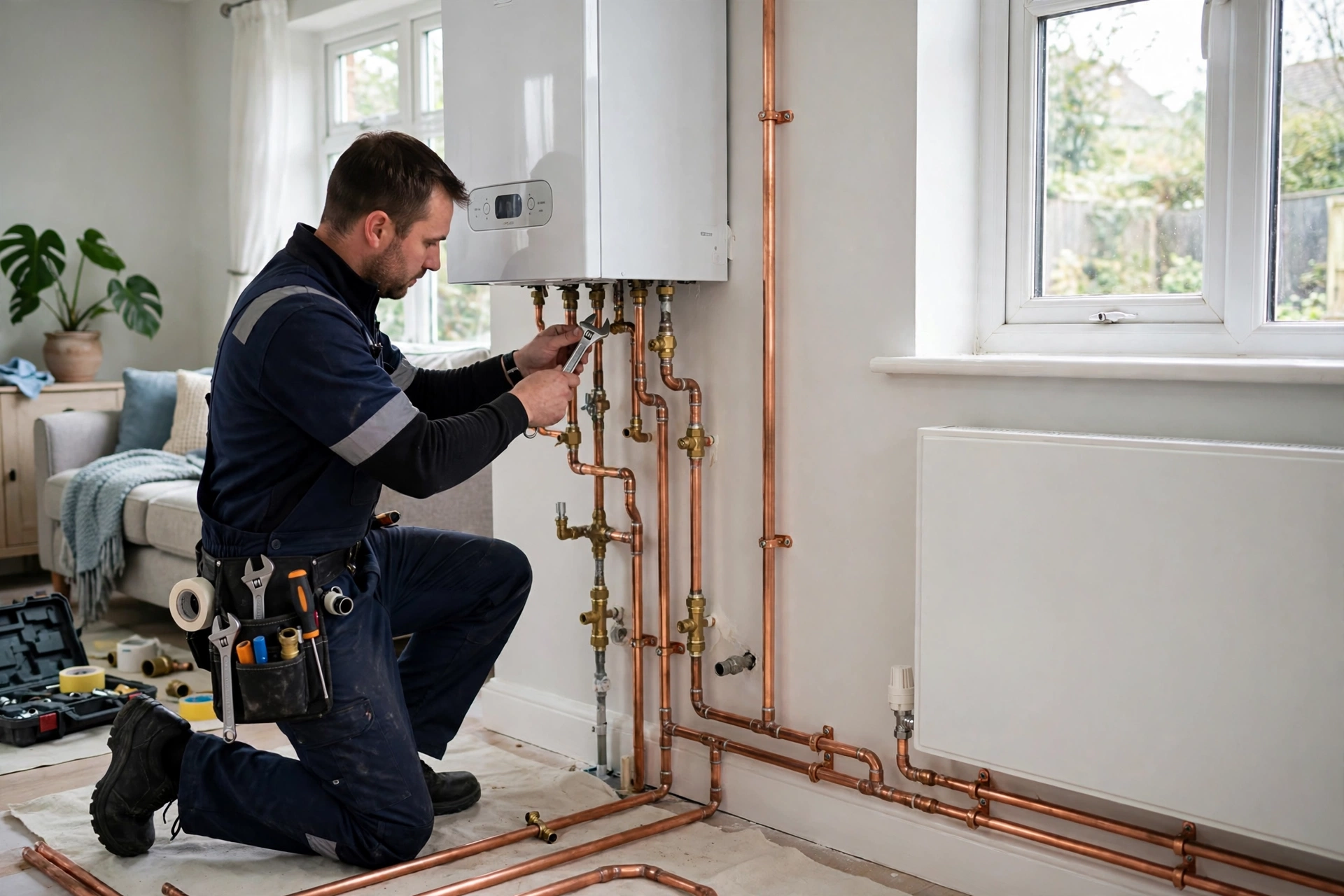
The sequence usually runs like this. Day one is boiler work and preparation: old boiler out, new boiler positioned, flue and condensate routes established. The middle days are radiators and pipework: new radiators hung, pipe runs completed room by room, and the system filled and tested as sections are finished. The final day or two are controls, balancing and commissioning: thermostats and valves set up, every radiator checked for even heat, the system flushed and dosed with inhibitor, and the Building Regulations certificate issued. Making good, plastering touch-ups and decoration, may extend beyond the heating work itself, so ask whether that is included in the timescale or left to a separate trade.
Delays usually come from access, not from the boiler. Solid floors, awkward pipe routes, a gas supply that needs upgrading, or asbestos in an older property can all add days. A site visit before quoting is the best protection against a timescale surprise, and an installer who quotes a full system without visiting should be asked what assumptions the quote rests on.
Frequently Asked Questions
How much does it cost to install central heating in a 3 bedroom house in the UK?
For a 3 bedroom home, a full gas system typically costs £3,500 to £6,500 where pipework can largely be reused, and £5,500 to £8,500 on the wider guides for a 3 to 4 bedroom home with more radiators. If the home has no existing central heating, expect £6,500 to £11,000 or more for a first fit.
Is it cheaper to install central heating room by room?
Usually not, if you mean a full system. Doing radiators and pipework in stages means repeated drain-downs, repeated visits and repeated making good, and the total labour ends up higher than a single planned installation. Staging makes sense only if you are genuinely phasing a renovation, for example heating the ground floor now and the extension later, and even then the boiler should be sized for the finished system from the start.
Does a new central heating system include a new boiler?
Yes, in a full system installation the boiler is included and is the largest single item, typically £2,000 to £3,500 for a like-for-like combi. If you already have a recent boiler and only need radiators and pipework, that is a partial job, not a full system, and it should be quoted as such.
Do I need planning permission for central heating installation?
No, a standard internal central heating installation does not normally need planning permission. It does fall under Building Regulations Part L, and gas work must be done by a Gas Safe registered engineer who can self-certify the installation. Listed buildings and conservation areas can have extra constraints on external flues, so check if your home is listed.
Can I get a grant for central heating installation?
Possibly, if you qualify. ECO4 can fund heating as part of a whole-house package for eligible households, and it runs to 31 December 2026. The Boiler Upgrade Scheme pays £7,500 towards a heat pump, or £9,000 for eligible oil and LPG homes between 21 July 2026 and 31 March 2027, applied by the installer. Neither scheme is open to every homeowner, so check eligibility before budgeting for a grant.
Is a heat pump cheaper than a gas central heating system?
No, not to install. A heat pump system with radiators typically costs £10,000 to £13,500 before grant for a 3 to 4 bedroom home, against £5,500 to £8,500 for a comparable gas system. After the £7,500 Boiler Upgrade Scheme grant the gap narrows considerably, and running costs then depend on your electricity tariff, your insulation and your radiator sizing. Our air source heat pump cost UK guide prices the heat pump route in full, including readiness checks.
How long will a new central heating system last?
A gas boiler typically lasts 10 to 15 years with annual servicing, and radiators and pipework can last far longer if the system is kept clean, dosed with inhibitor and fitted with a magnetic filter. The system as a whole does not expire on one date: boilers are replaced, radiators are replaced individually, and the pipework and controls are renewed as needed.
About the Author