Quick Answer: What a Boiler Service Costs
A one-off gas boiler service in the UK typically costs £80 to £120 when booked with an independent local Gas Safe engineer, with £100 a fair figure to budget for. The wider range across the 2026 cost guides is roughly £60 to £120, and the price you are quoted depends on the boiler type, the fuel, where you live, and whether you book with a local engineer or a national provider. British Gas lists a one-off service at £119, or £109 for members, which sits at the top end of the independent range and is a useful benchmark for what a national brand charges.
That one-off figure is only part of the story. Oil boilers cost more to service, electric boilers cost less, landlords pay for a service bundled with a gas safety certificate, and many households pay monthly for a cover plan instead of a one-off visit. The table below gives the headline figures, and the rest of this guide explains what is actually included in each one, when a cover plan beats a one-off service, and why the service matters beyond the price: it is the visit that keeps your warranty valid, catches faults before winter, and tells you honestly whether your boiler is worth keeping for another year.
| Service | Typical cost | Who it suits |
| One-off gas boiler service, independent engineer | £80 to £120 (wider range £60 to £120) | Most homeowners, booked once a year |
| One-off gas boiler service, British Gas | £119 (£109 members) | Households that want a national provider |
| Oil boiler service (OFTEC technician) | £90 to £150 | Oil-fired homes, usually rural |
| Electric boiler service | £60 to £110 | Electric boiler owners, simpler service |
| Landlord service + gas safety certificate (CP12) | £80 to £150 combined | Landlords, one visit for both jobs |
| Boiler cover plan | £8 to £18 per month (about £96 to £216 a year) | Households that want breakdown cover included |
The ranges are wide because the guides published in 2026 are pricing different things. One guide prices a straightforward annual service on a modern combi boiler by a local engineer. Another prices a service on an older heat-only boiler that needs parts, or a service booked in November when engineers are at their busiest. Both can be right at the same time. The rest of this guide separates those cases properly, so you can see which figure applies to your boiler and what is included in the price.
Cost by Boiler Type and Fuel
The fuel your boiler burns and the type of boiler you have are the two things that move the service price most. A gas combi boiler is the cheapest and quickest to service, because everything is in one unit and the engineer is in and out in under an hour. A system boiler or a heat-only boiler takes longer, because there is a cylinder and, on a heat-only system, a cold water tank to check as well. Oil boilers cost more because the burner needs cleaning and the oil filter and nozzle are consumables that are often replaced at the service. Electric boilers are the cheapest to service because there is no combustion to test and no flue gas to analyse.
A gas combi service is typically £80 to £120 with an independent engineer. A system boiler service is usually in the same range, perhaps £10 to £20 more, because the engineer also checks the cylinder, the expansion vessel and the system pressure. A heat-only, or regular, boiler service is usually £90 to £130, because the system has more components: the cylinder, the cold water storage tank, the feed and expansion tank and the pump all need a look. These are not separate jobs; they are all part of one visit, but the visit takes longer, and the price reflects that.
An oil boiler service is typically £90 to £150. The engineer must be OFTEC registered, not Gas Safe registered, which is a different register, and the service includes cleaning the burner, checking and often replacing the nozzle and the oil filter, and testing the combustion. Oil boilers soot up more than gas boilers, so the cleaning part of the job is heavier, and that is why the price is higher. If your oil boiler has not been serviced for several years, expect the first service to cost more, because the engineer will need to clean out years of deposits and may find parts that need replacing.
An electric boiler service is typically £60 to £110. There is no gas supply to test, no flue to check and no combustion analysis to run. The engineer checks the heating elements, the controls, the safety devices and the system pressure, and tests that the boiler is heating correctly. It is a shorter visit, and the price reflects that. Electric boilers still need a service, even though they have no flame: elements scale up, controls fail, and a service is the visit that finds those problems before they become a breakdown.
LPG boilers, which burn liquefied petroleum gas from a bulk tank or cylinders, are serviced like gas boilers and usually priced in the same £80 to £120 range, sometimes slightly higher because the engineer needs LPG qualifications on top of the standard Gas Safe registration. Always confirm the engineer is qualified for your fuel before booking; a Gas Safe engineer who is not LPG registered cannot legally work on an LPG boiler.
Where you live also moves the price. London and the South East are typically £10 to £30 dearer than the rest of the country, and a service booked in October or November, when every engineer is busy with pre-winter work and breakdowns, is usually dearer than the same service booked in May, June, July or August. The quiet months are the cheapest time to book, and they are also the best time to have the work done, because the engineer is not rushing between breakdowns and you are not competing with everyone else for the same appointment. If you can choose when to book, book in summer.
What a Boiler Service Actually Includes
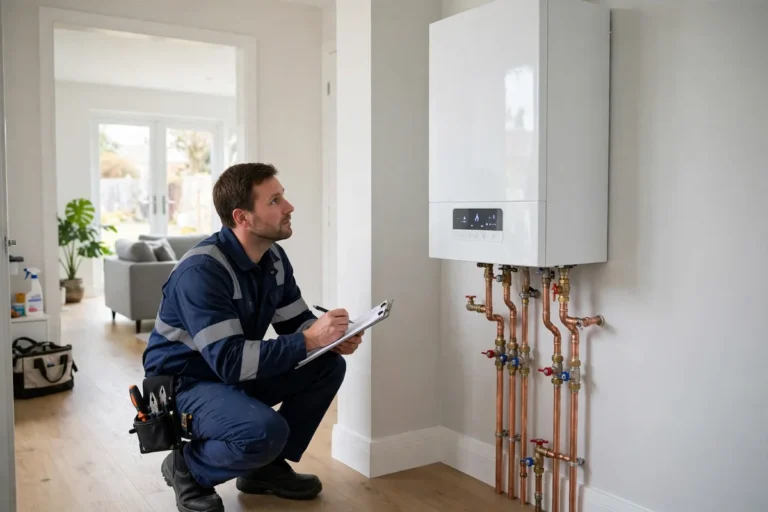
A proper boiler service is a structured check, not a quick look. The engineer works through the boiler and the system it serves, and the visit should take 30 to 60 minutes for a gas combi, longer for a system or heat-only boiler, and up to 90 minutes for an oil boiler. If an engineer is in and out in 15 minutes, the service was not done properly. Here is what should happen, and what to ask about if any of it is skipped.
First, the engineer checks the boiler itself. On a gas boiler, that means inspecting the burner, the heat exchanger, the ignition and the flame, cleaning out dust and debris, and checking the seals and the case. The engineer checks the flue, inside and outside, to make sure it is correctly fitted, undamaged and not blocked, and that the flue terminal is clear. A blocked or damaged flue is a safety issue, not a cosmetic one, and it is one of the things a service exists to find.
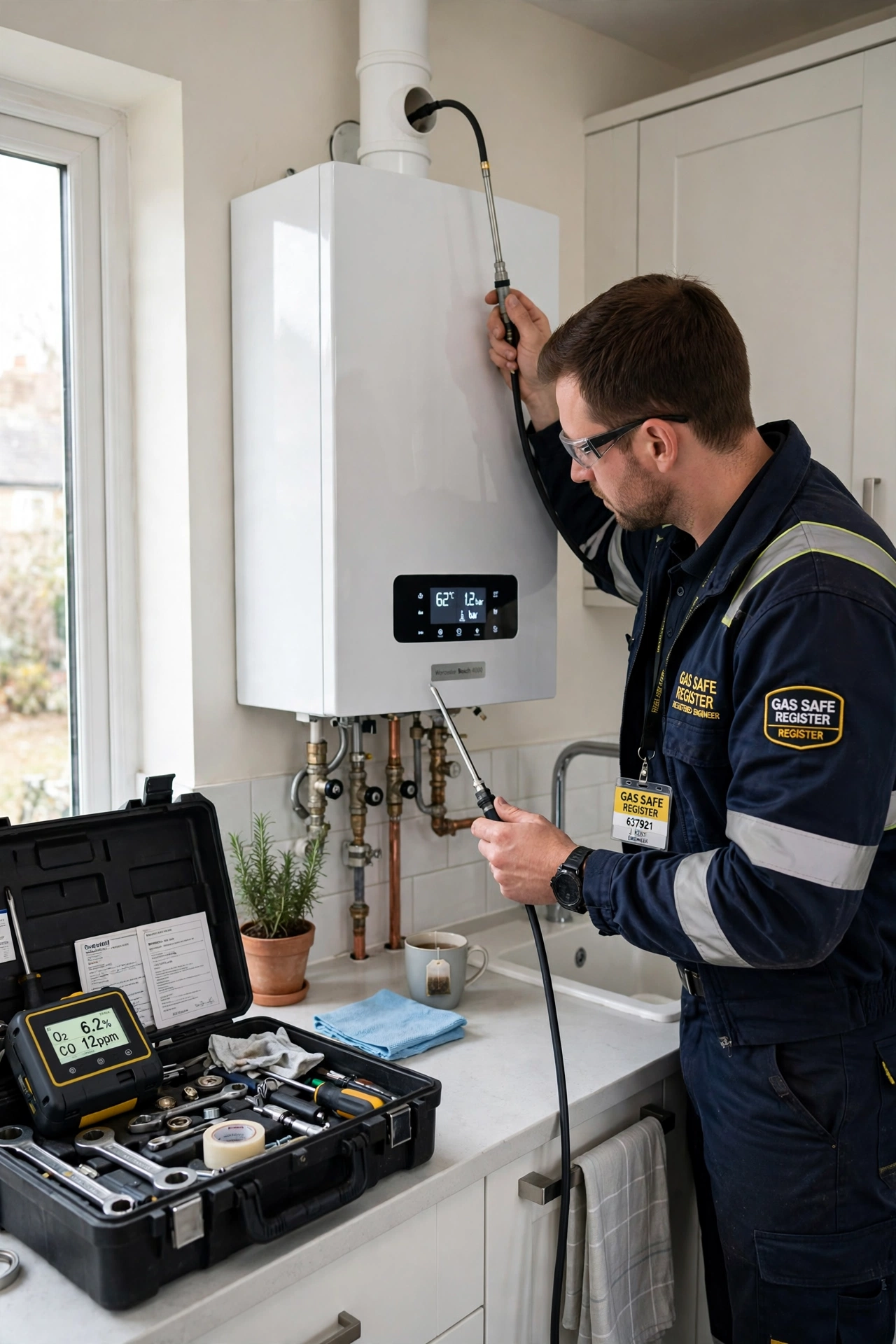
Second, the engineer runs a flue gas analysis. A probe is put into the flue while the boiler is running, and the analyser measures the combustion: the carbon monoxide level, the carbon dioxide level and the efficiency of the burn. This is the test that shows whether the boiler is burning gas cleanly and safely. If the readings are wrong, the engineer adjusts the burner or identifies the fault. This test is the core of the service, and it is the reason the visit needs a qualified engineer with the right equipment, not a handyman with a screwdriver.
Third, the engineer checks the gas pressure and the gas rate, to confirm the boiler is receiving the gas supply it was designed for, and checks that the gas pipework is sound. The engineer also checks the condensate drain, the small pipe that carries acidic water away from a condensing boiler, to make sure it is not blocked. A blocked condensate pipe is one of the most common causes of a boiler locking out in cold weather, and it is a five-minute check at a service that saves a call-out in January.
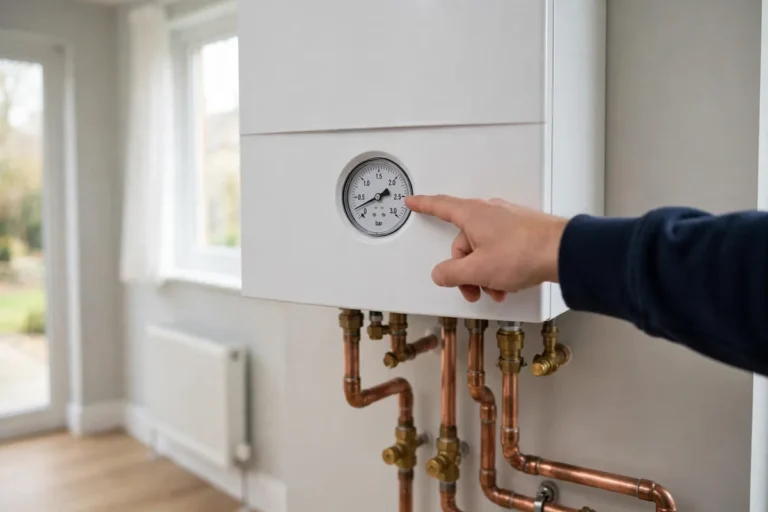
Fourth, the engineer checks the controls and the system around the boiler: the thermostat, the programmer, the thermostatic radiator valves if fitted, the system pressure and the pressure relief valve. On a system or heat-only boiler, the cylinder and its thermostat are checked too. The engineer should also check the inhibitor level in the system water, the chemical that stops radiators corroding from the inside, and top it up if it is low. If your radiators are cold at the bottom or the system water is black and sludgy, the engineer should tell you, because that is a sign the system needs more than a service.
At the end of the visit, you should receive a service report, usually a written or emailed record, stating what was checked, the flue gas readings, any parts replaced, and any advisory notes. Keep it. It is the evidence that the service happened, and it is what the manufacturer will ask for if you ever claim on the warranty. If the engineer finds a fault, the report should say what it is, whether it is a safety issue that needs fixing now, and what the repair would cost. A service that ends with a verbal “all fine” and no paperwork is not a complete service.
Service vs Safety Check vs Repair: Three Different Jobs
Homeowners often use the words service, safety check and repair as if they mean the same thing. They do not, and confusing them is how people pay for the wrong visit. A service is a maintenance visit: the boiler is opened, cleaned, tested and adjusted so it keeps running safely and efficiently. A gas safety check is an inspection: the appliances and pipework are tested for safety, but nothing is cleaned or adjusted. A repair is a fix: something has already broken, and the engineer is there to put it right.
A gas safety check, which landlords must have every year and homeowners can book voluntarily, typically costs £60 to £90 on its own, or £80 to £150 when bundled with a service as a combined visit. The check covers the gas appliances, the pipework, the flue and the ventilation, and it produces a Gas Safety Record, the document landlords know as a CP12. It does not include cleaning the burner, analysing the flue gas in the same depth, or checking the system water. If you are a homeowner, a service is the more useful visit, because it maintains the boiler as well as checking it. If you are a landlord, you need the safety check by law, and adding the service to the same visit is the sensible way to get both done at once.
A repair is different again. If the boiler has broken down, will not fire, is losing pressure, or is showing a fault code, you need a repair visit, not a service. A service will not fix a broken part, and an engineer called out for a service who finds a broken part will quote for the repair separately. The diagnostic charge for a repair visit is usually £60 to £100, and the repair itself is on top. That is why the service matters: it is the visit that finds a worn part, a weeping seal or a failing pump while the boiler is still working, so you can plan the repair instead of paying for an emergency call-out in the middle of winter.
The honest way to think about the three is this. The service keeps the boiler healthy. The safety check proves it is safe. The repair fixes it when it is not. Most homeowners need the first, once a year. Landlords need the second by law, and should add the first to the same visit. Everyone hopes never to need the third, and the first two are the cheapest way to make that happen.
Service or Cover Plan: The Yearly Maths
Many households pay for boiler cover instead of booking a one-off service each year. A cover plan typically costs £8 to £18 a month, which is about £96 to £216 a year, and it usually includes an annual service, unlimited call-outs, parts and labour for repairs, and sometimes a replacement contribution if the boiler cannot be fixed. Which? reports an average of about £183 a year for boiler cover, with some households paying up to £300. The question is whether that monthly payment is better value than paying for a one-off service and taking the risk on repairs yourself.
Work the maths honestly. A one-off service at £100 a year is the baseline. A cover plan at £15 a month is £180 a year, which is £80 more than the service alone. That £80 buys you call-outs and repairs. A single repair visit, with the diagnostic charge and a common part such as a pump or a fan, can easily cost £200 to £400, so one breakdown in the year makes the cover plan cheaper than paying as you go. Two quiet years in a row makes the cover plan more expensive than a one-off service, because you have paid £360 for two services you could have bought for £200.
The deciding factor is the age and condition of your boiler. A new boiler under warranty, with a service each year to keep that warranty valid, rarely needs a cover plan, because the manufacturer covers repairs and the service is the only annual cost. A boiler over ten years old, out of warranty, with a history of faults, is the case where cover makes sense, because a breakdown is likely and a single repair can cost more than a year of cover. A boiler between five and ten years old, running well, is the borderline case: the honest answer is that cover is insurance, and you are paying for peace of mind as much as for repairs.
Check the small print before taking out cover. Many plans have a waiting period of 14 to 30 days before you can claim, so you cannot take out cover the day the boiler breaks and claim the next morning. Many exclude the first repair, or exclude boilers over a certain age, or exclude pre-existing faults, which means a fault the service already flagged may not be covered. Some plans do not include the annual service at all, which means you are paying £180 a year for breakdown cover and still need to book a £100 service on top. Read the policy, compare the total annual cost against a one-off service plus a realistic repair allowance, and decide on the numbers, not on the fear of a breakdown.
Warranty: Why Skipping a Service Can Void It
This is the part of the article that matters most to anyone with a boiler less than ten years old. Most manufacturers, including Worcester Bosch, Vaillant, Baxi and Ideal, make an annual service by a Gas Safe registered engineer a condition of the warranty. Skip a year, and the manufacturer can refuse a warranty claim, even if the fault has nothing to do with the service. A boiler with a ten-year warranty that misses its third annual service may have no warranty left at all, and the owner will not find out until they try to claim.
The warranty condition is not a technicality; it is the manufacturer’s way of making sure the boiler is maintained. A boiler that is never serviced runs less efficiently, so it costs more to run, and it is more likely to fail, because small problems such as a blocked condensate pipe or a scaled heat exchanger are left to grow. The service is also the visit where the engineer spots the early signs of a failing part and flags it, often while the part is still under warranty and the replacement is free.
Keep the service records. Every manufacturer asks for proof of annual servicing when a warranty claim is made, and the proof is the service report from each year. Keep the reports together, ideally with the boiler’s installation certificate, the Benchmark logbook and the warranty documents, in one folder. If you move house, hand the folder to the buyer: a full service history is a selling point, and a missing year is a question a surveyor will ask.
If your boiler is already out of warranty, the service is still worth having, but the reason changes. It is no longer about protecting a warranty; it is about safety, efficiency and catching faults early. An old boiler that is serviced every year will run more efficiently, break down less often, and give you an honest answer from the engineer about whether it is worth keeping for another year or whether a replacement is the better spend. Our new boiler cost UK guide prices a replacement, so you can compare the cost of keeping an old boiler running against the cost of a new one.
Landlords: Service Plus Gas Safety Certificate in One Visit
Landlords have a legal duty that homeowners do not. Under the Gas Safety (Installation and Use) Regulations 1998, a landlord must have every gas appliance and flue in a rented property checked every 12 months by a Gas Safe registered engineer, and must give the tenant a copy of the Gas Safety Record, the CP12, within 28 days of the check. There is no legal requirement for the landlord to have the boiler serviced, only to have it checked, but booking both in one visit is the standard practice, and it is cheaper than two separate visits.
A combined service and gas safety check typically costs £80 to £150, depending on the number of appliances in the property and the area. A property with one boiler and no other gas appliances is at the lower end. A property with a boiler, a gas hob and a gas fire is at the higher end, because each appliance must be checked. Some engineers offer a landlord package that covers the annual check, the service and the CP12 for a fixed price, and that is worth asking about if you manage several properties.
The CP12 is not a service record, and a service is not a safety check, so make sure the engineer does both and gives you both documents. The CP12 proves the appliances are safe. The service report proves the boiler was maintained. Keep both, and give the tenant the CP12 within 28 days. If a tenant reports a gas smell, the boiler stops working, or the carbon monoxide alarm sounds, do not wait for the annual visit: call the National Gas Emergency Service on 0800 111 999 immediately.
Our gas safety certificate step-by-step guide covers the landlord’s duties in full, including what the check covers, what happens if an appliance fails, and how to arrange access when a tenant is uncooperative. Read it alongside this page if you are a landlord, because the two together cover the whole annual routine.
Service as Winter Preparation: The Whole System, Not Just the Boiler
A boiler service is most useful when it is treated as part of a whole heating-system check, not as a standalone chore. The boiler is one part of the system. The radiators, the pipework, the controls and, in some homes, the underfloor heating are the rest of it, and a service in late summer or early autumn is the right moment to look at all of it together, before the heating season starts.
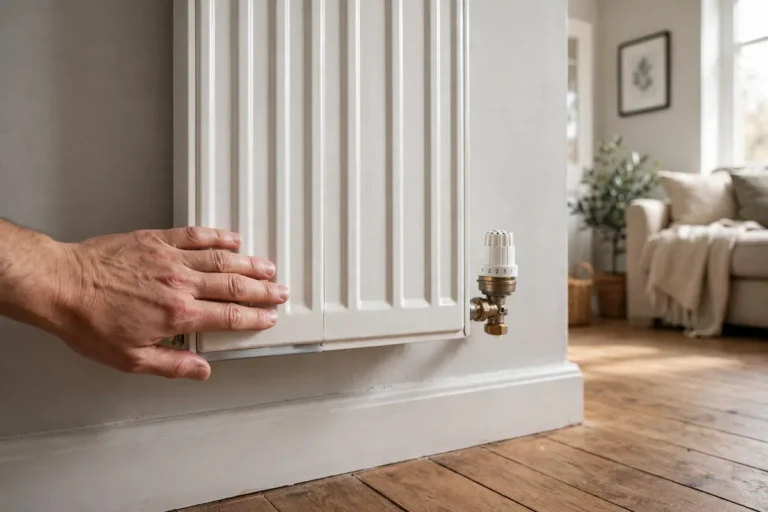
Ask the engineer to look at the radiators while they are there. If any radiator is cold at the bottom, or needs bleeding every few weeks, or the system pressure keeps dropping, those are signs of sludge in the system, and a service alone will not fix them. A power flush, which cleans the system out, is the next step, and our power flush cost UK guide prices it by radiator count and explains when a flush is the right fix and when it is not. Bleeding the radiators and balancing them, so each one heats evenly, is a small job that is often done at the same visit, and it makes a noticeable difference to how warm the house feels.
Check the controls too. A boiler running without a room thermostat, or with a thermostat in the wrong place, wastes gas, and a service is a good moment to ask the engineer whether your controls are set up properly. Since the Boiler Plus regulations, new gas boiler installations must have time and temperature controls and one of four additional efficiency measures, such as weather compensation or a smart thermostat. If your boiler predates those rules, the service is a chance to ask whether an upgrade would pay for itself.
If your home has underfloor heating as well as radiators, the service is the moment to check that the two work together properly, and to confirm the manifold, the thermostats and the mixing valve are all in order. Our underfloor heating cost UK guide covers the system in detail. And if the engineer tells you the boiler itself is at the end of its life, do not treat the service as a reason to keep it: a boiler that needs a major repair every year is telling you it is finished. Our central heating installation cost UK guide prices a full system as one project, which is the right way to think about it if the service reveals that the boiler, the radiators and the controls all need attention at once.
Book the service in summer if you can. The engineer is cheaper, the appointment is easier to get, and any fault the service finds can be fixed while the heating is off and the house is warm. A service booked in November is dearer, harder to arrange, and leaves you with a repair to organise in the cold. The cheapest service is not always the best service, but the best-timed service usually is the cheapest as well.
Frequently Asked Questions
How much does a boiler service cost in the UK?
A one-off gas boiler service typically costs £80 to £120 with an independent local Gas Safe engineer, with £100 a fair figure to budget for. British Gas charges £119 for a one-off service, or £109 for members. Oil boiler services are typically £90 to £150, and electric boiler services are typically £60 to £110.
How often should a boiler be serviced?
Once a year. Manufacturers, including Worcester Bosch, Vaillant, Baxi and Ideal, require an annual service by a Gas Safe registered engineer as a condition of the warranty. An annual service also keeps the boiler running safely and efficiently, and it is the visit that catches faults before they become breakdowns.
What is included in a boiler service?
A proper service includes inspecting and cleaning the burner and heat exchanger, checking the flue, a flue gas analysis, checking the gas pressure and gas rate, checking the condensate drain, testing the controls, and checking the system pressure and inhibitor level. You should receive a written service report at the end of the visit.
Is a boiler service the same as a gas safety check?
No. A service is maintenance: the boiler is opened, cleaned, tested and adjusted. A gas safety check is an inspection: the appliances and pipework are tested for safety, but nothing is cleaned or adjusted. Landlords must have a gas safety check every year by law, and should add a service to the same visit.
Is boiler cover worth it?
It depends on the age of your boiler. A new boiler under warranty rarely needs cover, because the manufacturer covers repairs. A boiler over ten years old, out of warranty, with a history of faults, is the case where cover makes sense. Work out the yearly maths: a one-off service is about £100 a year, while cover is typically £96 to £216 a year, with Which? reporting an average of about £183.
When is the cheapest time to book a boiler service?
May to August, when engineers are quietest. Services booked in October and November, at the start of the heating season, are usually dearer and harder to arrange. Book in summer, and any fault the service finds can be fixed while the heating is off.
What happens if I skip a boiler service?
The boiler will usually keep working, but it will run less efficiently, it is more likely to break down, and, if it is still under warranty, the manufacturer can refuse a claim because the annual service condition was not met. Skipping a service saves about £100 in the short term and risks a much larger bill later.
Does a boiler service include a power flush?
No. A service cleans and tests the boiler itself. A power flush cleans the radiators and pipework, and it is a separate job with a separate price, typically £300 to £800 depending on the number of radiators. If your radiators are cold at the bottom, ask the engineer at the service whether a flush is needed.
About the Author