How Much Does Coving Installation Cost?
Coving installation typically costs £25 to £70 per linear metre supplied and fitted, depending on material. For an average living room (around 16 metres of wall), that means £400 to £1,100 all in. Basic gypsum coving sits at the lower end; ornate plaster cornice at the top.
| Coving material | Typical per-metre fitted | Notes |
|---|---|---|
| Polystyrene (lightweight) | £25 to £35 | Cheapest; DIY-friendly; less crisp detail |
| Polyurethane / duropolymer | £30 to £50 | Sharp detail; moisture resistant; good for bathrooms |
| Gypsum / plaster | £40 to £70 | Traditional; best finish; needs a skilled fitter |
| Ornate cornice (plaster) | £60 to £100+ | Bespoke profiles for period properties |
Per-Room Worked Example
Take a typical living room, 4m x 4m. The perimeter is 16 metres. Add 10 percent wastage for mitre cuts and mistakes: 17.6 metres, round to 18.
- Polystyrene: 18m x £30 = £540
- Polyurethane: 18m x £40 = £720
- Gypsum: 18m x £55 = £990
Measure your own room the same way: perimeter plus 10 percent, multiplied by the per-metre rate. That is the number to sanity-check quotes against.
Why Do Quotes Vary So Much?
Per-metre figures conflict wildly online (£25 to £100+) because they bundle different things. The honest breakdown:
- Material: the single biggest variable (see table above)
- Labour model: day rates (£150 to £250) vs per-metre pricing; small rooms cost more per metre
- Ceiling height and access: high ceilings need towers and take longer
- Preparation: stripping old coving, making good artex or damaged plaster adds time
- Region: London 20 to 30 percent above the national figures
- Finishing: caulking and priming included? Or left for your decorator?
DIY vs Professional: An Honest Framework
| DIY | Professional | |
|---|---|---|
| Suits | Polystyrene and lightweight polyurethane in square rooms | Gypsum, cornice, period profiles, high ceilings |
| Cost | Materials only (£5 to £15/m) + adhesive and tools | £25 to £70/m fitted |
| Hardest part | Internal and external mitre cuts | None for you; they do it daily |
| Realistic outcome | Good in simple rooms with practice pieces | Crisp joints and invisible mitres |
Lightweight coving is genuinely DIY-able: buy 10 percent extra, practise mitres on offcuts, and use a mitre box. Gypsum in a Victorian bay is not a first project.
Coving vs Cornice: What Is the Difference?
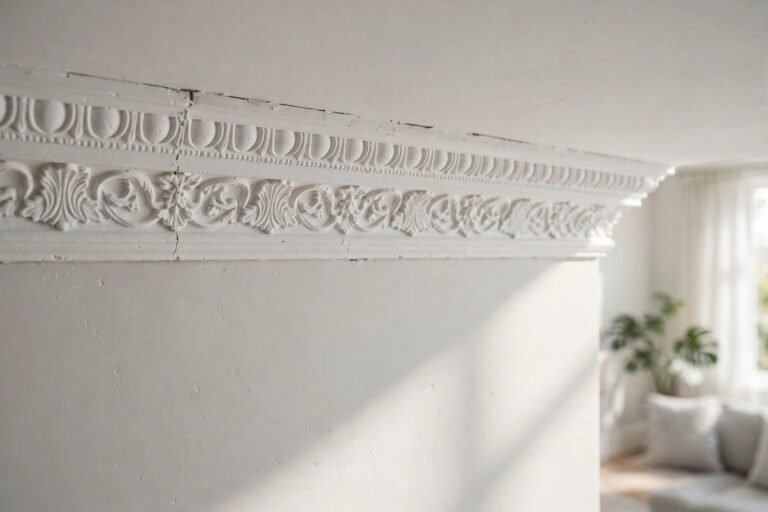
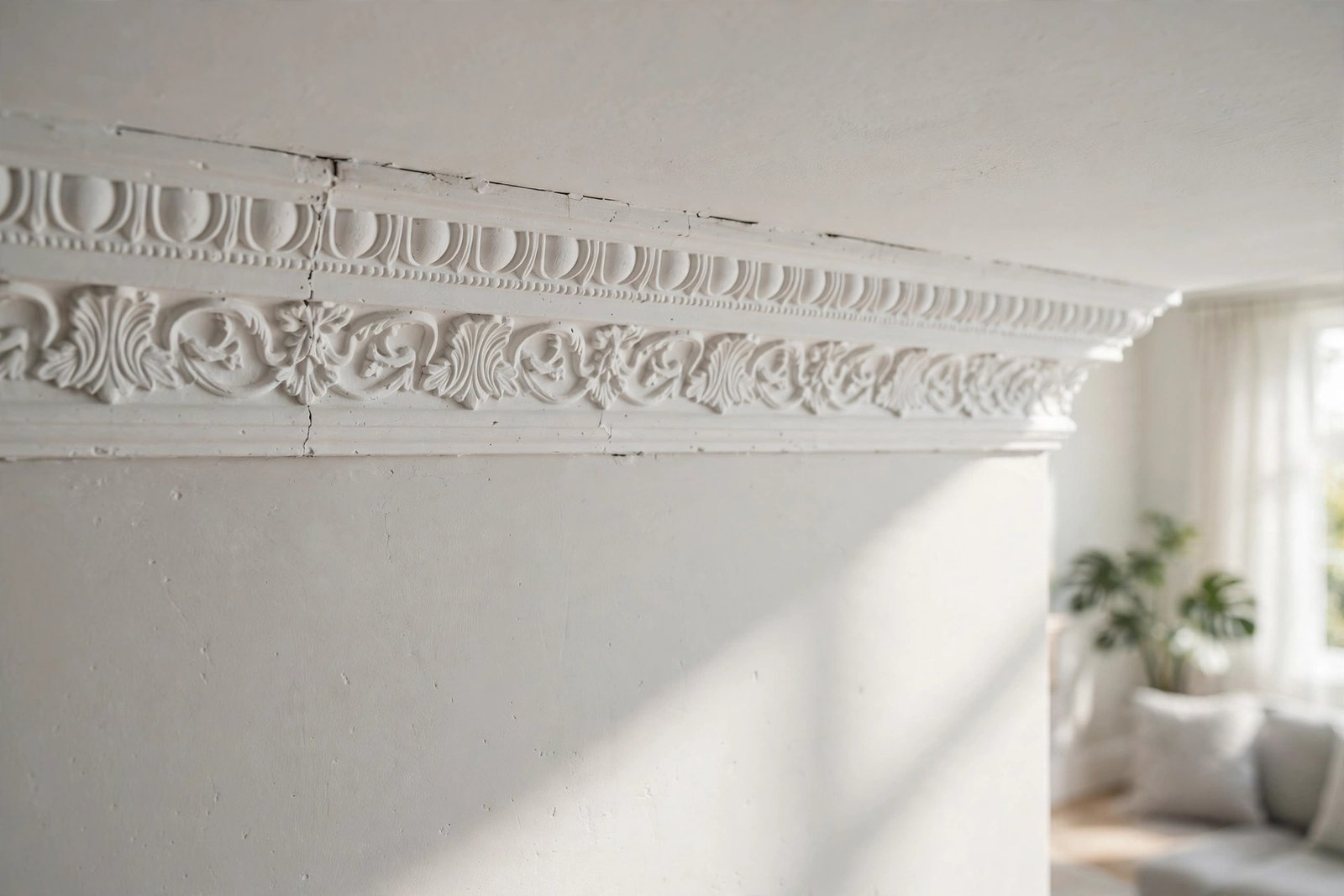
Coving is the simple concave strip covering the wall-ceiling joint. Cornice is larger, more ornate plasterwork with decorative profiles (dentil, egg-and-dart). Cornice costs more, suits period properties, and almost always needs a specialist fitter.
Quote Fairness Checklist
- Per-metre rate stated, with material named (not just “coving”)
- Room measured on perimeter + wastage, not guessed
- Old coving removal and making good included?
- Caulking, filling and priming included or extra?
- Access equipment for high ceilings allowed for?
- Written total, not just a day rate with open-ended days
Coving Installation FAQs
How much does coving cost per metre in the UK?
Typically £25 to £70 per metre supplied and fitted: £25 to £35 polystyrene, £30 to £50 polyurethane, £40 to £70 gypsum, £60 to £100+ ornate cornice.
How much to put coving in a living room?
For a 4m x 4m room (about 18 metres with wastage): roughly £540 polystyrene, £720 polyurethane, or £990 gypsum.
Can I install coving myself?
Lightweight polystyrene and polyurethane coving, yes, with a mitre box and practice. Gypsum and cornice are best left to professionals.
What is the difference between coving and cornice?
Coving is a simple concave strip; cornice is larger ornate plasterwork with decorative profiles, costing more and needing specialist fitting.
How long does coving installation take?
A professional fits an average room in half a day to a day; DIY takes a weekend including learning the mitre cuts.
Do you paint coving?
Yes, after fitting and caulking. Use the ceiling paint carried down, or a contrasting colour for period drama. Prime bare gypsum first (see our painting new plaster guide).
Can coving go in bathrooms?
Yes, but use moisture-resistant polyurethane rather than gypsum or polystyrene, and ensure good ventilation.
How do you measure a room for coving?
Measure the full wall perimeter, add 10 percent for wastage and mitre cuts, and multiply by the per-metre rate.
About the Author