What Are Trickle Vents?
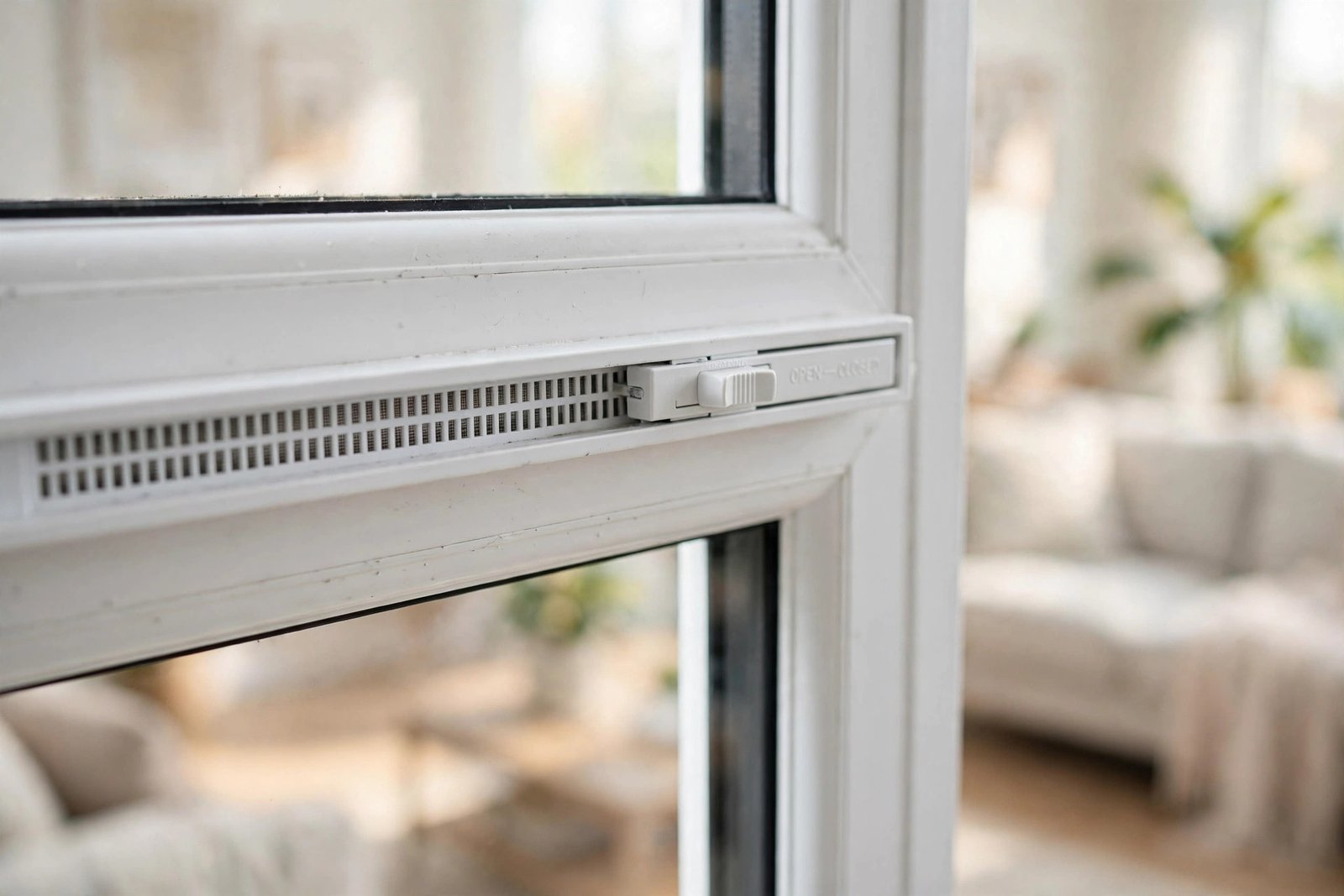
Trickle vents are small, adjustable openings fitted into the top of window or door frames. They allow a continuous, controlled flow of fresh air into a room even when the window is closed, providing background ventilation that reduces condensation, mould risk and indoor pollutants without compromising security.
Are Trickle Vents Mandatory in the UK?
In most cases, yes. Since the 15 June 2022 update to Approved Document F (Ventilation) of the Building Regulations, trickle vents (or equivalent background ventilation) are required in the vast majority of new and replacement windows and doors. The key rule: when you replace old windows, the new frames must include trickle vents regardless of whether the old windows had them.
This surprises many homeowners because the old windows “managed fine” without vents. But modern double and triple glazing is far more airtight than the draughty timber windows it replaces, so the background ventilation the old leaky frames provided accidentally must now be designed in deliberately.
The “No Worsening” Rule
The regulations include a critical principle: the replacement must not make the property’s ventilation worse than before. If the old windows had trickle vents, the new ones must at least match that ventilation. In practice, installers fit trickle vents to almost all replacement windows as the simplest compliant route.
How Much Ventilation Is Required? (EQA)
Requirements are measured in equivalent area (EQA) — the effective airflow area of the vent:
| Room type | Minimum EQA |
|---|---|
| Habitable rooms and kitchens (multi-storey) | 8,000mm² |
| Habitable rooms and kitchens (single-storey) | 10,000mm² |
| Bathrooms | 4,000mm² |
| WCs and utility rooms | Vented (no minimum set) |
All vents must have their EQA performance stamped on the internal section. Your FENSA-registered installer should confirm compliance and provide the certificate.
When Don’t You Need Trickle Vents?
Trickle vents are one compliance route, not the only one. You may not need them if:
- Mechanical ventilation with heat recovery (MVHR): the system handles supply and extract, so trickle vents are not required and should not be fitted.
- Continuous mechanical extract (MEV): trickle vents are still typically required as background supply air.
- Non-habitable rooms with adequate alternative ventilation.
If an installer tries to talk you out of trickle vents on a standard replacement job with no mechanical ventilation, treat it as a warning sign about that installer.
Can You Close Trickle Vents?
Yes, most trickle vents have an open/close control. But they are designed to be left open: closing them permanently defeats the ventilation strategy and can lead to condensation and mould, which is exactly what the regulations aim to prevent. For window cost context, see our double glazing costs guide.
Retrofit: Adding Trickle Vents to Existing Windows
Trickle vents can be retrofitted to most uPVC and aluminium frames by routing a slot in the head of the frame, typically costing £25 to £60 per vent fitted. It is a far cheaper route than replacing compliant windows, and worth considering if you are getting condensation on relatively new windows that were fitted without vents.
Trickle Vent FAQs
Are trickle vents a legal requirement in the UK?
In most cases yes. Since June 2022, Approved Document F requires background ventilation (usually trickle vents) in most new and replacement windows and doors.
Do replacement windows need trickle vents if the old ones didn’t have them?
Yes. The regulations apply regardless of whether the old windows had vents, because modern airtight glazing removes the accidental ventilation leaky old frames provided.
Can I refuse trickle vents on new windows?
Your installer must comply with building regulations. Refusing vents on a standard job leaves the installation non-compliant and can cause issues with FENSA certification.
Do trickle vents cause draughts?
Modern vents are thermally broken and designed to avoid draughts while allowing background airflow. Poorly fitted cheap vents are the usual cause of complaints.
How much ventilation do trickle vents provide?
Requirements are 8,000mm² EQA for habitable rooms and kitchens (10,000mm² in single-storey homes) and 4,000mm² for bathrooms.
Are trickle vents needed with MVHR?
No. A whole-house MVHR system handles ventilation mechanically, so trickle vents should not be fitted. Compare window options in our secondary vs double glazing guide.
Can trickle vents be fitted retrospectively?
Yes, to most uPVC and aluminium frames at £25 to £60 per vent fitted.
Do trickle vents help with condensation?
Yes. Continuous background ventilation is one of the most effective measures against window condensation and the mould that follows it.
About the Author