
Quick Answer: How Much Can Draught Proofing Save You?
Draught proofing a typical UK home costs £100 to £300 for DIY materials or professional installation of the main draught points, and can save a noticeable amount on annual heating bills by preventing warm air escaping and cold air entering through gaps around doors, windows, and other openings. It is one of the most cost-effective energy efficiency improvements available, often paying for itself within a single heating season.
Where Draughts Commonly Come From
| Location | Typical Draught Source |
|---|---|
| External doors | Gaps around the frame, letterbox, and keyhole |
| Windows | Gaps around frames, particularly on older single-glazed units |
| Loft hatch | Unsealed edges allowing warm air to escape upward |
| Floorboards | Gaps between boards in suspended timber floors |
| Chimneys | Open, unused chimneys acting as a constant air passage |
| Skirting boards | Gaps where skirting meets the floor, especially in older properties |
Draught Proofing Doors
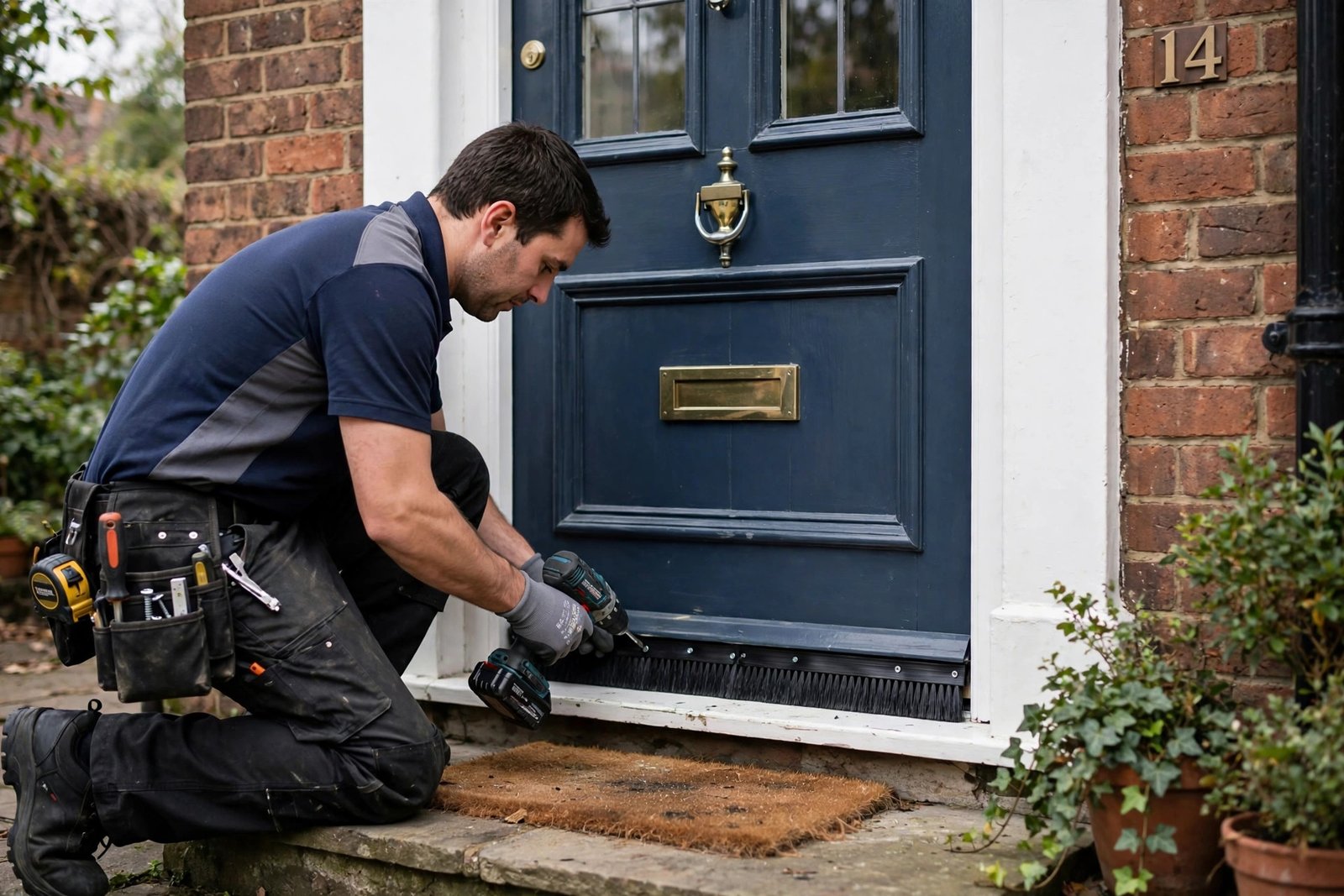
- Fit a brush or foam strip draught excluder along the bottom of external doors
- Add a letterbox brush or flap to reduce airflow through the letterbox opening
- Use foam or rubber strip sealant around the door frame where gaps are visible
- Consider a keyhole cover for older doors with a traditional keyhole design
Draught Proofing Windows
- Self-adhesive foam strips applied around the window frame seal small gaps effectively
- Silicone sealant works well for gaps between the window frame and surrounding wall
- Secondary glazing film can add a low-cost temporary barrier for particularly draughty single-glazed windows
- Heavy curtains, closed at night, add an extra layer of insulation against window draughts
Sealing the Loft Hatch
A loft hatch is often overlooked but can be a significant source of heat loss if left unsealed, since warm air naturally rises and escapes through any gaps around the hatch frame. Fitting a foam seal around the hatch edge and ensuring it closes snugly addresses this straightforward but frequently missed draught source.
Chimney Draught Proofing
An open, unused chimney can act as a constant draw of cold air into the room and warm air escaping upward. A chimney draught excluder, either an inflatable balloon type or a specific fitted cap, can significantly reduce this while still allowing the flue to be used again if needed by simply removing the excluder first.
Floorboard Draught Proofing
Older properties with suspended timber floors often have gaps between floorboards that let cold air through from the void beneath. Products range from simple silicone-based fillers for smaller gaps to specialist flexible sealant strips designed to move with natural floorboard expansion and contraction.
Draught Proofing Cost Breakdown
| Item | Typical Cost |
|---|---|
| Door draught excluder strips | £5 to £20 per door |
| Letterbox brush/flap | £10 to £25 |
| Window foam strips | £5 to £15 per window |
| Chimney draught excluder | £15 to £40 |
| Loft hatch seal | £10 to £20 |
| Professional whole-house draught proofing | £150 to £350 |
Draught Proofing and Ventilation Balance
While reducing unwanted draughts is beneficial, homes still need adequate ventilation to prevent condensation and maintain good indoor air quality. Trickle vents in windows, extractor fans in kitchens and bathrooms, and general room ventilation should not be sealed shut as part of a draught proofing project, since this can create damp and air quality problems.
DIY Draught Proofing vs Professional Installation
The vast majority of draught proofing tasks, from door strips to window foam seals, are straightforward DIY projects requiring minimal tools and skill. Professional installation is generally only worth considering for larger properties needing comprehensive treatment or older, more complex window and door setups where a tailored approach gives better results.
Can You Get Draught Proofing Free Through a Grant?
Yes, in many cases draught proofing can be fully funded through a government-backed energy efficiency scheme, meaning you pay nothing for the materials or the installation. Because draught proofing is cheap and effective, it is one of the measures most commonly included in grant-funded home upgrades. The table below summarises the main schemes across the UK.
| Scheme | Where | Who it is for |
|---|---|---|
| Warm Homes: Local Grant | England | Owner-occupiers and private tenants in EPC D to G homes, usually on lower incomes or in eligible postcodes; runs until March 2028 |
| ECO4 | Great Britain | Households on certain means-tested benefits, delivered through energy suppliers |
| Warmer Homes Scotland | Scotland | Eligible households on qualifying benefits, grants of up to £7,500 for efficiency measures |
| Nest | Wales | Owner-occupiers and private tenants in inefficient homes receiving means-tested benefits |
| Affordable Warmth Scheme | Northern Ireland | Households with annual income below £23,000 |
Eligibility rules change, so treat this as a starting point and check the current criteria on GOV.UK or through your local council before assuming you qualify. If you rent privately, your landlord will normally need to agree to the work. Even if you do not qualify for a grant, remember that DIY draught proofing costs only £100 to £300 and typically pays for itself within one heating season, so it remains worth doing at your own expense.
Frequently Asked Questions
How much can draught proofing save on heating bills?
Savings vary by property, but draught proofing is consistently identified as one of the most cost-effective energy efficiency measures available, often delivering a noticeable percentage reduction in heat loss for a relatively small upfront cost.
Does draught proofing cause condensation problems?
Excessive draught proofing that blocks essential ventilation, such as trickle vents or extractor fans, can contribute to condensation, so it is important to draught proof unwanted gaps while maintaining intentional ventilation points.
Can you draught proof an open fireplace you still use?
Yes, but a permanent chimney balloon excluder is not suitable if the fireplace remains in regular use; instead, look for products specifically designed for occasional-use fireplaces that can be easily removed and refitted.
Is draught proofing worth it for a well-insulated modern home?
Even well-insulated modern homes can have draughts around doors, windows, and loft hatches, so draught proofing remains a worthwhile, low-cost addition even where other insulation is already good.
How do I find where draughts are coming from?
A simple method is holding a lit candle or incense stick near likely draught points, such as door and window frames, and watching for flame movement indicating airflow, though a professional thermal survey can identify less obvious sources more precisely.
Can I get free draught proofing if I am on benefits?
Quite possibly. Households receiving means-tested benefits such as Universal Credit or Pension Credit can often get draught proofing fully funded through ECO4 in Great Britain, the Nest scheme in Wales, or Warmer Homes Scotland. Check the current eligibility for your nation before applying.
What is the Warm Homes: Local Grant?
The Warm Homes: Local Grant funds energy efficiency upgrades for lower-income households in England living in homes rated EPC D to G. Draught proofing is one of the measures it can cover, alongside insulation, solar panels and heat pumps. It is delivered through participating councils and runs until March 2028.
Does ECO4 cover draught proofing?
Yes, draught proofing is an eligible measure under ECO4, the energy company obligation scheme running across Great Britain. It is aimed at households on qualifying benefits, and the work is arranged through obligated energy suppliers rather than applied for directly.
Are there draught proofing grants in Scotland, Wales and Northern Ireland?
Yes. Scotland has Warmer Homes Scotland, Wales has the Nest scheme, and Northern Ireland has the Affordable Warmth Scheme for households earning under £23,000 a year. Each has its own eligibility rules, so check the scheme for your nation.
Do I need to own my home to get a draught proofing grant?
Not necessarily. Most schemes also cover private tenants, but your landlord will normally need to give written agreement before any work goes ahead. Social housing tenants are usually covered through separate landlord-led programmes.
Expert Insight
Energy assessors frequently highlight draught proofing as the single best value-for-cost energy efficiency measure available to UK homeowners, given the very low material cost relative to the heat loss reduction achieved, particularly in older properties with more numerous gaps and joints.
Final Thoughts
Draught proofing offers an exceptional return relative to its low cost, addressing one of the most common and avoidable sources of heat loss in UK homes. Working through doors, windows, the loft hatch, and any unused chimneys systematically will address the majority of draught sources in most properties.
Starting a draught proofing project? Tackle the biggest, most obvious gaps first, such as external doors and an unused chimney, before moving to smaller, more time-consuming details like individual floorboard gaps.
Related Guides
Written by the HometoWorld editorial team, covering home improvement, renovation, and property maintenance across the UK.
About the Author