Quick Answer: What Is Cavity Wall Insulation and Is Your Home Suitable?
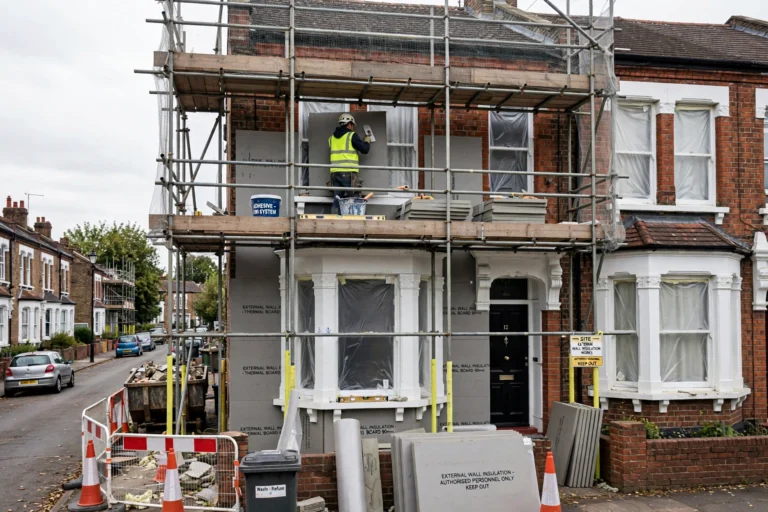
Cavity wall insulation fills the gap between the inner and outer walls of a property with an insulating material, reducing heat loss through the walls, which typically account for around a third of a home’s total heat loss. It suits properties built after around 1920 with a genuine cavity wall construction, and installation typically costs £500 to £1,500 depending on property size.
How Do You Know If You Have Cavity Walls?
Homes built from the 1920s onward in the UK are often constructed with cavity walls, consisting of two layers of brick or block with a gap between them, as opposed to older solid wall construction. A simple way to check is examining the brick pattern: cavity walls typically show a regular, uniform brick pattern (stretcher bond), while solid walls often show a mix of brick orientations. A professional survey can confirm cavity wall presence and current condition with certainty before any installation.
Types of Cavity Wall Insulation
Mineral Wool (Blown Fibre)
Mineral wool fibres are blown into the cavity through small holes drilled in the external wall, filling the gap evenly and offering good thermal performance at a moderate cost.
Polystyrene Beads
Small polystyrene beads, often bonded with an adhesive as they are injected, fill the cavity and offer good moisture resistance alongside solid thermal performance.
Polyurethane Foam
Foam insulation expands to fill the cavity completely, offering strong thermal performance, though it is less commonly used than the other two methods in typical UK domestic installations.
Cavity Wall Insulation Installation Process
- A professional surveyor assesses your property to confirm cavity wall suitability and current condition
- Small holes, typically around 22mm, are drilled into the external wall mortar joints at intervals
- Insulation material is injected or blown into the cavity through these holes
- Holes are filled and colour matched to blend with the existing brickwork
- The whole process typically takes half a day to a full day for an average semi-detached property
Cost and Savings From Cavity Wall Insulation
| Property Type | Typical Installation Cost | Estimated Annual Saving |
|---|---|---|
| Detached house | £1,000 to £1,500 | £200 to £300 |
| Semi-detached house | £600 to £1,000 | £120 to £200 |
| Terraced house | £400 to £700 | £80 to £150 |
These figures are general estimates. Actual savings depend on your current wall condition, heating patterns, and energy costs at the time.
When Cavity Wall Insulation Is Not Suitable
- Properties with solid wall construction rather than a genuine cavity, common in homes built before the 1920s
- Walls exposed to significant driving rain without adequate weatherproofing, where insulation could increase damp penetration risk
- Cavities already containing debris, damage, or previous unsuccessful insulation that would need removing first
- Some coastal or exposed locations where a full technical assessment is needed before proceeding
Cavity Wall Insulation and Damp: What You Need to Know
A poorly assessed or badly installed cavity wall insulation job can occasionally contribute to damp problems, particularly in exposed locations with significant wind-driven rain. This is why a proper technical survey before installation, carried out by an accredited installer, is essential rather than optional, and why choosing an installer registered with a recognised body such as CIGA (Cavity Insulation Guarantee Agency) matters for both quality assurance and warranty protection.
Guarantees and Accreditation
Reputable cavity wall insulation installers provide an independent guarantee, commonly through CIGA, covering the insulation for a substantial period, often 25 years. Checking for this guarantee, rather than relying solely on the installer’s own warranty, provides additional protection and reassurance.
Cavity Wall Insulation Removal: Costs, Process and Your Rights
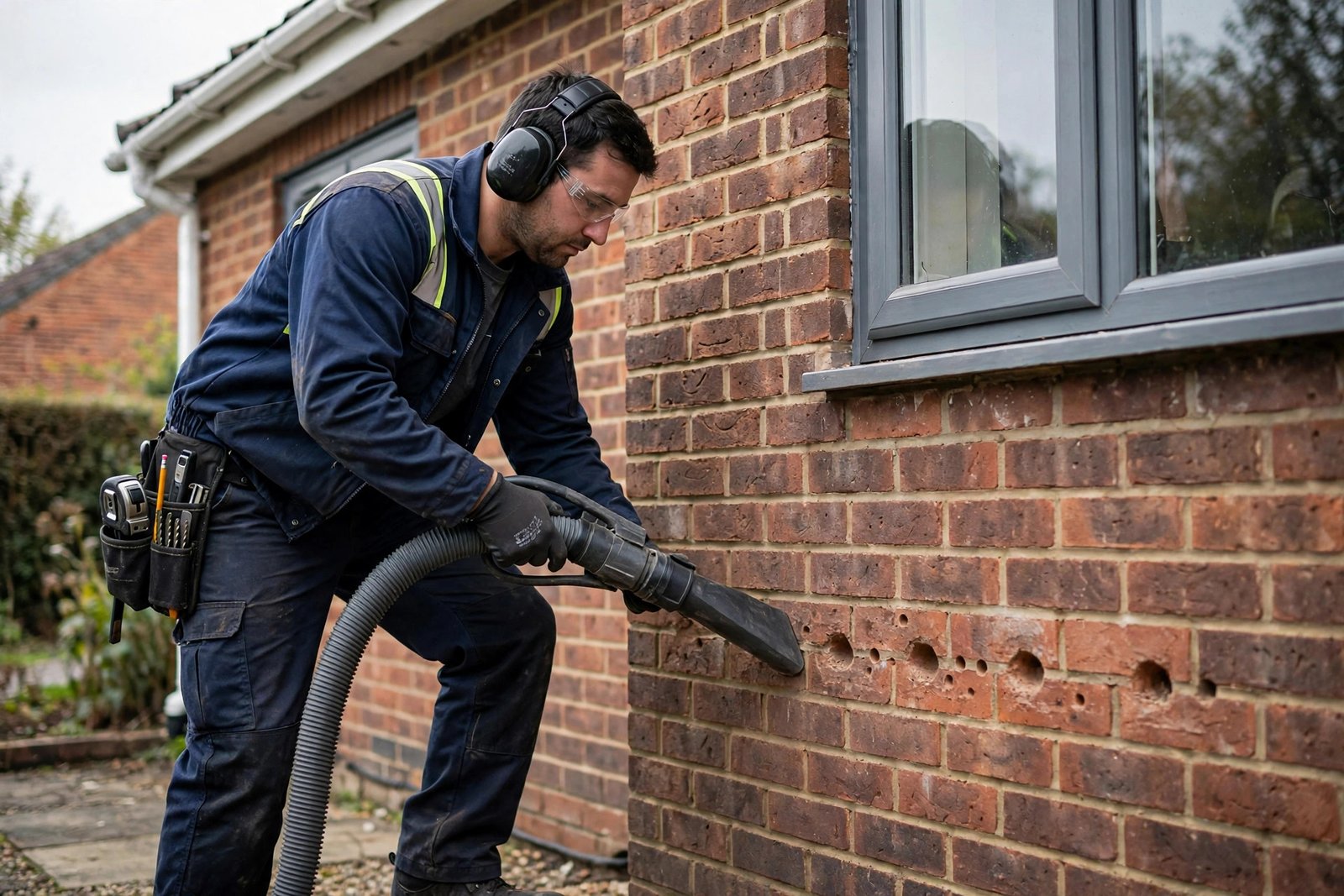
If your cavity wall insulation has failed, extraction is possible, but it is a specialist job with real costs. Here is what it costs, how it works, and who should pay.
How much does cavity wall insulation removal cost in the UK?
Removal costs around £21.50 per m2 on average (trade figures, 2026), or £1,680 to £2,520 for a typical semi-detached house. The realistic range across property types is £20 to £35 per m2.
| Property type | Typical wall area | Removal cost range |
|---|---|---|
| Flat / maisonette | 30 to 50 m2 | £600 to £1,200 |
| Terraced house | 50 to 70 m2 | £1,000 to £1,700 |
| Semi-detached (3-bed) | 70 to 90 m2 | £1,600 to £2,600 |
| Detached house | 100 to 140 m2 | £2,500 to £4,300 |
Material matters: polystyrene beads and blown fibre are cheapest to extract; polyurethane foam sits in the middle; old urea-formaldehyde foam is the most expensive because specialist disposal can add £500 to £1,000. Worked example: a 3-bed semi with 80 m2 of wall at £25/m2 = £2,000 for extraction. As a rule of thumb, removing old insulation and installing new adds about 75 percent to the removal price.
What affects the price?
- Property size and access (scaffolding adds cost)
- Insulation material type
- How saturated or degraded the fill is
- Whether a borescope or thermal imaging survey is needed (£150 to £400)
- Waste disposal requirements
- Region: London and the South East cost more
How is cavity wall insulation removed?
- A borescope or thermal imaging survey maps the fill and the cavity condition
- Holes are drilled in mortar joints (or low bricks are temporarily removed)
- Compressed air loosens the material while an industrial vacuum extracts it, working from the bottom up
- The empty cavity is inspected, with photographic evidence
- Holes are re-pointed and colour-matched; debris is cleared
- Allow 6 to 8 weeks of drying before any re-insulation
On-site work typically takes half a day to two days. This is not a DIY job: it needs specialist vacuum and compressed-air equipment.
Signs your cavity wall insulation has failed
- Damp patches appearing after rain
- Black mould on internal walls
- Cold spots and rising heating bills
- Musty smells
- Slumped or degraded fill found during a survey
- Corroded wall ties
- A mortgage surveyor flagging the insulation
Who pays for cavity wall insulation removal? (your rights)
You may not have to pay the full bill yourself. Work through this order:
- Check the CIGA 25-year guarantee first. The Cavity Insulation Guarantee Agency covers faulty workmanship and materials: if your install was guaranteed, start here.
- If the installer still trades, complain in writing citing the Consumer Rights Act 2015 (work must be done with reasonable care and skill).
- If the installer has gone bust, the CIGA route remains open for guaranteed installs.
- Surveyor negligence is a separate route if a survey wrongly recommended or failed to spot problems.
- Compensation precedents exist: settlements between £1,750 and £11,000 have been reported for failed installs.
Note what CIGA does not cover: consequential damage beyond removal and replacement is usually excluded. And a warning: Trading Standards has flagged bogus “compensation” cold callers who charge for surveys while promising payouts. Never pay an upfront fee to someone who rang you.
Can you get removal free on a grant?
Generally no. ECO4 and the Great British Insulation Scheme can fund re-installation for eligible households, but extraction itself is usually not grant-funded. Treat any extractor claiming otherwise with scepticism and verify independently.
After removal: re-insulate or leave the cavity empty?
Re-insulate only if the property is genuinely suitable: sheltered location, sound brickwork, no wind-driven rain problem. In exposed or coastal homes, leaving the cavity clear is often the safer choice. Either way, keep air bricks clear and maintain brickwork, pointing and gutters.
Mortgage and selling problems
Lenders can refuse a mortgage or devalue a property (reported reductions up to around £30,000) where cavity insulation has no valid certificate or has failed. Professional removal with photographic evidence and a surveyor’s report resolves most cases. Keep all paperwork for future buyers.
Cavity Wall Removal FAQs
How much does it cost to remove cavity wall insulation per m2?
Around £21.50 per m2 on average in 2026, with a realistic range of £20 to £35 depending on material and property. A typical semi-detached house costs £1,600 to £2,600.
Can I get cavity wall insulation removed for free on a grant?
Generally no. ECO4 and the Great British Insulation Scheme can fund re-installation for eligible households, but extraction itself is usually excluded from grant funding.
Who pays if my cavity wall insulation was installed badly?
Start with the CIGA 25-year guarantee, then the installer (citing the Consumer Rights Act 2015), then CIGA again if the installer has gone bust. Compensation settlements of £1,750 to £11,000 have been reported.
How long does cavity wall insulation removal take?
Half a day to two days on site for most houses, plus a survey beforehand and 6 to 8 weeks of drying before any re-insulation.
Will my house be colder after the insulation is removed?
Slightly, until re-insulated. But wet or slumped insulation was barely performing anyway, so many homeowners notice little difference, and the damp problems stop.
Can I remove cavity wall insulation myself?
No. It requires specialist industrial vacuum and compressed-air equipment, plus survey expertise. DIY attempts risk wall damage and leave material behind.
Should I replace cavity wall insulation after removal?
Only if the property is genuinely suitable: sheltered, sound brickwork, no wind-driven rain issues. In exposed or coastal locations, leaving the cavity empty is often safer.
What happens to the holes drilled during extraction?
They are re-pointed and colour-matched to the existing mortar. A reputable extractor provides photographic evidence of the work.
Frequently Asked Questions
How long does cavity wall insulation last?
Properly installed cavity wall insulation typically lasts for the lifetime of the property, often guaranteed for 25 years through schemes like CIGA, without needing replacement.
Can cavity wall insulation cause damp?
Correctly assessed and installed insulation in a suitable property rarely causes damp, but poor assessment or installation in an unsuitable or highly exposed property can occasionally contribute to moisture problems, which is why professional survey and accredited installation matter.
How do I know if my cavity wall insulation has failed?
Signs can include patchy cold spots on internal walls, increased heating bills without other explanation, or visible damp patches, and a specialist survey can confirm whether existing insulation has settled, degraded, or has installation gaps.
Can cavity wall insulation be removed?
Yes. Failed or unsuitable cavity wall insulation can be extracted by drilling holes in the mortar joints and removing the material with compressed air and an industrial vacuum, working from the bottom up. It costs around £21.50 per m2 (£1,680 to £2,520 for a typical semi), takes half a day to two days on site, and is strictly a specialist job, not DIY. If the original install was faulty, check the CIGA 25-year guarantee before paying yourself.
Is cavity wall insulation worth it for an older property?
This depends entirely on whether the property has a genuine, suitable cavity wall construction, which a professional survey should confirm before proceeding, since installation in an unsuitable solid wall property is not possible or appropriate.
Expert Insight
Energy efficiency assessors consistently highlight that a proper pre-installation survey, rather than installation cost alone, is the biggest factor separating a successful cavity wall insulation project from one that later causes problems, reinforcing the importance of choosing an accredited, thorough installer over the cheapest available quote.
Final Thoughts
Cavity wall insulation offers strong energy saving potential for suitable properties, but getting a proper technical survey before installation is essential to avoid the moisture-related problems that can occur in unsuitable or poorly assessed properties. Choosing an accredited installer with a recognised guarantee protects your investment for decades to come.
Considering cavity wall insulation? Insist on a proper technical survey before committing, and confirm the installer provides an independent guarantee such as CIGA rather than relying solely on their own warranty terms.
Related Guides
Written by the HometoWorld editorial team, covering home improvement, renovation, and property maintenance across the UK.
About the Author