
Quick Answer: How Do You Unblock a Drain?
Most household drain blockages can be cleared with a plunger, a drain snake, or a mix of baking soda and vinegar followed by hot water, without needing harsh chemical cleaners. Outdoor drain blockages, or ones that keep recurring despite clearing, often indicate a deeper problem such as tree root ingress or a collapsed pipe and are best assessed by a professional drainage engineer.
Common Causes of Blocked Drains
- Kitchen sinks: Fat, oil, and food debris solidifying inside the pipe
- Bathroom sinks and showers: Hair and soap scum building up over time
- Toilets: Excess toilet paper or items that should not be flushed
- Outdoor drains: Leaves, silt, and debris washed in during heavy rain, or tree root ingress in older clay pipework
Safe DIY Methods to Unblock a Drain
Boiling Water
For a partially blocked sink, pouring boiling water down the drain in stages can dissolve grease and soap build-up. This is often worth trying first for a minor, slow-draining blockage.
Baking Soda and Vinegar
Pour around half a cup of baking soda down the drain, followed by an equal amount of white vinegar. Leave for around 30 minutes, then flush with hot water. The chemical reaction helps break down organic build-up without harsh commercial chemicals.
Plunger
A standard sink or toilet plunger works by creating pressure to dislodge the blockage. Ensure enough water covers the plunger cup for an effective seal, and use firm, steady pumping motions rather than aggressive force.
Drain Snake or Auger
A drain snake physically reaches into the pipe to break up or hook out the blockage, and works well for hair and debris clogs that boiling water and plungers cannot shift.
Wire Coat Hanger
For a simple hair clog near the drain opening, a straightened wire coat hanger with a small hook bent at the end can pull out debris without needing specialist tools.
Unblocking Outdoor Drains and Gullies
Outdoor drains often block with leaves, silt, and general debris, particularly during autumn. Clearing the visible grate and gully by hand, followed by flushing with a hose, resolves many outdoor blockages. Persistent or recurring outdoor blockages can indicate a deeper issue, such as a collapsed section of pipe or tree root ingress, which needs a CCTV drain survey to diagnose properly.
What Not to Put Down a Drain
- Cooking fat, oil, and grease, which solidify as they cool inside the pipe
- Coffee grounds, which do not break down and accumulate over time
- Wet wipes, even those labelled flushable, which do not disintegrate like toilet paper
- Large amounts of hair without a drain guard to catch it first
Should You Use Chemical Drain Cleaners?
Commercial chemical drain cleaners can be effective for stubborn blockages but are corrosive and can damage older pipework, particularly older metal pipes, with repeated use. They also pose a safety risk if mixed with other cleaning products. Using them sparingly, and following the product’s safety instructions carefully, including ventilation and protective gloves, reduces this risk.
When to Call a Professional Drainage Engineer
- The blockage recurs repeatedly despite DIY clearing attempts
- Multiple drains in the property are affected simultaneously, suggesting a blockage in the main shared drain run
- Water is draining unusually slowly across the whole property
- There is a persistent bad smell that DIY methods do not resolve
- The blockage is in an outdoor drain and suspected to involve tree roots or a collapsed pipe
A professional can use a CCTV drain camera to identify the exact location and cause of a persistent blockage, and jetting equipment for blockages beyond the reach of a domestic drain snake.
How to Unblock an Outside Drain Without Rods
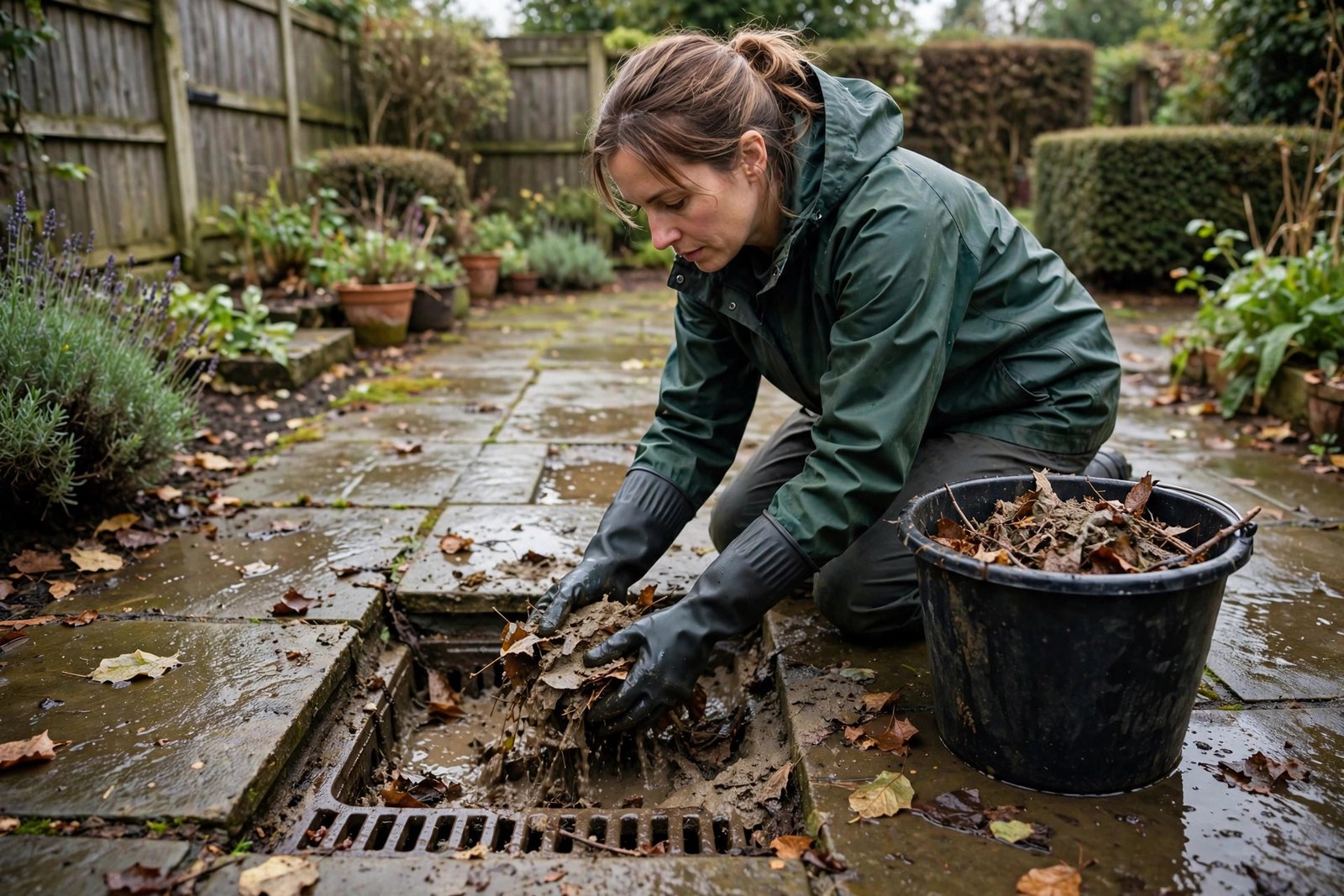
Yes, you can unblock an outside drain without drain rods. Most outside blockages sit in the gully trap (the U-bend under the grate that holds a water seal against smells), and that is reachable by hand. Follow these steps in order.
Step 1: Work out where the blockage is
Run the kitchen tap hard for 30 seconds and flush a toilet, then watch the gully. If water arrives at the gully and then backs up, the blockage is at or just beyond the gully: carry on. If no water arrives at all, the blockage is between the house and the gully: stop, this is a different problem. If water is rising out of the gully on its own, the downstream run is blocked: do not add more water, skip to calling a professional.
Step 2: Gear up
You need waterproof gloves (forearm-length is best), safety glasses, a bucket, an old trowel or scoop, a garden hose, and something to lever up the grate. Outside drain water carries bacteria: keep cuts covered and wash your hands and tools afterwards.
Step 3: Bail out the standing water
Scoop the standing water into a bucket and empty it into a toilet, not back onto the ground. Bailing first lets you see what you are doing and stops dirty water splashing everywhere when you start clearing.
Step 4: Clear the gully trap by hand
Lift the grate and pull out the packed debris: leaves, silt, and lumps of solidified kitchen fat are the usual culprits. Keep going until you can feel the smooth curve of the trap. This single step clears the majority of outside drain blockages.
Step 5: Flush it through
Run the hose into the gully outlet for one to two minutes. For greasy kitchen gullies, follow with hot (not boiling) tap water and washing-up liquid. Boiling water can craze old glazed clay pipes and soften plastic ones.
Step 6: If the blockage is just past the gully
Feed a stiff length of hosepipe into the outlet with the water running: the jet often shifts what your hands cannot reach. Alternatively, once bailed, press a plunger firmly over the outlet and pump: it moves water rather than air, so it works better than most people expect. A wet-and-dry vacuum on wet mode is another effective rod-free option.
3 Methods That Do Not Work on Outside Drains
Save your money and avoid a hazard: these popular suggestions do not clear packed outside blockages.
- Bleach: it disinfects but does not dissolve fat, leaves or silt.
- Bicarbonate of soda and vinegar: the fizz lasts seconds and has no force against packed silt or solidified fat.
- Caustic soda in standing water: it dilutes before reaching the blockage and leaves a pool of caustic liquid that is dangerous to you, pets and plants.
Is the Blocked Drain Your Responsibility? (UK)
A private drain serves only your property: clearing it is your job. A shared or lateral drain (serving more than one property) and any public sewer became the water company’s responsibility under the 2011 private sewer transfer. If the blockage is beyond your boundary or shared with neighbours, call your water company before paying a contractor: one reported Welsh Water visit for a private drain cost around £160, but charges vary. When in doubt, ask the water company first.
How to Stop Outside Drains Blocking Again
| Season | Task |
|---|---|
| Autumn | Clear leaves from grates and gully pots before heavy rain |
| Winter | Check flow after storms; clear debris promptly |
| Spring | Scoop out silt build-up from gully traps |
| Summer | Flush the kitchen gully with hot water and washing-up liquid |
Fit a drain guard or grate screen over vulnerable gullies, never pour fat down the sink, and remember that gutters discharge into gullies: keeping gutters clear (see our gutter cleaning guide) reduces what washes down. For the full year-round routine, see our seasonal home maintenance checklist.
When to Stop and Call a Professional: Outside-Drain Signs
- The inspection chamber or manhole is full to the cover
- Sewage is rising rather than draining away
- More than one fitting (sink, toilet, gully) backs up at once
- You cleared it but it re-blocks within a fortnight: this points to a collapsed pipe, displaced joint or root ingress, which needs a CCTV drain survey
- The blockage is beyond your property boundary (likely the water company’s job)
Outside Drain FAQs
Can you unblock an outside drain without rods?
Yes. Most outside blockages sit in the gully trap and can be cleared by hand after bailing out standing water, then flushed through with a hose. Rods are only needed for blockages further down the pipe.
What can I use instead of drain rods?
Waterproof gloves and a scoop, a garden hose, a plunger over the gully outlet, a stiff length of hosepipe fed into the outlet, or a wet-and-dry vacuum on wet mode.
Should I pour boiling water down an outside drain?
No, use hot tap water instead. Boiling water can craze old glazed clay pipes and soften plastic pipework. Hot water with washing-up liquid is safer for greasy kitchen gullies.
Does bicarbonate of soda and vinegar unblock an outside drain?
No. The fizz lasts seconds and cannot shift packed silt, leaves or solidified fat. It works for mild indoor sink smells, not outside blockages.
Can you use a plunger on an outside drain?
Yes, once you have bailed out the standing water. Press it firmly over the gully outlet and pump: it moves water rather than air, which makes it surprisingly effective.
How do I know if the blockage is inside the house or outside?
Run the kitchen tap hard and flush a toilet while watching the gully. Water arriving then backing up means the blockage is at or beyond the gully. No water arriving means it is between the house and the gully.
Who is responsible for a blocked outside drain in the UK?
You are responsible for a private drain serving only your property. Shared drains and public sewers are the water company’s responsibility since the 2011 private sewer transfer. Check with your water company before paying a contractor.
When should I stop trying and call a professional?
Stop if the inspection chamber is full to the cover, sewage is rising, multiple fittings back up at once, the blockage returns within a fortnight, or it lies beyond your property boundary.
Preventing Future Blockages
- Fit a drain guard in showers and baths to catch hair before it enters the pipe
- Never pour cooking fat or oil down the sink; let it cool and dispose of it in the bin instead
- Run hot water through kitchen and bathroom drains weekly to help prevent grease build-up
- Clear outdoor gullies of leaves and debris seasonally, particularly ahead of autumn
Frequently Asked Questions
Is baking soda and vinegar actually effective for blocked drains?
For minor blockages caused by organic build-up such as soap scum or grease, the combination can be helpful, but it is unlikely to clear a serious or deep blockage on its own.
How do you know if a blocked drain needs a professional?
If DIY methods have not cleared the blockage after a couple of attempts, or if the blockage keeps returning, it is worth calling a professional. Multiple affected drains or sewage smells also point to a problem beyond simple DIY fixes.
Can a blocked drain cause damp?
Yes, a severely blocked or leaking drain can contribute to damp in nearby walls or flooring, which is why persistent drainage problems should not be ignored.
How often should drains be professionally cleared?
Most homes do not need routine professional drain clearing unless there is a recurring problem, though older properties or those with mature trees nearby may benefit from periodic checks.
Is it safe to mix different drain cleaning chemicals?
No, mixing different chemical drain cleaners can produce dangerous fumes. Always use one product at a time and follow the safety instructions on the label.
Expert Insight
Drainage engineers frequently note that most recurring kitchen sink blockages trace back to fat and grease poured down the sink over time, rather than a single event. Outdoor gullies, meanwhile, often block simply because leaves and silt accumulate unnoticed until heavy rain exposes the problem.
Final Thoughts
Most everyday drain blockages can be safely resolved with simple DIY methods like a plunger, drain snake, or baking soda and vinegar. Knowing when a blockage is beyond DIY, particularly with outdoor drains or recurring problems, saves time and prevents a minor issue becoming a costly repair.
Dealing with a stubborn blockage? Try boiling water and a plunger first before reaching for chemical cleaners, and remember that prevention through good habits is always cheaper than a cure.
Related Guides
- EICR Cost UK: Complete Price Breakdown Guide
- Gas Safety Certificate: Step-by-Step Process for Property Owners
- Moving House Checklist
Written by the HometoWorld editorial team, covering home improvement, renovation, and property maintenance across the UK.
About the Author