Quick Answer: Are Composite Doors a Good Choice for UK Homes?
Composite doors, made from a combination of materials including timber core, GRP or uPVC skins, and insulating foam, offer strong security, low maintenance, and better thermal performance than standard uPVC doors, typically costing £900 to £2,000 installed. They have become the most popular front door choice for UK homeowners over the past decade thanks to this balance of durability, appearance, and performance.
What Are Composite Doors Made From?
A composite door combines several materials in layers: a solid timber or insulating foam core for strength and thermal performance, an outer GRP (glass reinforced plastic) or uPVC skin for weather resistance and appearance, and reinforced steel or aluminium components around the locking area for security.
Composite Doors vs uPVC Doors
| Feature | Composite Door | uPVC Door |
|---|---|---|
| Cost | £900 to £2,000 | £400 to £900 |
| Thermal performance | Excellent | Good |
| Security | Excellent, reinforced core | Good, varies by lock specification |
| Appearance | Realistic woodgrain texture available | Smoother, more uniform finish |
| Maintenance | Very low, does not warp or fade easily | Low, occasional cleaning |
| Lifespan | 35 to 45 years | 25 to 35 years |
Composite Doors vs Timber Doors
Traditional solid timber front doors offer an authentic period appearance that composite doors replicate closely but cannot fully match in terms of genuine material. However, composite doors avoid the common timber door problems of warping, swelling in damp weather, and the need for regular repainting or varnishing, making them a lower maintenance alternative that still suits period properties well through realistic woodgrain finishes.
Composite Door Colours and Styles
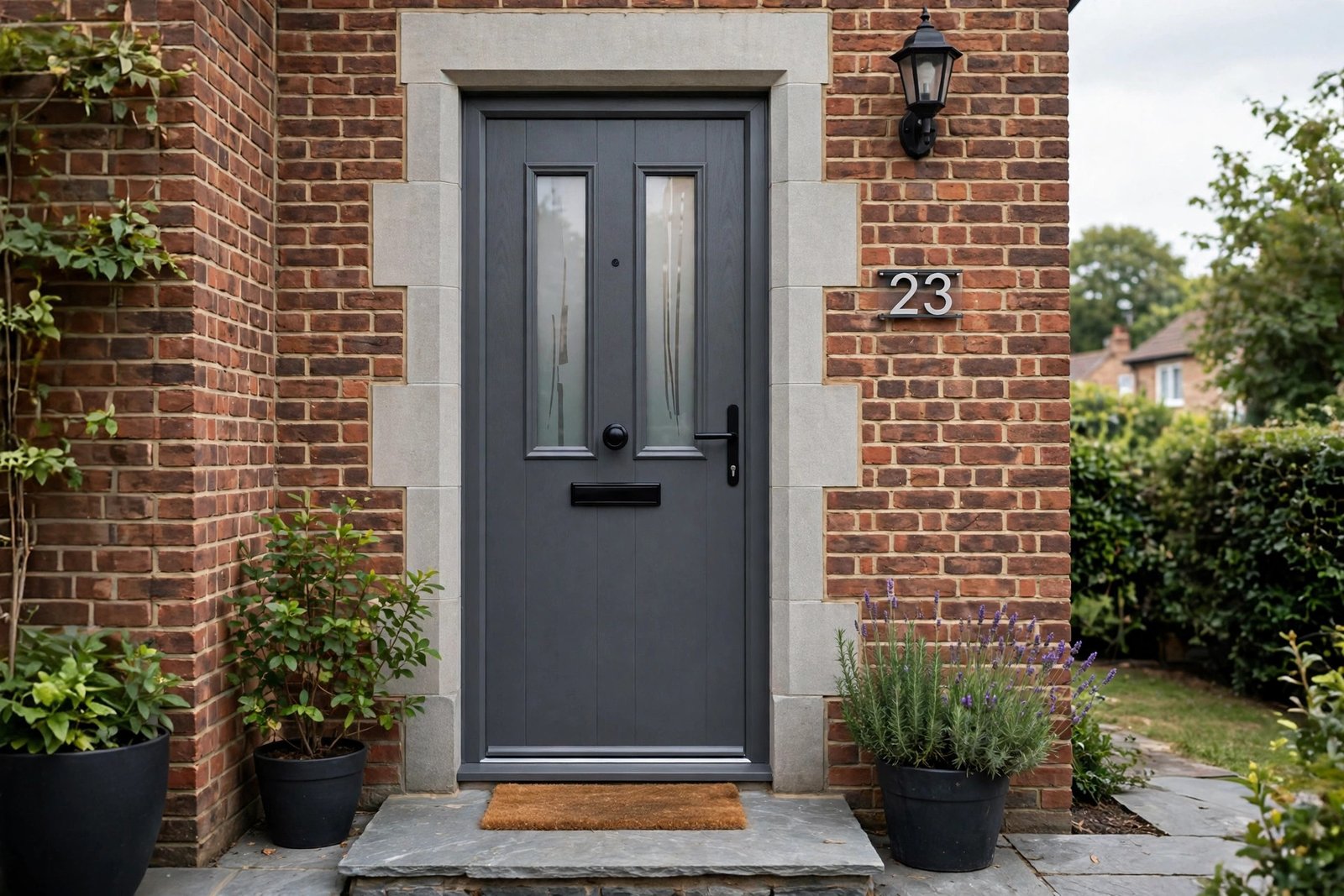
Composite doors are available in an extensive range of colours, with anthracite grey and black composite doors particularly popular in recent years for a contemporary look, alongside traditional options like red, blue, and green for period style properties. Many ranges also offer decorative glazing options and side panels to bring in additional natural light to a hallway.
Security Features of Composite Doors
- Multi point locking systems securing the door at several points along the frame
- Reinforced core resistant to forced entry attempts
- Anti-snap cylinder locks, protecting against a common lock manipulation technique
- Many composite doors carry Secured by Design accreditation, a police backed security standard
Composite Door Installation
Composite door installation typically involves removing the old door and frame, checking and preparing the opening, fitting the new frame, and hanging the door with correctly adjusted hinges and hardware. Professional installation is strongly recommended given the weight of composite doors and the precision needed for the multi point locking mechanism to engage correctly, typically taking half a day to a full day depending on any structural adjustments needed.
Composite Doors With Side Panels
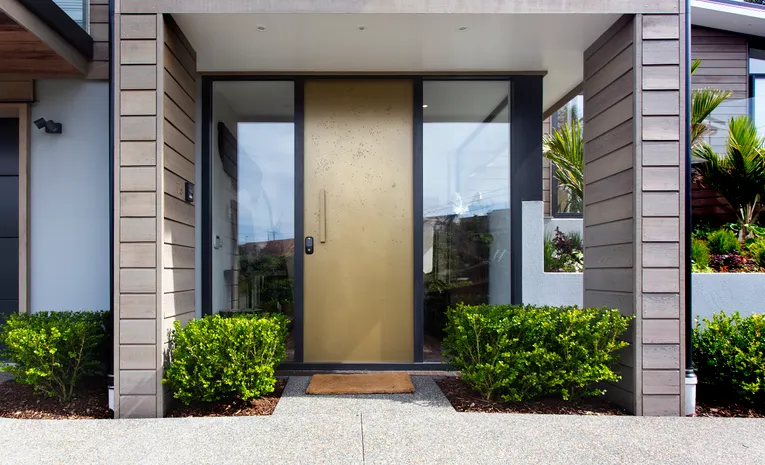
Composite doors with side panels add glazed sections beside the main door, bringing additional natural light into a hallway while maintaining the security and thermal performance of the composite construction. This is a popular choice for properties with wider door openings, such as many detached and semi detached homes.
Composite Door Prices: What Pushes the Cost Up
A standard composite front door in the UK typically costs between £900 and £2,000 supplied and fitted in 2026. Supply only prices for the door itself usually run from £500 to £1,300, with professional installation adding roughly £150 to £550 depending on how straightforward the job is. Premium specifications, such as solid timber cores, decorative glazing and sidelights, can push the fitted price to £2,500 or more. The large spread exists because two doors that look similar on the surface can differ significantly in construction, glazing, colour and hardware.
The table below shows the main factors that move a quote up or down.
| Cost factor | Typical impact on price |
|---|---|
| Glazing | Solid doors are cheapest; a half glazed design usually adds £100 to £200, with decorative or stained glass costing more |
| Colour and finish | Standard colours included in the base price; dual colour or bespoke shades typically add £50 to £150 |
| Hardware | Standard handles and letterbox included; upgrades to stainless steel, black finishes or smart locks add £50 to £200 |
| Side panels and sidelights | Add around £400 to £1,500 or more, especially where the opening must be widened |
| Core construction | Foam filled GRP doors cost less than doors with a solid engineered timber core |
| Fitting complexity | A straightforward swap of like for like doors costs £150 to £300; frame replacement or opening alterations cost £300 to £500 |
When comparing quotes, always check exactly what is included, because a cheaper headline price may not represent the full fitted cost. A complete quote should cover the door and frame, the chosen glazing, the locking system, handles and furniture, removal of the old door, professional installation, finishing around the frame and disposal of the old materials. Ask whether the price is supply only or supply and fit, and get like for like specifications from at least three installers so the numbers are directly comparable. The cheapest quote is rarely the best value once guarantees and installation quality are taken into account.
Frequently Asked Questions
Are composite doors worth the extra cost over uPVC?
For most homeowners prioritising security, thermal performance, and a realistic timber appearance with minimal maintenance, composite doors are generally considered worth the additional cost compared to standard uPVC.
Do composite doors fade in sunlight?
Quality composite doors are formulated to resist UV fading significantly better than standard uPVC, though as with any exterior product, south facing doors in constant direct sun will show some colour change over many years.
How long do composite doors last?
Composite doors typically last 35 to 45 years with minimal maintenance, outperforming both standard uPVC and untreated timber doors in longevity.
Can composite doors be repaired if damaged?
Minor scuffs can often be touched up, but significant structural damage to a composite door usually requires full replacement rather than repair, given the bonded, multi layer construction.
Do composite doors need much maintenance?
Very little, typically just an occasional wipe down with mild soapy water and checking that hinges and locks continue to operate smoothly, without the repainting or varnishing that timber doors require.
How much does a composite door cost in the UK?
A standard composite door typically costs £900 to £2,000 supplied and fitted in 2026. Supply only prices run from £500 to £1,300, with fitting adding around £150 to £550. Premium designs with solid timber cores, decorative glazing or sidelights can reach £2,500 or more.
Why do two similar looking composite doors cost different prices?
Hidden specification differences drive the price apart. A door with a solid engineered timber core costs more than a foam filled GRP door, and glazing, bespoke colours, upgraded hardware and higher security ratings each add to the total. Installation complexity also matters, so always compare the full written specification rather than appearance alone.
Should I buy a composite door supply only or have it fitted by the supplier?
Buying supply only and arranging your own fitter can save money if the quote difference is large, but it may split the guarantee between two companies. Having one installer supply and fit the door keeps a single point of responsibility and is usually the more cost effective route for most homeowners.
Do I need planning permission to replace a front door with a composite door?
In most cases no planning permission is needed, as replacing an external door is permitted development. You may need consent if you live in a listed building or a conservation area. Your installer should be registered with FENSA or a similar scheme so the work complies with building regulations.
How much do side panels add to a composite door price?
Sidelights and side panels typically add £400 to £1,500 or more to the fitted price, depending on the glazing specification and whether the opening must be widened. If your budget is tight, a composite door on its own still makes a strong statement and a panel can be added later.
Expert Insight
Door installers report that composite doors have become the most requested front door type for UK homeowners over the past several years, largely driven by the combination of a realistic timber appearance with genuinely low ongoing maintenance, a balance that neither pure timber nor standard uPVC doors offer as effectively.
Final Thoughts
Composite doors offer one of the best overall combinations of security, thermal performance, appearance, and low maintenance currently available for UK front doors. While they cost more upfront than standard uPVC, the extended lifespan and reduced maintenance often make them the more cost effective choice over the long term.
Choosing a new front door? Check specifically for Secured by Design accreditation if security is a priority, since this confirms independent testing against forced entry rather than relying on manufacturer claims alone.
Related Guides
- UPVC Door Hinges: Types and Replacement
- Internal Bifold Doors: Complete Buying Guide
- Standard Door Sizes UK: Complete Guide
Written by the HometoWorld editorial team, covering home improvement, renovation, and property maintenance across the UK.
About the Author