Quick Answer: What Is the Standard Door Size in the UK?
The standard internal door size in the UK is 1981mm by 762mm (78 inches by 30 inches), though 686mm and 838mm widths are also common depending on the room. Standard external door sizes are typically 1981mm by 838mm. Door thickness is usually 35mm for internal doors and 44mm for external doors, which affects fire rating and weatherproofing performance.
Standard Internal Door Sizes UK
| Door Size (Height x Width) | Imperial Equivalent | Typical Use |
|---|---|---|
| 1981mm x 610mm | 78″ x 24″ | Small cupboards, narrow spaces |
| 1981mm x 686mm | 78″ x 27″ | Bathrooms, smaller rooms |
| 1981mm x 762mm | 78″ x 30″ | Most common standard internal door |
| 1981mm x 838mm | 78″ x 33″ | Bedrooms, living rooms, wider openings |
Standard External Door Sizes UK
External doors are typically taller and wider than internal doors to accommodate frames, weather seals, and thicker construction. The most common external door size is 1981mm by 838mm, with a thickness of 44mm, compared to the 35mm thickness typical of internal doors.
Door Thickness Explained
- 35mm: Standard for most internal doors
- 40mm: Used for some fire rated internal doors, such as FD30 rated doors between a garage and a house
- 44mm: Standard for external doors, providing better weatherproofing and security
How to Measure a Door Opening Accurately
- Measure the height of the opening at three points across its width, using the smallest measurement if they differ
- Measure the width at the top, middle, and bottom of the opening, again using the smallest measurement
- Check the opening for square by measuring both diagonals corner to corner. If they match, the opening is square
- Measure the depth of the wall to confirm the correct door lining or frame depth needed
Older properties, particularly those built before standardised sizing became common, may have openings that do not match modern standard sizes, in which case a made to measure door or frame adjustment will be needed — or, for internal openings, an internal bifold door kit sized to the full opening.
Standard Door Width by Room Type
| Room | Typical Door Width | Notes |
|---|---|---|
| Bathroom / WC | 686mm | Narrower doors common for smaller rooms |
| Bedroom | 762mm to 838mm | Standard width for general use |
| Living room / hallway | 838mm or wider | Wider for easier furniture movement |
| Cupboard / airing cupboard | 457mm to 610mm | Narrower, often bifold or single panel |
| Front / back external door | 838mm | Standard external width |
Accessibility and Wider Doorways
Building Regulations Part M sets accessibility requirements for new build and some renovation projects, generally recommending a minimum clear opening width of 775mm for accessible doorways, which is wider than some older standard doors provide once the frame and door thickness are accounted for. This is worth considering if accessibility is a priority for any current or future occupant.
Non-Standard and Bespoke Door Sizes
Period properties, loft conversions, and older extensions often have openings that fall outside standard sizing. In these cases, options include a bespoke made to measure door, adjusting the opening itself to fit a standard size, or using an oversized standard door trimmed down slightly, which is only suitable within certain tolerances before it affects the door’s structural integrity or fire rating.
Standard Door Sizes in Scotland
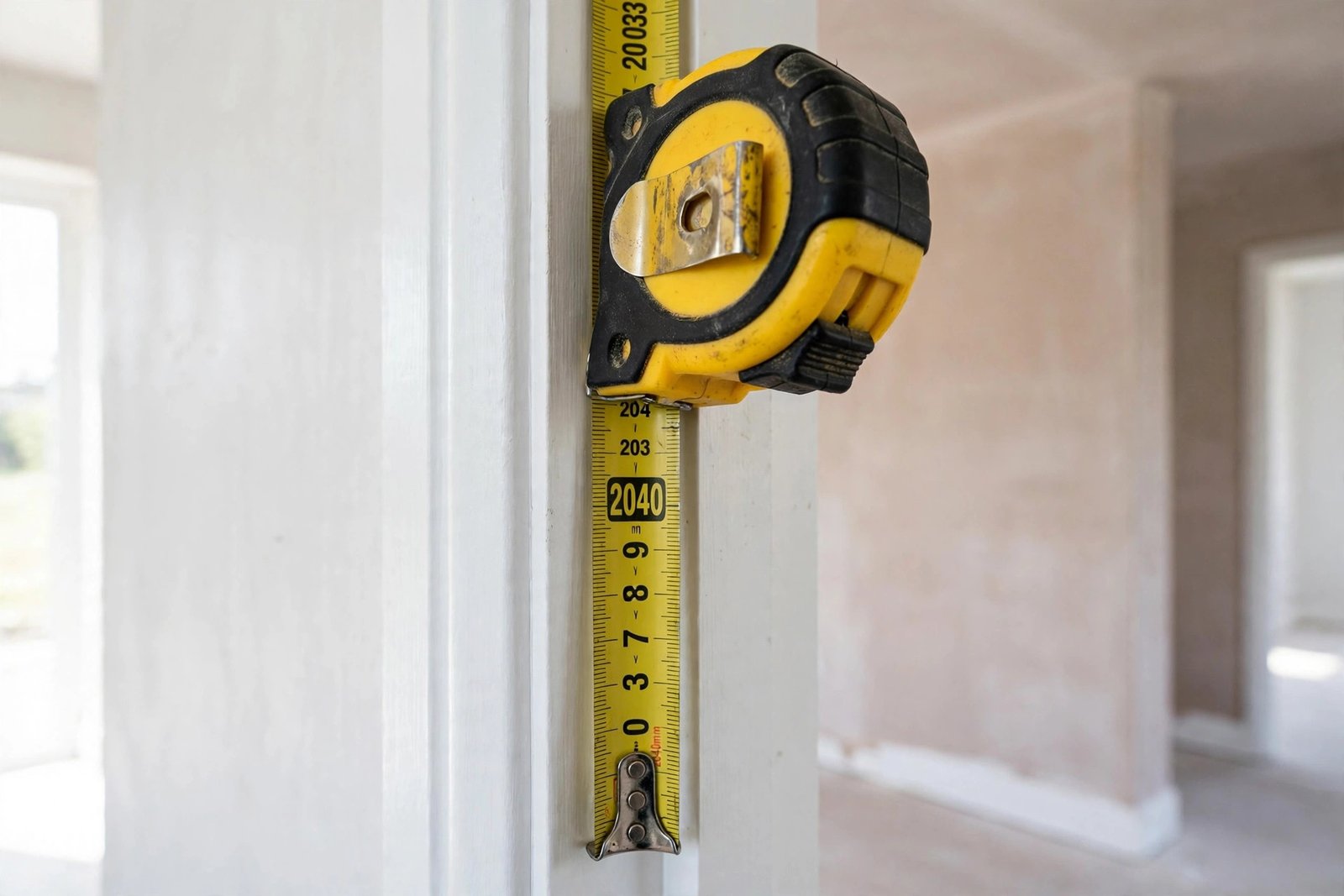
One detail most UK door size guides skip is that Scotland plays by different rules. Scottish housebuilding shifted to metric timber frame construction much earlier than England and Wales, and door manufacturers responded with a taller 2040mm standard leaf instead of the 1981mm size used south of the border. If you live in Scotland or are buying a door for a Scottish property, the sizes listed earlier on this page will not fit your openings.
The most common Scottish internal door is 2040mm by 726mm, which is roughly 6ft 8in by 2ft 4 5/8in. The full range of standard metric internal sizes stocked by UK suppliers is shown below.
| Metric size (mm) | Imperial equivalent | Typical use |
|---|---|---|
| 2040 x 526 | 80.3in x 20.7in | Cupboard and wardrobe doors |
| 2040 x 626 | 80.3in x 24.6in | Narrow bathrooms and ensuites |
| 2040 x 726 | 80.3in x 28.6in | Most common Scottish internal door |
| 2040 x 826 | 80.3in x 32.5in | Bedrooms and living rooms |
| 2040 x 926 | 80.3in x 36.5in | Wider openings and accessible rooms |
Thickness is different too. Scottish internal doors are typically 40mm thick rather than the 35mm standard found in England and Wales. The extra thickness suits timber frame walls and gives the door a noticeably more solid feel. Check that any handles, latches and hinges you buy are rated for 40mm doors, as some budget ironmongery only suits 35mm leaves.
The practical trap catches people buying online. Many English based retailers list 1981mm doors as standard with no mention of Scotland, so a door ordered at the English standard height arrives 59mm too short for a Scottish opening, and that gap cannot be covered by architrave or filler. Always confirm which national standard your home follows before you order, and measure the opening itself rather than assuming. In older Scottish tenements, original doors can be non standard entirely, so the same made to measure fallback described above applies.
Frequently Asked Questions
What is the most common internal door size in the UK?
1981mm by 762mm is the most widely used standard internal door size across UK housing, fitting most bedroom, living room, and general purpose openings.
How do I know what size door I need?
Measure the existing opening’s height and width at multiple points, using the smallest measurement in each direction, then compare against standard sizes to find the closest match, or consider a bespoke door if the opening falls significantly outside standard dimensions.
Are external doors a different thickness to internal doors?
Yes, external doors are typically 44mm thick compared to the standard 35mm for internal doors, providing better weatherproofing, security, and structural strength against the elements.
What size door frame do I need for a standard door?
A standard door frame or lining typically adds around 40 to 45mm to each side of the door leaf dimensions to accommodate the frame itself, so always check the specific product’s overall kit size, not just the door leaf size.
Can I fit a standard door in an older, non-standard opening?
In many cases yes, either by adjusting the opening slightly or using packing pieces around a standard frame, though significantly undersized or oversized openings may require a bespoke door instead.
What is the standard door size in Scotland?
The most common standard internal door size in Scotland is 2040mm by 726mm, which is noticeably taller and slightly narrower than the English and Welsh standard of 1981mm by 762mm. Scottish new build homes almost always use these metric dimensions, so always measure your own opening before ordering a door online.
Why are Scottish doors taller than English doors?
Scottish housebuilding moved to metric timber frame construction earlier and more widely than the rest of the UK, and manufacturers standardised around a taller 2040mm (6ft 8in) door leaf. This means a doorway built for a Scottish standard door will not accept an English sized door without reframing the opening.
Can I fit an English standard door in a Scottish opening?
No. A standard English internal door is 1981mm tall while a Scottish opening is built for a 2040mm door, leaving a 59mm gap that cannot be hidden with architrave. Always check which national standard your home was built to, especially when ordering from English based online retailers.
Are Scottish internal doors thicker?
Yes. Scottish internal doors are usually 40mm thick rather than the 35mm standard found in England and Wales. The extra thickness suits timber frame construction and gives the door a more solid feel, but it also means door furniture such as handles and latches must suit 40mm doors.
What size is a standard front door in Scotland?
The most common standard front door size in Scotland is 2040mm by 826mm with a 44mm thickness, although 2040mm by 926mm is also widely stocked for wider entranceways. As with internal doors, the taller 2040mm height is the key difference from English and Welsh front doors.
Expert Insight
Joiners consistently recommend checking a door opening for square before ordering any door, since even a standard sized door will not fit or close properly in an opening that has moved out of square over time, which is common in older properties as a building settles.
Final Thoughts
Knowing UK standard door sizes makes it much easier to plan a renovation, order replacement doors with confidence, and spot when an opening will need a bespoke solution instead. Always measure the actual opening rather than assuming standard sizing, particularly in period properties.
Ordering a replacement door? Take photos of your measurements alongside a tape measure for your own records, which makes it much easier to resolve any sizing queries with a supplier later.
Related Guides
- Internal Bifold Doors: Complete Buying Guide
- Composite Doors: Complete Buying Guide
- Window Boards and Sills: Complete Guide
Written by the HometoWorld editorial team, covering home improvement, renovation, and property maintenance across the UK.
About the Author