
Quick Answer: What Is the Best Paint for Garden Furniture?
The best paint for garden furniture depends on the material: specialist exterior wood paint or furniture paint for wooden pieces, a metal specific exterior paint with rust inhibiting primer for steel or iron furniture, and a flexible outdoor plastic paint for resin or plastic furniture. All exterior furniture paint should be UV resistant and formulated to withstand rain and temperature changes, unlike standard interior paint.
Painting Wooden Garden Furniture
Wooden garden furniture, whether softwood or hardwood, needs a paint formulated specifically for exterior wood to cope with UK weather. Standard interior wood paint will crack and peel far more quickly outdoors.
- Clean the furniture thoroughly and allow to dry completely
- Sand lightly to remove any flaking old paint or a weathered grey surface layer on previously untreated wood
- Apply a suitable exterior wood primer if the wood is bare or previously unpainted
- Apply two coats of exterior wood paint or furniture paint, allowing full drying time between coats
- Choose a dry day with mild temperatures for painting, since extreme heat or humidity affects how the paint cures
Painting Metal Garden Furniture
Metal garden furniture, whether wrought iron or steel, needs specific attention to rust prevention. Any existing rust should be removed with a wire brush before painting, followed by a rust inhibiting primer and a paint specifically formulated for exterior metal use.
- Remove loose rust and flaking old paint with a wire brush or sandpaper
- Apply a rust converter to any remaining light surface rust that cannot be fully removed
- Prime with a metal specific exterior primer before the topcoat
- Apply an exterior metal paint, ideally one with built in rust inhibiting properties
Painting Plastic and Resin Garden Furniture
Plastic garden furniture is more challenging to paint successfully, since standard paint does not always adhere well to plastic surfaces and can flake with flexing or temperature changes. A specialist plastic and outdoor furniture spray paint, formulated to flex with the material, gives the most durable result.
Garden Furniture Paint Comparison Table
| Material | Recommended Paint | Key Prep Step | Typical Recoat Frequency |
|---|---|---|---|
| Softwood | Exterior wood/furniture paint | Sand, prime bare wood | Every 2 to 3 years |
| Hardwood (teak, oak) | Exterior wood oil or paint | Sand back weathered layer | Annually for oil finish |
| Metal (steel, iron) | Exterior metal paint | Remove rust, prime | Every 2 to 4 years |
| Plastic/resin | Flexible outdoor plastic paint | Clean, light key sand | Every 1 to 2 years |
Paint vs Stain vs Oil for Garden Furniture: Which Should You Choose?
Paint is not the only option for wooden garden furniture, and for some pieces it is not even the best one. Before buying tins, decide which of the three finishes suits your furniture and how much maintenance you will actually do.
| Finish | Look | Durability | Maintenance | Best for |
|---|---|---|---|---|
| Exterior paint | Opaque, any colour, hides imperfections | Highest: 2 to 4 years | When it fails it peels, so recoating needs sanding back | Tired furniture you want to transform with colour |
| Wood stain | Shows the grain, tinted colour | Good: 2 to 3 years | Fades rather than peels, so recoating is quicker and easier | Decent wood where you want a natural look with some colour |
| Wood oil | Natural, enhances grain | Lowest: needs annual reapplication | Simple wipe-on recoat, no sanding or peeling to deal with | Hardwood like teak where you love the natural timber |
Choose paint when the furniture is worn and you want a dramatic refresh: it is the most durable option, comes in the widest colour range, and its thickness covers scratches and imperfections that stain would show through. The price is paid at recoat time: failed paint peels, and peeling paint must be sanded back before repainting.
Choose stain when the wood is in decent shape and you like the look of grain. Stain is usually cheaper and quicker to apply than paint, and because it fades instead of peeling, maintenance is a light clean and recoat rather than a sanding project. Solid-colour stains exist if you want strong colour with stain’s easy maintenance.
Choose oil for quality hardwood you want to keep looking like wood. Oils need reapplying every year, but each application is a simple wipe on and off with no stripping, and oiled teak weathers beautifully. What oil cannot do is add colour choice: you get the wood’s own tones, enhanced.
One more practical point: whichever finish you choose, the furniture will last longer with a light wash every couple of months in the using season. Warm soapy water and a soft sponge is enough. Do not use the abrasive side of the sponge on painted surfaces, and try not to site furniture where sap drips from trees or water pours off a roof.
Should You Spray or Brush Paint Garden Furniture?
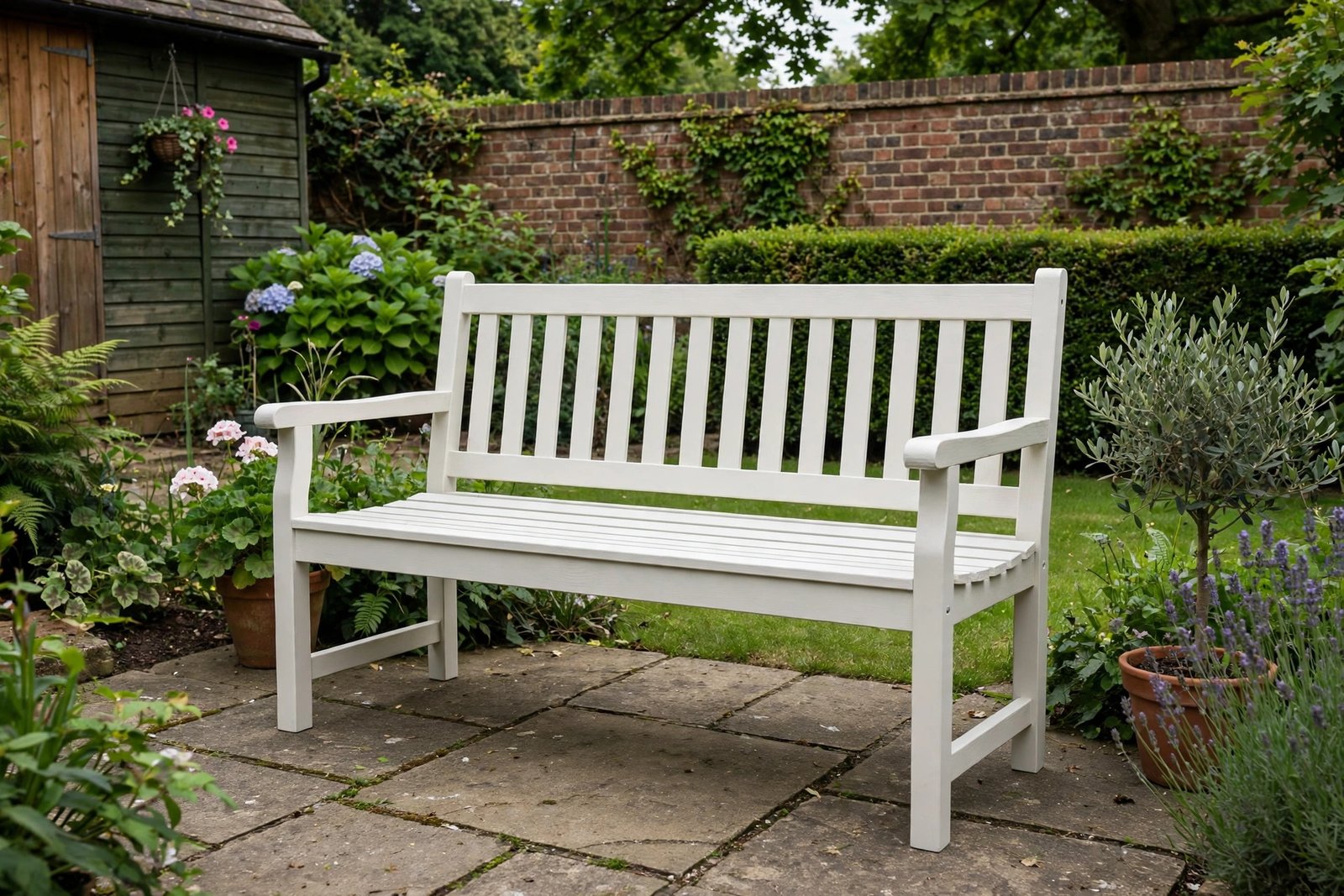
Spray paint gives a more even finish for furniture with detailed shapes, such as wrought iron patterns or moulded plastic chairs, since a brush can struggle to reach every contour evenly. Brush application works well for simpler, flatter shapes such as wooden bench slats or a plain garden table, and allows more control over coverage in a single small area.
How Weather Affects Garden Furniture Paint
UK weather, with its mix of rain, UV exposure, and temperature swings, is demanding on any exterior paint finish. Choosing a paint specifically rated for exterior and UV resistance, rather than assuming any weatherproof label is equivalent, makes a meaningful difference to how long the finish lasts before fading or peeling.
Frequently Asked Questions
Can you use exterior wall paint on garden furniture?
It is not recommended, since exterior masonry or wall paint is formulated for a different surface and flex requirement than furniture paint, and will generally not adhere or perform as well on wood, metal, or plastic furniture.
How long does paint last on outdoor furniture?
This varies by material and paint quality, but most exterior furniture paint lasts two to four years before needing a fresh coat, with metal and plastic furniture sometimes needing more frequent attention than well maintained hardwood.
Do you need to prime garden furniture before painting?
Priming is recommended for bare wood and any metal furniture, particularly where rust has been treated, since it significantly improves paint adhesion and overall durability against outdoor conditions.
What is the most durable garden furniture paint?
Specialist two part or hard wearing single pack exterior paints formulated specifically for garden furniture generally offer the best durability, outperforming general purpose exterior paint not designed for furniture level wear.
Can you paint garden furniture in winter?
Most exterior paints need a minimum temperature and dry conditions to cure properly, so painting is best done in spring, summer, or early autumn rather than winter, when temperatures and humidity are less favourable.
Paint vs Stain FAQs
Is it better to paint or stain garden furniture?
Paint lasts longer and offers more colours, making it best for transforming worn furniture. Stain is cheaper, quicker to apply and easier to maintain since it fades rather than peels. Choose based on the wood’s condition and how much maintenance you will do.
How often do you need to re-oil garden furniture?
Typically once a year for hardwoods like teak. Oiling is quick: clean the wood, wipe the oil on, wipe the excess off. Skipping a year will not ruin the furniture, it will just look drier until you reapply.
Can you stain over painted garden furniture?
Not directly. Stain needs to penetrate the wood, so old paint must be stripped back to bare timber first. If you want a change without stripping, repainting is the easier route.
Does garden furniture paint peel?
It can, usually because of poor preparation or painting in damp conditions. When paint fails it peels, which is why preparation (cleaning, sanding, priming bare wood) matters more than the brand of paint.
How do you maintain painted garden furniture?
Wash it lightly every couple of months during the using season with warm soapy water and a soft sponge. Avoid abrasive pads, keep it out of constant drip zones, and touch up chips promptly before water gets underneath.
Expert Insight
Furniture restorers consistently note that rust treatment before painting, not the paint brand chosen, is the biggest factor in how long a repainted metal garden chair or table stays looking good, since paint applied over untreated rust will fail from beneath regardless of its quality.
Final Thoughts
Choosing the right paint for your garden furniture’s specific material, and preparing the surface properly beforehand, will give a far more durable result than paint choice alone. For ongoing care beyond painting, see our guide to cleaning and restoring garden furniture.
Repainting garden furniture this season? Choose a dry stretch of at least 48 hours in the forecast before starting, to give the paint proper time to cure without rain interference.
Related Guides
- How to Clean and Restore Garden Furniture
- Rattan Garden Furniture: The Buyer’s Guide
- Patio Ideas and Cost: Complete Guide
Written by the HometoWorld editorial team, covering home improvement, renovation, and property maintenance across the UK.
About the Author