Quick Answer: What Are Internal Bifold Doors?
Internal bifold doors are hinged, folding door systems that concertina back against a wall, making them ideal for connecting living spaces, kitchen diners, or home offices without taking up the floor space a standard hinged door would need when fully open. They typically come in two, three, or four panel configurations and are available in timber, glazed, and painted finishes to suit both period and contemporary properties.
How Internal Bifold Doors Work
Unlike a standard hinged door that swings on a single pivot, bifold doors are made up of two or more panels connected by hinges, running on a top track and often a bottom guide channel. When opened, the panels fold neatly in on themselves and stack against the wall or door frame, leaving a wide, largely unobstructed opening.
Types of Internal Bifold Doors
2 Panel Bifold Doors
The simplest configuration, suited to narrower openings such as a store cupboard, utility room, or airing cupboard doors, where a compact folding action is enough.
3 and 4 Panel Bifold Doors
Wider openings, such as those connecting a kitchen and dining area, typically use three or four panel systems, giving a larger clear opening once fully folded back.
Glazed Internal Bifold Doors
Glazed bifold doors allow light to pass between rooms even when closed, making them a popular choice for connecting a hallway to a living room, or for internal use where natural light needs to travel further into a property.
Solid and Panelled Bifold Doors
Solid panelled bifold doors suit spaces where privacy or sound separation matters more than light transfer, such as a home office or a room used as a playroom.
Internal Bifold Door Materials
| Material | Typical Cost per Door Set | Best For |
|---|---|---|
| MDF/painted softwood | £150 to £400 | Budget projects, painted finish |
| Oak veneered | £250 to £600 | Mid range, natural wood look |
| Solid oak | £400 to £900+ | Premium finish, period properties |
| Glazed (any core material) | £200 to £700 | Light transfer between rooms |
Prices above are for the door panels and track kit, excluding professional fitting, which typically adds £100 to £250 depending on whether the opening needs any structural adjustment.
Measuring for Internal Bifold Doors
Standard internal door sizes in the UK are commonly 1981mm by 762mm or 1981mm by 838mm for a single door leaf, but bifold systems are sold as complete kits sized to the full opening width, so measuring the existing opening accurately, including checking it is square, is essential before ordering. Our standard door sizes UK guide covers this in more detail if you are unsure what size opening you are working with.
Fitting Internal Bifold Doors: DIY or Professional?
Bifold door kits are designed to be more DIY accessible than a full new doorway, since most systems come with a track, hinges, and panels ready to fit into an existing, properly sized opening. However, getting the track perfectly level and the panels correctly aligned takes care, and a poorly fitted bifold system is one of the more common DIY door frustrations, since misalignment causes the panels to catch or fail to close smoothly.
Common Internal Bifold Door Problems and How to Fix Them
Even well fitted bifold doors develop issues over time, and most of them trace back to alignment rather than faulty hardware. The table below covers the problems UK homeowners report most often, with the fix for each.
| Symptom | Likely cause | DIY fix |
|---|---|---|
| Door sticks or scrapes | Debris in the track or dried hinges | Vacuum the track and guide channel, then apply silicone spray to hinges and rollers |
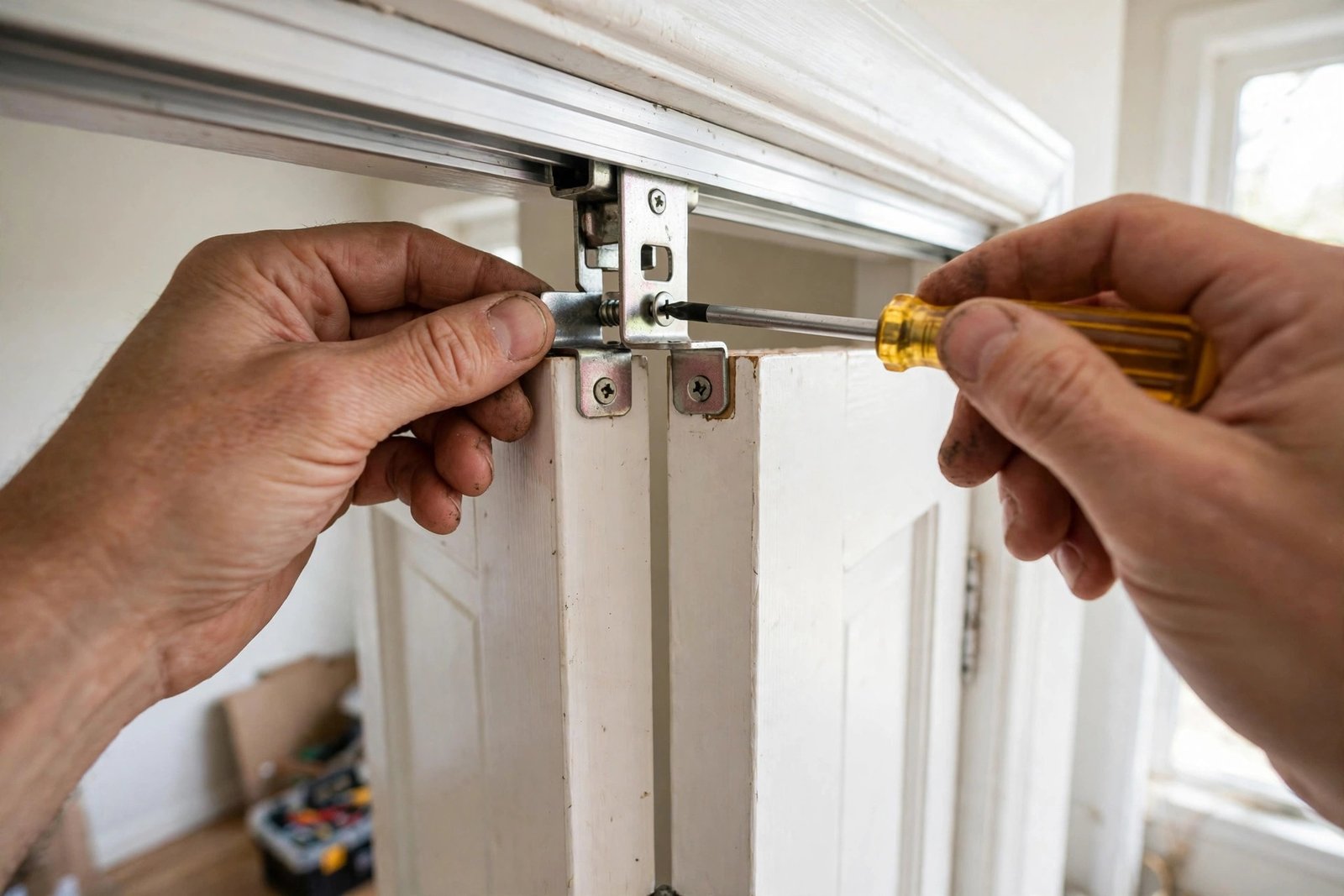
| Door will not close fully | Misaligned panels or loose pivot bracket | Check the top pivot bracket setscrew, realign the panel edge parallel to the frame, then retighten |
| Door bounces back open | Track not level or snugger out of adjustment | Check the track with a spirit level and adjust the top pivot so the closed position holds |
| Panel has come off the track | Spring loaded top pivot slipped out | Depress the top pivot, guide the roller back into the channel, then check door height adjustment |
| Door feels wobbly or loose | Worn pivot pin hole | Remove the door, plug the hole with a glued wooden dowel, redrill and rehang |
Start every repair by opening and closing the door slowly while watching the panels, since seeing where it catches tells you more than any guesswork. Cleaning and lubrication alone resolves the majority of sticking complaints, so always try that before adjusting hardware. Work through one adjustment at a time and test between changes, because adjusting two pivots at once makes it hard to tell what helped.
Call a joiner rather than forcing the issue if a panel has dropped significantly, the track itself is bent, or the door still drags after cleaning and adjustment. Forcing a stiff bifold can crack the frame or strip the pivot fixings, turning a simple adjustment into a replacement job. A professional adjustment typically costs £80 to £150 in the UK.
Pros and Cons of Internal Bifold Doors
- Pros: Space saving when open, good for connecting rooms, wide range of styles and finishes, allow light transfer with glazed options
- Cons: Track and hinges require occasional maintenance, can be less effective at sound insulation than a solid single door, multiple panels mean more potential points of wear over time
Where to Use Internal Bifold Doors
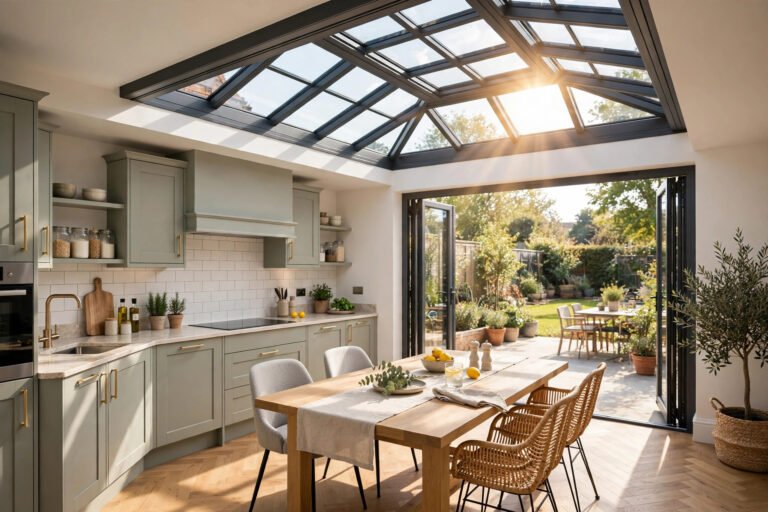
- Connecting an open plan kitchen and dining area while retaining the option to close the space off
- Utility rooms and airing cupboards, where a two panel system saves space compared to a swinging door
- Home offices, allowing the room to be opened up to the rest of the house or closed for privacy during calls
- Wardrobe and storage openings, particularly in bedrooms with limited floor space
Frequently Asked Questions
How much space do internal bifold doors save compared to hinged doors?
A standard hinged door needs clear floor space equal to its full width to swing open, while bifold doors fold back against the wall, freeing up most of that space, which is particularly useful in smaller rooms or tight hallways.
Can internal bifold doors be fitted to any opening?
Most standard sized openings can accommodate a bifold system, but non-standard or older openings may need adjustment, so it is worth measuring carefully or getting a professional assessment before ordering.
Do bifold doors need a bottom track?
Many internal bifold systems use a bottom guide channel rather than a full track, which keeps the floor area cleaner and easier to walk over, though this varies by manufacturer and door weight.
Are glazed bifold doors good for privacy?
Glazed bifold doors are better suited to spaces where light transfer matters more than full privacy. Frosted or obscure glass options exist for situations needing a balance of both.
How do you maintain internal bifold doors?
Regularly check and lightly lubricate the hinges and track, and keep the guide channel free of dust and debris, which prevents the panels from sticking or misaligning over time.
Why does my internal bifold door keep sticking?
Sticking is usually caused by dust and debris in the track or dried out hinges and rollers. Vacuum the track and guide channel thoroughly, then apply a silicone based lubricant to the moving parts. This simple maintenance fixes most sticking complaints.
How do I stop my bifold door bouncing back open?
A door that will not stay closed usually has a track that is not perfectly level or a top pivot that needs adjusting. Check the track with a spirit level first, then adjust the pivot bracket so the panels sit squarely in the closed position.
Can I fix a bifold door that has come off its track myself?
Yes, in most cases. Depress the spring loaded top pivot, guide the roller back into the track channel, then check that the door height is set correctly so it does not jump out again. If the track is bent, it may need straightening or replacing.
When should I call a professional for bifold door repairs?
Call a joiner if a panel has dropped significantly, the track is bent, pivot fixings are stripped, or the door still drags after cleaning and adjustment. A professional adjustment typically costs £80 to £150, far less than a replacement door.
How often should internal bifold doors be maintained?
Vacuum the tracks every month or two and lubricate the hinges and rollers once or twice a year. Regular light maintenance prevents the buildup that causes most sticking and misalignment problems.
Expert Insight
Joiners commonly report that the majority of bifold door problems trace back to an out of square opening rather than a fault with the door kit itself. Checking and, if necessary, correcting the opening before fitting saves far more time than troubleshooting a misaligned door afterward.
Final Thoughts
Internal bifold doors offer one of the most effective ways to connect spaces while retaining the option to close them off, particularly in open plan kitchen diners and home offices. Choosing the right panel configuration and material for your specific opening, and taking care with measurement and fitting, will give the best long term result.
Considering bifold doors for your home? Measure your opening twice and check it for square before ordering, since this single step prevents the majority of fitting issues reported by DIY installers.
Related Guides
- Standard Door Sizes UK: Complete Guide
- Composite Doors: Complete Buying Guide
- French Doors vs Patio Doors
Written by the HometoWorld editorial team, covering home improvement, renovation, and property maintenance across the UK.
About the Author