
Moving abroad from the UK is exciting, but it is also one of the biggest administrative tasks a homeowner will ever face. Whether your destination is across the Atlantic or anywhere else, the move itself is only half the job. The other half is sorting out your home, your bills and your legal duties before you leave. This checklist walks through everything, with the focus where it belongs: on your house.
Start with your move date, not your boxes
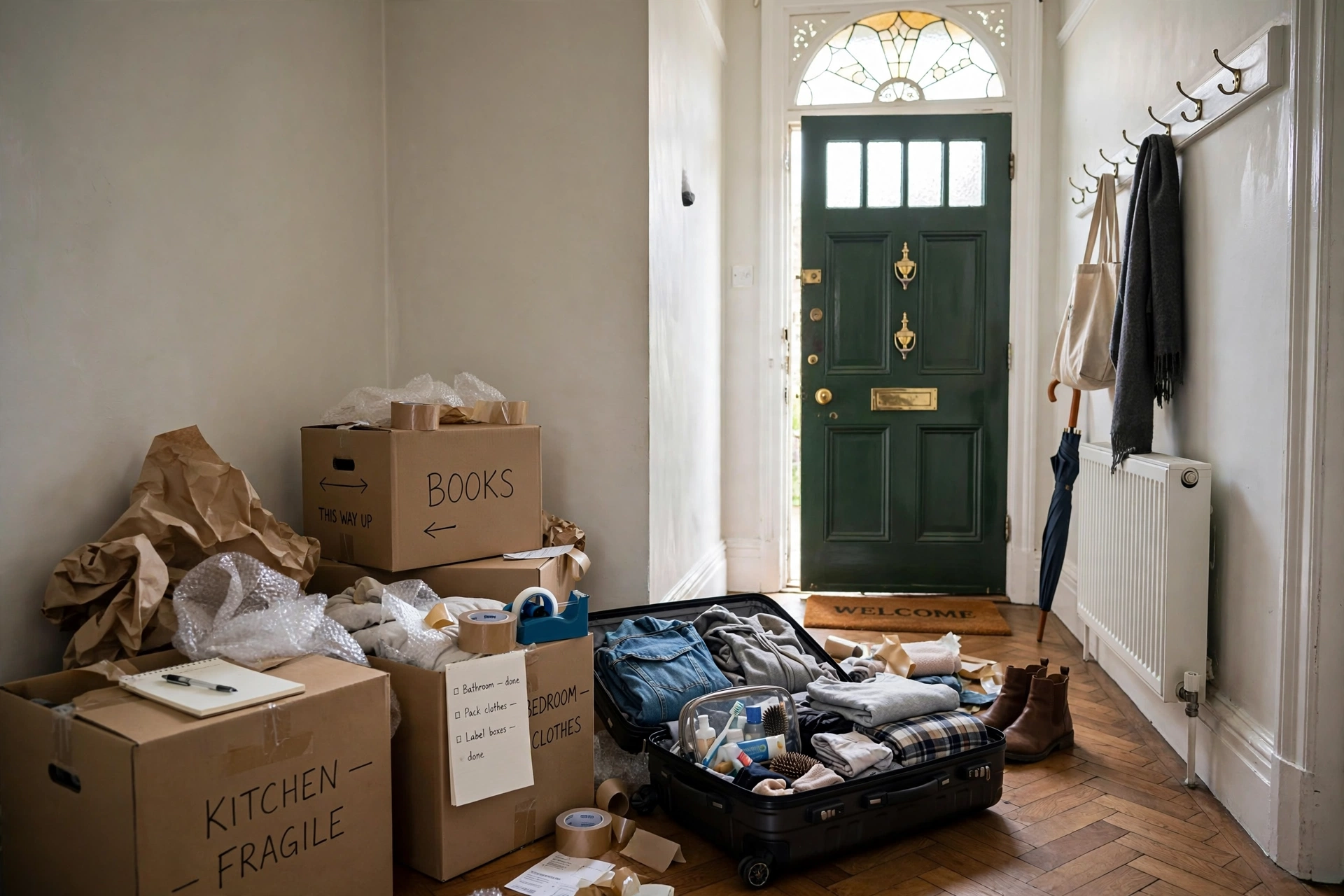
Most problems come from doing things in the wrong order. Your visa route and your move date decide everything else, so confirm those first. Once the date is set, work backwards. Tell your employer or client, give notice on your rental or start your property sale, and book removals only after the date is firm. Booking a removal company before you have a confirmed date is one of the most common causes of wasted deposits.
Decide what to do with your UK home
This is the biggest decision of the whole move. Leaving a house empty, renting it out and selling it all carry different costs and different paperwork. The table below sets out the main trade offs.
| Option | Main benefit | Main cost or duty | Best for |
|---|---|---|---|
| Sell before you leave | Releases capital and ends your UK property duties | Estate agent fees and conveyancing; strict tax rules if you sell while non resident | Permanent moves with no plan to return |
| Rent it out | Keeps a foothold in the UK market and brings in income | Landlord duties from abroad, UK tax on rent, Non Resident Landlord Scheme admin | Moves of 1 to 5 years where you may return |
| Leave it empty | Maximum flexibility if plans change | Full council tax plus empty home premiums, insurance restrictions, security risk | Short moves under 6 months only |
There is no universally right answer, but leaving a home empty long term is usually the most expensive option of the three, and many people underestimate the cost.
Council tax and the empty home premium
If you leave your home empty, you still pay council tax on it. Councils in England can add a premium on top of the normal bill once a property has been empty and substantially unfurnished for a year. The premium is 100 percent after 1 year, 200 percent after 5 years and 300 percent after 10 years. Separate rules apply to furnished second homes, which can face a 100 percent premium from 1 April 2025 in councils that adopt the charge. Rules and exceptions differ between councils, so check your own council’s policy before you leave. One practical point: a property that is being actively marketed for sale or let can be exempt from the premium for up to 12 months in some areas, which is another reason not to leave the property in limbo.
Protect your home if it will stand empty
An empty house is more vulnerable to burglary, leaks and frost damage, and standard home insurance often limits or excludes cover once a property has been empty for more than 30 to 60 days. Before you go, tell your insurer how long the property will be empty and ask for written confirmation of cover. A few low cost steps make a real difference: turn off the water at the stopcock or have the system drained, set the heating to a low frost protection level in winter, ask someone you trust to visit regularly, use timers on lights, and make sure the post does not pile up on the doorstep. Set up Royal Mail Redirection so important post reaches you or a trusted contact.
Tell HMRC you are leaving
You must tell HMRC if you are leaving the UK to live abroad permanently or to work abroad full time for at least one full tax year. If you do not usually complete a Self Assessment tax return, you tell HMRC by filling in form P85, which you can submit online once you have left the UK, or by post before you leave. If you usually complete Self Assessment, you report the move through your tax return using the residence pages. Doing this lets HMRC work out whether you are due a tax refund and whether you need to pay tax in more than one country. If you plan to rent out your UK home, you will also need to register for Self Assessment, because UK rental income stays taxable in the UK even when you live abroad.
Health, documents and the rest of the admin
Once you move abroad permanently you are generally no longer entitled to NHS healthcare, so arrange health insurance for your destination before you travel. Tell your GP and dentist you are leaving. Collect medical, dental and vaccination records for the whole family. Other jobs that are easy to forget: tell your student loan provider if you are leaving for more than 3 months, tell the DWP if you receive benefits, update your driving licence arrangements, and make sure your will still works under the laws of your new country. Keep one folder, physical and digital, with copies of every document you submit.
Sort the practical move itself
Get quotes from at least three removal companies and ask each one to explain exactly what is included: packing, customs paperwork, storage, delivery and insurance. Declutter first, because international shipping is priced by volume and it is cheaper to sell or donate bulky items than to ship them. Photograph everything valuable before it is packed. Take meter readings on the day you leave, photograph them, and close or transfer every utility account so no one else can run up bills in your name.
FAQs
Can I leave my house empty while I move abroad?
Yes, but it is rarely the cheapest option. You will still pay full council tax, your council can add an empty home premium after a year, your home insurance may restrict cover after 30 to 60 days of emptiness, and the property is more exposed to burglary and leaks. For moves longer than 6 months, renting out or selling usually works out better.
Do I have to pay council tax if I move abroad?
Yes, if you still own the property. The bill follows the property, not where you live. An empty and unfurnished home faces no premium in its first year but can face a 100 percent premium after 1 year, rising the longer it stays empty. If tenants move in, council tax becomes their responsibility.
Do I need to tell HMRC when I move abroad?
Yes, if you are leaving the UK to live abroad permanently or to work abroad full time for at least one full tax year. People who do not file Self Assessment use form P85; people who do file report the move through their tax return. Telling HMRC lets them calculate any refund and confirm your tax position.
Can I rent out my UK home while living abroad?
Yes. You will pay UK tax on the rental income, your letting agent or tenant will normally deduct basic rate tax under the Non Resident Landlord Scheme unless you get approval to receive rent without deduction, and you must register for Self Assessment. Appoint a UK based agent or trusted contact to handle maintenance and emergencies.
Will my home insurance cover an empty house?
Often only partly. Most standard policies limit or exclude cover once a home has been empty for 30 to 60 days, which can leave you unprotected against burglary, leaks and frost damage. Tell your insurer before you leave and get written confirmation of what is covered, or arrange specialist unoccupied property insurance.
Should I sell my house before moving abroad?
Selling suits permanent moves because it releases capital and ends your UK property duties. Renting suits moves of a few years where you may return. Compare the costs honestly: selling has agent and legal fees, renting has management and tax admin, and leaving the home empty usually costs the most once council tax premiums and insurance are added up.
About the Author