Quick Answer: How Do You Paint Skirting Boards Properly?
Skirting boards should be cleaned, sanded, and primed before painting, using a stain blocking primer if the wood has knots or old stains, then finished with two coats of a durable paint such as eggshell or satinwood. Most professional decorators paint skirting boards after the walls but before the final coat of the wall paint, using masking tape to protect the fresh skirting line.
Best Paint Types for Skirting Boards
| Paint Type | Finish | Durability | Best For |
|---|---|---|---|
| Eggshell | Low sheen | Good | Most homes, subtle finish |
| Satinwood | Medium sheen | Very good | High traffic hallways, family homes |
| Gloss | High shine | Excellent | Traditional look, easy to wipe clean |
| Water based gloss | High shine | Very good | Faster drying, less yellowing over time |
Water based gloss paint has become the preferred choice for many decorators in recent years, offering a similar finish to traditional oil based gloss but with faster drying time and significantly less yellowing over the following years. If you are also deciding on wall finishes at the same time, see our matt vs silk paint guide.
Satinwood vs Eggshell for Skirting Boards: Which Wins?
This is the decision most homeowners get stuck on, and it dominates decorating forums for good reason: the two finishes look similar in the tin but behave differently on the wall. Here is the head-to-head.
| Satinwood | Eggshell | |
|---|---|---|
| Sheen level | Medium, around 40 percent | Low, around 15 percent |
| Durability | Very good: resists scuffs and scratches | Good, but a step below satinwood |
| Hides wood flaws | Moderate: sheen highlights dents | Better: low reflectivity disguises damage |
| Touching up | Blends reasonably | Very hard: touch-ups usually show |
| Yellowing (oil-based) | Yellows over time | Yellows over time |
| Best for | Hallways, family homes, high traffic | Period properties, imperfect boards, modern low-sheen look |
Choose satinwood if your skirting takes daily abuse: hallways, stairs, homes with kids or dogs. Its higher resin content makes it tougher and easier to wipe clean when marked. Choose eggshell if your boards are old, dented or uneven: the lower sheen is far more forgiving, and it gives the fashionable flat finish that suits period properties.
Two practical warnings. First, eggshell is notoriously hard to touch up: its slight sheen means a patched area almost always shows, so keep enough paint to redo a full length if needed. Second, the yellowing row above applies to oil-based versions of both. Modern water-based satinwood and eggshell resist yellowing far better, which is why most decorators now default to water-based for white woodwork.
Whichever you pick, the undercoat rule is the same: bare wood needs a primer or undercoat first, while previously painted boards in sound condition can usually skip straight to topcoat after sanding. And never use wall emulsion on skirting: it chips and cracks under the knocks that skirting absorbs daily.
Should You Paint Skirting Boards or Walls First?
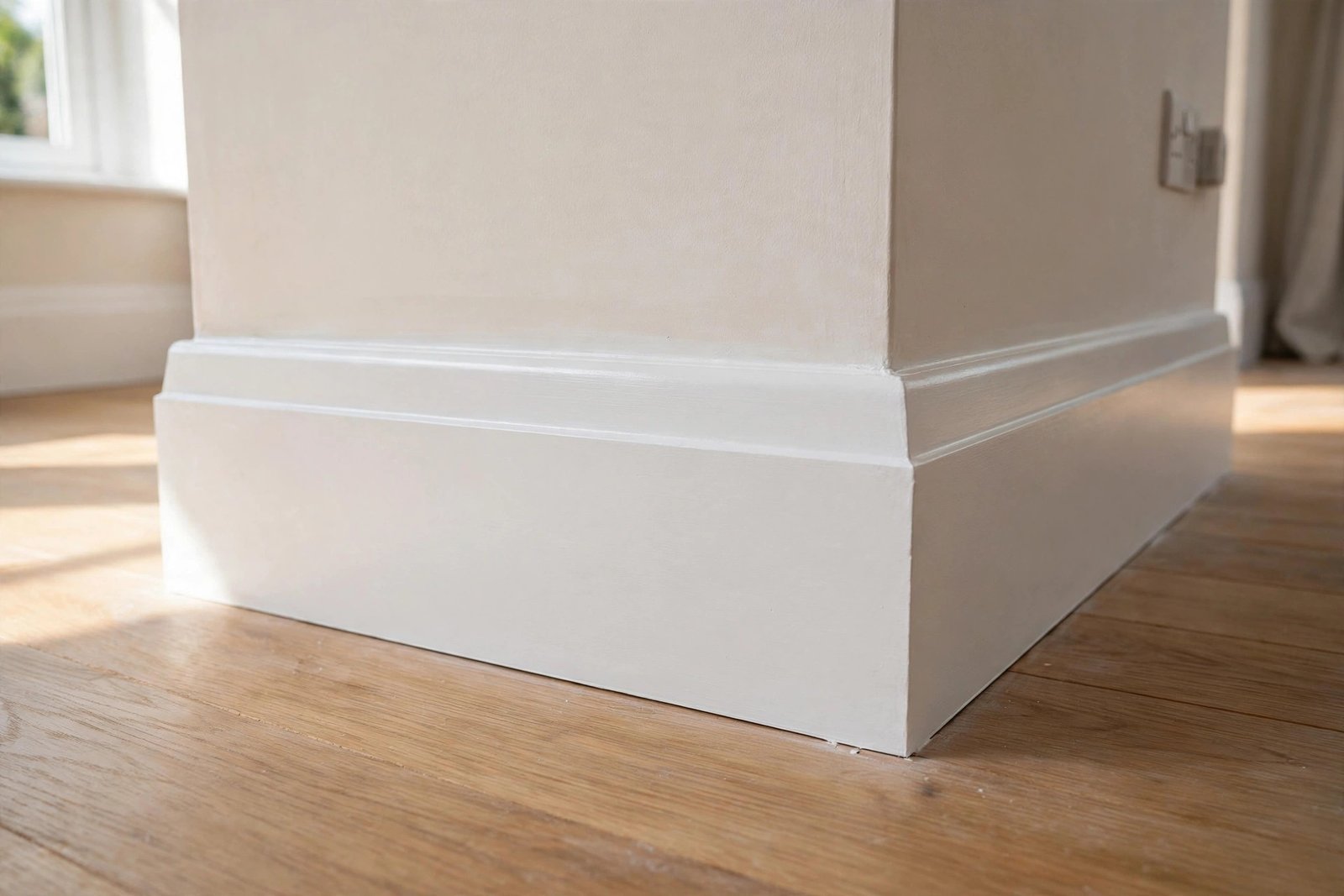
Most professional decorators paint the ceiling first, then the walls, and finish with the skirting boards and other woodwork last. This order makes it easier to achieve a crisp, clean line where the skirting meets the wall, since any minor wall paint marks on the skirting can be covered by the final skirting coat, whereas the reverse is much harder to correct neatly.
How to Prepare Skirting Boards for Painting
- Clean the skirting thoroughly with sugar soap or a mild detergent to remove dust, grease, and general grime
- Fill any dents, gaps, or nail holes with a suitable wood filler and allow to dry fully
- Sand the surface lightly with fine grit sandpaper to key the surface and smooth any filled areas
- Wipe away all sanding dust with a tack cloth or slightly damp cloth before priming
- Apply a stain blocking primer if there are visible knots, old stains, or if switching from a dark to a light colour
Should You Sand Skirting Boards Before Painting?
Sanding is recommended even on previously painted skirting boards, since it keys the existing surface so the new paint adheres properly rather than simply sitting on top and potentially peeling later. A light sand with fine grit paper is usually sufficient for boards in reasonable condition, while more significant preparation is needed if the existing paint is flaking or chipped.
How to Paint Skirting Boards: Step by Step
- Apply painter’s tape along the bottom edge of the wall and along the floor or carpet edge to protect surrounding surfaces
- Cut in along the top edge of the skirting with a small angled brush for precision
- Apply the primer coat if needed, allowing full drying time as per the manufacturer’s instructions
- Apply the first topcoat in the direction of the wood grain, working in manageable sections
- Allow to dry fully, then apply a second topcoat for even coverage and durability
- Remove the masking tape carefully while the final coat is still slightly tacky to avoid pulling paint away with the tape
Coloured Skirting Boards: A Growing Trend
While white and off white remain the most common skirting board colours, coloured skirting boards, whether matching the wall colour for a seamless look or using a contrasting dark tone, have grown in popularity as a way to add character to a room. Matching skirting to the wall colour tends to make a room feel taller and more cohesive, while contrasting skirting draws the eye and adds a more defined, traditional look.
Common Skirting Board Painting Mistakes
- Skipping sanding on previously painted skirting, leading to poor paint adhesion
- Not using a stain blocking primer over knots or old dark stains, which can bleed through lighter topcoats
- Applying paint too thickly in one coat rather than two thinner, more even coats
- Removing masking tape too late, once the paint has fully hardened, risking a torn or uneven edge
Frequently Asked Questions
What is the best paint finish for skirting boards?
Satinwood and water based gloss are both popular choices, offering good durability and an easy to wipe clean surface, which suits skirting boards given their exposure to knocks, dust, and general household wear.
Do you need to prime skirting boards before painting?
Priming is recommended, particularly on bare wood, boards with visible knots or stains, or when changing from a dark to a light colour, since it improves paint adhesion and prevents staining bleeding through.
How long does paint take to dry on skirting boards?
Most water based paints are touch dry within a few hours and ready for a second coat the same day, though full curing to a hard, durable finish can take one to two weeks, during which the surface should be treated gently.
Can you paint skirting boards without removing carpet?
Yes, using painter’s tape to protect the carpet edge and working carefully close to the join is the standard approach, though removing carpet gripper strips temporarily can make access easier for a full repaint.
What colour should skirting boards be?
White and off white remain the most versatile and popular choices, working with almost any wall colour, though matching skirting to the wall colour or choosing a bold contrast are both current, well established alternatives.
Satinwood vs Eggshell FAQs
Is satinwood or eggshell better for skirting boards?
Satinwood is tougher and easier to clean, making it better for hallways and family homes. Eggshell hides wood imperfections better and gives a more modern low-sheen look. There is no universal winner: match the finish to your traffic levels.
Can you paint eggshell over satinwood?
Yes, after a light sand to key the surface and a wipe down. Do not mix the two paints together in the tin, as the different formulations can dry patchy.
Does eggshell paint yellow less than gloss?
Oil-based eggshell yellows like oil-based gloss over time. Water-based eggshell resists yellowing far better, which is one reason decorators now prefer water-based finishes for white woodwork.
Can you use emulsion on skirting boards?
It is not recommended. Emulsion is formulated for walls, not for the knocks, scuffs and cleaning that skirting endures. It will chip and crack far sooner than satinwood, eggshell or gloss.
How many coats of satinwood do skirting boards need?
Two topcoats over a primer or undercoat on bare wood. On previously painted boards in good condition, two topcoats after sanding is usually enough without a separate undercoat.
Expert Insight
Professional decorators consistently identify inadequate sanding and priming, rather than the choice of paint brand, as the leading cause of skirting board paint failing or chipping prematurely. Time spent on preparation delivers a far more durable, professional looking finish than rushing straight to the topcoat.
Final Thoughts
Well painted skirting boards make a noticeable difference to how finished a room feels, and the process rewards careful preparation far more than it rewards an expensive paint choice. Clean, fill, sand, and prime properly, and even a budget paint will give a durable, professional looking result.
Planning to repaint your skirting boards? Do a full room’s skirting in one sitting where possible, since matching a touch up to previously painted sections days or weeks later can be noticeably harder than doing the whole run in one go.
Related Guides
- Matt vs Silk Paint: Which Should You Choose?
- How to Paint New Plaster and Plasterboard
- How to Remove Paint and Varnish
Written by the HometoWorld editorial team, covering home improvement, renovation, and property maintenance across the UK.
About the Author