
EICR Cost UK: Complete Price Breakdown Guide
Understanding EICR cost is essential for landlords, homeowners, and businesses planning for compliance. Electrical inspections are mandatory for rental properties and strongly recommended for owner-occupied homes, alongside related landlord obligations such as a gas safety certificate and fire risk assessment.
EICR: Quick Answers
How much does an EICR cost for a 3-bedroom house? Typically £150 to £250 in the UK, including VAT in most quoted prices. London and the South East sit at the top of the range. The exact figure depends on circuit count, property age and access.
How often do landlords need an EICR? At least every 5 years, or sooner if the previous report specifies a shorter interval. There is no legal requirement to renew it for each new tenant while the existing report remains valid.
What Is Included in the Cost?
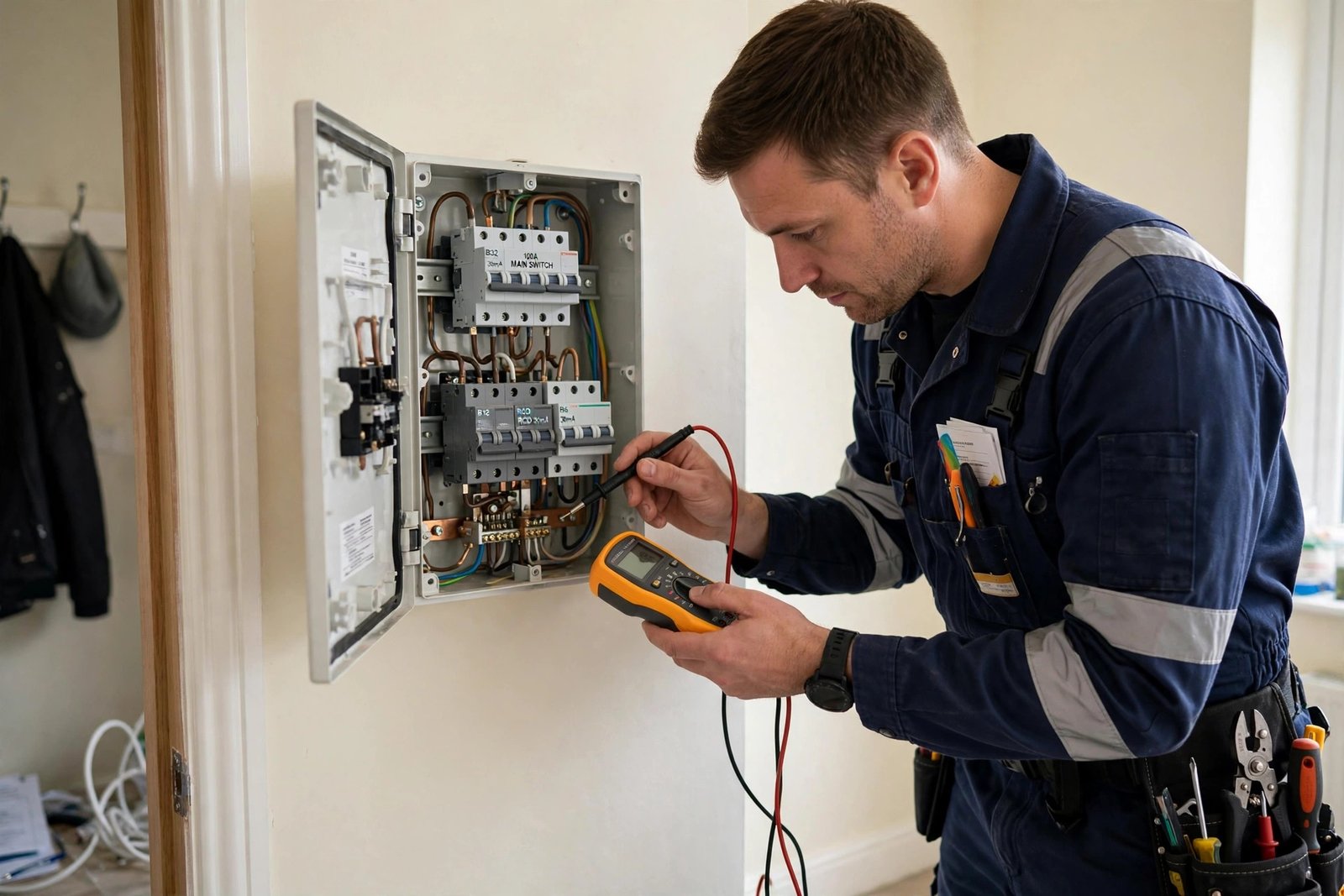
An official government guidance involves a full assessment of a property’s fixed electrical installation. The electrician inspects the consumer unit, tests circuits, checks earthing and bonding, and identifies potential safety risks. The result is a detailed electrical installation condition report outlining whether the property is satisfactory or requires remedial work.
The inspection does not usually include repair work. If faults are found, additional charges may apply for corrective actions.
Average EICR Cost in the UK
Residential pricing generally falls within the following range:
• 1 bedroom flat £100 to £150
• 2 to 3 bedroom house £150 to £200
• 4 to 5 bedroom property £200 to £300
• Large homes over £300
Commercial EICR costs per circuit typically range from £15 to £25. Larger commercial premises may be priced based on total circuits rather than property size.
EICR Cost for a 3-Bedroom House: What You Should Pay
The 3-bedroom house is the most common UK rental property, so it deserves its own breakdown. Most electricians quote £150 to £250 for a standard 3-bed, which usually has 6 to 10 circuits. If your quote falls far outside this band, use the checklist below before deciding.
| 3-bed scenario | Typical range |
|---|---|
| Standard 3-bed, good access, modern consumer unit | £150 to £200 |
| 3-bed, older wiring or difficult access | £200 to £250 |
| 3-bed in London / South East | £200 to £300 |
| 3-bed HMO (more circuits, more checks) | £250 to £350 |
What pushes a 3-bed quote up or down?
- Circuit count: more circuits mean more testing time; ask how many circuits your quote covers.
- Age of wiring: pre-1990s installations take longer to inspect.
- Access: blocked lofts, locked outbuildings and overfilled cupboards add time.
- Urgency: next-day bookings carry a premium; book 4 to 6 weeks ahead.
- VAT: confirm whether the quote includes VAT; a £200 quote plus VAT is really £240.
Is my quote fair? A quick checklist
- Is the electrician registered with NICEIC or NAPIT? Check the registers online.
- Does the price include the written report (not just the visit)?
- Is VAT included in the quoted figure?
- Does the inspection cover dead testing, live testing and RCD checks (2 to 4 hours on site for a 3-bed)?
- Are remedial works quoted separately, not bundled opaquely?
- Be wary of £69-style offers: a proper inspection cannot be done responsibly at that price.
London vs Regional Pricing
London and the surrounding areas often charge 15 to 25 percent more than other UK regions. Higher operational costs and increased demand influence pricing. Landlords operating in central London should budget accordingly.
Factors Affecting EICR Cost
Several variables influence pricing:
• Number of circuits in the property
• Accessibility of wiring and consumer unit
• Age and condition of installation
• Urgent booking requests
• Property type including HMOs
Older properties may require longer inspection times due to outdated wiring systems.
How Often Do Landlords Need an EICR?
At least every 5 years. That is the legal maximum interval under the Electrical Safety Standards in the Private Rented Sector (England) Regulations 2020. But the real answer has important nuances that catch landlords out.
The 5-year legal rule, in plain English
Regulation 3 requires the installation to be inspected and tested “at regular intervals”, which the government guidance defines as at least every 5 years, by a qualified and competent person. The 5 years run from the date of the last inspection, and you must supply the report to tenants and the local authority on request within the set time limits.
When your report sets a shorter interval
The electrician can recommend re-inspection sooner than 5 years (for example, every 3 years for an ageing installation). If the report says 3 years, 3 years becomes your legal interval, not 5. Always check the “next inspection due” date on the report itself.
Do you need a new EICR for a new tenant?
No. This is the most common misconception. Validity follows the report’s expiry date, not the tenancy. If your EICR is 2 years old and valid for 5, a new tenant moving in does not trigger a fresh inspection. You must, however, give the new tenant a copy of the existing report before they occupy the property.
HMOs, Scotland, Wales and Northern Ireland
- HMOs: licensing often brings its own inspection cycles; check your licence conditions as they can demand shorter intervals.
- Scotland: the Repairing Standard imposes electrical safety duties with its own guidance; do not assume English rules transfer directly.
- Wales: fitness-for-habitation standards under the Renting Homes (Wales) Act 2016 apply.
- Northern Ireland: no identical statutory regime; insurers and agents commonly require periodic reports anyway.
The 2026 renewal wave
The 2020 Regulations took full effect in April 2021, which means a large cohort of first-round EICRs expires in 2026. Electricians are busier than usual this year. If your report dates from 2021, book your re-inspection now rather than waiting for the expiry month.
Landlord renewal checklist
- Check the “next inspection due” date on your current report
- Book 4 to 6 weeks before expiry
- Arrange tenant access in writing, with flexible times
- Ask for remedial work to be quoted separately with a 28-day completion plan
- Distribute the new report: to tenants within 28 days, to new tenants before occupation, to the local authority within 7 days if requested
What the C1, C2, C3 and FI Codes Mean
Every EICR classifies each observation with a code. Only some codes make a report “unsatisfactory”:
| Code | Meaning | What it triggers |
|---|---|---|
| C1 | Danger present | Unsatisfactory. Immediate remedial action required. |
| C2 | Potentially dangerous | Unsatisfactory. Remedial work required, normally within 28 days. |
| C3 | Improvement recommended | Satisfactory overall. Advisory only, but worth addressing. |
| FI | Further investigation required | Unsatisfactory until investigated. The electrician could not fully assess something. |
A report with only C3 observations is still satisfactory. C1, C2 or FI findings make it unsatisfactory, and the landlord must complete remedial work within 28 days (or the shorter period the report specifies) and obtain written confirmation it was done.
Does the Price Include Remedial Work?
Most electricians separate inspection and repair costs. If C1 or C2 issues are identified, landlords must complete repairs within 28 days. Always request a clear quotation before proceeding.
Typical remedial cost bands
If your report comes back unsatisfactory, these are the typical UK price bands for common fixes (2026):
| Remedial work | Typical range |
|---|---|
| Consumer unit (fuse box) replacement | £400 to £600 |
| Earthing and bonding upgrades | £150 to £300 |
| Adding RCD protection to circuits | £150 to £350 |
| Replacing damaged sockets or switches (each) | £40 to £80 |
| Full or partial rewire (3-bed house) | £3,000 to £6,000 |
Penalties for Missing an EICR
Under the 2020 Regulations, local authorities can impose civil penalties of up to £30,000 per breach. They can also serve remedial notices requiring the work to be done within 28 days, and carry out the work themselves and bill you if you do not comply. Note: you may see conflicting penalty figures quoted online; the £30,000 civil penalty is the figure set out in the regulations themselves, which is why we cite the legislation rather than blogs. An invalid or missing EICR can also affect landlord insurance claims and HMO licence status.
Is a Cheap Inspection Worth It?
Choosing the lowest price may compromise inspection quality. An incomplete EICR can leave landlords exposed to penalties and insurance issues. Always verify that the electrician is NICEIC or NAPIT registered.
Before booking, ask what the inspection actually includes. A proper EICR on a 3-bed house takes 2 to 4 hours on site and covers dead testing, live testing and RCD checks, with the power off briefly. Consider bundling: many electricians discount when you book the EICR together with your gas safety check or EPC assessment in one visit.
EICR FAQs
How often do landlords need an EICR?
At least every 5 years under the 2020 Regulations, or sooner if the previous report specifies a shorter interval. Always check the “next inspection due” date on your report.
Does an EICR need renewing with each new tenant?
No. Validity follows the report’s expiry date, not the tenancy. Give the new tenant a copy of the existing valid report before they move in.
How much does an EICR cost for a 3-bedroom house?
Typically £150 to £250 in the UK, with London at the top of the range. Confirm whether the quote includes VAT and the written report.
What happens if my EICR is unsatisfactory?
You must complete the required remedial work, normally within 28 days, and get written confirmation it was done. C1 and C2 findings need fixing; C3 is advisory only.
What do C1, C2, C3 and FI codes mean?
C1 means danger present, C2 potentially dangerous, C3 improvement recommended, FI further investigation needed. C1, C2 or FI make the report unsatisfactory.
Who can carry out an EICR?
A qualified and competent person, in practice an electrician registered with a government-approved scheme such as NICEIC or NAPIT. Check the registers before booking.
What is the fine for not having an EICR?
Local authorities can impose civil penalties of up to £30,000 per breach under the 2020 Regulations.
Is PAT testing included in an EICR?
No. An EICR covers the fixed electrical installation only. Portable appliance testing (PAT) is a separate check for plug-in appliances.
How long does an EICR inspection take?
Typically 2 to 4 hours for a 3-bedroom house, with the power switched off for short periods during testing.
Can tenants refuse access for an EICR?
Tenants should allow access for legal safety checks under most tenancy agreements. Document written requests with flexible times offered if access is difficult.
Final Thoughts
Budgeting correctly for EICR cost ensures compliance and peace of mind. Investing in professional inspections protects tenants, prevents electrical hazards, and reduces long term financial risk.
Related Guides
About the Author