Short Answer: It Is Almost Certainly Sludge. And Bleeding Will Not Fix It
If your radiator is hot at the top and cold at the bottom, the cause is almost certainly sludge. Sludge is a black, iron-oxide deposit, magnetite, that forms inside steel radiators and pipework as they corrode from the inside over years. It is heavier than water, so it sinks and settles in the lowest part of the radiator, where it blocks hot water from reaching the bottom. The top still gets hot because hot water can still flow across the top of the radiator. The bottom stays cold because the sludge is sitting there in the way.
That is the short answer, and it matters because it changes what you should do next. The most common advice for a cold radiator is to bleed it. Bleeding is the right fix for a radiator that is cold at the top, because trapped air is light and collects at the top. But sludge sits at the bottom, and no amount of bleeding will shift it. If you have already bled the radiator and the bottom is still cold, you have already proved the point: the problem is not air.
Ideal Heating is quoted as putting sludge at 99% of cold-bottom cases (quoted by CLA Developments). That figure comes from a manufacturer, quoted by a small builder, and it is worth treating as a strong steer rather than a guarantee, but it matches what every heating source in this guide says. A cold bottom is a sludge symptom until proved otherwise.
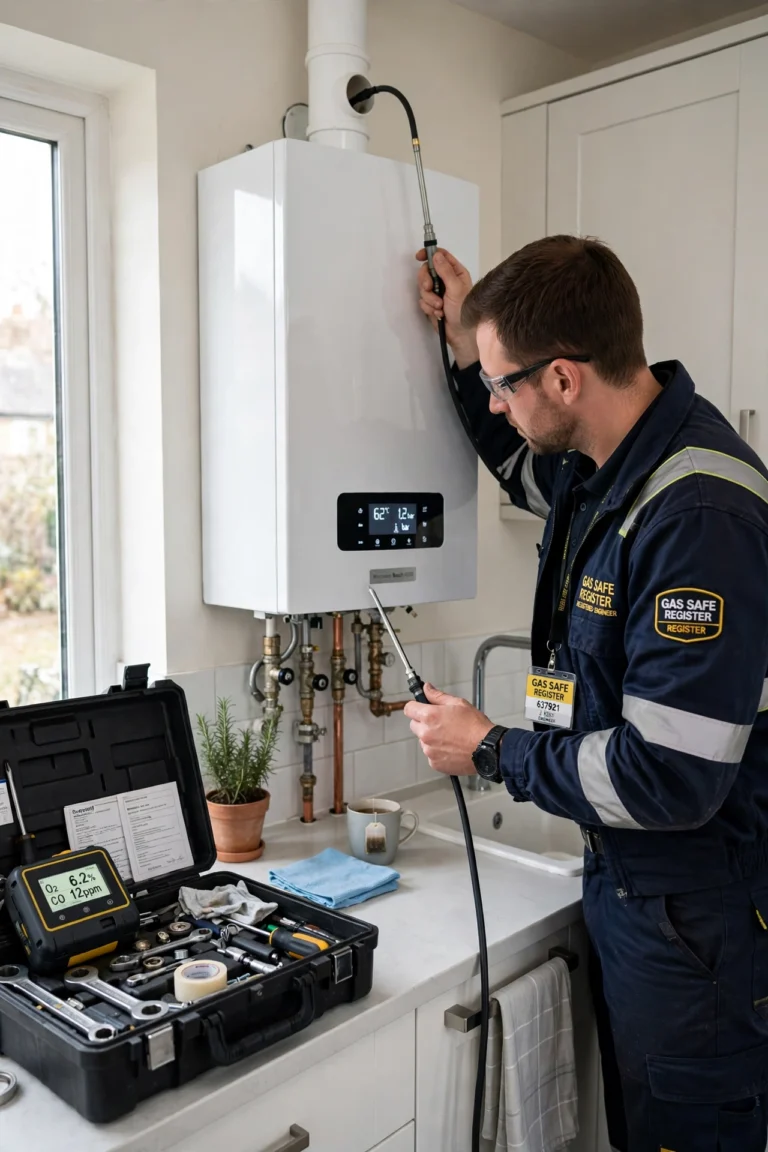
This guide explains how to tell for certain, what to check before you spend any money, which fix matches your situation, and how to stop sludge coming back. It is general information, not heating advice for your specific system. Anything that involves the boiler, the gas supply, the flue or the sealed circuit should go to a Gas Safe registered engineer, and this guide says so wherever that line is crossed.
Feel the Radiator First: What the Cold Patch Is Telling You
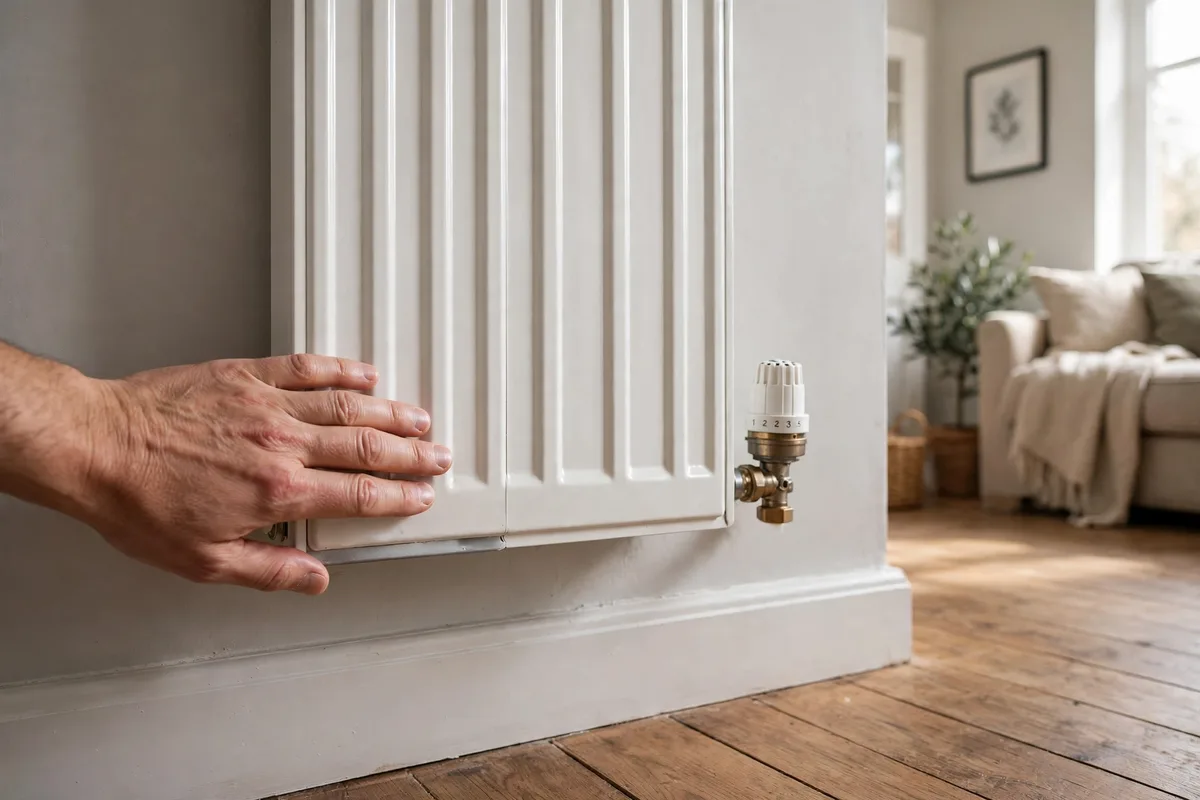
Before you do anything else, feel the radiator with your hand, slowly, from the top to the bottom and from one end to the other. Where the cold patch sits is the diagnosis. Most radiators do not need a tool at this stage; they need a hand.
| What you feel | What it usually means | What to do first |
|---|---|---|
| Cold at the top, hot at the bottom | Trapped air | Bleed the radiator with a radiator key |
| Cold at the bottom, hot at the top | Sludge (magnetite) settled at the bottom | Do not bleed it. Read the fix ladder below |
| Cold all over, while other radiators are hot | A valve problem, partly closed lockshield valve or a stuck TRV pin | Check the valves on that radiator |
| Cold at one end, hot at the other | Poor circulation or an unbalanced system | Check the lockshield valve, then consider balancing |
| Every radiator cold, or the whole house cold | A boiler or controls problem | Check the boiler, thermostat and timer first |
Two warnings before you read the table as a verdict. First, a healthy radiator is not the same temperature all over. Hot water enters, gives up its heat and leaves cooler, so the top is always warmest and the bottom outlet side coolest. A normal radiator is hot on top and comfortably warm along the bottom. What is not normal is a cold patch, the middle of the bottom cold to the touch while the top is too hot to hold (VHS Works). Do not call a normal warm-to-cool gradient a fault.
Second, condensing boilers deliberately widen that difference. They run cooler return water for efficiency, so the bottom of a radiator on a modern condensing system will feel cooler than on an old non-condensing boiler. That is by design. The test is the same: a cold patch you can put your hand on without feeling heat is a fault; a bottom that is warm but cooler than the top is not.
Quick Checks Before You Spend Anything
A cold bottom is usually sludge, but “usually” is not “always”, and three free checks take five minutes and can save you a flush you did not need.
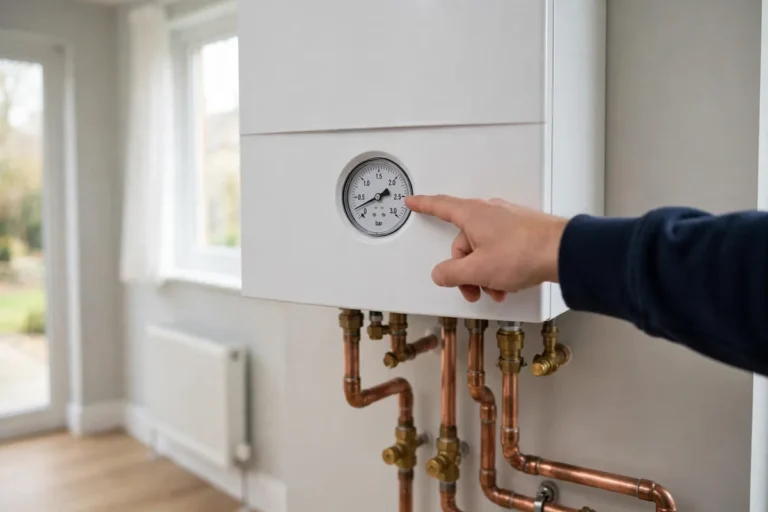
1. Bleed it anyway, once, to rule air out. Even though bleeding will not fix sludge, one bleed tells you what you are dealing with. Open the bleed valve with a radiator key and a cloth, let any air hiss out, and close it as soon as water appears. If air came out and the top warms up, you had an air problem on top of whatever is at the bottom. If no air came out, or the bottom is still cold after bleeding, air is ruled out and sludge moves to the top of the list. Bleed with the heating off and the radiator cool enough to touch, and check the boiler pressure afterwards. Worcester Bosch gives 1 to 1.5 bar with the system cold (quoted by First Plumb Solutions). If the pressure has dropped below that, top it up through the filling loop and, if you are not sure how, ask a heating engineer rather than guessing.
2. The magnet test. Run a fridge magnet along the cold strip at the bottom of the radiator. If it grips firmly there, there is magnetite behind the metal (Boiler Cover UK). Magnetite is magnetic; air is not, and limescale is not. A magnet that sticks hard to the cold patch and slides freely over the hot part is about as direct a test as a homeowner can do, and it costs nothing. If the magnet does not grip, the cold patch may be limescale instead, which is more common in hard-water areas, or the problem may be circulation rather than a deposit at all.
3. Check the valves. Look at both ends of the radiator. The lockshield valve, usually the one with a plastic cap, on the opposite end from the thermostatic radiator valve (TRV), should be partly open, not shut. A partly closed lockshield valve, or a TRV pin stuck down inside the valve head, can starve a radiator of hot water and leave it cold all over or cold at one end (Boiler Cover UK; CLA Developments; First Plumb Solutions). With the heating running, turn the TRV up to its highest setting and feel whether the radiator starts to warm. If the TRV head is loose or the pin underneath does not move when you press it, the valve may be the fault rather than the water inside the radiator. Do not force a stuck pin with tools; a heating engineer can free or replace a valve cheaply, and forcing it can break the seal.
If the magnet grips, bleeding changed nothing, and the valves are open, you have sludge. The rest of this guide is about what to do with it.
When It Is Sludge: What It Is and Why It Forms
Sludge is not dirt from outside the system. It is the system itself, slowly corroding. Steel radiators and pipework rust from the inside when oxygen gets into the heating water, and the rust forms a fine black powder, magnetite, that circulates with the water and settles wherever the flow is slowest. The bottom of a radiator is the slowest place in the system, so that is where it collects.
It builds up gradually, which is why the symptom creeps up on people. A radiator that was fine last winter is lukewarm at the bottom this winter, and cold by the next. The build-up also explains why the problem is usually worst on the radiators furthest from the boiler, or on the ground floor, where the water has travelled furthest and slowest.
Two things make sludge worse. The first is a system that has never been properly cleaned and dosed with inhibitor, the chemical that slows corrosion, or one where the inhibitor has not been topped up after work on the system. The second is fresh water repeatedly entering the system, which happens when a system keeps losing pressure and being topped up, or when a leak lets oxygenated water in. Every top-up brings fresh oxygen, and fresh oxygen means more corrosion.
Limescale adds to the deposit in hard-water areas, and poor circulation makes it worse: a tired pump, or a system that has never been balanced, pushes less water through the radiators, so the sludge settles instead of being carried around. That is why the order matters, sludge first, circulation second, and why a radiator that is new, or recently power-flushed, and still cold at the bottom points to circulation rather than a deposit (Boiler Cover UK; CLA Developments; First Plumb Solutions). If the system is clean and the radiator is still cold, the water is not getting there properly, and the fix is balancing or a pump, not another flush.
One Radiator or the Whole System: The Fix Ladder
The right fix depends on how many radiators are affected. Work up the ladder, not down it, starting with the smallest job that matches the symptom.
One radiator is cold at the bottom
A single affected radiator can be taken off the wall and flushed out with a hose. The engineer (or a confident DIYer) isolates the radiator, drains it, carries it outside, and flushes water through it until it runs clear. The sludge that was sitting in the bottom comes out with the water, and the radiator goes back on the wall. This is the cheapest fix, and it is the right one when every other radiator in the house heats properly. If the radiator is old, badly corroded inside, or the sludge has been there so long that flushing does not clear it, replacement is the honest answer instead, and our guide to radiator replacement cost UK prices that job by radiator type and by whole-house count, so you can compare the cost of one new radiator against flushing the old one.
Several radiators are cold at the bottom
When more than one radiator is affected, the sludge is not in one radiator; it is in the system. Flushing one radiator will not help, because the dirty water will put sludge straight back into it. The whole system needs cleaning: a power flush or a chemical clean, followed by fresh inhibitor.
A power flush pushes water and cleaning chemicals through the whole system at high flow, radiator by radiator, and carries the sludge out. A chemical flush is gentler. Chemicals circulate in the system over days or weeks, loosening the deposits, and the system is then drained and refilled. Which one suits your system depends on its age and condition, and on how bad the sludge is; a heating engineer should decide, not a salesperson.
Indicative UK price: a power flush typically costs £300 to £800 depending on radiator count (First Plumb Solutions). Treat that as a sourced range, not a quote. The number of radiators, the size of the house and the state of the system all move it. Our guide to power flush cost UK breaks the price down by radiator count, explains when a power flush is the wrong fix, and covers chemical flushing, magnetic filters and the BS 7593 standard in detail. Read it before you accept a quote, because the most useful thing it tells you is when not to pay for a flush at all.
The system is clean but the radiator is still cold
If the system has been flushed, the inhibitor is fresh, and a radiator is still cold at the bottom, the problem is circulation, not dirt. The two usual causes are balancing and the pump. Balancing means adjusting the lockshield valve on each radiator so that hot water reaches every radiator evenly, rather than racing through the nearest ones and barely reaching the furthest. It is a slow job. An engineer adjusts one valve at a time and checks the temperature drop across each radiator, but it is cheap compared with a flush, and it is often the real fix for a system that has been flushed and still underperforms. The other cause is a tired pump that no longer pushes water hard enough, particularly on larger systems. A pump replacement is a heating engineer’s job, and if the boiler is old as well, it is worth reading our guide to central heating installation cost UK before deciding whether to replace parts of an ageing system or the whole thing.
When Flushing Will Not Fix It
A power flush is a real fix for sludge, but it is not a fix for everything, and it is worth knowing its limits before you pay for one.
A radiator that is cold because its valve is shut or stuck does not need a flush. It needs the valve opened, freed or replaced. Flushing a system with a stuck TRV will not open the valve, and the radiator will still be cold afterwards.
A radiator that is cold because the system is unbalanced needs balancing, not cleaning. If the water is not reaching the radiator in the first place, cleaning the water will not change that.
A radiator that is corroded through, leaking, or so old that the inside is flaking needs replacing. Flushing can clear loose sludge, but it cannot restore metal that has rusted away, and in a very old radiator it can expose pinhole leaks that the sludge was effectively plugging. If a radiator is weeping, rust-stained at the seams, or cold at the bottom even after a flush, replacement is the answer, and the cost of a single new radiator is usually far less than a second flush.
A system with a failing boiler or a faulty pump needs that fault fixed first. A flush will not repair a pump that cannot circulate water, and it will not fix a boiler that is not heating the water properly. If every radiator in the house is cold, look at the boiler and the controls before you look at the sludge.
The honest test is the one this guide started with: feel the radiator, bleed it once, try the magnet, check the valves. If the evidence points to sludge in one radiator, flush that radiator. If it points to sludge across the system, flush the system. If it points anywhere else, fix that thing first.
Prevention: Keeping Sludge From Coming Back
A flush that is not followed by prevention is money spent twice. Sludge forms again in a system that is left unprotected, so the job is not finished when the water runs clear.
Inhibitor, kept topped up. After any flush, the system should be dosed with inhibitor, the chemical that slows internal corrosion, and the dose should be checked and topped up after any work that drains the system, and at each annual service. Inhibitor is not a one-off; it depletes over time, and a system that was dosed five years ago and never checked since is effectively unprotected.
A magnetic filter, cleaned at each service. A magnetic filter sits on the pipework near the boiler and catches magnetite as it circulates, before it can settle in a radiator. It only works if it is cleaned. A filter full of sludge catches nothing. Ask your engineer to clean it at every annual service, and to show you what came out of it; the amount of black sludge in the filter is a direct measure of how much corrosion is happening in your system. Our guide to boiler service cost UK explains what a service should include, including the filter clean and the inhibitor check, so you can tell whether the service you are paying for covers them.
Fix leaks and stop topping up. A system that keeps losing pressure and needing top-ups is a system that keeps taking in fresh, oxygenated water, and fresh oxygen means more sludge. If you are topping up the pressure more than once or twice a year, there is a leak or a faulty expansion vessel somewhere, and finding it matters more than any chemical you add. Approved Document L and BS 7593 expect a system to be cleaned, flushed and dosed with inhibitor before a new boiler goes in (CLA Developments), which is the standard a new installation should meet, and the standard an old system should be brought back to after a flush.
Bleed radiators when they need it, not on a schedule. Bleeding is for air at the top, and a radiator that is cold at the top is the signal. Bleeding a radiator with sludge at the bottom does nothing, and bleeding for the sake of it lets air, and oxygen, into the system. Bleed when the symptom says air, and leave it alone otherwise.
FAQs
Why is my radiator cold at the bottom but hot at the top?
Because sludge, black iron-oxide magnetite from corroding steel radiators and pipework, has settled in the bottom of the radiator and is blocking hot water from reaching it. The top still gets hot because water can flow across the top. Ideal Heating is quoted as putting sludge at 99% of cold-bottom cases (quoted by CLA Developments).
Will bleeding my radiator fix a cold bottom?
No. Bleeding removes trapped air, and air is light, so it collects at the top of a radiator. A radiator that is cold at the top is the one bleeding fixes. Sludge sits at the bottom and no amount of bleeding shifts it. If you have already bled the radiator and the bottom is still cold, you have ruled air out.
How do I test if my radiator has sludge?
Run a fridge magnet along the cold strip at the bottom of the radiator. If it grips firmly, there is magnetite behind the metal (Boiler Cover UK). Combine that with the feel test: a cold patch at the bottom while the top is too hot to hold is sludge; a bottom that is warm but cooler than the top is normal.
Is a radiator that is cooler at the bottom than the top always faulty?
No. Hot water enters, gives up heat and leaves cooler, so the top of a healthy radiator is always warmest and the bottom outlet side coolest. Condensing boilers deliberately widen that difference for efficiency. A fault is a cold patch, the middle of the bottom cold to the touch while the top is hot, not a gentle gradient.
How much does it cost to fix a cold radiator bottom?
It depends on how many radiators are affected. One radiator can be taken off and flushed with a hose, which is the cheapest fix. Several cold radiators mean the whole system needs a power flush or chemical clean; a power flush typically costs £300 to £800 depending on radiator count (First Plumb Solutions). Our guide to power flush cost UK breaks the price down by radiator count.
Can I fix a cold radiator bottom myself?
You can do the diagnosis yourself: feel the radiator, bleed it once, try the magnet test, and check the valves. Taking a radiator off the wall and flushing it is possible for a confident DIYer, but anything involving the boiler, the gas supply, the flue or the sealed circuit must go to a Gas Safe registered engineer (Boiler Cover UK). After bleeding, check the boiler pressure. Worcester Bosch gives 1 to 1.5 bar with the system cold (quoted by First Plumb Solutions).
What if my radiator is cold all over?
That is usually a valve problem, not sludge: a partly closed lockshield valve or a stuck TRV pin starving the radiator of hot water. Turn the TRV to its highest setting and check the lockshield valve is open. If every radiator in the house is cold, the problem is more likely the boiler or the controls. Check the thermostat, timer and boiler first.
How do I stop sludge coming back after a flush?
Keep inhibitor topped up, have the magnetic filter cleaned at each annual boiler service, and fix any leak that makes you top up the system pressure repeatedly. A system that keeps taking in fresh water keeps corroding. Approved Document L and BS 7593 expect a system to be cleaned, flushed and dosed with inhibitor before a new boiler goes in, and the same standard should be kept up afterwards.
About the Author