A standard family bathroom renovation in the UK takes 10 to 15 working days on site, which works out at 2 to 4 calendar weeks once weekends and drying time are counted. That is the short answer, and it is the figure the Federation of Master Builders gives in its bathroom planning guide: allow approximately two to four weeks for a full bathroom renovation.
But that headline figure hides the part that catches most homeowners out. The fitting itself is only half the job. Before anyone picks up a tool, the planning, survey, ordering and delivery stage usually takes another six to eight weeks, according to installer Fit My Bathroom. So from the day you decide to renovate to the day you can use the finished room, a realistic total is 10 to 12 weeks, not the two to four weeks quoted for the work on site.
This guide separates those two clocks properly. First the timelines by room type, then the week by week order the trades actually work in, then what delays jobs, and finally how to keep yours on schedule.
How Long Does a Bathroom Renovation Take by Room Type?
Every bathroom is different, but the trade works in recognisable patterns. The table below uses working days on site, Monday to Friday, from the day the old bathroom comes out to the final clean. Calendar time is longer, because weekends, delivery gaps and drying time sit between the working days.
| Room type | Time | What is included |
|---|---|---|
| Cloakroom or downstairs WC | about 5 working days on site, 1 calendar week | New WC and basin, tiled floor, painted walls. |
| En-suite or shower room | about 10 working days, 2 calendar weeks | Shower enclosure, WC, vanity, tiled shower walls and floor. |
| Family bathroom, same layout | 10 to 15 working days, 2 to 3 calendar weeks | Bath with shower over it, WC, vanity, towel rail, tiling and lighting. |
| Family bathroom, new layout | 15 to 20 working days, 3 to 4 calendar weeks | Re-plumbed layout, moved waste pipes, new electrics, more tiling. |
| Compact wet room | 15 or more working days, 3 to 5 calendar weeks | Whole floor tanked and laid to falls, level access shower. |
| Premium bathroom | about 15 to 20 working days, 3 to 4 calendar weeks | Concealed valves, wall hung fittings, large format tiles, underfloor heating. |
| Full rebuild with walls moved | 20 to 30 working days, 4 to 6 calendar weeks | Structural work, new layout, wet room or underfloor heating. |
These figures come from the installers and guides that publish real schedules rather than marketing promises. Fit My Bathroom, which quotes fixed prices from these timings, gives 5 days for a cloakroom, 10 for an en-suite, 10 to 15 for a family bathroom, 15 or more for a compact wet room and about 15 for a premium bathroom. Bathroom Mountain gives six to ten working days for a standard family bathroom, three to five days for a small cloakroom or en-suite, and ten to fifteen days or more for a large bathroom or one where the layout changes. Drench puts a typical fit at around a week. BestBuilders, working from 2026 UK market averages, gives 7 to 10 working days for a cosmetic refresh where everything is swapped like for like, 15 to 20 working days for a full refit with new tiling and a re-plumbed layout, and 20 to 30 working days for a wet room, underfloor heating or a layout rebuild.
Notice how wide the range is for what sounds like the same job. A “standard bathroom” can mean anything from a five day suite swap to a fifteen day full refit, and that is why quoted timelines disagree so much online. The scope decides the time, not the room size alone. Three things move a job up the table fastest: changing the layout, choosing a wet room instead of a shower tray, and adding underfloor heating.
A cloakroom takes about a week
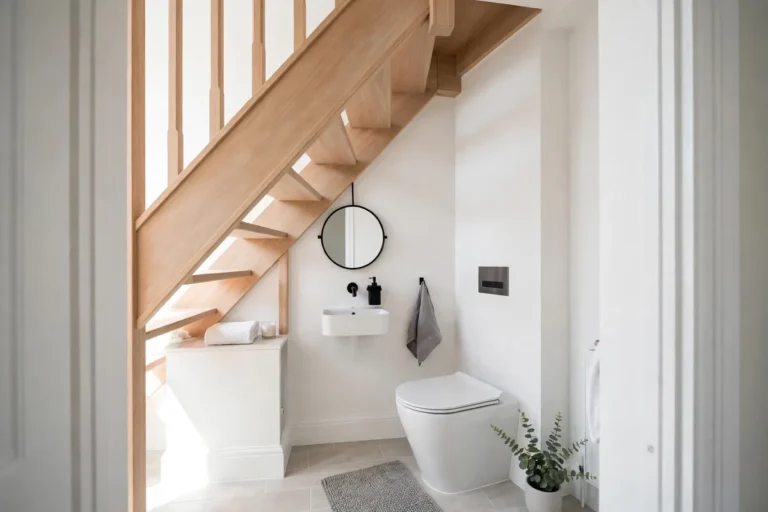
A downstairs WC is the quickest bathroom job because there is so little in it. One WC, one basin, a tiled floor and painted walls, with no bath or shower to plumb in and no tanking to cure. Five working days is realistic, and a single team can often finish it without waiting for other trades. The main risk is the same as on any small job: if the floor needs levelling or the soil pipe needs moving, add days.
An en-suite takes about two weeks
An en-suite or shower room usually takes about ten working days on site. The shower is the work here: enclosure, tray or level access entry, tiled shower walls and floor, plus the WC and vanity. Ten days allows for first fix plumbing and electrics, tanking the shower area, tiling, and second fix. If the en-suite is a conversion of a bedroom or cupboard, add time for the new soil pipe and ventilation, which is covered in our guide to the cost of adding an ensuite bathroom.
A family bathroom takes two to four weeks
This is the job most people mean when they ask the question, and it is also the one with the widest honest range. A like for like swap in the same layout, bath out and bath back in, new suite, re-tile, can be done in 10 working days. Change the layout, move the bath or WC, add a walk in shower or underfloor heating, and the same room takes 15 to 20 working days. The Federation of Master Builders puts the standard range at two to four weeks, and the FMB’s own survey published in April 2026 found that 19 percent of homeowners expected a full bathroom to take a week or less. That expectation is where disappointment starts. A week is a cosmetic refresh, not a renovation.
A wet room takes three to five weeks
A wet room is slower than a shower room because the whole floor has to be tanked, laid to falls so water runs to the drain, and tiled as one waterproof surface. There is no tray to hide a mistake behind. Fit My Bathroom gives 15 working days or more for a compact wet room, and the timeline guides converge on three to five calendar weeks. Upstairs wet rooms take longer still, because the timber floor needs a proper build up before tanking. Our wet room cost guide explains the build in detail, and the time follows the build: tanking membranes and tile adhesive both have manufacturer cure schedules that the trades have to respect.
The Planning Stage Before Work Starts Takes Six to Eight Weeks
This is the part no headline timeline mentions, and it is the part that makes a “two week bathroom” feel like a three month project. Fit My Bathroom puts the pre-work stage at six to eight weeks: an estimate, a survey, the written proposal, and deliveries. Each step has its own wait.
First comes the design and quoting stage, two to three weeks in the Kent Plasterers guide. You choose the layout and the products, the installer surveys the room, and a written quote comes back. Then the products are ordered. Standard suites and tiles from a merchant can arrive in days, but a specific bath, a bespoke vanity unit, a large format tile or a particular shower valve can take four to six weeks, and some special order items take longer. The job cannot start until the long lead items are on site or at least confirmed, because a fitter who starts without the shower valve will be standing idle in week two waiting for a delivery.
Then there is the queue. A reputable installer is usually booked weeks ahead, and the wait is longer in spring and autumn, the peak seasons for bathroom work. The build time is the same nationwide, but the waiting list is not. This is worth knowing when you compare quotes: an installer who can start tomorrow is either very lucky or very quiet, and neither is a reliable sign on its own.
The practical rule is to plan on 10 to 12 weeks from decision to finished room for a standard bathroom: six to eight weeks of planning and ordering, then two to four weeks on site. Kent Plasterers gives the same overall figure, three to four weeks of actual work inside a 10 to 12 week project from planning to completion. Order the products before you book the start date, not after, and the pre-work stage shrinks to its minimum.
Week by Week: The Trade Order of a Standard Bathroom Renovation
A bathroom is fitted in a fixed order, and the order is not negotiable. Each trade depends on the one before it, and the drying and curing times between stages set the pace more than the working days do. This is the sequence for a standard family bathroom refit, same layout, 10 to 15 working days on site.
Days 1 to 2: Strip out
The old suite comes out, tiles are removed, and the room is taken back to bare walls and floor. Expect dust and noise, and expect the skip to fill fast. This is also the moment hidden problems appear: rotten floorboards under the bath, a leaking waste, crumbling plaster behind the tiles. A good installer budgets a contingency day here rather than pretending the strip out will be clean. Water is off to the bathroom during this stage, so if it is your only bathroom, agree with the installer how the WC will be kept working overnight.
Days 2 to 4: First fix plumbing and electrics
First fix means the pipes and cables that will be hidden in the walls and under the floor. New hot and cold supplies, waste pipes to the new positions, the shower valve body set into the wall, and the electrical cables for lighting, the extractor fan and any heated towel rail or underfloor heating mat. This stage has to be right before anything is covered up, because fixing a pipe buried behind tiles means taking the tiles off again.
Electrical work in a bathroom must comply with Part P of the Building Regulations, and the work has to meet the BS 7671 wiring requirements. The extractor fan must meet the minimum rate in Approved Document F, which is 15 litres per second for a standard intermittent bathroom extract. These are not optional extras. They are the rules the finished room is judged against, and your installer should be able to tell you how each one is met.
Days 4 to 6: Plastering, boarding and preparation
Walls are made good, plastered or boarded, and the shower area is prepared for tanking. This is where the calendar starts to stretch, because new plaster has to dry before it can be tiled. A new skim coat needs 7 to 14 days to dry, depending on conditions, according to Kent Plasterers, and tilers who claim they can tile onto plaster after three or four days are either using a specialised rapid dry system, which is uncommon in bathrooms, or risking tile failure. Tiles that go onto damp plaster can debond months later, and the failure shows up six to eighteen months after the job, long after the installer has been paid.
In practice, installers manage this by using moisture resistant plasterboard or tile backer board instead of a wet skim coat wherever they can, which removes most of the drying wait. But where a skim coat is used, the drying time is real and cannot be rushed with a heater. Forced drying cracks plaster and traps moisture behind the tiles.
Days 5 to 8: Tanking and tiling
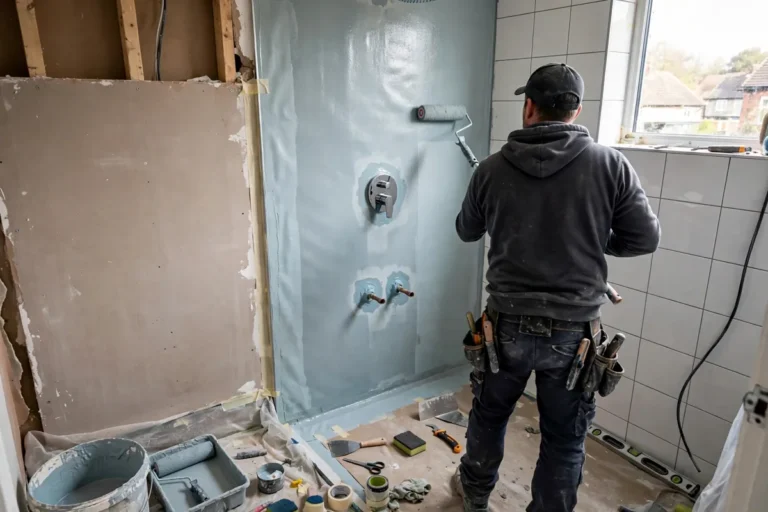
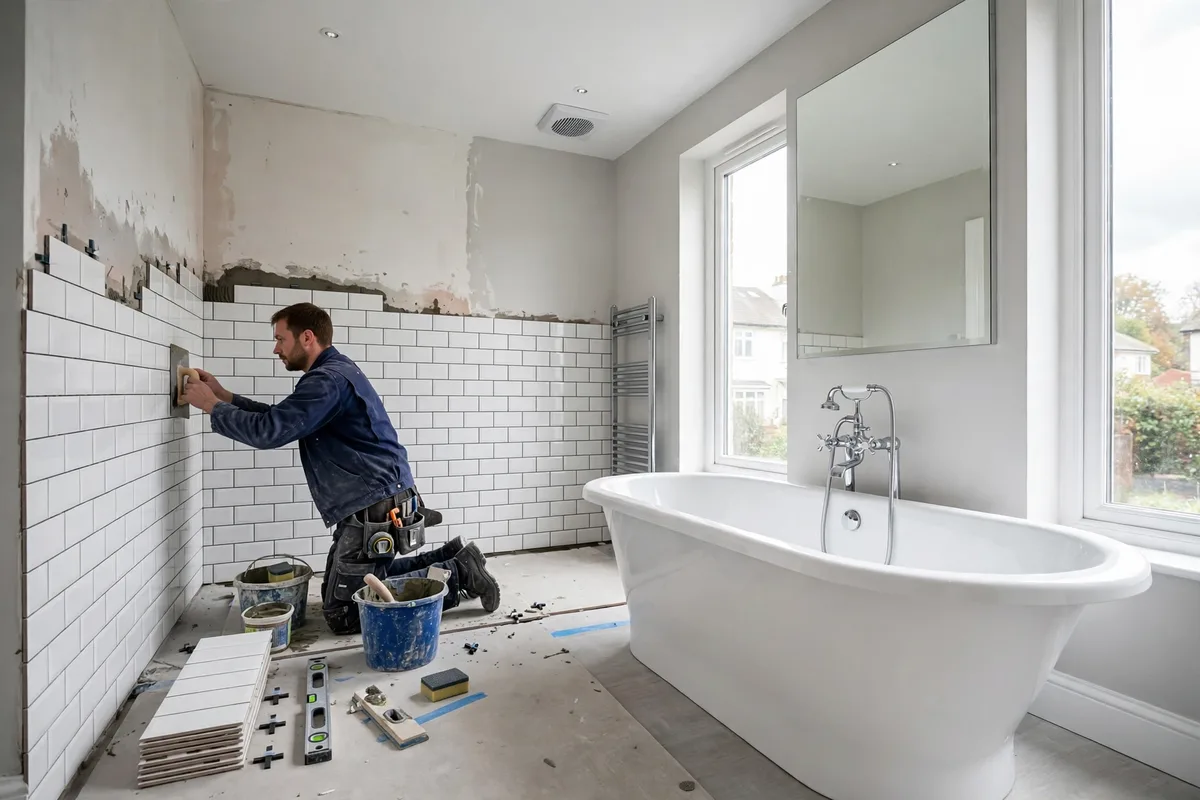
Tanking is the waterproof membrane painted or sheeted onto the shower walls and the wet room floor. It has its own cure time, set by the manufacturer, and tiling cannot start until it has cured. Then comes the tiling itself, which is usually the longest single phase of the job. BestBuilders gives four to six days for tiling on a standard refit, and the time grows with the tile: large format tiles are slower to lay and level, floor to ceiling tiling doubles the area, and patterned or mosaic tiles take longer than plain ones. Grout and adhesive then need their own cure time before the room can be used.
The cost side of this stage is covered in our bathroom tiling cost guide, which prices labour per square metre and works through examples by room size. The time side follows the same logic: more tiled area and more complex tiles mean more days.
Days 8 to 11: Second fix
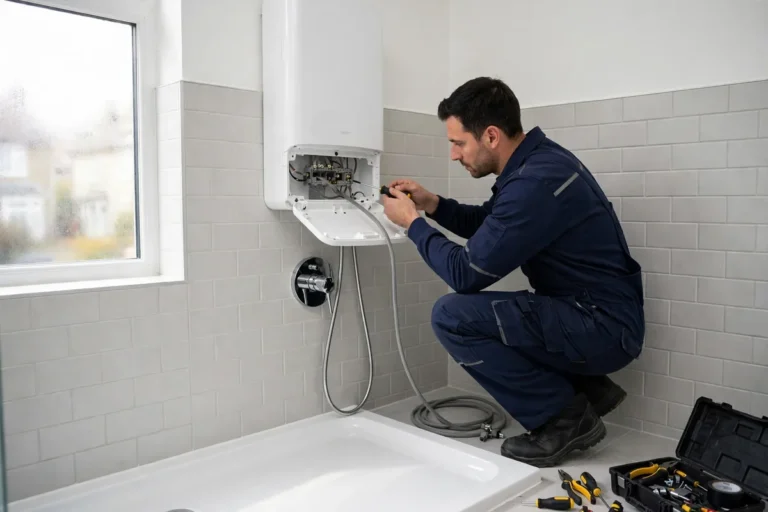
Second fix is the visible part: the bath, WC, basin and vanity go in, taps and the shower are fitted, the towel rail and lighting are connected, and the mirror and accessories are fixed. This usually takes two to three days on a standard bathroom. It looks fast because the hard work was done in first fix, but it is also the stage where a wrong or damaged product stops everything. A basin that arrives chipped or a tap that does not match the valve body means a reorder and a delay, which is why the products should have been checked on delivery, before strip out, not discovered on the day they are fitted.
Days 11 to 13: Decoration, silicone and snagging
The room is painted, silicone sealant is applied around the bath, shower and basin, and the installer walks the room with you to snag anything that is not right: a tile that needs re-grouting, a door that catches, a seal that needs smoothing. Silicone needs time to cure before the shower is used, usually 24 hours, and the room gets a final clean. Then it is yours.
Add the stages up and you get 10 to 15 working days, but count the calendar and you get two to three weeks, because weekends fall in between and the plaster, tanking, adhesive, grout and silicone each need their own cure time. That gap between working days and calendar weeks is the single most common source of confusion in bathroom timelines.
What Delays a Bathroom Renovation?
BestBuilders, working from 410 completed UK bathroom projects in 2025 and 2026, found that 90 percent of delays come from six predictable factors. They are worth knowing before you start, because every one of them can be planned around.
1. What is hidden under the old bathroom
Rotten joists under the bath, a slow leak that has soaked the floor, a waste pipe in the wrong place, walls that are out of square. None of this is visible until strip out, and all of it adds days. This is the most common delay, and the only honest answer is a contingency: budget an extra two or three days and a few hundred pounds in your head, and be pleasantly surprised if you do not need them.
2. Layout changes
Moving a WC or a bath means moving the soil pipe and the waste runs, and the soil pipe decides what is possible. A WC can only move as far as the soil pipe and the fall of the waste allow, and a macerator is a compromise, not a free pass. Layout changes also mean more first fix work, more plastering and more tiling, so a job that would have taken ten days takes fifteen or twenty. If you are considering a layout change, our guide to a bath to shower conversion shows how the project breaks down day by day.
3. Products arriving late, wrong or damaged
This is the delay that frustrates homeowners most, because it feels avoidable, and it usually is. A tile that is out of stock, a bath in the wrong size, a shower valve that does not match the brochure. The fix is to order everything before work starts, check every delivery against the order while the boxes are still sealed, and keep one spare box of tiles for breakages and future repairs. Installers cannot tile a wall with tiles that have not arrived.
4. Drying and curing time
Plaster, tanking, adhesive, grout and silicone all cure on their own schedule, and none of them can be hurried. A new skim coat needs 7 to 14 days before tiling, and tanking and adhesives carry manufacturer schedules the trades respect. Jobs that compress this timeline to get finished faster tend to show the problems later, when tiles debond or grout cracks. If your installer promises to skip the drying time, that is a warning sign, not a selling point.
5. Trades not available back to back
Most bathroom renovations need three or four trades: plumber, electrician, tiler and plasterer, and sometimes a carpenter or a builder. If the tiler is not free the day the plasterer finishes, the job waits. Kent Plasterers makes this point directly: in practice most bathroom renovations take three to four weeks because trades are not available back to back. A single firm that employs all its own trades avoids this, which is one reason a bathroom specialist can be faster than coordinating separate trades yourself.
6. Decisions made mid-job
Changing the tile, moving a light, swapping the tap after first fix has started means reordering, reworking and waiting. Every change made after the relevant stage has passed costs days. Decide the layout, the products and the finishes before strip out, write them down, and treat changes after that point as the exception. The step by step home renovation checklist is a useful way to lock those decisions in before work starts.
How to Keep a Bathroom Renovation on Schedule
A realistic timeline is not luck. It is the result of a few decisions made before the first tile comes off.
Order everything before strip out. Every product on site, checked against the order, before the old bathroom comes out. The long lead items, a bespoke vanity, a particular shower valve, large format tiles, should be ordered first, because they set the start date.
Agree the programme in writing. Ask the installer for a day by day or week by week programme, not just a total number of weeks, and ask what happens if a stage overruns. A written programme makes a delay visible early, when it can still be recovered, instead of discovered in the last week.
Keep one bathroom working. If it is your only bathroom, agree in advance how the WC will be kept working overnight, and whether a temporary shower is possible. Most installers will keep the WC usable each evening, but it has to be planned, not assumed.
Do not start the next trade early. Tiling cannot start until the plaster or tanking has cured, and second fix cannot start until the tiling has cured. Pressing a trade to start early to save a day risks a failure that costs weeks to put right.
Hold a contingency of a week. However good the programme is, hold a week in your own head beyond the promised finish date. If the job finishes on time, you have lost nothing. If a hidden problem appears, you are not caught without a working bathroom and a deadline you cannot move.
How Much Does a Bathroom Renovation Cost?
This guide is about time, not money, and the full cost breakdown belongs to the bathroom renovation cost guide. For context only, the guides that publish both time and cost converge on a typical UK bathroom renovation costing £3,500 to £10,000 depending on size and specification, according to Kent Plasterers. Bathroom Mountain and Drench, summarised by VHS Works, put a simple replacement with budget products under £3,000, a mid-range complete renovation at £5,000 to £8,000 including labour, and £10,000 or more once the room is larger, the fittings are premium or there is structural work. The Federation of Master Builders found in August 2026 that 71 percent of homeowners expected their bathroom renovation to cost less than £10,000, while 26 percent believed a full renovation could be completed for under £5,000. Expect the time and the cost to move together: the jobs that take longest, layout changes, wet rooms and premium finishes, are also the jobs that cost most.
FAQs: How Long Does a Bathroom Renovation Take?
How long does a typical bathroom renovation take in the UK?
A standard family bathroom takes 10 to 15 working days on site, or 2 to 4 calendar weeks. The Federation of Master Builders gives the same range: allow approximately two to four weeks for a full bathroom renovation. Planning, ordering and deliveries before work starts add another six to eight weeks, so the whole project from decision to finished room is usually 10 to 12 weeks.
How long does a small bathroom renovation take?
A small en-suite or shower room takes about 10 working days on site, and a cloakroom or downstairs WC takes about 5 working days. A small family bathroom with the same layout takes 10 to 15 working days, the same as a larger one, because the number of stages is the same and only the tiled area is smaller.
Can a bathroom renovation be done in a week?
A cosmetic refresh can be done in a week: a like for like suite swap with no re-tiling and no layout change, typically 5 to 10 working days. A full renovation cannot honestly be done in a week. The FMB survey from April 2026 found 19 percent of homeowners expected a full bathroom in a week or less, but a full refit needs 10 to 15 working days on site, plus drying time between stages.
How long does a wet room take to install?
A compact wet room takes 15 working days or more on site, or 3 to 5 calendar weeks. The extra time is the tanking and the floor laid to falls, both of which have cure times that cannot be skipped. Upstairs wet rooms on timber floors take longer than ground floor wet rooms on concrete.
Why do bathroom renovations take so long?
The fitting is quick; the waiting is not. Plaster needs 7 to 14 days to dry before tiling, tanking and adhesives have manufacturer cure times, and trades are rarely available back to back. The work itself is 10 to 15 working days, but the calendar stretches to two to four weeks, and the planning and ordering stage before work starts adds six to eight weeks on top.
Do I need planning permission for a bathroom renovation?
Most straightforward bathroom replacements in England do not require planning permission. Building Regulations still apply: electrical work must comply with Part P, and ventilation must meet the minimum extract rate in Approved Document F. A new bathroom in a new position, for example an en-suite created from a bedroom, may need Building Regulations approval for drainage and ventilation, so check with your local building control before work starts.
How long before I can use the shower after a renovation?
After the final silicone is applied, allow at least 24 hours for it to cure before using the shower. Grout and adhesive also need their cure time, which the installer will confirm from the product data sheets. Using the shower early risks water getting behind the tiles and the silicone failing.
About the Author