Quick Answer: What Are the Main Types of Windows?
The main window types used in UK homes are casement, tilt and turn, sash, bay and bow, and French windows. Casement windows are the most common and affordable, tilt and turn offers flexible opening and easier cleaning, sash windows suit period properties, and bay or bow windows add extra internal space and light, each with different cost, security, and maintenance considerations covered below.
Casement Windows
Casement windows are hinged at the side and open outward like a door, making them the most widely fitted window type in the UK due to their simplicity, affordability, and good ventilation control.
- Cost: £300 to £600 per window installed
- Pros: Good ventilation, wide opening, cost effective, widely available in uPVC, timber, and aluminium
- Cons: Opens outward, which can be a consideration for windows near pathways or where outdoor space is limited
Tilt and Turn Windows
Tilt and turn windows offer two opening modes from a single handle: tilting inward from the top for secure ventilation, or turning fully inward on a side hinge for cleaning or full opening. This dual function has made tilt and turn windows increasingly popular, particularly in upper floor rooms where cleaning the outside of an outward opening window is more difficult.
- Cost: £400 to £750 per window installed
- Pros: Easier to clean from inside, secure tilt ventilation option, good for upper floors
- Cons: Slightly higher cost than standard casement, mechanism is more complex
Sash Windows
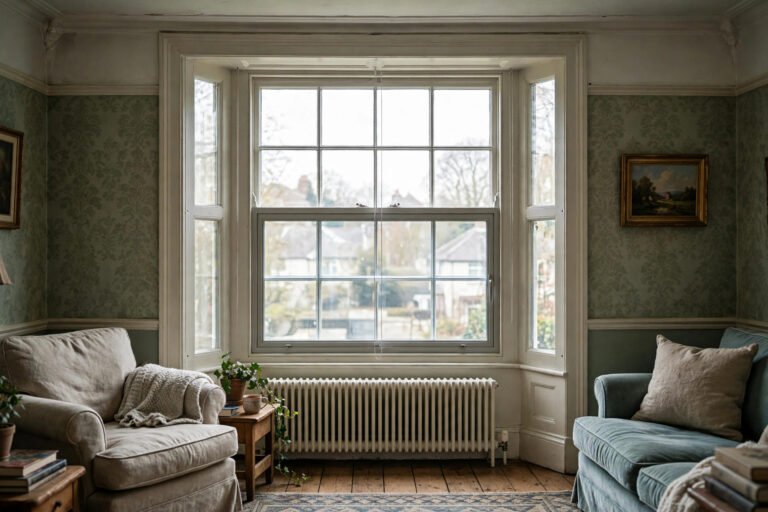
Sash windows slide vertically within the frame and are strongly associated with Georgian, Victorian, and Edwardian period properties, where their traditional appearance is often a requirement in conservation areas.
- Cost: £600 to £1,200+ per window installed
- Pros: Authentic period appearance, good ventilation control by opening top and bottom sashes
- Cons: More expensive than casement, traditional timber sashes need more maintenance
Bay and Bow Windows
Bay windows project outward from the wall in angled sections, while bow windows use a curved, multi pane arrangement, both adding extra internal floor space and additional natural light compared to a flat window of the same wall opening.
- Cost: £1,500 to £4,000+ depending on size and number of panes
- Pros: Extra internal space, increased light, strong kerb appeal
- Cons: Higher cost, more complex installation, more panes mean more potential points requiring maintenance
French Windows and Doors
French windows, essentially a pair of glazed doors opening outward, are typically used where a window opening extends close to floor level, offering both ventilation and direct access to a garden or balcony.
Other Window Styles Found in UK Homes
The five styles above cover most replacement window projects, but they are not the only window types found in UK houses. When you are comparing the full range of window styles for your home, these less talked about options are worth knowing about, because they often suit specific rooms and situations better than the standard choices.
Fixed windows, sometimes called picture windows, do not open at all. Their job is to bring in as much light and view as possible at the lowest cost, and because there is no opening mechanism there are no draught points, which makes them naturally energy efficient. Typical cost: £250 to £500 installed. They are a popular choice for hallways, stairwells, and high level positions, paired with opening windows nearby for ventilation.
Sliding windows move horizontally along a track rather than swinging open, which makes them practical where there is no room for an outward opening sash, such as above a kitchen worktop or beside a path. Typical cost: £400 to £800 installed. The trade off is that sliding panels do not seal as tightly as hinged casements, so they generally perform slightly worse on airtightness.
Awning and hopper windows are small windows hinged at the top (awning) or bottom (hopper). They are ideal for bathrooms, utility rooms, and basements where you want ventilation without a large opening, and the top hinged awning style can be left open in light rain. Typical cost: £300 to £600 installed.
Roof windows and skylights fit into a sloping roof to bring daylight into loft conversions, single storey extensions, and dark hallways. They can be fixed or opening, and some include blinds or ventilation flaps. Typical cost: £500 to £1,000+ installed depending on size and whether the opening is custom. They need careful flashing to stay watertight, so installation quality matters more than with wall windows.
Transom windows are the narrow panes of glass set above a door or a larger window, often fixed shut. They were common in Victorian and Edwardian houses for moving light and air around the home, and they are still used in hallway doors and internal partitions today. Typical cost: £200 to £450 installed as part of a wider project.
| Window Style | Typical Cost | Best For | Opens? |
|---|---|---|---|
| Fixed / picture | £250 to £500 | Light, views, stairwells | No |
| Sliding | £400 to £800 | Kitchens, tight spaces | Yes, horizontal |
| Awning / hopper | £300 to £600 | Bathrooms, basements | Yes, small opening |
| Roof window / skylight | £500 to £1,000+ | Loft conversions, extensions | Fixed or opening |
| Transom | £200 to £450 | Above doors, hallways | Usually fixed |
One more option worth mentioning is the flush casement window, sometimes sold as a mock sash. It is a casement window engineered so the opening sash sits flush with the frame, replicating the flat, elegant profile of a traditional timber sash. In conservation sensitive areas this can give you the period look with modern performance, and some local authorities accept them where a standard lipped casement would be refused. Expect costs of around £450 to £850 per window installed.
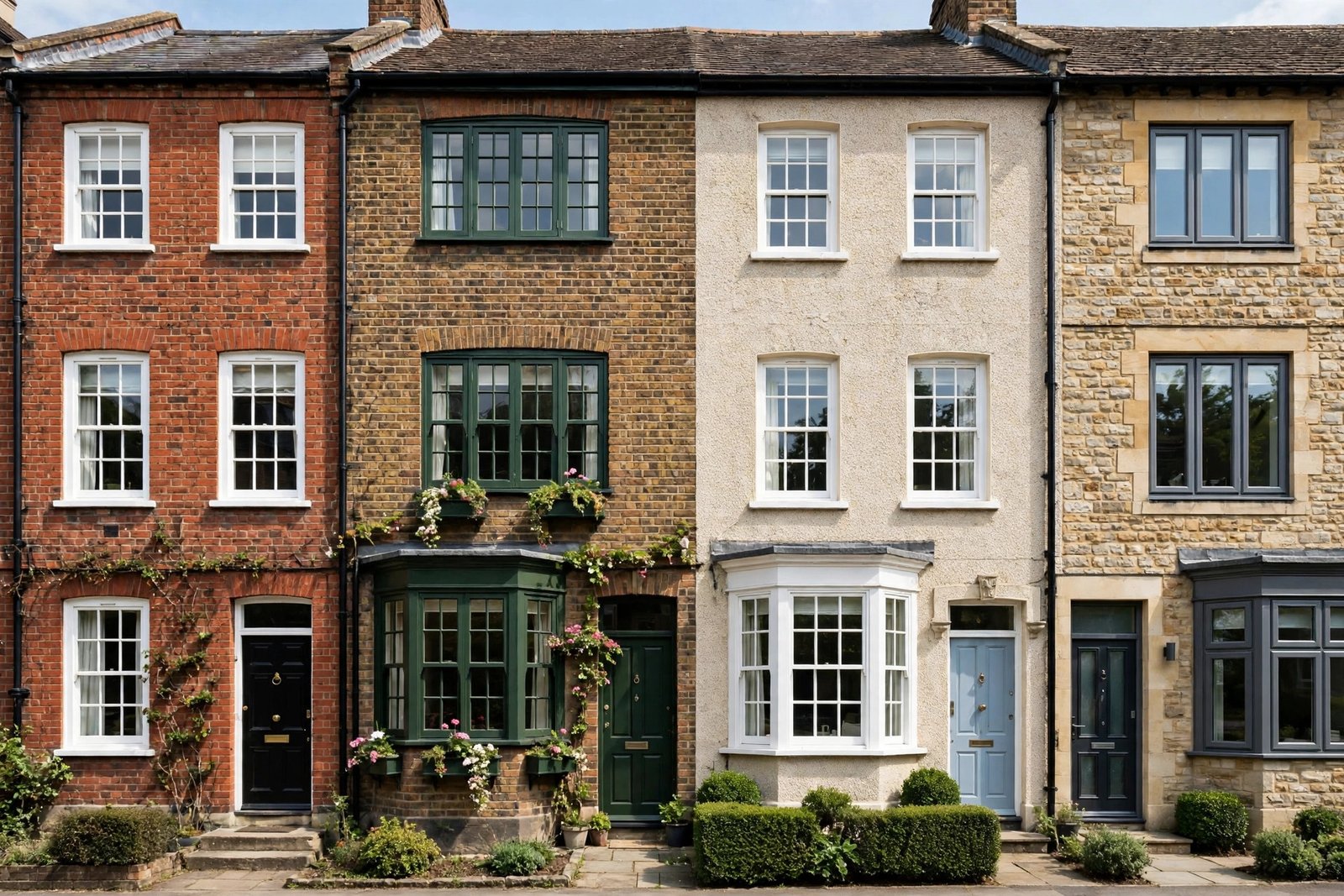
Window Type Comparison Table
| Window Type | Cost Range | Best For | Maintenance |
|---|---|---|---|
| Casement | £300 to £600 | Most homes, budget projects | Low |
| Tilt and turn | £400 to £750 | Upper floors, easy cleaning priority | Low to moderate |
| Sash | £600 to £1,200+ | Period and listed properties | Moderate to high (timber) |
| Bay/bow | £1,500 to £4,000+ | Adding space and light | Moderate |
Choosing a Window Frame Material
Whichever window style you choose, frame material affects both cost and maintenance. uPVC remains the most budget friendly and low maintenance option, aluminium offers slim, contemporary sightlines with excellent durability, and timber suits period properties but requires more regular upkeep. For a full cost breakdown by frame material, see our double glazing cost UK guide.
Window Glazing Options
- Double glazing: Standard for most modern UK installations, balancing cost and thermal performance
- Triple glazing: Additional thermal and acoustic performance at a higher cost, suited to very cold locations or noise sensitive sites
- Acoustic glass: Specifically formulated for noise reduction, useful on busy roads or near flight paths
- Security laminated glass: Adds resistance to forced entry, often specified for ground floor windows
Frequently Asked Questions
What is the most energy efficient window type?
Tilt and turn and casement windows both offer good sealing when closed, and energy efficiency depends more on glazing specification and frame material than the opening style itself, so a well specified double glazed unit in any of these styles will perform well.
Are sash windows more expensive to maintain than casement windows?
Traditional timber sash windows generally need more regular maintenance, including repainting and mechanism checks, compared to uPVC casement windows, though modern uPVC or aluminium sash style windows reduce this maintenance burden while keeping the traditional appearance.
Do bay windows need planning permission?
Replacing an existing bay window with a similar style typically falls under permitted development, but adding a new bay window where none existed before may require planning permission, so it is worth checking with your local authority.
Which window type is best for a period property?
Sash windows are generally the most appropriate choice for genuine period character, and in conservation areas or listed buildings, specific window styles may be a planning requirement rather than just a preference.
Can you mix window types on one house?
While possible, most homeowners aim for visual consistency across the property, particularly on the front elevation, though rear or side windows sometimes use a different, more practical style where visibility from the street is less of a concern.
What is a fixed or picture window?
A fixed window, often called a picture window, is a pane of glass in a frame that does not open. It is the cheapest window style per square metre and the most airtight, making it ideal for maximising light and views in hallways, stairwells, and above doors, as long as another window nearby provides ventilation.
Are sliding windows a good choice for UK homes?
Sliding windows work well where there is no clearance for an outward opening window, such as above kitchen worktops or beside garden paths. They are less common in UK homes than casements and generally seal less tightly, so they suit secondary positions rather than being the default choice for every room.
What are awning and hopper windows used for?
Awning windows hinge at the top and hopper windows hinge at the bottom, and both give a small, secure ventilation opening. They are most often fitted in bathrooms, utility rooms, and basements where privacy and background airflow matter more than a full opening, and top hinged versions can stay open in light rain.
Do roof windows and skylights need planning permission?
In most cases no, as replacing or adding roof windows that do not project more than 150mm beyond the roof slope falls under permitted development. Exceptions apply to listed buildings and some conservation areas, and any structural alteration to the roof should still comply with building regulations.
Can I get the look of sash windows with casement windows?
Yes. Flush casement windows, sometimes called mock sashes, sit level with the frame to mimic the flat profile of traditional timber sash windows while opening on hinges. They are a popular compromise for period style properties that are not subject to strict listing or conservation area rules.
What is a transom window?
A transom window is a narrow pane of glass positioned above a door or a larger window, either fixed or openable. Common in Victorian and Edwardian houses, transoms let light travel deeper into hallways and landings, and they are still fitted above hallway doors and internal glazed partitions today.
Expert Insight
Window installers report that tilt and turn windows have seen the fastest growth in popularity among UK homeowners over recent years, largely driven by the practical benefit of being able to clean the outside of upper floor windows from inside the property.
Final Thoughts
Choosing the right window type comes down to balancing your property’s architectural style, budget, and practical priorities such as cleaning access and ventilation. Casement windows remain the sensible default for most homes, while sash suits period properties and tilt and turn offers valuable flexibility for upper floors.
Planning new windows? Get quotes specifying both the window style and the exact glazing specification, since two quotes for the same style can vary significantly based on glass and frame quality alone.
Related Guides
- Double Glazing Cost UK: Complete Guide
- Window Boards and Sills: Complete Guide
- French Doors vs Patio Doors
Written by the HometoWorld editorial team, covering home improvement, renovation, and property maintenance across the UK.
About the Author