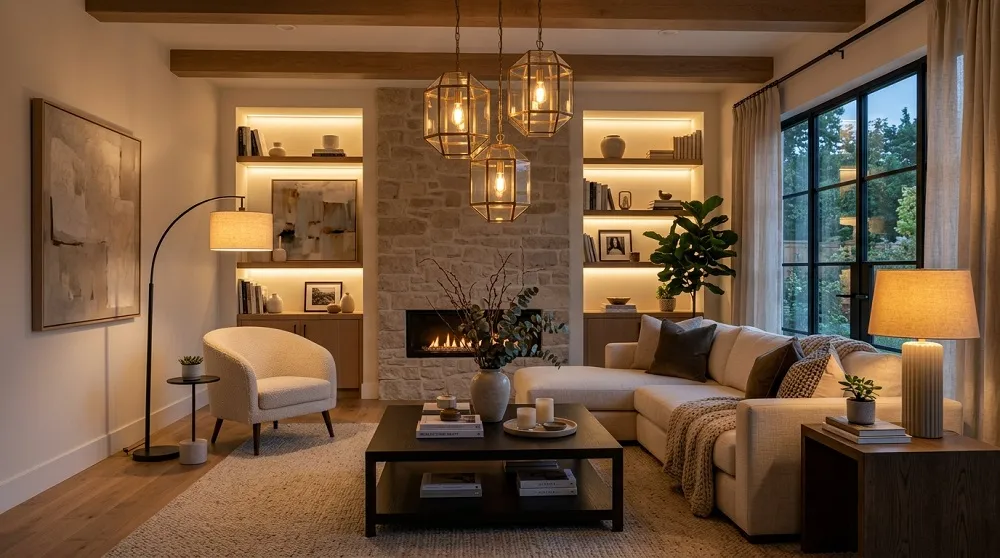
Good lighting does more than help you see. It shapes how each room feels, how easily you can work or relax, and how much electricity your home uses. This guide explains how to plan lighting for every room in a UK home, using the two numbers that matter most: lumens (brightness) and Kelvin (colour temperature).
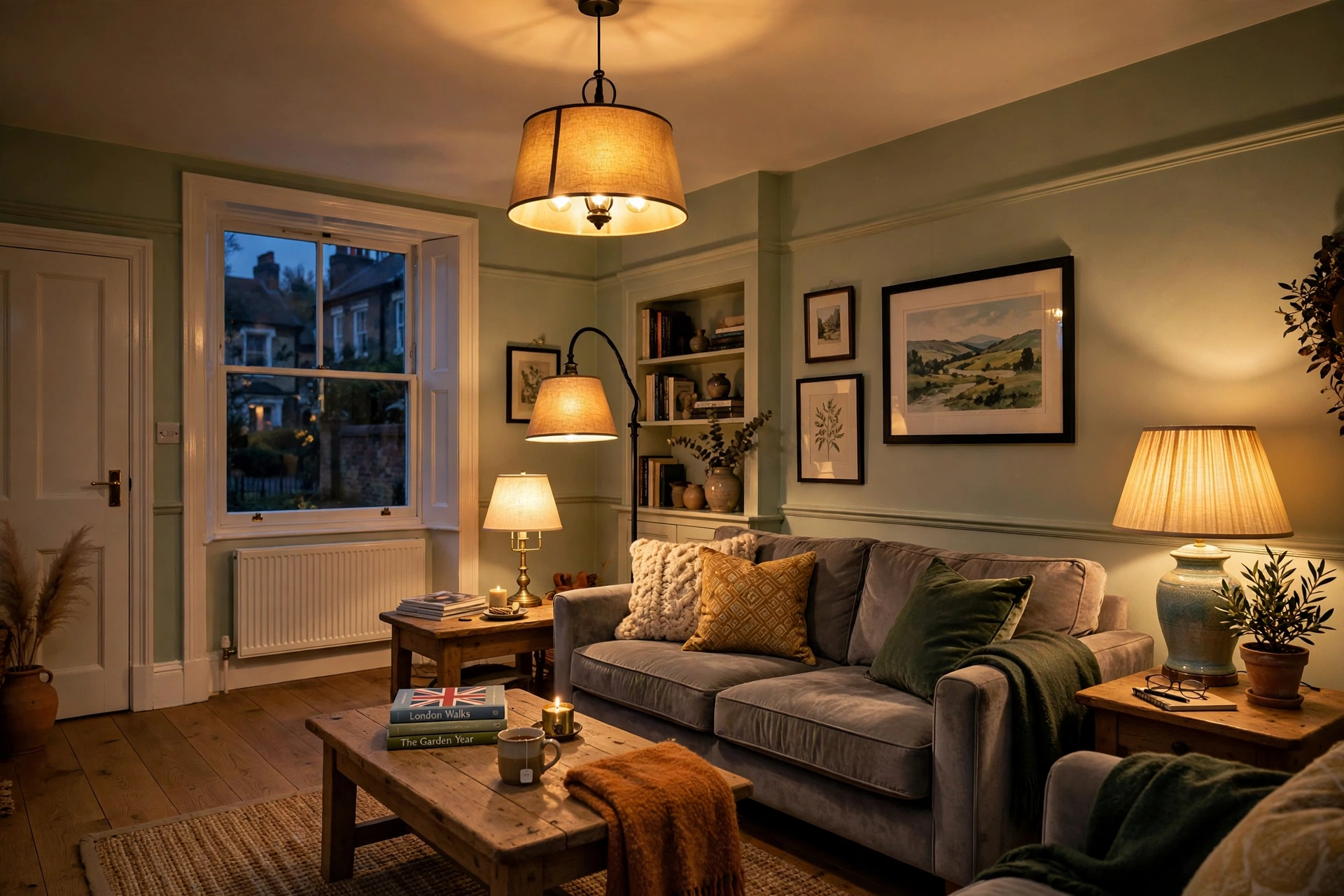
The three layers of lighting
Most well-lit rooms use three layers together:
Ambient lighting is the general light that fills the room. Typical sources are ceiling pendants, flush fittings, and downlights.
Task lighting is focused light for activities such as cooking, reading, grooming, or working at a desk. Think under-cabinet strips, desk lamps, and mirror lights.
Accent lighting adds depth and highlights features like artwork, shelves, or textured walls. Wall sconces, picture lights, and LED strips do this job.
A single ceiling light on its own usually creates shadows and flat-looking rooms. Combining at least two layers makes rooms feel balanced and flexible.
How many lumens does each room need?
Lumens measure how much light a bulb gives out. Watts only tell you how much energy it uses, so always check lumens when you shop. The figures below are typical starting points for the total light in a room, spread across all fittings, not one bulb:
| Room | Typical total lumens | Notes |
|---|---|---|
| Living room | 1,500 to 3,000 | Spread across ceiling light, floor and table lamps; use dimmers for flexibility |
| Bedroom | 1,000 to 2,000 | Keep it soft; add brighter bedside reading lights separately |
| Kitchen | 3,000 to 6,000 | Bright task light over worktops, dimmer or warmer light for the dining area |
| Home office | 3,000 or more | Even light on desk and walls to reduce eye strain and screen glare |
| Bathroom | 1,000 to 2,000 | Plus dedicated mirror lighting for grooming; IP-rated fittings required (see below) |
| Hallway and stairs | 500 to 1,000 | Even light along the route improves safety at night |
Room size, ceiling height, and wall colour all change how bright a room feels. Dark walls and dark lampshades absorb light, so you may need to aim higher in those rooms.
Choosing the right colour temperature
Colour temperature is measured in Kelvin (K). Lower numbers mean warmer, yellower light; higher numbers mean cooler, whiter light. Ignore vague labels like “warm white” on their own, since manufacturers use them inconsistently, and check the Kelvin number on the packaging instead.
| Kelvin range | What it looks like | Best for |
|---|---|---|
| 2700K to 3000K | Warm white, cosy | Living rooms, bedrooms, dining rooms |
| 3500K to 4100K | Neutral white, balanced | Kitchens, bathrooms, utility areas |
| 5000K to 6500K | Cool daylight, crisp | Home offices, workshops, task areas |
As a rule, use warm white (2700K to 3000K) where you relax and sleep, and neutral to cool white (3500K to 5000K) where you work with your hands or eyes. You can mix temperatures within a room, for example cool task lighting in a kitchen with warm pendants over the dining table, but keep them consistent within each zone.
LED bulbs: energy, cost, and fitting types
LEDs are now the default choice for UK homes. The Energy Saving Trust says LEDs are just as powerful as halogen lights but use 80 per cent less electricity to do so, and they last far longer, so fewer replacements are needed.
If you are upgrading old bulbs, match the lumen output rather than the wattage:
| Old incandescent (approx) | Typical LED equivalent | Light output |
|---|---|---|
| 40W | 5W | About 450 lumens |
| 60W | 7W | About 800 lumens |
| 75W | 10W | About 1,100 lumens |
| 100W | 14W | About 1,600 lumens |
These are approximate. Always check the lumen figure on the box.
Two practical checks before you buy. First, confirm the cap type: most UK table and ceiling fittings use B22 bayonet or E27 screw caps, while smaller fittings often use E14 or GU10. Second, if you want dimming, both the bulb and the dimmer switch must be LED-compatible. Not every LED bulb is dimmable, and old dimmer switches designed for incandescent bulbs can cause flicker. Look for “dimmable” on the packaging and check the manufacturer’s compatibility list for the switch.
Lighting by room
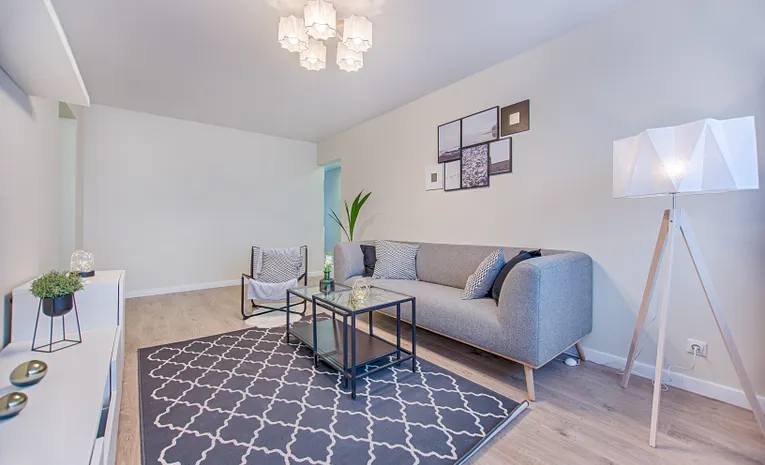
Living room: Combine a central ceiling fitting with floor and table lamps for warmth. Add dimmers so the room adapts from daytime use to evening relaxation.
Bedroom: Use soft 2700K to 3000K light with diffused shades. Put bedside lamps or wall lights on separate switches for reading without waking the whole room.
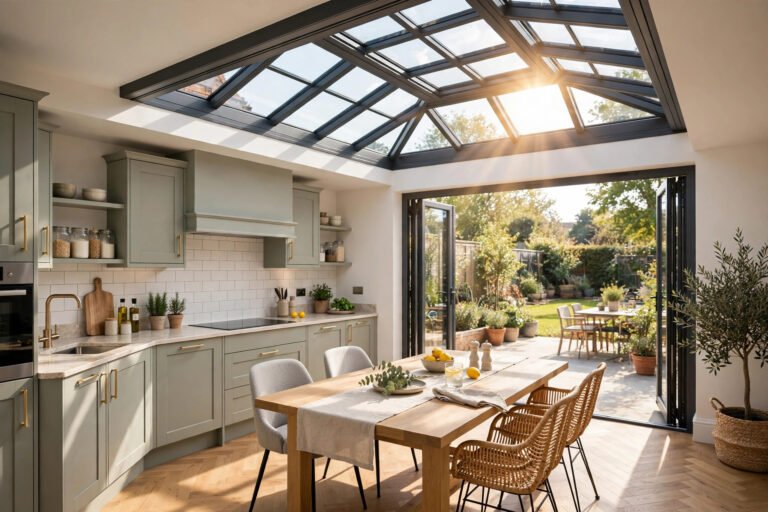
Kitchen: Use bright, neutral-white task lighting over worktops and the cooker, plus pendants or dimmable lights for the eating area. Under-cabinet LED strips remove shadows from overhead lights.
Bathroom: Bright, neutral-white light suits grooming. Always use IP-rated fittings near water: see the zones section below.
Home office: Aim for even, neutral-white light across the desk and surrounding walls. A desk lamp plus soft background light reduces contrast and eye strain, especially with screens.
Hallway and stairs: Even, glare-free light improves safety. Motion-sensor fittings or smart schedules add efficiency.
Outdoors: Choose IP65-rated fittings for full weather resistance. Warm to neutral white suits garden seating areas; motion-sensor security lights are best kept separate from decorative lighting.
Bathroom zones and IP ratings
UK wiring rules divide bathrooms into zones based on how close a fitting is to water. The zone decides the minimum IP (ingress protection) rating:
| Zone | Where it is | Minimum IP rating |
|---|---|---|
| Zone 0 | Inside the bath or shower tray | IP67 (immersion-proof), low voltage only |
| Zone 1 | Above the bath or shower, up to 2.25m | IP44 minimum; IP65 if sprayed directly |
| Zone 2 | Within 60cm of a bath, shower, basin, or tap | IP44 minimum |
| Outside zones | Beyond 60cm from water sources | Standard fittings acceptable if out of reach of wet hands |
Electrical work in bathrooms is notifiable under Part P of the Building Regulations, so have new circuits or fittings installed by a qualified electrician who can certify the work. Like-for-like replacements in the same position are treated differently, but if in doubt, get professional advice.
Common lighting mistakes to avoid
Relying on one light source. A single ceiling fitting leaves corners dark and creates harsh shadows.
Skipping dimmers. Dimmers let one fitting serve bright daytime tasks and soft evening moods, especially in living rooms and bedrooms.
Mixing colour temperatures randomly. A warm lamp next to a cool ceiling light in the same area looks inconsistent. Group temperatures by zone instead.
Forgetting wall colour. Dark paint absorbs light. Rooms with dark walls or ceilings often need noticeably more lumens.
Ignoring outdoor lighting. Good exterior light improves security and extends usable space after dark.
FAQs
What is the difference between lumens and watts?
Lumens measure brightness (how much light you get). Watts measure energy use. Because LEDs produce more light per watt, always compare bulbs by lumens and ignore the old wattage habit.
What colour temperature should I choose for my living room?
Warm white between 2700K and 3000K suits living rooms. It creates a cosy atmosphere and works well with soft furnishings. Add a dimmer for flexibility between daytime and evening use.
How many lumens do I need in a living room?
Aim for 1,500 to 3,000 lumens in total, spread across several fittings. Two medium lamps often give more even light than one very bright ceiling light.
Can I use the same bulbs in every room?
You can, but rooms perform better with different settings. Use warm white (2700K to 3000K) for living and sleeping areas, and neutral to cool white (3500K to 5000K) for kitchens, bathrooms, and workspaces.
Do LED bulbs work with my existing dimmer switches?
Only if both the bulb and the switch are LED-compatible. Old dimmers designed for incandescent bulbs can make LEDs flicker or buzz. Buy bulbs marked “dimmable” and check the dimmer manufacturer’s compatibility list.
What IP rating do bathroom lights need?
Lights within 60cm of a bath, shower, basin, or tap need at least IP44. Fittings directly above a bath or shower need IP44 minimum, or IP65 where sprayed directly. Inside the bath or shower tray itself, fittings must be IP67 and low voltage.
Do I need an electrician for bathroom lighting?
New electrical circuits or new fittings in a bathroom are notifiable under Part P of the Building Regulations. Use a qualified electrician who can certify the work rather than attempting it yourself.
About the Author