Kitchen Tiling Cost UK (2026): Splashback and Floor Prices
Quick Answer: What Kitchen Tiling Costs in the UK
Kitchen tiling in the UK is two different jobs with two different ways of pricing, and that is the first thing to understand before you look at any per-square-metre figure. A kitchen splashback, the strip of tiles between the worktop and the wall cabinets, typically costs £150 to £400 as a small job, with Checkatrade putting the average at around £275. A kitchen floor typically costs £500 to £1,500 depending on the size of the kitchen and the tile you choose, with Checkatrade putting a typical floor at around £800 and MyBuilder putting the average cost of tiling a kitchen at £800 to £1,500.
The reason the two jobs are priced differently is size. A splashback is usually only 2 to 3 square metres, so most tilers quote it as a fixed job price, not per square metre, because the cost is mostly the tiler’s time to come out, set up and finish a small area. A floor is 10 to 20 square metres, so it is priced per square metre, and the tile you choose makes a much bigger difference to the total. The all-in figure that most cost guides quote for tiling, around £110 per square metre including standard tiles, materials and labour, comes from Checkatrade’s June 2026 guide, and it is a fair guide for a floor. It is not a useful figure for a splashback, because a splashback is too small for a per-square-metre rate to make sense.
| Job | Typical total | How it is priced |
|---|---|---|
| Kitchen splashback (worktop to cabinets) | £150 to £400 | Per job, not per m2 |
| Kitchen floor, small (10m2) | £500 to £800 | Per m2, all-in |
| Kitchen floor, medium (15m2) | £650 to £1,000 | Per m2, all-in |
| Kitchen floor, large (20m2+) | £1,200+ | Per m2, all-in |
| Kitchen floor, typical | Around £800 | Per m2, all-in |
The figures in this guide come from 2026 cost guides published by Checkatrade, MyBuilder, Elliren Tiles, Fantastic Services, Property Job Quotes, Property Workshop and Bhumicalculator, cross-checked against each other. They are not our own survey, and they disagree with each other in places, because they are measuring different things: some quote labour only, some quote all-in, some are London prices and some are national averages. This guide separates the two jobs, so you can see which figure applies to yours, and why the cheapest headline number on a cost site is rarely the price of a finished kitchen.
One more thing to settle first: whether you are tiling as part of a kitchen renovation or on its own. If the kitchen is being refitted, the tiling is usually the last trade in, after the units and worktops are fitted, and the tiler works around a finished kitchen. If you are re-tiling an existing kitchen, the old tiles have to come off first, and that removal is a real cost, around £800 to £900 according to Checkatrade, which is often left out of the headline figures. Our kitchen renovation cost UK guide prices the whole project, and this guide prices the tiling part of it properly.
Kitchen Splashback Cost: The Small Job Priced Per Job
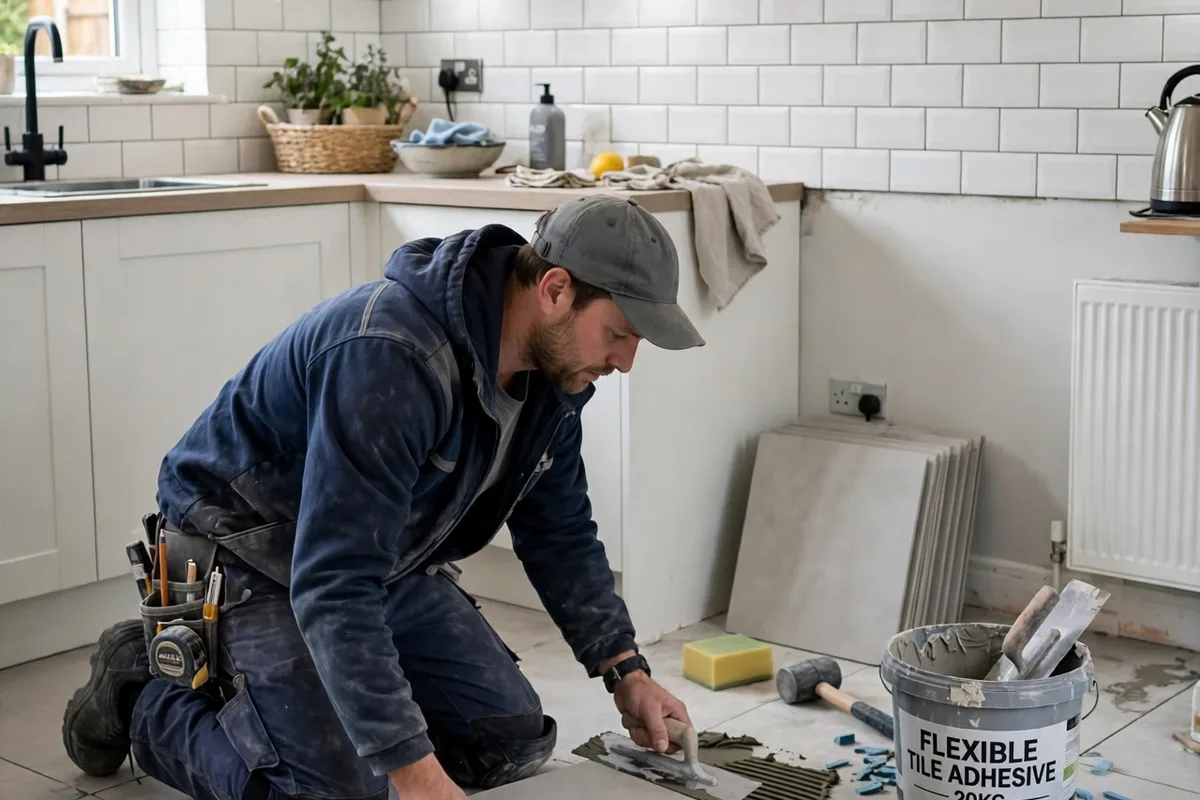
A splashback is the strip of tiles that runs along the wall between the kitchen worktop and the wall cabinets, usually about 600mm high, plus the area behind the hob, which often runs up to the extractor hood. In a typical straight-run kitchen it covers about 2 to 3 square metres. In an L-shaped kitchen with a hob on a second wall it can be 3 to 4 square metres. It is the most common kitchen tiling job, because it is the part of the kitchen that gets splashed, stained and wiped every day, and because a new splashback is the cheapest way to change how a kitchen looks without replacing anything else.
The price is £150 to £400 for a standard splashback, according to Fantastic Services, with Property Workshop putting the range at £148 to £367 and an average of £218. Checkatrade puts the average at around £275. In London and the South East, expect £250 to £500, according to Property Job Quotes, against £180 to £400 outside London. The range is wide because the price is mostly labour, and labour is mostly time, and a splashback takes a tiler half a day to a day depending on the tile and the number of cuts.
What makes one splashback cost £150 and another £400 is usually the tile, not the area. A plain ceramic metro tile at £15 to £25 per square metre needs very little cutting and goes up fast. A glass or mosaic tile at £35 to £100 per square metre needs to be cut carefully, laid on mesh sheets, and grouted with more care, and it takes longer. A herringbone or patterned layout adds 25 to 40 percent to the labour, according to Bhumicalculator, because every tile has to be cut at an angle and the waste is higher. The tile itself is only a small part of a splashback quote: 3 square metres of ceramic tile costs £45 to £75, while the labour for the same job is £150 to £300, so choosing a dearer tile adds less to the total than choosing a harder pattern.
There are two things a splashback quote should include that cheap quotes sometimes leave out. The first is the adhesive and grout, which Checkatrade puts at around £10 per square metre, and which for a splashback is a small sum but should still be itemised. The second is the edging. A splashback has exposed edges at the top and at the ends, and those edges need either a tile trim, a metal angle, or tiles with a finished edge, otherwise the raw edge of the tile shows. Ask whether trims are included in the quote, and what they cost, because a quote that leaves them out will grow by the price of the trims plus the time to fit them.
A splashback is also the job where the per-square-metre rate is most misleading. At £110 per square metre all-in, a 2.5 square metre splashback would cost £275, which happens to match Checkatrade’s average, but only by coincidence. The real cost is the tiler’s half day, and a tiler who charges £200 to £350 a day, which is the range Checkatrade and MyBuilder both quote, will charge roughly that for a splashback whatever the exact area is, because the travel, the setup, the mixing and the cleaning up are the same for 2 square metres as for 4. If a quote for a splashback is priced per square metre, ask what the minimum charge is, because there will be one.
One practical point: a splashback goes on after the worktop is fitted, not before. The tiles sit on the worktop, and the joint between the tiles and the worktop is sealed with silicone, not grout, so that the worktop can move slightly without cracking the tiles. If the splashback is being fitted as part of a new kitchen, the worktop has to be in first, and our kitchen worktop prices UK guide covers what the worktop itself costs. If the splashback is being fitted in an existing kitchen, the worktop stays where it is, and the tiler works around it, which is slower and can add to the price if there are sockets, a hob or a tap to cut around.
Kitchen Floor Tiling Cost: Priced Per Square Metre
A kitchen floor is a bigger job, and it is priced the way most tiling is priced: per square metre, all-in. Elliren Tiles puts a small kitchen floor of 10 square metres at £500 to £800, a medium floor of 15 square metres at £650 to £1,000, and a large floor of 20 square metres or more at £1,200 and above. Checkatrade puts a typical kitchen floor at around £800, and a 10 square metre kitchen at £600 to £1,300. MyBuilder puts a kitchen floor at £800 to £2,500, which is a wider range because it covers everything from a small ceramic floor to a large natural stone floor, and it puts the average cost of tiling a kitchen, floor and walls together, at £800 to £1,500.
The all-in rate that sits behind those totals is around £45 to £130 per square metre, according to both Elliren and Fantastic Services, with Checkatrade’s headline average of around £110 per square metre sitting near the top of that range. The reason the range is so wide is the tile. A basic ceramic floor at £45 to £80 per square metre all-in, from Bhumicalculator, is a different job from a porcelain floor at £60 to £115 per square metre all-in, and a natural stone floor at £85 to £190 or more per square metre all-in is different again. The labour is roughly the same for all three, at £25 to £55 per square metre, so almost all of the difference between a cheap floor and an expensive floor is the tile itself.
| Kitchen floor size | Area | Typical all-in total |
|---|---|---|
| Small galley or single-wall kitchen | 10m2 | £500 to £800 |
| Medium L-shaped kitchen | 15m2 | £650 to £1,000 |
| Large open-plan kitchen | 20m2+ | £1,200+ |
| Typical kitchen, Checkatrade | 10 to 12m2 | Around £800 |
There is one thing about a kitchen floor that does not apply to a splashback, and it is the condition of the floor underneath. Tiles need a flat, solid, level surface, and a kitchen floor that is not flat has to be levelled first, usually with a self-levelling compound, which is a separate cost. A floor that has old tiles on it has to have them removed, and Checkatrade puts removal at around £800 to £900, which can be as much as the tiling itself on a small floor. A floor that is going over underfloor heating needs the heating to be tested before the tiles go down, and the adhesive has to be suitable for a heated floor. Our underfloor heating cost UK guide prices the heating side of the job, and it is worth reading before you price the tiling, because the two are planned as one job, not two.
A kitchen floor also takes longer than a splashback, and time is what you are paying for. Checkatrade says a tiler lays roughly 8 to 12 square metres of floor tiles a day, so a 10 square metre floor is a day’s work plus the drying time, and a 20 square metre floor is two days. The adhesive has to set before the grout goes in, and the grout has to set before the floor can be walked on, so a kitchen floor is out of use for at least a day after the tiling is finished, and often two. If the kitchen is the only route through the house, that matters, and it is worth asking the tiler how long the kitchen will be out of action before the work starts.
What Tiles Cost Per Square Metre
The tile is the part of the price you choose, and it is the part where the range is widest. MyBuilder’s 2026 guide gives these material prices per square metre: ceramic £15 to £25, porcelain £15 to £35, natural stone £30 to £90 or more, and glass and mosaic £35 to £100. Checkatrade puts tiles at an average of £50 per square metre, with adhesive and grout at £10 per square metre on top. Those are the material prices only. The labour to lay them is the same whatever tile you choose, at £25 to £55 per square metre, except for the tiles that are harder to lay, which cost more in labour as well.
Ceramic is the cheapest and the most common choice for a kitchen floor, and it is the right choice for most kitchens. It is hard-wearing enough for a domestic kitchen, it comes in every size and colour, and it is the easiest tile to cut and lay, which keeps the labour at the bottom of the range. The limitation is that it is not as hard as porcelain, so in a very high-traffic kitchen, or a kitchen with a dog, or a kitchen where things get dropped, it can chip. For a splashback, ceramic is the default, and there is no reason to pay more unless you want the look of something else.
Porcelain is the tile most tilers recommend for a kitchen floor, and it is the one Elliren Tiles says is commonly used for kitchens because it resists stains, scratches and moisture. It costs £15 to £35 per square metre for the tile, which overlaps with ceramic at the bottom end, and it is harder, denser and less porous than ceramic, so it lasts longer and it is easier to keep clean. The extra cost over ceramic on a 15 square metre floor is £0 to £150 for the tile, which is a small sum against the total job, and it is the reason most kitchen floors are porcelain rather than ceramic. The catch is that porcelain is harder to cut, so the labour can be slightly higher, and it needs a better adhesive, which is part of the £10 per square metre for adhesive and grout.
Natural stone, which covers marble, limestone, slate and travertine, is the expensive choice, at £30 to £90 or more per square metre for the tile alone, and £85 to £190 or more per square metre all-in, according to Bhumicalculator. It looks better than any manufactured tile, and it is the tile that adds the most to the value of a kitchen, but it needs sealing, it stains if it is not sealed properly, and it is the hardest tile to lay well, because every tile is a different thickness and the floor has to be levelled to take it. A natural stone floor is a job for a tiler who has laid stone before, and it is worth asking for examples of their stone work before you accept a quote.
Glass and mosaic tiles, at £35 to £100 per square metre, are almost always a splashback choice rather than a floor choice, because they are too slippery and too fragile for a floor. On a splashback they are the most expensive option per square metre, but a splashback is only 2 to 3 square metres, so the total cost of the tile is £70 to £300, and the difference between the cheapest and the dearest tile on a splashback is a few hundred pounds, not thousands. That is why a splashback is the place to spend money on a tile you love, and a floor is the place to spend money on a tile that lasts.
Labour: Day Rates, Per-Square-Metre Rates and the London Premium
Labour is the biggest part of a kitchen tiling quote, and it is quoted in three different ways, which is one reason the figures on cost sites disagree. Checkatrade quotes labour at around £50 per square metre, around £40 per hour, and £200 to £350 per day. MyBuilder quotes the same range: £40 to £50 per hour, £200 to £350 per day, and around £50 per square metre. Elliren Tiles quotes £30 to £60 per square metre, and Fantastic Services quotes £25 to £55 per square metre, split into £25 to £40 per square metre for floors and £30 to £45 per square metre for walls. All four guides agree on the same picture: a tiler costs roughly £200 to £350 a day, and the per-square-metre rate is just that day rate divided by how many square metres a tiler lays in a day.
The per-square-metre rate is the one to use for a floor, because a floor is big enough for the rate to make sense. The day rate is the one to use for a splashback, because a splashback is too small for a per-square-metre rate, and the tiler will charge for the day or the half day whatever the area is. The hourly rate is the one to be careful about, because an hourly rate with no estimate of the hours is not a quote, it is an open-ended charge, and a tiler who quotes by the hour should still be able to say how many hours the job will take.
London and the South East cost more, and every guide agrees on the size of the premium. Fantastic Services puts it at 20 to 30 percent higher, Property Job Quotes puts it at 25 to 35 percent higher, and Bhumicalculator puts it at 15 to 25 percent higher. In pounds, Property Job Quotes puts day rates at £180 to £260 outside London and £250 to £350 in London, and labour at £40 to £65 per square metre outside London against £50 to £80 per square metre in London. A kitchen floor that costs £800 outside London costs roughly £1,000 to £1,100 in London, and a splashback that costs £275 outside London costs £350 to £370 in London. If you live in London, use the London figures, not the national averages, and if a London quote comes in at the national average, ask what has been left out.
The other thing that moves the labour price is the pattern. A straight grid layout, where the tiles are laid in rows and columns, is the fastest to lay and the cheapest in labour. A brick-bond layout, where each row is offset by half a tile, takes longer because every other tile has to be cut. A herringbone or patterned layout takes longest of all, and Bhumicalculator puts the extra labour at 25 to 40 percent, because every tile is cut at an angle and the waste is higher. On a 15 square metre floor at £50 per square metre for labour, a herringbone layout adds £190 to £300 to the labour alone, before the extra tiles are counted. If you want a pattern, budget for it, and buy the extra tiles it needs.
Worked Examples: Three Real Kitchens Priced in Full
Per-square-metre figures are useful for comparing quotes, but most people want to know what the whole job costs for a kitchen like theirs. The three examples below are worked out from the published rates in this guide, and they show the arithmetic, so you can change any figure and see what happens to the total. They include VAT at 20 percent, because the cost guides this article is based on state their prices including VAT, and they assume a straightforward job outside London, with no removal of old tiles and no levelling needed.
Example 1: a small galley kitchen, splashback only. The splashback runs along one wall, worktop to cabinets, about 2.5 square metres, in plain ceramic metro tiles. Tiles at £20 per square metre come to £50. Adhesive and grout at £10 per square metre come to £25. Labour for a half day, at a day rate of £200 to £350, comes to £150 to £250. Trims and silicone come to around £20. The total is £245 to £345, which sits inside the published range of £150 to £400 and close to Checkatrade’s average of £275. If the same splashback is laid in glass mosaic at £60 per square metre, the tile cost rises to £150, and the total rises to £345 to £445, which shows why the tile matters more on a splashback than on a floor in percentage terms, even though the absolute sum is small.
Example 2: a medium L-shaped kitchen, porcelain floor, 15 square metres. Porcelain tiles at £25 per square metre come to £375. Adhesive and grout at £10 per square metre come to £150. Labour at £40 per square metre, in the middle of the £25 to £55 range, comes to £600. Ten percent extra tiles for cuts and breakages, which Fantastic Services recommends, add £38. The total is £1,163, which is slightly above Elliren’s range of £650 to £1,000 for a 15 square metre floor, and the difference is that this example uses mid-range porcelain and a mid-range labour rate, while Elliren’s range starts with basic ceramic and a low labour rate. With ceramic tiles at £15 per square metre and labour at £30 per square metre, the same floor comes to £225 for tiles, £150 for adhesive and grout, £450 for labour and £23 for extra tiles, a total of £848, which is inside Elliren’s range. The two totals are both right: they are different tiles and different labour rates, and the quote you get will depend on which tile and which tiler you choose.
Example 3: a large open-plan kitchen, 20 square metres of floor plus a splashback. The floor in porcelain at £25 per square metre comes to £500 for tiles, £200 for adhesive and grout, and £800 for labour at £40 per square metre, plus £50 for extra tiles, a total of £1,550 for the floor alone. The splashback, at Checkatrade’s average of £275, brings the combined total to £1,825. That is above Elliren’s £1,200 and above for a large floor, because this example includes the splashback as well, and because it uses mid-range rates throughout. With basic ceramic and a lower labour rate, the same combined job comes to around £1,300, and with natural stone on the floor it would be £2,500 or more. The honest way to use these examples is to treat the lower end as the price for basic tiles and a low labour rate outside London, and the higher end as the price for better tiles, a harder pattern, or London rates.
What the examples show, and what the cost guides agree on, is that the tile is the variable you control. On a 15 square metre floor, the difference between ceramic at £15 per square metre and porcelain at £35 per square metre is £300. The difference between a straight layout and a herringbone layout is £190 to £300 in labour. The difference between a quote outside London and a quote in London is 20 to 35 percent on the whole job. None of those differences is hidden, but all of them are hidden inside a single headline figure, which is why a quote that breaks the price into tiles, materials and labour is worth more than a quote that gives a single total.
What Pushes the Price Up
Most kitchen tiling jobs cost what the worked examples say they will cost. The jobs that cost more are the ones where something about the kitchen makes the work harder, and the extra cost is usually one of five things. The first is removing the old tiles. Checkatrade puts removal at around £800 to £900, and it is a separate job from the tiling, because the old tiles have to be chipped off, the wall or floor underneath has to be made good, and the rubble has to be taken away. If your kitchen already has tiles that need to come off, the removal can cost as much as the new tiling on a small floor, and it should be in the quote, not discovered after the work starts.
The second is levelling. A floor that is not flat has to be levelled with a self-levelling compound before the tiles go down, and a wall that is not flat has to be plastered or boarded. A tiler who quotes without seeing the floor is guessing, and the guess is usually that the floor is flat. Ask the tiler to check the floor with a straight edge before they quote, and ask what happens if it needs levelling, because a floor that needs levelling and is not levelled will crack the tiles within a year.
The third is the pattern. A straight grid is the cheapest layout. A brick-bond layout costs more in labour and in waste, because every other tile is cut. A herringbone layout costs the most, at 25 to 40 percent more labour, and it needs 15 percent extra tiles instead of 10 percent, because the angled cuts waste more. A patterned or encaustic tile costs more for the same reason, and it also takes longer to set out, because the pattern has to be planned before the first tile goes down. If you want a pattern, the tiler should be able to say how much extra it costs, and if they cannot, they have probably not laid that pattern before.
The fourth is the number of cuts. A kitchen has sockets, a hob, a tap, a sink, door frames and cupboard legs, and every one of them is a cut in a tile. A splashback with four double sockets and a hob takes longer than a splashback with no sockets at all, because each socket needs a tile cut around it, and a badly cut tile around a socket is the most visible mistake in a kitchen. A floor with a lot of cupboard legs and a kitchen island takes longer than an empty floor, for the same reason. A quote that does not ask about the sockets and the fittings is a quote that has not been thought through.
The fifth is underfloor heating. A floor over underfloor heating needs a flexible adhesive, a movement joint around the edge of the room, and a test of the heating before the tiles go down and after they have set. The heating itself is a separate cost, covered in our underfloor heating cost UK guide, but the tiling over it costs slightly more in materials and in time, because the adhesive is dearer and the heating has to be switched off and allowed to cool before the tiles are laid, and then brought back up slowly afterwards. A tiler who has not tiled over underfloor heating before should say so, because the detailing is different, and getting it wrong cracks the tiles.
Splashback or Floor First: Which to Do, and in What Order
If you are tiling a kitchen, the usual question is whether to do the splashback, the floor, or both, and in what order. The answer depends on whether the kitchen is being refitted or just re-tiled. In a full refit, the floor goes down first, before the units are fitted, because the units sit on the finished floor, and the splashback goes on last, after the worktops are fitted, because the tiles sit on the worktop. Our kitchen renovation cost UK guide sets out the order of a full refit, and the tiling fits into it at those two points.
If you are re-tiling an existing kitchen without refitting it, the order is different, because the units and the worktop are already in place. The floor is tiled first, working around the plinths of the units, and the splashback is tiled second, working around the worktop and the sockets. Doing the floor first matters, because the floor tiles have to go under the plinths, and if the splashback is done first, the dust and rubble from the floor work lands on the new splashback. Doing both jobs at the same time, with the same tiler, is cheaper than doing them separately, because the tiler is already on site, the adhesive and grout are already mixed, and the travel and setup are paid for once. A splashback on its own costs £150 to £400. A splashback done at the same time as a floor costs less, because the labour is shared, and it is worth asking the tiler for a combined price.
There is one case where the splashback should come first, and it is when the floor is not being tiled at all. A new splashback on its own is the cheapest way to refresh a kitchen, and it is a job that can be done in a day with the kitchen still usable, because the worktop stays in place and the only disruption is the dust from cutting the tiles. A floor on its own is a bigger job, and it is the one to do when the floor itself is the problem, whether it is worn, damaged, or just the wrong material for a kitchen. Neither job needs planning permission, and neither needs Building Regulations approval on its own, because tiling is a finish, not a structural change. The only rule that applies is the electrical one: if the tiling involves moving a socket, or fitting a socket in a new position, that is electrical work, and it has to be done by a qualified electrician, not by the tiler.
Choosing a Tiler and What to Ask
A kitchen tiler is a specialist, and the difference between a good one and a bad one is visible every day, because the tiles are on show. The first thing to ask is whether the tiler has laid the tile you have chosen before. A tiler who has laid ceramic all their life may not have laid natural stone, and a tiler who has laid floors may not have laid a herringbone splashback. Ask for photographs of recent work with the same tile and the same pattern, and if the tiler cannot show any, choose a different tiler or a different tile.
The second thing to ask is what the quote includes. A good quote breaks the price into tiles, adhesive and grout, labour and VAT, and it says whether the old tiles are being removed, whether the floor is being levelled, whether trims are included, and whether the waste is being taken away. A quote that gives a single total without a breakdown is a quote that can grow, and it usually grows by the items that were left out. Ask whether the quote is fixed, and what happens if the floor needs levelling or the wall needs making good, because those are the two extras that most often appear after the work starts.
The third thing to ask is how long the job will take and how long the kitchen will be out of use. A splashback takes half a day to a day, and the kitchen stays usable. A floor takes one to two days for the tiling, plus a day for the adhesive and grout to set, and the kitchen is out of use for that time. A tiler who says a floor can be walked on the same day it is grouted is a tiler who is in a hurry, and the grout will crack. Ask when the kitchen can be used again, and plan around it.
The fourth thing to ask is about the guarantee. A tiler should guarantee their work, usually for a year, and the guarantee should cover the tiles coming loose, the grout cracking, and the floor being level. The tiles themselves are guaranteed by the manufacturer, not by the tiler, and the guarantee does not cover damage from the house moving or from water getting under the tiles because a seal has failed. Ask what the guarantee covers, and get it in writing, because a verbal guarantee is worth nothing if the tiler has moved on.
Get at least two quotes, and compare them line by line rather than by the headline total. A quote that is much cheaper than the others has usually left something out, and the missing item is usually the removal, the levelling, or the VAT. A quote that is much dearer should be able to explain why, whether it is a better tile, a harder pattern, or London labour rates. The right tiler is the one who can explain the tile, the pattern, and the price, in plain English, before the work starts.
Frequently Asked Questions
How much does it cost to tile a kitchen in the UK?
A splashback typically costs £150 to £400, with an average of around £275. A kitchen floor typically costs £500 to £1,500, depending on the size of the kitchen and the tile, with a typical floor at around £800. The all-in rate for tiling is around £45 to £130 per square metre, with Checkatrade’s headline average at around £110 per square metre including standard tiles, materials and labour.
How much does a kitchen splashback cost?
A standard splashback costs £150 to £400, according to Fantastic Services, with Property Workshop putting the range at £148 to £367 and an average of £218, and Checkatrade putting the average at around £275. In London, expect £250 to £500. Small splashbacks are usually quoted per job, not per square metre, because the cost is mostly the tiler’s time.
How much does it cost to tile a kitchen floor per m2?
The all-in cost is £45 to £130 per square metre, depending on the tile. Labour alone is £25 to £55 per square metre, and the tile itself is £15 to £25 per square metre for ceramic, £15 to £35 for porcelain, and £30 to £90 or more for natural stone. A 10 square metre floor costs £500 to £800, a 15 square metre floor £650 to £1,000, and a 20 square metre floor £1,200 or more, according to Elliren Tiles.
What is the cheapest way to tile a kitchen?
Use ceramic tiles in a straight grid layout, and do the splashback and the floor at the same time with the same tiler. Ceramic is the cheapest tile at £15 to £25 per square metre, a straight layout is the cheapest to lay, and combining the two jobs shares the travel and setup cost. A basic ceramic floor at £45 to £80 per square metre all-in is the cheapest option that still lasts, and it is the one most cost guides quote as the bottom of the range.
How long does it take to tile a kitchen?
A splashback takes half a day to a day, and the kitchen stays usable. A kitchen floor takes one to two days to lay, plus a day for the adhesive and grout to set, and the kitchen is out of use for that time. A tiler lays roughly 10 to 15 square metres of wall tiles or 8 to 12 square metres of floor tiles a day, according to Checkatrade, so a 15 square metre floor is about two days of laying.
Should I tile the kitchen floor or the splashback first?
In a full refit, the floor goes down first, before the units are fitted, and the splashback goes on last, after the worktops are fitted. In an existing kitchen, the floor is still tiled first, so that the dust and rubble from the floor work does not land on the new splashback. Doing both jobs together with the same tiler is cheaper than doing them separately.
Do I need planning permission to tile a kitchen?
No. Tiling is a finish, not a structural change, so it does not need planning permission and it does not need Building Regulations approval on its own. The only rule that applies is the electrical one: if the work involves moving a socket, that has to be done by a qualified electrician.
How many extra tiles should I buy?
Buy 10 percent extra for a straight layout, to cover cuts and breakages, which is the figure Fantastic Services recommends. For a patterned or herringbone layout, buy 15 percent extra, which is the figure Checkatrade’s calculator page recommends, because the angled cuts waste more tile. Keep a few spare tiles after the job, because the same tile may not be available in a year if one cracks.
About the Author