Quick Answer: What Toilet Installation Costs in the UK
A toilet installation in the UK is not one job with one price. It is three different jobs, and the price depends on which one yours is. A like-for-like replacement, where the new toilet goes in the same spot as the old one, typically costs £150 to £450 supplied and fitted. A wall-hung toilet with a concealed cistern typically costs £550 to £800 supplied and fitted. And a toilet in a brand-new position, where new pipework and a soil-pipe connection have to be made, typically costs £600 to £1,500 for the toilet and its pipework, and up to around £4,000 if the job is a whole new downstairs toilet room.
The reason the ranges are so wide is that cost guides mix up three different things: the price of the toilet unit on its own, the labour to fit it, and the price of the two together. A standard close-coupled toilet unit costs £100 to £250 on its own, and the labour to swap it in the same spot is £100 to £200 outside London, so the supplied-and-fitted total lands at £150 to £450 depending on the toilet you choose and where you live. Compare those two figures carefully whenever you read a cost guide, because a headline of £150 might be the unit only, while a headline of £450 might be the finished job. This guide labels every figure as supply-only, install-only, or supply-and-fit, so you can compare like with like.
| Job | Typical total (supply and fit) | What decides the price |
|---|---|---|
| Like-for-like close-coupled replacement | £150 to £450 | Toilet unit price and region |
| Replacement with pipework or re-tiling | £350 to £600 | Amount of extra plumbing and making good |
| Back-to-wall toilet | £250 to £550 | Unit and the furniture or panelling around it |
| Wall-hung with concealed cistern | £550 to £800 | Frame, in-wall cistern and tiling over it |
| New position near an existing soil pipe | £600 to £1,500 | Distance to the soil pipe and floor work |
| New downstairs toilet room | £2,000 to £4,000 | Soil connection, walls, tiling and finishing |
| Smart / hands-free toilet | £1,900 to £2,500 | Specialist unit and electrics |
The figures in this guide come from 2026 cost guides published by Costwise, Checkatrade, MyJobQuote, MyBuilder and Fantastic Services, cross-checked against each other. They are not our own survey, and they disagree with each other in places, because some quote labour only, some quote all-in, some are London prices and some are national averages. The article separates the jobs so you can see which figure applies to yours.
One thing to settle before you get a quote: whether the toilet is being replaced on its own or as part of a bathroom refit. A replacement on its own is a half-day job for one plumber. A bathroom refit is a multi-week project with several trades, and a full bathroom refit costs £3,000 to £15,000 according to MyBuilder. This guide prices the toilet job on its own. If you are refitting the whole room, our bath to shower conversion cost UK guide and our wet room cost UK guide price the bigger projects.
Like-for-Like Replacement Cost: The Same Spot, A New Toilet
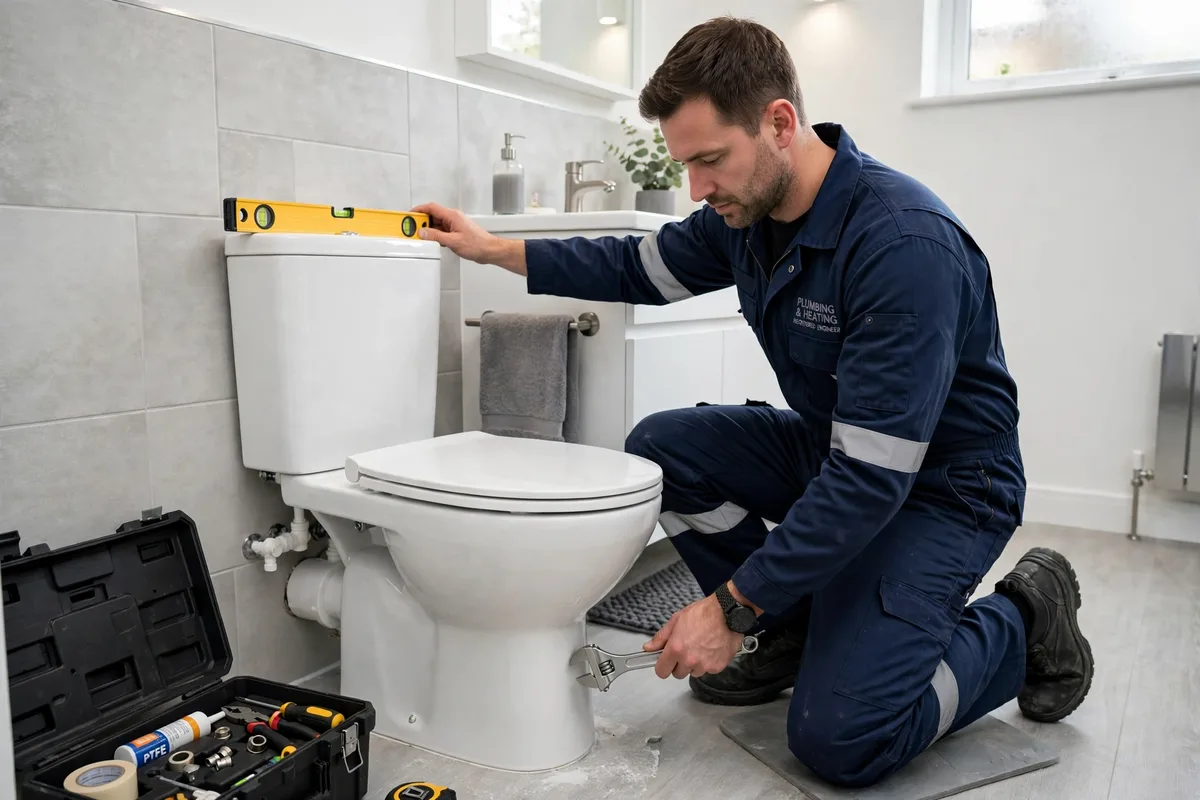
A like-for-like replacement is the cheapest and simplest toilet job: the old toilet comes out, the new one goes into the same place, using the same water supply and the same soil-pipe connection. No pipework moves, no floor is lifted, no wall is opened. It is the job most homeowners are actually pricing when they search for toilet installation cost.
The supplied-and-fitted price is £150 to £450 for a standard close-coupled toilet, according to Costwise, MyJobQuote and MyBuilder. Costwise puts the range at £150 to £350 with the average supplied-and-fitted job at around £350, MyJobQuote puts it at £200 to £400, and MyBuilder at £150 to £400. The three ranges overlap heavily, which is a good sign: the market for a straightforward swap is well settled, and a quote far outside £150 to £450 for a standard close-coupled toilet deserves a second look.
The two parts of that total are the unit and the labour. A standard close-coupled toilet unit costs £100 to £250 on its own, according to Fantastic Services, and the labour to fit it is £100 to £200 outside London, according to Checkatrade. So the total depends mostly on which toilet you buy. A £100 budget toilet fitted for £150 of labour is a £250 job. A £250 designer close-coupled fitted for the same £150 of labour is a £400 job. The fitting work is the same; the toilet is what changes the price. That is also why it is worth asking a plumber for the labour figure separately, so you can see whether you are paying for the toilet or for the fitting.
A like-for-like swap takes 2 to 4 hours, according to Checkatrade, and a plumber charges £40 to £60 an hour, or £320 to £480 a day. Most swaps are done in one visit, and the plumber should leave the old toilet removed and the new one tested and sealed. If the quote includes removing the old toilet, ask whether disposal is included, because some plumbers charge extra to take the old suite away. Our close-coupled toilets complete guide explains the types of close-coupled toilet, so you can choose the unit before you get the fitting quote.
There is one thing that can turn a simple swap into a bigger job: the soil-pipe connection. If the old toilet has been in place for decades, the pan connector may be corroded or the wrong size for the new pan, and the plumber may need to fit a new connector or adjust the soil pipe. That is usually a small addition to the same visit, but it is worth asking whether the quote covers the connector, because a quote that assumes the old connector will fit is a quote that can grow once the old toilet is out.
Replacement With Pipework or Re-Tiling: When the Job Grows
The second kind of toilet job is a replacement in the same place, but with extra work around it: a short run of new pipework, a new isolation valve, a floor tile or two replaced, or the wall re-tiled behind the cistern. It is still a replacement, not a new position, but the extra work changes the price and the timescale.
The supplied-and-fitted price for this kind of job is £350 to £600, according to Costwise. The jump from the like-for-like range is not the toilet: it is the extra half-day of work and the materials for the pipework and making good. A common version of this job is a toilet replacement combined with a small amount of re-tiling, for example when the old toilet was wider than the new one and the floor tiles underneath it are missing or damaged. The tiling part of that job is priced by the square metre, and our kitchen tiling cost UK guide shows how tilers price small areas, which is the same logic that applies to a bathroom floor.
Ask the plumber to itemise the extras. A good quote for this kind of job lists the toilet, the labour, the pipework materials, and the making good separately, so you can see which part is driving the price. If the quote is a single number with no breakdown, you cannot tell whether the extra £200 over a like-for-like swap is pipework, tiling, or simply a dearer toilet. And if the plumber finds damaged floorboards or a leaking waste pipe once the old toilet is out, that is a genuine extra, not a surprise: a toilet that has been leaking for years can rot the floor underneath it, and the repair is part of the job, not part of the quote.
Back-to-Wall and Wall-Hung Toilets: The Concealed Cistern Premium
Back-to-wall and wall-hung toilets cost more to install than a close-coupled toilet, because the cistern is hidden. A back-to-wall toilet has its cistern behind a unit or a half-height wall, so you see only the pan. A wall-hung toilet hangs from a steel frame inside the wall, with the cistern concealed in the wall itself, and the pan floats above the floor. Both look neater than a close-coupled toilet, and both cost more to fit, because the fitting work includes building the concealment, not just connecting the pan.
A back-to-wall toilet typically costs £250 to £550 supplied and fitted, according to MyBuilder. A wall-hung toilet with a concealed cistern typically costs £550 to £800 supplied and fitted, according to MyJobQuote and MyBuilder, with Costwise putting the range at £600 to £900. The labour alone for a wall-hung toilet is £300 to £400 outside London, according to Checkatrade, against £100 to £200 for a like-for-like close-coupled swap. The difference is the frame and the wall: the frame has to be fixed to the floor and the wall, the cistern has to be connected inside the wall, and the wall has to be tiled or panelled over the frame before the pan can be hung.
The unit prices tell the same story. A standard close-coupled unit costs £100 to £250, while a concealed cistern unit costs £250 to £600, according to Fantastic Services, and that is before the steel frame, which is usually sold with the cistern as a kit. So a wall-hung job is dearer in both parts: the unit and the labour. It is also a job where the wall matters. A wall-hung frame needs a solid wall or a properly built stud wall to fix to, and a wall that is not strong enough will need strengthening first. Ask the plumber to confirm the wall is suitable before you buy the frame, because a frame that cannot be fixed properly is a job that has to be redone.
Our wall-hung toilets complete guide explains the types, the frame systems and the wall requirements in detail, so you can decide whether the look is worth the premium before you commit to the fitting cost.
New Position and New Room: The Soil Pipe Decides the Price
A toilet in a new position is a different job from a replacement, with a different price and a different set of risks. The work is not the toilet: it is getting water to the new spot and waste away from it, and the waste is the hard part. A toilet flushes into a soil pipe, a 110mm pipe that carries waste to the drain, and the new toilet has to connect to it with the right fall, the right distance, and the right ventilation. Everything else in the job follows from that connection.
A new toilet with new pipework near an existing soil pipe typically costs £600 to £1,500 supplied and fitted, according to MyJobQuote. That range covers a toilet moved a short distance in the same bathroom, where the soil pipe is close and the floor can be lifted and relaid without much disruption. A whole new downstairs toilet room typically costs £2,000 to £4,000, according to MyBuilder, and a full new under-stairs bathroom can reach around £4,000, according to MyJobQuote. The difference between those two figures is the room itself: walls, a door, tiling, lighting and finishing, not just the toilet.
The single biggest cost driver is the distance to the soil pipe. A toilet that sits directly above or beside the soil stack connects with a short run of pipe and a small amount of floor work. A toilet on the other side of the house needs a long soil-pipe run, which means lifting floors, cutting joists, or running pipework through the wall, and each of those adds labour and making good. If the soil pipe cannot be reached by gravity, the alternative is a macerator, a pump that grinds waste and pushes it through a small-bore pipe to the drain. A macerator makes a new toilet possible almost anywhere, but it is a compromise: it needs electricity, it is noisier than a gravity connection, and it can block if the wrong things are flushed. It is a solution to a real problem, not a free choice, and it should be priced as a separate item, not hidden inside the toilet price.
A new toilet position also brings Building Regulations into play. Adding a toilet, or moving one, is building work that has to be notified to your local council’s building control, and the drainage and ventilation have to meet Part H of the Building Regulations. Your plumber or builder should handle the notification, but ask who is responsible for it and whether the fee is in the quote, because it is a cost that is easy to leave out and awkward to discover later.
What the Labour Covers and What It Does Not
A toilet installation quote should cover the removal of the old toilet, the fitting of the new one, the connection to the water supply and the soil pipe, the sealing, and a test flush. It should also cover the disposal of the old toilet, or say clearly that it does not. What it usually does not cover is the making good around the job: replacing damaged floor tiles, repainting a wall that was opened up, or repairing plaster. Those are separate trades or separate line items, and they are where a cheap quote can grow.
The labour rate is the other thing to check. A plumber charges £40 to £60 an hour, or £320 to £480 a day, according to Checkatrade, and a like-for-like swap takes 2 to 4 hours. So a labour figure of £100 to £200 for a swap is consistent with those rates. A labour figure far above that for a simple swap, with no pipework or making good in the quote, is worth questioning. And a labour figure far below it may mean the plumber is pricing the job as a quick add-on to other work, which is fine if the work is genuinely quick, but not if the quote is missing the removal or the disposal.
Get two or three quotes for any job bigger than a like-for-like swap, and ask each plumber the same questions: is the toilet supplied or am I buying it, is the old toilet’s removal and disposal included, is the soil-pipe connector included, and is the making good included. The answers to those four questions explain almost every difference between two quotes for the same job.
London and the South East: The Regional Premium
Toilet installation costs more in London and the South East, as most trade work does. Checkatrade puts the premium at around 15 to 30 percent, or about £50 to £200 more on labour, and the wall-hung labour figure shows it directly: £300 to £400 outside London, £400 to £500 in London and the South East. So a like-for-like swap that costs £150 to £450 nationally might cost £200 to £550 in London, and a wall-hung job that costs £550 to £800 nationally might cost £650 to £950 in London.
The premium is a labour premium, not a materials premium. The toilet unit costs the same wherever you buy it, and the frame and cistern cost the same too. What costs more is the plumber’s time, because London plumbers charge higher day rates. If you are comparing quotes, compare the labour figures, not the totals, because the totals hide whether the difference is the toilet or the region. And if you live outside London and the South East, the national ranges in this guide are the right ones to use; if you live in London, add the premium to the labour, not to the whole job.
Smart and Hands-Free Toilets: A Specialist Job
A smart toilet, with a heated seat, a wash function, a dryer and automatic flushing, is a different kind of installation from a standard toilet, because it needs electricity as well as water and waste. The unit costs £500 to £4,000 or more, according to MyJobQuote, and the supplied-and-fitted price for a specialist model is £1,900 to £2,500, with fitting alone at £500 to £700. The fitting cost is higher because the job includes an electrical connection, which has to be done by a qualified electrician or a plumber who is competent to do the electrical work, and because the toilet itself is heavier and more complex to install than a standard pan.
If you are buying a smart toilet, check two things before you order it. The first is the electrical supply: a smart toilet needs a fused spur or a socket near the toilet, and if there is not one, an electrician has to install it, which is a separate cost. The second is the water supply: some smart toilets need a higher water pressure than a standard toilet, and a plumber should confirm your pressure is enough before the unit is ordered. A smart toilet that is ordered before those two checks is a smart toilet that may not work in your bathroom.
Choosing a Plumber and Getting a Quote That Holds
A toilet installation is plumbing work, and it should be done by a qualified plumber. For a like-for-like swap, any experienced plumber can do the job. For a new position, a wall-hung toilet, or a smart toilet, look for a plumber who has done that kind of job before, and ask to see photos of similar work. The quality of the fitting matters more than the price of the toilet: a badly sealed pan leaks, a badly fixed frame moves, and a badly connected soil pipe smells, and all three are expensive to fix after the bathroom is finished.
A quote that holds is a quote that is itemised. Ask for the toilet unit, the labour, the materials, the removal and disposal, and the making good as separate lines, and ask whether VAT is included. Most domestic plumbing quotes are given including VAT, but a quote that does not say so is a quote that can grow by 20 percent. And ask how long the job will take. A like-for-like swap is half a day. A wall-hung toilet is a day. A new position is a day or two, plus the making good. A quote that promises a new position in half a day is a quote that has missed the soil work.
Frequently Asked Questions
How much does it cost to replace a toilet in the UK?
A like-for-like replacement of a standard close-coupled toilet typically costs £150 to £450 supplied and fitted, according to Costwise, MyJobQuote and MyBuilder. The unit on its own costs £100 to £250, and the labour is £100 to £200 outside London. A wall-hung toilet costs more, typically £550 to £800 supplied and fitted.
How long does it take to install a toilet?
A like-for-like swap takes 2 to 4 hours, according to Checkatrade, and is usually done in one visit. A wall-hung toilet takes about a day, because the frame has to be fixed and the wall tiled or panelled over it. A toilet in a new position takes a day or two, plus the time to make good the floor and walls.
Can a toilet be moved to a different place in the bathroom?
Yes, but the price depends on the distance to the soil pipe. A new toilet near an existing soil pipe typically costs £600 to £1,500 supplied and fitted, according to MyJobQuote. If the soil pipe cannot be reached by gravity, a macerator pump can be used instead, but it needs electricity, is noisier, and can block. Moving a toilet also has to be notified to building control under Part H of the Building Regulations.
Is it cheaper to buy the toilet myself and pay for fitting only?
It can be, because you can shop around for the unit and the plumber charges labour only, which is £100 to £200 for a like-for-like swap outside London. But check that the plumber will fit a toilet you supply, and that the warranty on the unit is yours to claim, not the plumber’s. Some plumbers prefer to supply the toilet themselves, because then the warranty and the fitting are their responsibility.
How much does a wall-hung toilet cost to install?
A wall-hung toilet with a concealed cistern typically costs £550 to £800 supplied and fitted, according to MyJobQuote and MyBuilder, with Costwise putting the range at £600 to £900. The labour alone is £300 to £400 outside London, and £400 to £500 in London and the South East, according to Checkatrade. The concealed cistern unit costs £250 to £600 on its own.
Does installing a new toilet need Building Regulations approval?
Adding a toilet in a new position, or moving an existing one, is building work that has to be notified to your local council’s building control, and the drainage and ventilation have to meet Part H of the Building Regulations. A like-for-like replacement in the same spot does not need approval. Ask your plumber or builder who is handling the notification and whether the fee is in the quote.
How much does a plumber charge per hour in the UK?
A plumber charges £40 to £60 an hour, or £320 to £480 a day, according to Checkatrade. A like-for-like toilet swap takes 2 to 4 hours, so the labour is typically £100 to £200 outside London. In London and the South East, expect around 15 to 30 percent more.
What is the cheapest way to replace a toilet?
The cheapest route is a like-for-like swap of a standard close-coupled toilet, bought as a budget unit at £100 to £150 and fitted by a local plumber for £100 to £200 of labour, giving a total of around £250. Avoid the false economy of the cheapest unit if it has a poor flush or a weak warranty, because a toilet that has to be replaced twice is not cheap.
About the Author