Quick Answer: Can You Fit Underfloor Heating Under Carpet?
Yes, underfloor heating can be fitted under carpet, but the carpet and underlay combined must have a low enough tog rating, generally 2.5 tog or below, to allow heat to transfer effectively into the room. A thick carpet with heavy underlay will insulate against the heat rather than letting it through, significantly reducing the system’s efficiency.
How Underfloor Heating Works Under Different Floor Types
Underfloor heating performance depends heavily on the thermal resistance, or tog rating, of whatever sits above it — see our types of flooring guide for how each material compares. Hard flooring such as tile transfers heat almost instantly with minimal resistance, while soft floor coverings like carpet naturally insulate, which is the opposite of what you want directly above a heat source.
| Floor Covering | Typical Tog Rating | UFH Suitability |
|---|---|---|
| Ceramic or porcelain tile | Under 0.5 tog | Excellent, near instant heat transfer |
| Engineered wood | 0.5 to 1.5 tog | Good, check manufacturer guidance |
| Vinyl or LVT | 0.5 to 1 tog | Good, most ranges rated for UFH |
| Low tog carpet with thin underlay | Up to 2.5 tog combined | Acceptable with correct product selection |
| Standard carpet with thick underlay | 3 tog or higher | Poor, significantly reduces efficiency |
Choosing Carpet and Underlay for Underfloor Heating
- Look specifically for carpet and underlay products labelled as underfloor heating compatible, which will state a maximum tog rating
- Combine a low tog carpet with a low tog underlay rather than assuming either product alone is sufficient
- Natural fibre carpets such as wool tend to have a higher tog rating than synthetic alternatives, so always check the specific product rather than assuming by fibre type
- Avoid rubber backed underlay, which can act as an additional insulating barrier against heat transfer
Best Underlay for Underfloor Heating Under Carpet
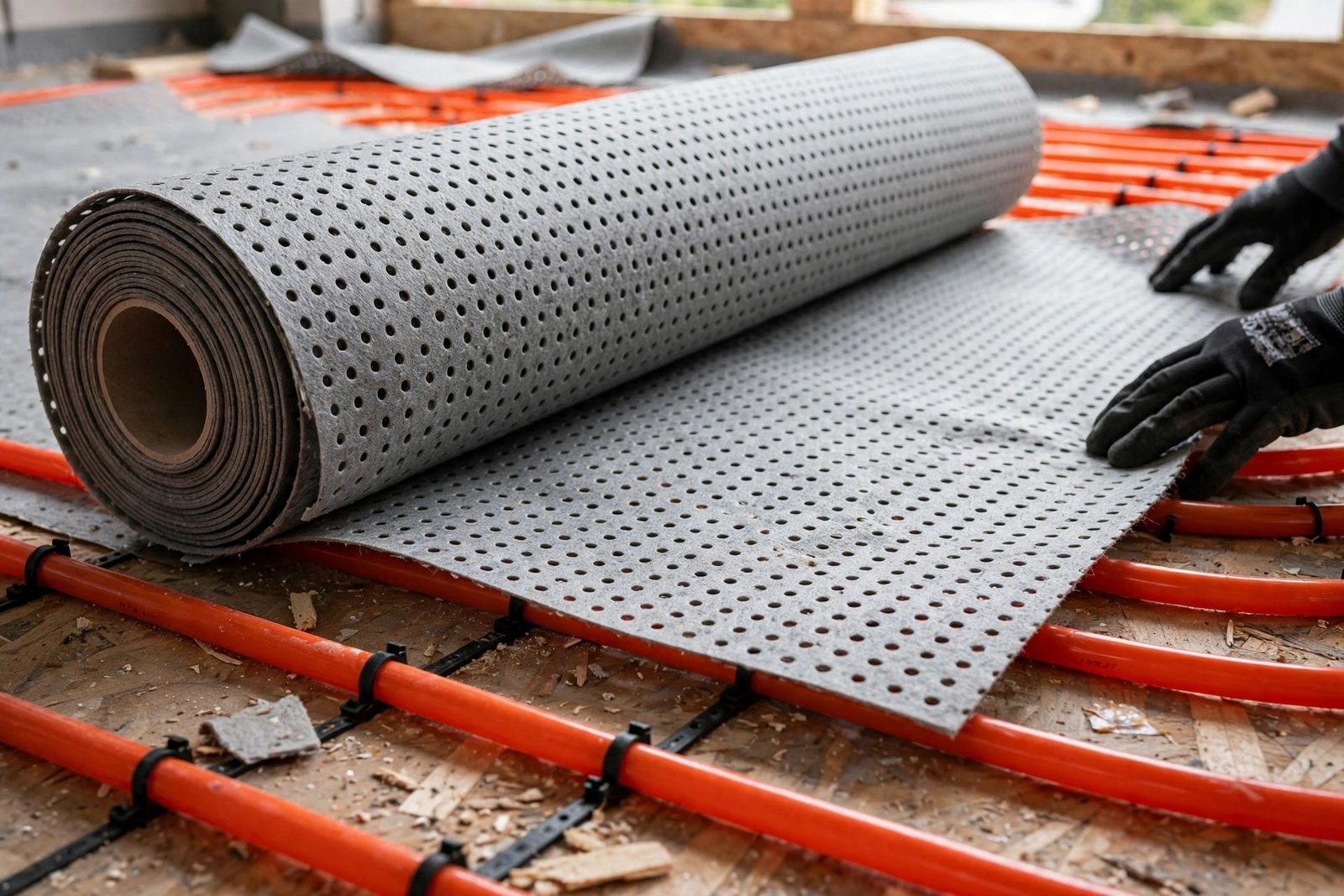
Standard carpet underlay is designed to insulate, which is the opposite of what you need over a heat source. Purpose-made underfloor heating underlays use perforated or low density constructions that let heat pass through while still feeling comfortable underfoot. The number that matters is the combined tog rating of carpet plus underlay, which should stay at or below 2.5. With a typical wool mix carpet at around 1.2 tog, that leaves roughly 1.3 tog of headroom for the underlay, so aim for an underlay rated at 0.8 tog or less.
| Underlay | Thickness | Tog rating | Best for |
|---|---|---|---|
| Wilsons ThermalStream | 10mm | 0.8 | Maximum comfort; perforated foam transfers heat faster, suits electric and wet systems |
| Duralay Heatflow Carpet | 6.1mm | 0.75 | Budget friendly low tog option; not suitable for electric or dry systems |
| Cloud 9 Radiance | Around 8mm | Low tog (check product) | Good all round UFH carpet underlay |
| Tredaire King | Around 9mm | Low tog (check product) | Comfortable domestic option for wet systems |
The compatibility detail that catches people out is the system type. Some low tog carpet underlays are rated for wet (water based) systems only and should not be used with electric mat or dry systems, so always check the technical specification sheet before buying. Typical prices for specialist UFH carpet underlay run from around £5 to £9 per square metre in 2026, which is a modest addition to the overall heating project but makes the difference between a warm room and a lukewarm one.
Electric vs Water Based Underfloor Heating with Carpet
Both electric and water based, or wet, underfloor heating systems can work under carpet provided the tog rating guidance above is followed. Electric systems tend to heat up faster, making them well suited to rooms used intermittently such as a bedroom, while water based systems are generally more cost effective to run continuously and suit larger areas or whole house installations.
Subfloor Considerations for Underfloor Heating
Suspended timber floors require different underfloor heating solutions to solid concrete floors, since the heat emitters and any necessary insulation need to be installed within the joist depth rather than within a screed layer. Suspended floor insulation is particularly important in this scenario, both to direct heat upward into the room rather than downward through the void, and to meet current thermal performance requirements.
Cost of Underfloor Heating Under Carpet
| Item | Typical Cost |
|---|---|
| Electric UFH system (materials, per sqm) | £40 to £80 |
| Water based UFH system (materials, per sqm) | £60 to £120 |
| Professional installation | £30 to £60 per sqm on top of materials |
| Underfloor heating compatible carpet and underlay | £20 to £45 per sqm |
Running Costs: Carpet vs Hard Flooring with UFH
Because carpet insulates against heat transfer, rooms with carpet over underfloor heating generally take longer to reach a comfortable temperature and can cost slightly more to run for the same result compared to a room with tile or LVT flooring, where heat reaches the room almost immediately.
Common Mistakes When Fitting Carpet Over Underfloor Heating
- Choosing carpet and underlay based on feel and appearance alone, without checking the combined tog rating
- Assuming any carpet described as suitable for underfloor heating can be paired with any underlay, rather than checking the combined rating
- Fitting underlay with an integrated damp proof membrane on a suspended timber floor where it is not required, trapping moisture
- Running the system at full temperature immediately after fitting new carpet, rather than allowing a gradual warm up period as most manufacturers recommend
Frequently Asked Questions
What tog rating is best for underfloor heating with carpet?
A combined carpet and underlay tog rating of 2.5 or below is generally recommended for effective underfloor heating performance, with lower ratings performing better still.
Does carpet reduce underfloor heating efficiency?
Yes, carpet and underlay insulate against heat transfer to some degree, meaning the room takes longer to warm up and may cost more to run compared to hard flooring, though a correctly specified low tog carpet keeps this effect manageable.
Can you fit any carpet over underfloor heating?
No, standard thick carpet with heavy underlay is not recommended, since it will significantly reduce heating efficiency. Always choose products specifically rated as suitable for use with underfloor heating.
Is electric or water underfloor heating better under carpet?
Both work under correctly specified carpet, though electric systems heat up faster for intermittent use rooms while water based systems are generally more economical for continuous heating of larger areas.
How long does it take underfloor heating to warm a carpeted room?
This varies by system and insulation, but carpeted rooms typically take somewhat longer to reach temperature than rooms with hard flooring, often 60 to 90 minutes from cold depending on the specific setup.
What is the best underlay for underfloor heating under carpet?
Wilsons ThermalStream is widely regarded as the best option, combining a 10mm comfortable thickness with a low 0.8 tog rating thanks to perforated heat transfer holes. Duralay Heatflow Carpet is a strong budget alternative at 0.75 tog, but it cannot be used with electric or dry systems.
What tog underlay do I need with a 1.2 tog carpet?
The combined carpet and underlay rating should not exceed 2.5 tog, so with a 1.2 tog carpet you need an underlay rated at 1.3 tog or lower. In practice, choosing an underlay at 0.8 tog or below leaves a useful safety margin and delivers noticeably better heat transfer.
Can Duralay Heatflow be used with electric underfloor heating?
No. Duralay Heatflow Carpet underlay is not rated for electric or dry underfloor heating systems and should only be used with wet (water based) systems. Using an incompatible underlay can reduce efficiency and may affect product warranties, so check the specification sheet first.
Does thicker underlay always mean less efficient heating?
Not necessarily. Tog rating matters more than thickness alone. ThermalStream is 10mm thick yet only 0.8 tog because its perforated foam construction lets heat pass through, while some thinner rubber underlays have higher thermal resistance. Judge products by their stated tog rating, not by how they feel.
How much does underfloor heating carpet underlay cost?
Specialist underfloor heating carpet underlay typically costs around £5 to £9 per square metre in the UK in 2026. For a 20 square metre room that adds roughly £100 to £180 to the project, a small fraction of the total heating installation cost.
Expert Insight
Heating engineers frequently report that underfloor heating complaints about poor performance trace back to an incorrectly specified floor covering rather than a fault with the heating system itself. Checking the combined tog rating before purchase avoids the majority of these issues entirely.
Final Thoughts
Underfloor heating can absolutely work under carpet, provided you choose a low tog carpet and underlay combination specifically rated for the purpose. For rooms where efficiency and speed of heat up matter most, hard flooring such as tile or LVT will always outperform carpet, but a correctly specified carpet still delivers a comfortable, effective result.
Planning underfloor heating with carpet? Ask your supplier for the combined tog rating in writing for your chosen carpet and underlay pairing, rather than relying on the carpet’s rating alone.
Related Guides
- Types of Flooring for Your Home: The Complete Guide
- Vinyl Flooring Guide: Types, Cost and Best Rooms
- Smart Thermostats: Complete Guide
Written by the HometoWorld editorial team, covering home improvement, renovation, and property maintenance across the UK.
About the Author