Quick Answer: How Much Does a New Driveway Cost in the UK?
A new driveway in the UK typically costs £1,500 to £6,000 depending on size, material, and ground preparation needed, with gravel being the cheapest option and block paving or resin bound surfaces sitting at the higher end. Most homeowners pay between £40 and £100 per square metre installed, depending on material choice and site complexity.
Driveway Cost by Material
| Material | Cost per sqm Installed | Lifespan |
|---|---|---|
| Gravel | £25 to £50 | 10 to 15 years, with topping up |
| Tarmac | £40 to £70 | 15 to 20 years |
| Block paving | £50 to £100 | 20 to 30 years |
| Resin bound | £60 to £100 | 15 to 25 years |
| Concrete | £45 to £80 | 20 to 30 years |
| Natural stone | £80 to £150 | 30+ years |
Whole Driveway Cost Estimate by Size
| Driveway Size | Gravel | Block Paving | Resin Bound |
|---|---|---|---|
| Small (20 sqm) | £500 to £1,000 | £1,000 to £2,000 | £1,200 to £2,000 |
| Medium (40 sqm) | £1,000 to £2,000 | £2,000 to £4,000 | £2,400 to £4,000 |
| Large (60 sqm) | £1,500 to £3,000 | £3,000 to £6,000 | £3,600 to £6,000 |
What Affects Driveway Installation Cost?
Ground Preparation
Excavating the existing surface, addressing drainage, and preparing a proper sub-base can add significantly to the overall cost, particularly for driveways being installed on soft or uneven ground.
Access and Site Complexity
Restricted access for machinery and materials, or a driveway on a slope, both increase labour time and therefore cost compared to a straightforward flat, accessible site.
Drainage Requirements
UK regulations require permeable surfacing or proper drainage provision for new or replacement driveways over a certain size to prevent surface water runoff onto public roads, which can add to material and installation cost depending on the chosen solution.
Pattern and Design Complexity
Block paving laid in a simple grid pattern costs less than intricate herringbone or decorative border designs, which require more cutting and installation time.
Do You Need Planning Permission for a Driveway?
A new or replacement driveway using permeable material, or one that directs water to a permeable area rather than the road, generally does not need planning permission under permitted development rights. Non-permeable surfacing over a certain area, typically 5 square metres, without adequate drainage provision may require planning permission, so checking current guidance for your specific project is worthwhile before starting.
Dropped Kerb Costs: The Extra Many Driveway Budgets Miss
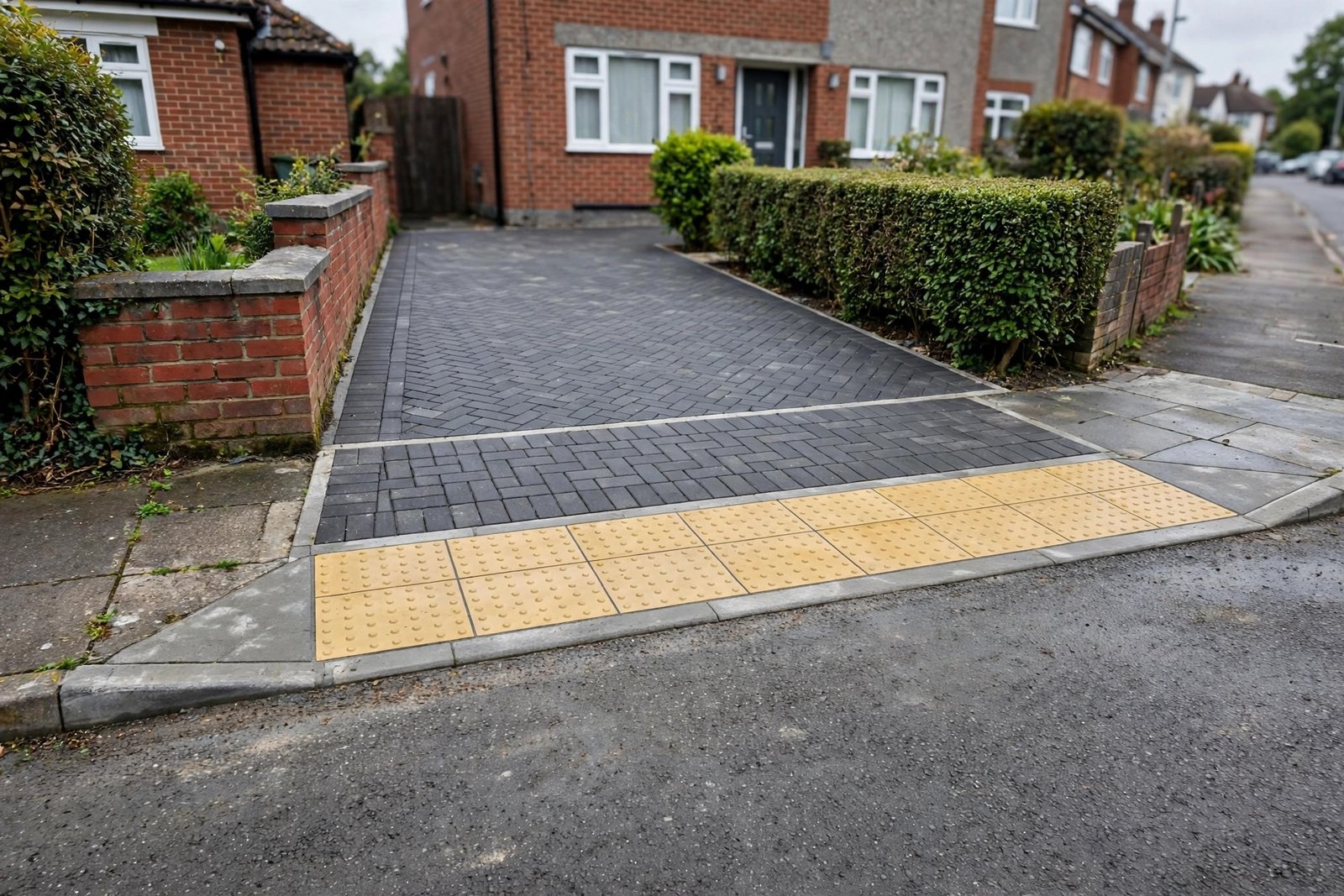
If your new driveway meets a public road, you will almost certainly need a dropped kerb, also called a vehicle crossover, so cars can legally cross the pavement. This is a separate job from the driveway itself, arranged through your local council, and it is one of the most commonly forgotten items in driveway budgets.
A dropped kerb in the UK typically costs between £800 and £2,000 in 2026, though prices vary considerably by council area. Some councils carry out the work themselves using approved contractors, while others let you hire your own contractor subject to a licence. London boroughs tend to sit at the top of the range, while some northern councils charge noticeably less.
| Cost component | Typical 2026 UK range |
|---|---|
| Council application and inspection fee | £150 to £350 |
| Kerb dropping construction (standard width) | £600 to £1,500 |
| Wider crossover or double width | £1,200 to £2,500+ |
| Relocating a lamp column or utility cover | £500 to £2,000+ extra |
The process usually starts with an application to your council’s highways department, which checks sight lines, distance from junctions and whether any street furniture needs moving. Approval typically takes four to eight weeks, so apply well before your driveway installer is booked. Driving over an undropped kerb without permission can lead to enforcement action and a fine, and it may also invalidate your car insurance for damage caused while mounting the pavement.
Permission can be refused. Councils commonly reject applications where the crossover would sit too close to a junction, bus stop or pedestrian crossing, or where visibility is poor. If your property is on a classified road or in a conservation area, expect stricter assessment and possibly a longer wait.
Choosing the Right Driveway Material
- Gravel: Lowest cost, good drainage, but needs periodic topping up and is less suitable for steep slopes
- Tarmac: Smooth, durable, cost-effective for larger areas, though less visually distinctive than other options
- Block paving: Highly durable, wide range of colours and patterns, individual blocks can be replaced if damaged
- Resin bound: Smooth, permeable, low maintenance, and available in various colours and finishes
- Natural stone: Premium appearance and longevity at the highest cost point
Driveway Maintenance by Material
| Material | Maintenance Needs |
|---|---|
| Gravel | Periodic raking and topping up, occasional weed treatment |
| Tarmac | Occasional sealing, crack repair as needed |
| Block paving | Periodic re-sanding of joints, occasional pressure washing |
| Resin bound | Low maintenance, occasional cleaning |
Frequently Asked Questions
What is the cheapest driveway material?
Gravel is generally the cheapest driveway material to install, though it requires more ongoing maintenance than harder surfaces like tarmac or block paving.
How long does a new driveway take to install?
Installation time varies by material and size, but most residential driveways take three to seven days from ground preparation through to a finished, usable surface.
Do I need permission for a new driveway?
Permeable driveways or those with proper drainage generally do not need planning permission, while larger non-permeable surfaces without adequate drainage may require it, so checking local guidance is recommended.
Which driveway material lasts longest?
Natural stone and block paving generally offer the longest lifespan among common UK driveway materials, often lasting 20 to 30 years or more with proper maintenance.
Can I lay a driveway myself?
Gravel driveways are the most DIY-accessible option, while block paving, tarmac, and resin bound surfaces generally require professional installation for a durable, properly draining result.
How much does a dropped kerb cost in the UK?
A standard dropped kerb typically costs £800 to £2,000 in 2026, including the council application fee of roughly £150 to £350 and the construction work itself. Wider crossovers, or jobs that need street furniture moved, can cost considerably more.
Do I need permission for a dropped kerb?
Yes. You must apply to your local council’s highways department before any work starts. The council assesses sight lines, proximity to junctions and street furniture, and approval usually takes four to eight weeks.
Can I drop the kerb myself or use my own contractor?
It depends on your council. Some require their own approved contractor to do the work, while others allow you to use a licensed private contractor. Doing it yourself without permission is not allowed and can result in enforcement action.
How long does a dropped kerb take to install?
The physical work usually takes one to two days, but the full process from application to completion commonly takes six to ten weeks once council assessment and scheduling are factored in.
Will a dropped kerb add value to my house?
A properly installed dropped kerb with off-street parking is generally seen as a plus by buyers, particularly in urban areas where on-street parking is scarce. It also removes the legal risk of driving over an undropped kerb.
Expert Insight
Driveway contractors consistently identify inadequate ground preparation, particularly sub-base depth and drainage, as the leading cause of premature driveway failure, regardless of the surface material chosen, underlining why proper preparation should never be skipped to save cost.
Final Thoughts
Choosing the right driveway material comes down to balancing budget, desired appearance, and maintenance tolerance, while proper ground preparation and drainage remain essential regardless of which surface you choose. Getting multiple detailed quotes helps ensure ground preparation is properly costed rather than corners being cut to offer an artificially low headline price.
Planning a new driveway? Ask contractors specifically about sub-base depth and drainage provision in their quote, since these unseen elements matter more to long-term durability than the visible surface material alone.
Related Guides
Written by the HometoWorld editorial team, covering home improvement, renovation, and property maintenance across the UK.
About the Author