Quick Answer: What Is a Bath Shower Mixer Tap?
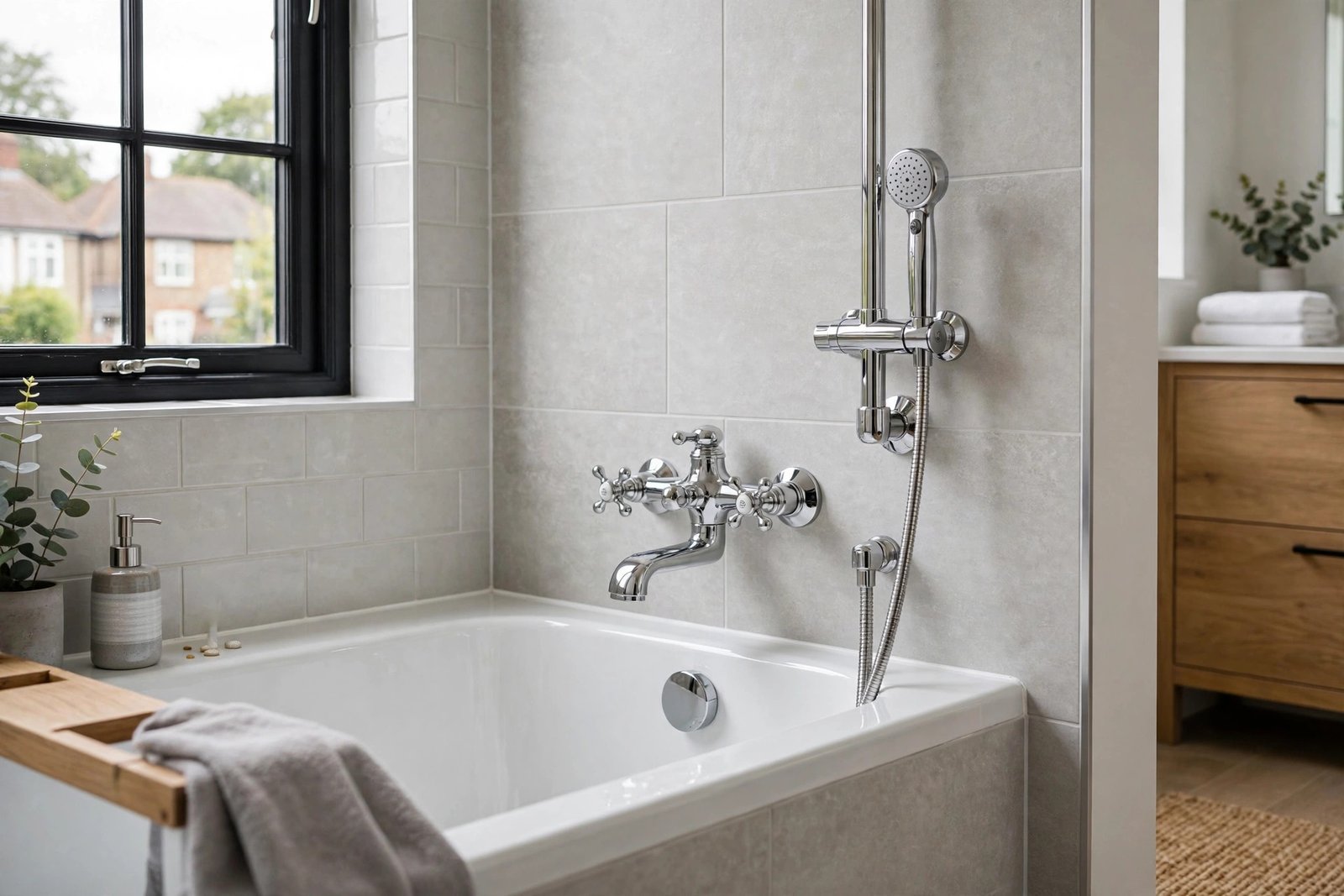
A bath shower mixer tap combines a standard bath tap with an integrated shower handset, mixing hot and cold water to a single controlled temperature and diverting flow between the bath spout and the shower head. It offers a space-saving, cost-effective way to add shower functionality to a bathroom without a separate shower installation, typically costing £40 to £250 depending on style and features.
How Bath Shower Mixer Taps Work
Water flows through the mixer, which blends the hot and cold supply to your set temperature, then a diverter valve directs the flow either out through the bath spout or up through the shower handset. Most designs allow switching between bath and shower flow with a simple pull or turn diverter control.
Types of Bath Shower Mixer Taps
Deck-Mounted Mixer Taps
Fitted directly onto the edge of the bath itself, deck-mounted mixers are the most common style, straightforward to install where the bath already has appropriate tap holes.
Wall-Mounted Mixer Taps
Fitted to the wall above the bath rather than the bath edge itself, wall-mounted mixers suit baths without pre-drilled tap holes or bathrooms wanting a cleaner look around the bath rim.
Thermostatic Bath Shower Mixers
Include a thermostatic valve that maintains a constant water temperature even if water pressure elsewhere in the house changes, such as someone flushing a toilet or running another tap, offering improved safety and comfort.
Manual Bath Shower Mixers
A more affordable option without thermostatic control, requiring manual adjustment to maintain temperature, which can fluctuate if water demand elsewhere in the property changes during use.
Bath Shower Mixer Tap Comparison
| Type | Typical Cost | Key Benefit |
|---|---|---|
| Manual deck-mounted | £40 to £100 | Affordable, straightforward installation |
| Thermostatic deck-mounted | £80 to £200 | Consistent temperature, added safety |
| Wall-mounted thermostatic | £120 to £300 | Clean look, suits baths without tap holes |
Why Choose a Bath Shower Mixer Over a Separate Shower?
- Significantly lower cost than installing a fully separate shower enclosure or wet room
- No additional plumbing work needed if the bath already has suitable water supply and tap holes
- Ideal for smaller bathrooms without space for a separate shower cubicle
- Provides flexibility, allowing both a relaxing bath and a quick shower from the same fixture
Choosing the Right Handset and Riser Rail
Most bath shower mixer installations include a riser rail, allowing the shower handset height to be adjusted and the handset to sit in a fixed holder when not in use. Handset spray pattern options, single function through to multi-function with massage or rainfall settings, add further versatility, though more features generally increase cost.
Will a Bath Shower Mixer Tap Work with Low Water Pressure?
Water pressure is the single biggest factor in whether a bath shower mixer performs well, and it is the detail most buyers overlook. UK homes have very different pressures depending on the hot water system, and not every mixer tap suits every system.
Pressure is measured in bar. A gravity-fed system, with a cold tank in the loft and a hot water cylinder in the airing cupboard, typically delivers 0.1 to 0.5 bar at the bath, depending on the height drop from the tank. A combi boiler or unvented cylinder delivers mains pressure, usually 1 to 3 bar. Every mixer tap has a minimum operating pressure in its specification: many need 0.5 to 1 bar, while low-pressure models work from 0.1 or 0.2 bar.
Before buying, check two things. First, find the minimum pressure on the product specification and make sure your system meets it. Second, check whether your hot and cold supplies are balanced. In gravity-fed homes the cold often comes from the mains at high pressure while the hot comes from the tank at low pressure. A thermostatic mixer handles unbalanced supplies far better than a manual one, because the thermostatic cartridge constantly adjusts the mix to hold your set temperature.
| System | Typical pressure | What to buy |
|---|---|---|
| Gravity-fed (tank and cylinder) | 0.1 to 0.5 bar | Low-pressure mixer (0.1 or 0.2 bar minimum); thermostatic preferred |
| Combi boiler | 1 to 3 bar | Any mixer; both supplies balanced at mains pressure |
| Unvented cylinder | 1 to 3 bar | Any mixer; excellent shower performance |
| Pumped gravity system | Boosted to 1 bar plus | Any mixer; pump must suit both supplies |
If your pressure is too low for the tap you want, you have three options: choose a low-pressure tap instead, raise the cold water tank to increase the head (not always practical), or fit a shower pump to boost both supplies. A twin-impeller shower pump typically costs £150 to £400 plus installation and transforms a weak gravity-fed shower.
Installing a Bath Shower Mixer Tap
- Turn off the water supply before removing any existing bath taps
- Fit the new mixer tap body into the existing tap holes, or mount to the wall if using a wall-mounted design
- Connect the hot and cold water supplies to the mixer according to the manufacturer’s instructions
- Fit the riser rail and shower handset holder at an appropriate height
- Turn the water supply back on and test both the bath flow and shower diverter function, checking for leaks
While straightforward deck-mounted replacements can suit a confident DIYer, wall-mounted installations and any new pipework generally require a qualified plumber.
Bath Shower Mixer Tap Maintenance
- Descale the shower handset and tap regularly in hard water areas to maintain water flow and pressure
- Check and replace worn washers or cartridges if the tap develops a persistent drip
- Inspect the shower hose periodically for any signs of wear, kinking, or leaks at the connections
Frequently Asked Questions
Do I need special plumbing for a bath shower mixer tap?
Most bath shower mixer taps can be fitted using your existing bath’s water supply, provided pressure is adequate, without needing new dedicated plumbing, though wall-mounted versions may need some additional pipework.
Is a thermostatic bath shower mixer worth the extra cost?
For households where water demand elsewhere, such as multiple bathrooms or appliances, could affect temperature during a shower, a thermostatic mixer offers meaningfully improved safety and comfort worth the additional cost.
Can a bath shower mixer be fitted to any bath?
Most baths with standard tap holes can accommodate a deck-mounted mixer, while baths without suitable tap holes need a wall-mounted mixer instead, so checking your bath’s configuration before purchase is important.
Why is my bath shower mixer losing pressure?
Reduced pressure often indicates limescale buildup within the shower handset or tap, which regular descaling can resolve, though persistent issues may indicate a worn cartridge needing replacement.
What is the difference between a mixer shower and an electric shower?
A mixer shower blends existing hot and cold water supplies, relying on your home’s water heating system, while an electric shower heats water on demand using its own electrical element, independent of the home’s central heating or hot water supply.
Water Pressure FAQs
What is the minimum water pressure for a bath shower mixer tap?
Check the product specification: standard mixers often need 0.5 to 1 bar, while low-pressure models work from 0.1 or 0.2 bar. Gravity-fed systems typically deliver 0.1 to 0.5 bar, so matching the tap to your system is essential.
Can I use a bath shower mixer with a gravity-fed system?
Yes, provided you choose a mixer rated for low pressure (0.1 or 0.2 bar minimum). A thermostatic model is the better choice on gravity systems because it copes with unbalanced hot and cold pressures.
Do bath shower mixers work with combi boilers?
Yes, very well. Combi boilers deliver both hot and cold at balanced mains pressure (1 to 3 bar), which suits any mixer tap and gives strong shower performance from the handset.
How do I check my home’s water pressure?
As a rough check, time how long the bath tap takes to fill a litre jug: under 7 seconds suggests reasonable pressure. For an exact figure, screw a pressure gauge onto an outside tap or ask a plumber to test it during a visit.
Will a shower pump improve my bath shower mixer?
Yes. A twin-impeller shower pump boosting both hot and cold supplies can take a weak gravity-fed mixer shower from a dribble to a strong spray. Expect to pay £150 to £400 for the pump plus a plumber’s installation fee.
Expert Insight
Plumbers frequently recommend thermostatic bath shower mixers over manual versions for family bathrooms specifically, citing the added safety benefit of consistent temperature control as particularly valuable where children may be using the shower.
Final Thoughts
A bath shower mixer tap offers one of the most cost-effective ways to add genuine shower functionality to a bathroom without the expense and space demands of a separate shower installation. Choosing between manual and thermostatic control, and deck-mounted versus wall-mounted styles, comes down to your specific bath configuration, budget, and household needs.
Upgrading your bath tap? Check your bath’s existing tap hole configuration and water pressure before choosing a mixer, since these factors determine which specific products will suit your installation.
Related Guides
Written by the HometoWorld editorial team, covering home improvement, renovation, and property maintenance across the UK.
About the Author