
Quick Answer: What Is a Belfast Sink?
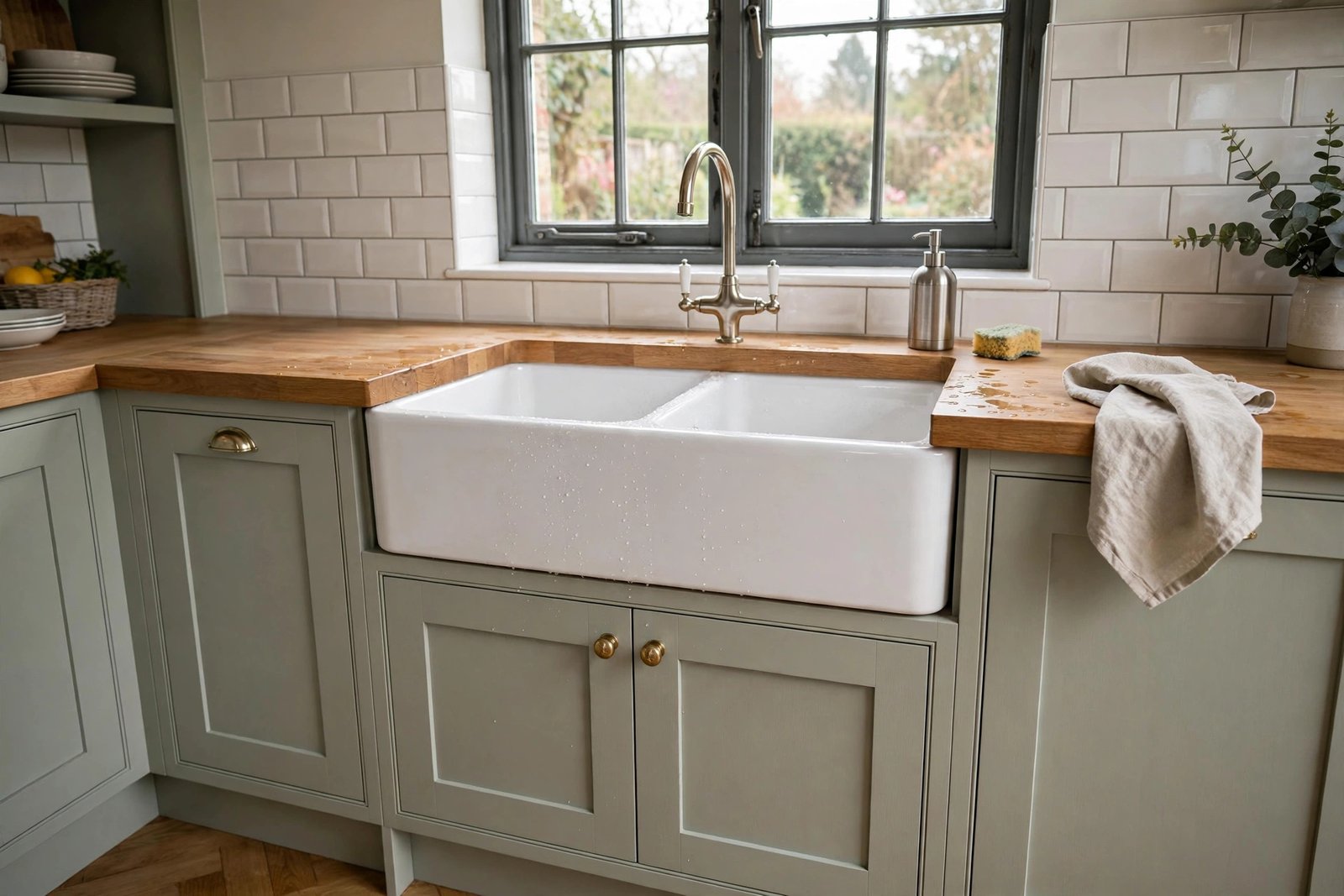
A Belfast sink is a deep, rectangular ceramic sink traditionally used in kitchens and utility rooms, characterised by its overflow weir at the back and substantial size, offering a farmhouse style look combined with genuine practicality for large pots, laundry, and bulky washing tasks. Prices typically range from £100 to £400 depending on size, brand, and finish.
Belfast Sink vs Butler Sink: What Is the Difference?
Belfast sinks and Butler sinks look almost identical, both being deep, rectangular ceramic sinks, but the traditional distinction is that a genuine Belfast sink includes a built-in overflow weir at the back, while a Butler sink does not. In practice, many modern retailers use the two terms interchangeably, so checking the specific product’s overflow feature is worthwhile if this distinction matters to you.
Why Choose a Belfast Sink?
- Exceptional depth and capacity, ideal for washing large pots, roasting trays, and bulky items
- Classic farmhouse or period aesthetic that suits both traditional and modern rustic kitchen styles
- Highly durable ceramic construction that resists staining, scratching, and heat damage
- Versatile use beyond the kitchen, popular in utility rooms and boot rooms for washing muddy boots, pet accessories, or garden produce
Belfast Sink Sizes
| Size Category | Typical Dimensions | Best For |
|---|---|---|
| Small | Around 455mm wide | Smaller kitchens, utility rooms |
| Standard | Around 595mm wide | Most kitchens, the most common size |
| Large | Around 660mm wide or more | Larger kitchens, heavy-duty use |
Belfast Sink Materials and Finishes
Fireclay
The traditional and most common material for Belfast sinks, offering excellent durability, heat resistance, and a classic glossy white finish, though fireclay sinks are heavy and need adequately supported cabinetry beneath.
Ceramic
Similar in appearance to fireclay but sometimes lighter and slightly less expensive, still offering good durability for everyday kitchen use.
Coloured and Patterned Options
While white remains the most traditional and popular choice, coloured Belfast sinks in tones like cream, grey, or even bold colours have become available for homeowners wanting to move beyond the classic white farmhouse look.
Choosing Taps for a Belfast Sink
Belfast sinks typically sit lower than standard kitchen sinks and often have no pre-drilled tap holes, meaning taps are usually wall-mounted rather than deck-mounted on the sink itself. A tall, high-arc bridge tap or wall-mounted tap is the traditional and most practical pairing, allowing enough clearance for large pots and pans.
Installing a Belfast Sink
- Ensure the cabinet or support unit beneath is rated for the significant weight of a ceramic Belfast sink, since standard cabinetry may need reinforcement
- Fit an appropriate waste and overflow connection, noting that Belfast sinks may need adapting for a standard waste disposal fitting if desired
- Install wall-mounted taps at an appropriate height and position to clear the sink’s depth
- Seal the sink into its housing or worktop cutout, ensuring a watertight fit around all edges
Given the weight and specific support requirements, professional installation is recommended for Belfast sinks rather than a straightforward DIY swap.
Belfast Sink Cabinet Requirements: Getting the Size and Support Right
The cabinet beneath a Belfast sink matters more than with any other kitchen sink, because a fireclay Belfast sink can weigh 25 to 40 kilograms before it holds a single litre of water. A standard flat pack kitchen base unit is not always strong enough on its own, so matching the sink to the right cabinet is one of the most important steps in the whole installation.
The table below shows the minimum cabinet width for each common Belfast sink size.
| Belfast sink width | Minimum cabinet width | Notes |
|---|---|---|
| 455mm (small) | 500mm | Suits utility rooms and compact kitchens |
| 595mm (standard) | 600mm | The most common pairing in UK kitchens |
| 660mm and above (large) | 700 to 800mm | Often needs a bespoke or reinforced double unit |
Width is only half the story. Purpose made Belfast sink base units are typically shorter than standard 720mm high kitchen units, often around 450 to 500mm high, which leaves the sink sitting at a comfortable working height once the worktop goes on. The sink rests directly on the cabinet carcass or on internal bearers, so the unit needs a solid top frame rather than an open top. Flat pack chipboard units can work, but reinforcing the carcass with timber bearers front to back gives far better long term support and costs very little.
Worktop choice matters too. Because the sink sits proud of or level with the worktop rather than clipped underneath it, laminate worktops need careful sealing around the cut out to stop moisture reaching the chipboard core. Solid timber, stone and quartz worktops are more forgiving. Always check the sink manufacturer’s stated minimum cabinet size before ordering, since a few millimetres of difference between brands can decide whether a standard 600mm unit fits.
Belfast Sink Cost Breakdown
| Item | Typical Cost |
|---|---|
| Standard fireclay Belfast sink | £100 to £250 |
| Premium/branded Belfast sink | £250 to £450 |
| Wall-mounted bridge tap | £80 to £300 |
| Professional installation | £150 to £350 |
Caring for a Belfast Sink
- Clean regularly with a non-abrasive cleaner to maintain the glossy ceramic finish
- Avoid dropping heavy cast iron pans directly into the sink, since chipping can occur despite the material’s durability
- Address any limescale buildup promptly in hard water areas to keep the finish looking its best
- Use a sink protector or grid in the base if washing delicate items regularly, to prevent scratching
Frequently Asked Questions
Are Belfast sinks practical for everyday use?
Yes, despite their traditional appearance, Belfast sinks are highly practical for everyday kitchen tasks, particularly washing large items, and many households find the generous size genuinely useful beyond the aesthetic appeal.
Do Belfast sinks need special taps?
Most Belfast sinks are not pre-drilled for standard deck-mounted taps, so a wall-mounted tap is typically required, which is worth factoring into your kitchen renovation planning and budget.
How heavy is a Belfast sink?
Belfast sinks are significantly heavier than standard stainless steel or composite sinks, given their solid ceramic construction, so confirming adequate cabinet support before installation is essential.
Can a Belfast sink be fitted with a waste disposal unit?
This is possible with the right adapter and waste fitting, though it is less common than with standard sinks, and checking compatibility with your specific waste disposal unit before purchase is advisable.
What is the difference between a Belfast sink and a standard kitchen sink?
Belfast sinks are considerably deeper and typically single-bowl, without the multiple bowl or drainer configurations common in standard kitchen sinks, prioritising capacity and traditional style over compartmentalised functionality.
What size cabinet do I need for a standard 595mm Belfast sink?
A standard 595mm wide Belfast sink needs a minimum 600mm wide base cabinet. Purpose made Belfast sink units are usually around 450 to 500mm high rather than the standard 720mm, so the sink sits at the correct working height under the worktop.
Can I fit a Belfast sink into a standard kitchen base unit?
Sometimes, but it needs checking first. Standard units are taller than ideal and may need cutting down, and the carcass should be reinforced with timber bearers to carry the 25 to 40 kilogram weight of a fireclay sink. A purpose made Belfast sink unit is the safer option.
How much weight must the cabinet support?
Allow for the sink itself at 25 to 40 kilograms, plus the weight of water and washing up. A full standard Belfast sink can hold around 40 litres, so the cabinet should comfortably support 70 kilograms or more in total, including a margin for safety.
What worktops work best with a Belfast sink?
Solid timber, granite, quartz and other solid surfaces all suit Belfast sinks well. Laminate worktops can be used but the cut edges around the sink must be sealed thoroughly, since any water reaching the chipboard core will cause swelling over time.
Does the cabinet need a service void for the plumbing?
Yes. Leave room behind or beneath the sink for the waste, trap and any overflow pipework. Purpose made Belfast sink cabinets usually include a service void of around 50mm, which is enough for standard 40mm kitchen waste pipework.
Expert Insight
Kitchen designers frequently note that Belfast sinks remain one of the most enduringly popular choices for farmhouse and country style kitchen renovations, valued as much for genuine day-to-day practicality with large cookware as for their classic aesthetic appeal.
Final Thoughts
A Belfast sink brings both timeless style and genuine everyday practicality to a kitchen or utility room, particularly for households regularly washing large pots, trays, or bulky items. Planning for adequate cabinet support and the right wall-mounted tap pairing will ensure a smooth installation and a sink that performs as well as it looks.
Considering a Belfast sink? Confirm your base cabinet can support the sink’s weight before ordering, since this is one of the most commonly overlooked practical considerations in a Belfast sink installation.
Related Guides
Written by the HometoWorld editorial team, covering home improvement, renovation, and property maintenance across the UK.
About the Author