Quick Answer: How Much Does a New Patio Cost?
A new patio in the UK typically costs £1,000 to £4,000 depending on size and material, with concrete slabs being the most affordable option and natural stone or porcelain paving sitting at the higher end. Most homeowners pay between £50 and £120 per square metre installed, including groundwork and materials.
Patio Cost by Material
| Material | Cost per sqm Installed | Lifespan |
|---|---|---|
| Concrete slabs | £40 to £70 | 20 to 30 years |
| Natural stone (sandstone/limestone) | £70 to £130 | 30+ years |
| Porcelain paving | £80 to £140 | 25 to 30 years |
| Block paving | £60 to £100 | 20 to 30 years |
| Gravel | £30 to £60 | 10 to 15 years |
Patio Costs Beyond the Paving: Labour, Groundwork and Hidden Extras
The per square metre figures most guides quote are only part of the story. On a typical professionally laid patio, the paving material itself accounts for roughly half of the total bill. The rest goes on labour, groundwork and the extras that rarely appear in headline prices. Understanding these components helps you compare quotes fairly and budget accurately.
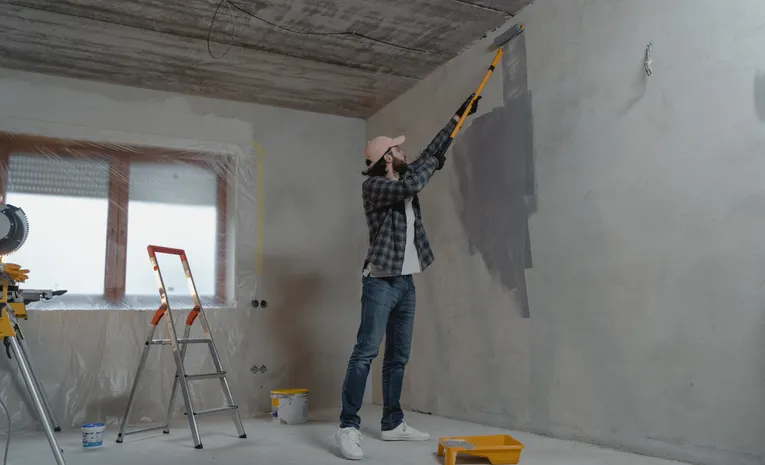
Labour is the single largest non-material cost. Patio installers in the UK typically charge between £100 and £200 per day per person in 2026, or work to a square metre rate that bundles labour with basic groundwork. Rates run higher in London and the South East and lower in the North and Midlands. A straightforward 20 square metre patio usually takes two to three days for a two-person team.
| Cost component | Typical 2026 UK range |
|---|---|
| Labour (two-person team) | £200 to £400 per day |
| Excavation and sub-base (MOT Type 1, membrane) | £25 to £45 per square metre |
| Waste removal (skip hire) | £200 to £350 per skip |
| Drainage (channel or French drain) | £30 to £60 per linear metre |
| Edging and finishing | £15 to £30 per linear metre |
Groundwork is where cheap quotes often hide their savings. Proper excavation to around 150mm, a compacted sub-base and a drainage fall away from the house are what keep a patio level and puddle free for decades. Quotes that skip these steps can look attractive but usually lead to settlement and water pooling within a few years. Always ask what sub-base depth and drainage provision are included before comparing prices.
Site access also moves the price. If machinery and materials must be carried through the house or along a narrow side passage, expect labour time, and therefore cost, to rise noticeably compared with a garden that has direct rear access.
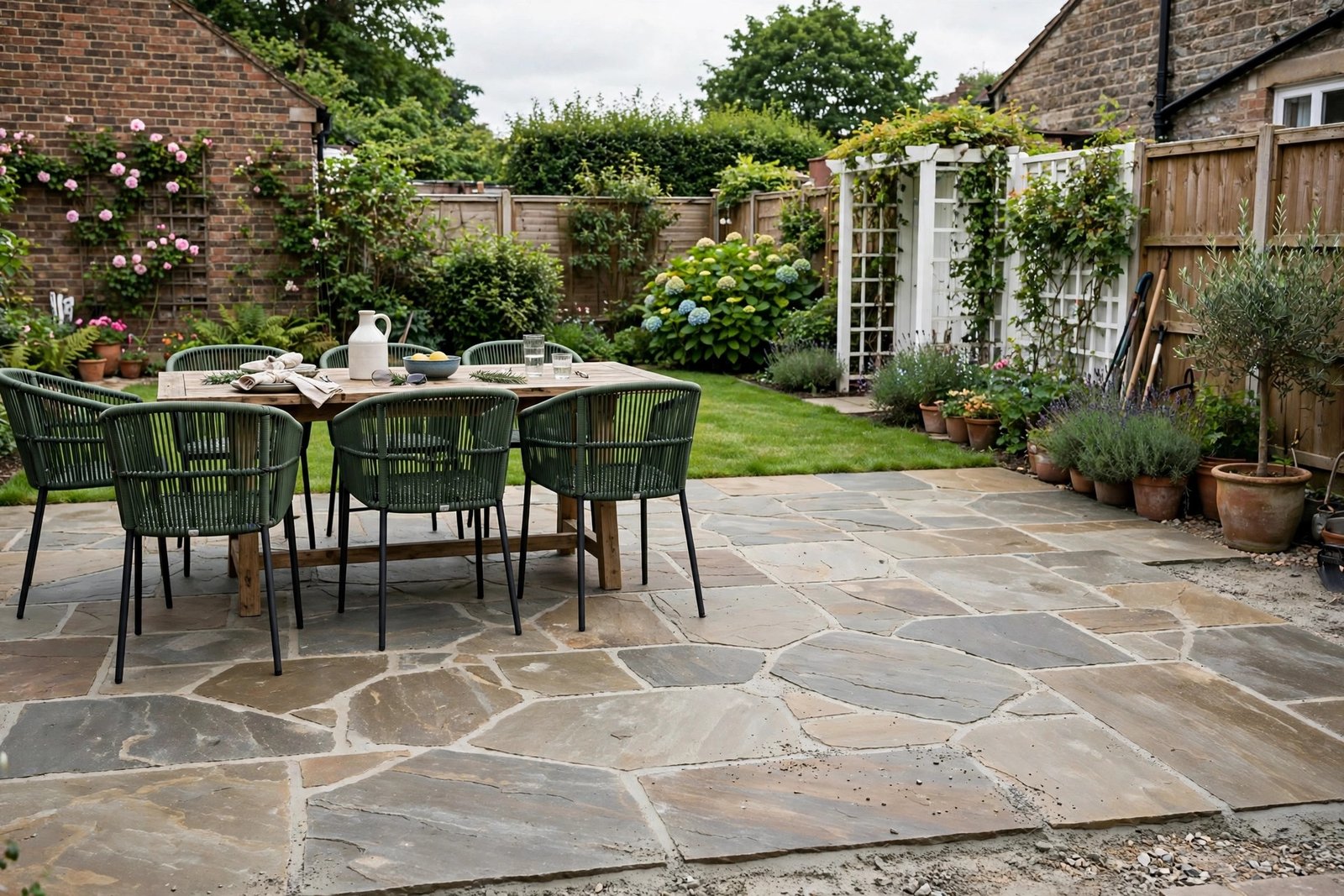
Choosing the Right Patio Material
Concrete Slabs
The most budget-friendly and widely available option, concrete paving slabs come in various colours and textures, offering good durability at a relatively low cost, making them a popular default choice for straightforward garden patios.
Natural Stone
Sandstone, limestone, and similar natural stone options offer a premium, characterful appearance with excellent longevity, though at a higher cost and with more variation in colour and texture between individual slabs.
Porcelain Paving
Increasingly popular for its consistent appearance, low porosity meaning better stain and frost resistance, and minimal maintenance requirements compared to natural stone.
Block Paving
Small individual blocks laid in various patterns, offering flexibility in design and the ability to replace individual damaged blocks rather than larger sections.
Patio Size and Layout Ideas
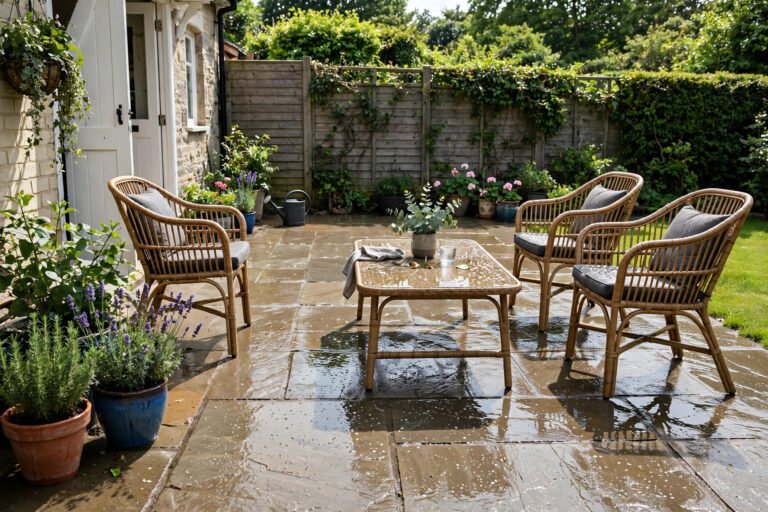
- Small patios (under 15 sqm): Suit a compact seating area or bistro table, often positioned directly off a back door
- Medium patios (15 to 30 sqm): Comfortably accommodate outdoor dining furniture and additional seating
- Large patios (30+ sqm): Suit multi-zone designs combining dining, lounging, and possibly a fire pit or outdoor kitchen area
Patio Design Trends
- Porcelain paving in large format slabs for a clean, contemporary look
- Mixed material designs combining paving with gravel or decking sections
- Raised patio areas creating defined zones within a larger garden
- Integrated planting beds and borders softening the hard landscaping
Patio Installation Process
- Mark out the patio area and excavate to an appropriate depth for the sub-base and paving thickness
- Lay and compact a sub-base of hardcore or MOT type 1, ensuring proper drainage falls away from the house
- Add a bedding layer, typically sand or mortar depending on the paving type
- Lay paving slabs or blocks, maintaining consistent joint widths and checking levels throughout
- Point or grout the joints once paving is set, and allow proper curing time before full use
Do You Need Planning Permission for a Patio?
Most garden patios fall under permitted development and do not need planning permission, provided they do not cover an excessive proportion of the garden or sit adjacent to a boundary in a way that raises privacy concerns for neighbours. Raised patios over a certain height, or those near a boundary, may have specific restrictions, so checking local guidance for anything beyond a straightforward ground-level patio is sensible.
Patio Maintenance by Material
| Material | Maintenance Needs |
|---|---|
| Concrete | Occasional pressure washing, resealing every few years |
| Natural stone | Periodic sealing, moss and algae treatment |
| Porcelain | Minimal, occasional cleaning |
| Block paving | Re-sanding joints periodically, pressure washing |
Frequently Asked Questions
What is the cheapest patio material?
Concrete paving slabs are generally the most affordable patio material, offering reasonable durability at the lowest typical cost per square metre among common options.
How long does it take to lay a patio?
A typical residential patio takes two to five days to install, depending on size and whether significant ground preparation or drainage work is needed.
Can I lay a patio myself?
Smaller, straightforward patios using concrete slabs are achievable as a DIY project for a confident, physically capable homeowner, though larger areas or premium materials like natural stone often benefit from professional installation for the best long-term result.
Does a patio need drainage?
Yes, patios should be laid with a slight fall away from the house to prevent water pooling against the property, and larger patios may need additional drainage provision depending on ground conditions and local regulations.
What is the best patio material for a family garden?
Porcelain paving or good quality concrete slabs are often recommended for family gardens given their durability, low maintenance, and reasonable slip resistance compared to some natural stone options.
How much does patio installation labour cost per day?
Patio installers typically charge £100 to £200 per person per day in 2026, depending on region and experience. A two-person team laying a straightforward 20 square metre patio usually needs two to three days, so labour alone often totals £800 to £1,800.
What groundwork is included in a patio quote?
A proper quote should include excavation to around 150mm, a weed membrane, a compacted MOT Type 1 sub-base of about 100mm, and a drainage fall away from the house. If these items are not listed separately, ask the installer to confirm they are included.
Do I need to budget for waste removal?
Yes. Excavated soil and old paving have to go somewhere, and skip hire typically costs £200 to £350. Some installers include waste removal in their quote while others list it separately, so check before comparing headline prices.
Why do patio quotes vary so much?
The biggest variables are sub-base depth, drainage provision, waste removal, site access and regional labour rates. Two quotes for the same paving can differ by 30 percent or more purely on how thoroughly the groundwork is specified.
Is it cheaper to lay a patio in winter?
Some installers offer slightly lower rates in the quieter months from October to February, and materials may be easier to source. However, wet ground can complicate excavation, so any saving should be weighed against the risk of weather delays.
Expert Insight
Landscapers consistently emphasise that proper drainage falls and sub-base preparation matter more to a patio’s long-term performance than the paving material itself, since even premium natural stone will develop problems if laid on inadequate groundwork.
Final Thoughts
Choosing the right patio material and layout comes down to balancing budget, desired appearance, and how the space will actually be used, while proper groundwork and drainage remain the foundation of a patio that lasts for decades. Taking time to plan the layout around how you will use the space typically delivers better long-term satisfaction than choosing based on material appearance alone.
Planning a new patio? Consider how you will actually use the space, dining, lounging, or both, before finalising size and layout, since retrofitting a patio that is too small for its intended use is a common and avoidable regret.
Related Guides
Written by the HometoWorld editorial team, covering home improvement, renovation, and property maintenance across the UK.
About the Author