
Quick Answer: Are Video Doorbells Worth It?
Video doorbells replace a traditional doorbell with a camera, motion detector, and two-way audio, letting you see and speak to visitors remotely via a smartphone app, even when not home. They are widely considered worthwhile for the security, parcel theft deterrence, and convenience they offer, typically costing £60 to £250 depending on features and video quality.
How Video Doorbells Work
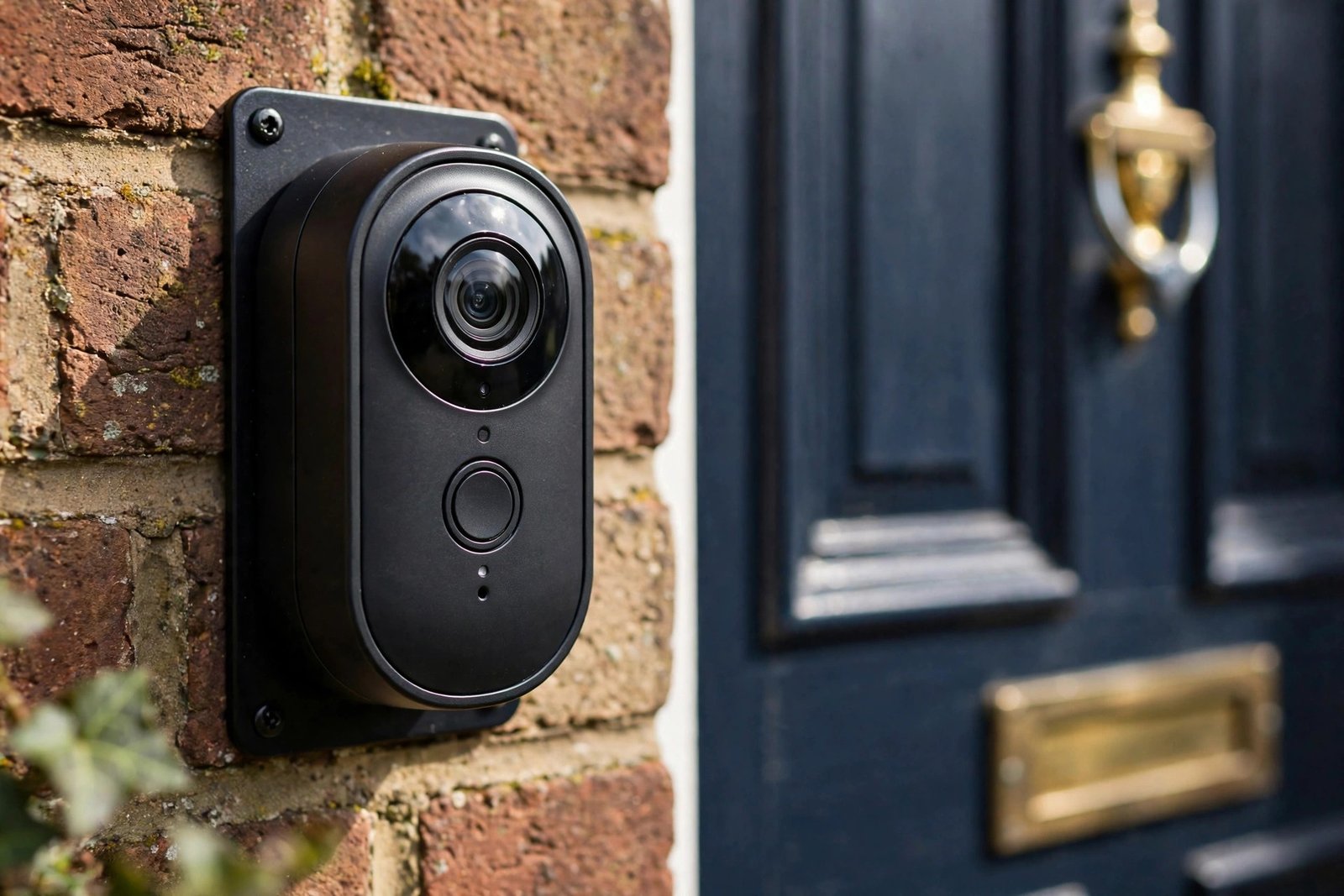
A video doorbell mounts at the front door in place of, or alongside, a traditional doorbell, connecting to your home WiFi. When a visitor presses the button or motion is detected, the camera activates, sending a live notification to your phone where you can view, speak, and sometimes record the interaction, regardless of your physical location.
Wired vs Battery-Powered Video Doorbells
| Feature | Wired | Battery-Powered |
|---|---|---|
| Power source | Connected to existing doorbell wiring | Rechargeable or replaceable battery |
| Installation | Requires existing doorbell wiring or new cabling | Simple mount, no wiring needed |
| Maintenance | None, continuous power | Periodic charging or battery replacement |
| Best for | Homes with existing doorbell wiring | Renters or homes without suitable wiring |
Key Features to Look For
- Video resolution: 1080p as a minimum for clear identification of visitors
- Field of view: A wide angle helps capture parcels left at the door as well as visitors
- Motion detection zones: Customisable zones reduce false alerts from passing traffic or pedestrians
- Night vision: Essential for clear footage of evening visitors or deliveries
- Two-way audio: Allows you to speak with visitors or delivery drivers remotely
- Storage options: Cloud subscription or local storage for recorded footage
Video Doorbells and Parcel Theft
One of the most cited practical benefits of video doorbells is reducing parcel theft, since the visible camera and recorded footage act as both a deterrent and evidence if a delivery is stolen. Many homeowners specifically cite this as their primary reason for installing one, alongside general security benefits.
Installing a Video Doorbell
- Check whether you have existing doorbell wiring, which determines whether a wired or battery model suits your installation better
- Confirm your WiFi signal strength reaches the front door location clearly
- Mount the doorbell at the recommended height, typically around chest to eye level for optimal facial capture
- Pair the device with the manufacturer’s app and configure motion zones and notification preferences
Cost of Video Doorbells
| Type | Typical Cost |
|---|---|
| Basic battery-powered doorbell | £60 to £100 |
| Mid-range with enhanced features | £100 to £180 |
| Premium with 4K or advanced AI detection | £180 to £300+ |
| Cloud storage subscription | £3 to £8 per month |
Prices checked October 2026.
Video Doorbells Without a Subscription: How They Work
You do not have to pay a monthly fee to own a useful video doorbell. Subscription-free models store footage locally, on a microSD card, built-in storage, or a home base station, instead of in the manufacturer’s cloud. You get live viewing, two-way audio, motion alerts and recorded clips with no ongoing cost. What you usually give up is long cloud history and some advanced AI features, which is a fair trade for many households.
The no-subscription market is now mature. Eufy’s doorbells record locally to a HomeBase with no monthly fee, Tapo’s range offers up to 4K video with local or optional cloud storage and no required subscription, and Reolink doorbells store to microSD or a home NVR. Yale’s smart doorbell keeps several days of recordings locally without a plan. The brand to watch is Ring: its doorbells work for live view without a plan, but recorded video history needs a Ring Protect subscription.
| No-subscription doorbell | Subscription doorbell | |
|---|---|---|
| Upfront cost | £85 to £180 | £60 to £180 |
| Monthly fee | £0 | £3 to £8 |
| 5-year total | £85 to £180 | £240 to £660 |
| Footage storage | Local (SD card, base station) | Cloud, typically 30 to 180 days |
| If the doorbell is stolen | Footage may be lost with it | Cloud clips survive |
That last row is the honest trade-off: local storage dies with the device, while cloud storage survives theft. For most front doors, a well-mounted doorbell plus a base station kept indoors is a sensible balance. If you go subscription-free, choose a model with at least 2K resolution and a wide field of view, since you cannot rely on cloud AI to enhance weak footage later.
Renters and Video Doorbells
Battery-powered video doorbells are generally well suited to rental properties, since they typically require no permanent wiring alterations and can be removed when moving. It is still worth checking your tenancy agreement or with your landlord before fitting any device that alters the exterior of the property.
Video Doorbells and Neighbour Privacy
As with any home camera, being mindful of how much of a neighbouring property or shared space your video doorbell captures is good practice. Most video doorbells allow adjusting the field of view or setting privacy zones to exclude specific areas from recording.
Frequently Asked Questions
Do video doorbells work without WiFi?
No, video doorbells rely on a WiFi connection to send alerts and stream video to your phone, so a stable connection at the front door is essential for reliable operation.
Can I use a video doorbell in a flat with a shared entrance?
This depends on the building and any shared entrance policies, and it is worth checking with your landlord, freeholder, or building management before installing one on a communal door.
How long does video doorbell footage stay stored?
This varies by manufacturer and subscription level, but many services retain footage for a set period, commonly 30 to 60 days, unless saved separately by the user.
Do video doorbells drain battery quickly?
Battery life varies by usage and model, but many battery-powered doorbells last one to six months between charges under typical use, with more frequent motion triggering reducing battery life faster.
Can a video doorbell replace a full security system?
A video doorbell covers the front door specifically but does not provide the broader entry point coverage of a full security system, so many homeowners use both together for more complete protection.
No-Subscription Video Doorbell FAQs
Can you get a video doorbell without a subscription?
Yes. Eufy, Tapo, Reolink, Yale and several others offer doorbells that store footage locally with no monthly fee. You keep live view, two-way audio, motion alerts and recordings; you just skip the cloud storage.
Which video doorbells have no monthly fee in the UK?
Eufy doorbells with HomeBase, Tapo doorbells, Reolink wired and battery models, and Yale’s smart doorbell all work fully without a subscription. Ring doorbells need Ring Protect for recorded video history.
How does local storage work on video doorbells?
Clips save to a microSD card in the doorbell, built-in memory, or a base station inside your home. You view them in the app on your local network or remotely. Storage typically holds days to weeks of event clips before overwriting the oldest.
Do Ring doorbells work without a subscription?
Partially. You get live view, two-way talk and motion alerts free, but no recorded video history. For playback of past events you need a Ring Protect plan.
Is cloud storage worth paying for?
It is worth it if you want long video history (30 to 180 days), footage that survives the doorbell being stolen, and advanced person or package detection. For basic visitor and parcel monitoring, local storage is usually enough.
How long is footage kept without a subscription?
It depends on storage size and activity, but typically several days to a few weeks of motion-triggered clips before the oldest footage is overwritten. Busy streets fill storage faster than quiet cul-de-sacs.
Expert Insight
Security researchers consistently highlight video doorbells as one of the highest value-for-cost home security additions available, given their relatively low price point combined with a genuine, well documented deterrent effect on both burglary attempts and parcel theft.
Final Thoughts
A video doorbell offers strong practical value for most UK homeowners, combining security benefits with everyday convenience for managing deliveries and visitors remotely. Choosing between wired and battery-powered models comes down mainly to your existing doorbell wiring and whether you rent or own your property.
Choosing a video doorbell? Check your WiFi signal strength at the front door before buying, since a weak connection is one of the most common causes of missed alerts and poor performance.
Related Guides
- Home Security Systems: Complete Guide
- CCTV Cameras for Home: Complete Buying Guide
- Smart Locks: Complete Guide
Written by the HometoWorld editorial team, covering home improvement, renovation, and property maintenance across the UK.
About the Author