
Quick Answer: How Can You Renovate a House Affordably?
Affordable house renovation comes down to prioritising structural and safety work first, keeping existing layouts to avoid moving plumbing and electrics, mixing budget materials with a few statement pieces, and doing suitable preparation work yourself. A well planned budget renovation can transform a property for a fraction of a full premium specification refit.
Prioritise Structural and Safety Work First
When budget is limited, structural integrity, damp treatment, and electrical safety should always come before cosmetic upgrades. A beautifully decorated room built on unresolved damp or unsafe wiring is a false economy that costs far more to fix properly later.
Keep Existing Layouts Where Possible
Moving plumbing and electrical points is one of the most expensive changes in any renovation. Keeping the kitchen sink, bathroom suite, and electrical points in their existing positions while updating the surfaces, fixtures, and finishes around them can save a significant portion of the total budget compared to a full layout change.
Budget-Friendly Renovation Ideas by Room
Kitchen
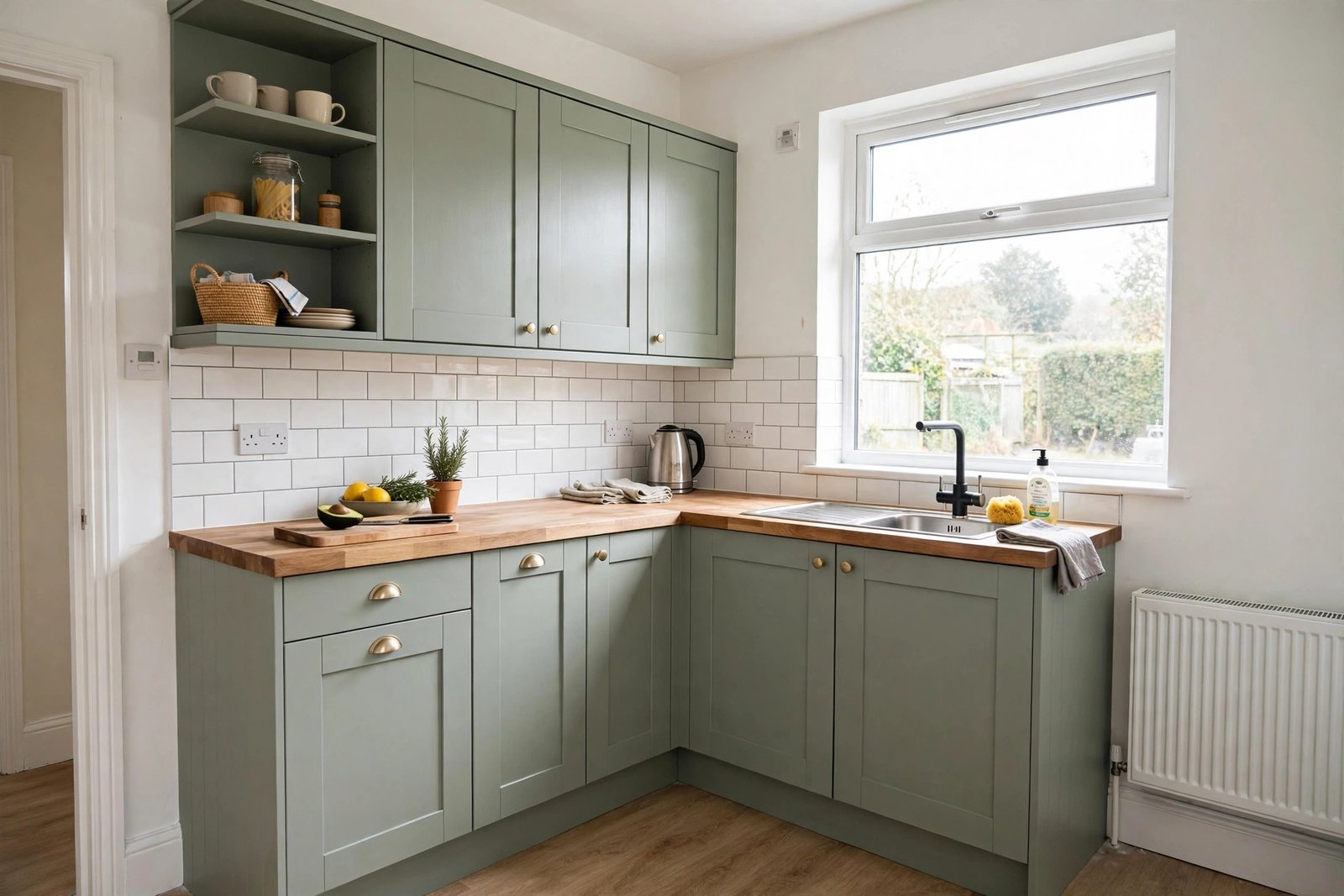
- Reface or repaint existing cabinet doors rather than replacing the whole kitchen carcass
- Replace worktops and handles for an updated look at a fraction of a full kitchen replacement cost
- Keep appliances in their current positions to avoid moving plumbing and electrics
Bathroom
- Reglaze or resurface an existing bath and tiles rather than a full replacement, where condition allows
- Update taps, shower heads, and accessories for a quick visual refresh
- Retile a feature wall rather than the entire room to control material cost
Living Areas
- Paint is one of the most cost effective transformations available for any room
- Refinish existing wood flooring rather than replacing it, where the subfloor is sound
- Update lighting fixtures for a disproportionately large visual impact relative to cost
Where to Splurge and Where to Save
| Save On | Consider Splurging On |
|---|---|
| Cabinet carcasses (reface instead) | Worktops in high-use areas like kitchens |
| Basic bathroom tiles | A statement feature wall or floor tile |
| Standard paint colours | Quality paint for durability in high traffic areas |
| Generic light fittings | One or two statement lighting pieces per room |
What Does a Budget Renovation Cost in the UK? Room-by-Room Ranges
One of the hardest parts of renovating on a budget is knowing what is realistic for your money. The figures below are typical 2026 UK ranges for a budget-level refresh, meaning you keep the existing layout and focus on surfaces, fixtures and finishes. A mid-range full refit, where units or suites are replaced, is shown for comparison so you can see what stepping up buys you.
| Room | Budget refresh (2026) | Mid-range full refit (2026) |
|---|---|---|
| Kitchen | £1,500 to £4,000 (repaint doors, new worktop, handles, tap) | £8,000 to £15,000 (new units, worktops, appliances) |
| Bathroom | £1,000 to £3,000 (reglaze bath, retile feature wall, new fittings) | £5,000 to £10,000 (new suite, full retiling) |
| Living room | £500 to £1,500 (paint, lighting, flooring refresh) | £3,000 to £6,000 (new flooring, plastering, joinery) |
| Bedroom | £400 to £1,200 (paint, lighting, wardrobe doors) | £2,500 to £5,000 (fitted wardrobes, new flooring) |
| Whole house cosmetic refresh | £5,000 to £12,000 (3-bed, paint, flooring, fixtures) | £25,000 to £50,000+ (full refit, new kitchen and bathroom) |
Labour typically makes up 40 to 60 percent of any renovation bill, which is why doing your own painting, stripping out and simple flooring work has such a large effect on the total. Get at least three itemised quotes for the parts you cannot do yourself, and ask each tradesperson to break out labour and materials separately so you can compare like with like.
The most common budgeting mistake is spending freely on the first room and running out of money before the last. Set your total budget first, then allocate it across rooms by priority, keeping a contingency of 10 to 15 percent for the surprises that almost always appear once work starts.
DIY Tasks Worth Doing Yourself
- Painting and decorating, one of the highest labour-cost-to-skill-level ratios in a renovation
- Basic demolition and stripping out, such as removing old kitchen units or tiles, where safe to do so
- Simple flooring installation like click-fit laminate or LVT
- Garden and outdoor tidying, freeing budget for indoor priorities
Structural work, plumbing, and electrics should always be left to qualified tradespeople, both for safety and because unsafe DIY work can invalidate home insurance and cost far more to correct later.
Getting the Best Value From Tradespeople
- Get at least three itemised quotes to compare labour and material costs separately
- Ask whether a tradesperson can supply materials at trade price, which is often cheaper than retail
- Consider timing work outside peak renovation season for potentially better availability and rates
- Bundle jobs needing the same trade together to reduce multiple callout charges
Where to Find Affordable Materials
- Reclamation yards for characterful, lower cost period features
- End of line and clearance sections at builders’ merchants and tile shops
- Local online marketplaces for gently used fixtures, doors, and furniture
- Waiting for seasonal sales on paint, flooring, and fixtures from major retailers
Frequently Asked Questions
What is the cheapest way to renovate a house?
Keeping existing layouts, refacing rather than replacing where possible, and prioritising paint and cosmetic updates over structural changes generally gives the biggest visual transformation for the lowest cost.
Is it cheaper to renovate room by room or all at once?
Renovating all at once is generally more cost efficient overall due to shared costs like skip hire and contractor mobilisation, but room by room renovation allows the cost to be spread over a longer period, which suits some budgets better.
Can you renovate a house for under £10,000?
A cosmetic refresh, focused on paint, flooring updates, and fixture replacements rather than structural change, is realistic within this budget for a small to mid-size property, though full room renovations involving new kitchens or bathrooms typically exceed this figure.
What renovation gives the best return for the least cost?
A fresh coat of paint throughout, combined with decluttering and minor repairs, consistently offers one of the best visual improvements relative to cost of any renovation task.
Should I do a full renovation or a series of smaller updates?
This depends on your budget flexibility and living situation. A series of smaller updates spreads cost and disruption over time, while a full renovation, though requiring more upfront budget, avoids the inefficiency of repeatedly re-disrupting the same spaces.
How much does it cost to renovate a house on a budget in the UK?
A cosmetic refresh of a 3-bed UK home, focused on paint, flooring updates and fixture replacements rather than structural change, typically costs £5,000 to £12,000 in 2026. Full room renovations involving new kitchens or bathrooms usually start at £25,000 for the whole house.
What is the biggest budget killer in a home renovation?
Changing the layout mid-project. Moving plumbing, drains or electrical points can add thousands to a bill that was already agreed, and it often forces rework of plastering and decorating already completed. Finalise the layout before any work starts.
Is it cheaper to renovate in winter in the UK?
It can be. Tradespeople are often quieter between January and March, so you may get better availability and more competitive quotes than in the spring and summer rush. External work is harder in bad weather, but internal rooms can be renovated at any time of year.
Should I buy materials myself or let the tradesperson supply them?
Ask your tradesperson first. Many can buy at trade discount, which is often cheaper than retail even after their markup, and they take responsibility for quantities and wrong deliveries. Supplying materials yourself only saves money when you find genuine clearance deals.
How do I budget for unexpected costs during a renovation?
Keep a contingency fund of 10 to 15 percent of the total budget that you do not allocate to any room at the start. Older properties almost always reveal hidden issues such as damp, rotten timbers or outdated wiring once surfaces are opened up.
Expert Insight
Renovation consultants frequently note that homeowners who plan a full room design before starting, even on a tight budget, waste significantly less money on changed-mind purchases and returns than those who buy materials as they go without an overall plan.
Final Thoughts
Affordable house renovation is entirely achievable with the right priorities: safety and structure first, smart material choices, and a willingness to do suitable tasks yourself. Planning the full scope before starting, rather than deciding room by room as you go, consistently delivers the best results for the budget available.
Renovating on a budget? Set your total budget first, then allocate it by priority across rooms, rather than spending freely on the first room and running short by the time you reach the last.
Related Guides
- Home Renovation Costs UK: Complete Guide
- Home Renovation Checklist: Order of Work
- Storage Containers for Home Renovation
Written by the HometoWorld editorial team, covering home improvement, renovation, and property maintenance across the UK.
About the Author