
Quick Answer: Do You Need a Storage Container for a Home Renovation?
Storage containers are one of the most practical solutions for a home renovation, keeping furniture and belongings safe, dry, and out of the way while work is underway. Options range from on-site steel containers delivered to your driveway to off-site self storage units, with cost depending on container size, rental duration, and whether it stays on your property or is collected and stored elsewhere.
Types of Storage Containers for Renovation Projects
On-Site Steel Storage Containers
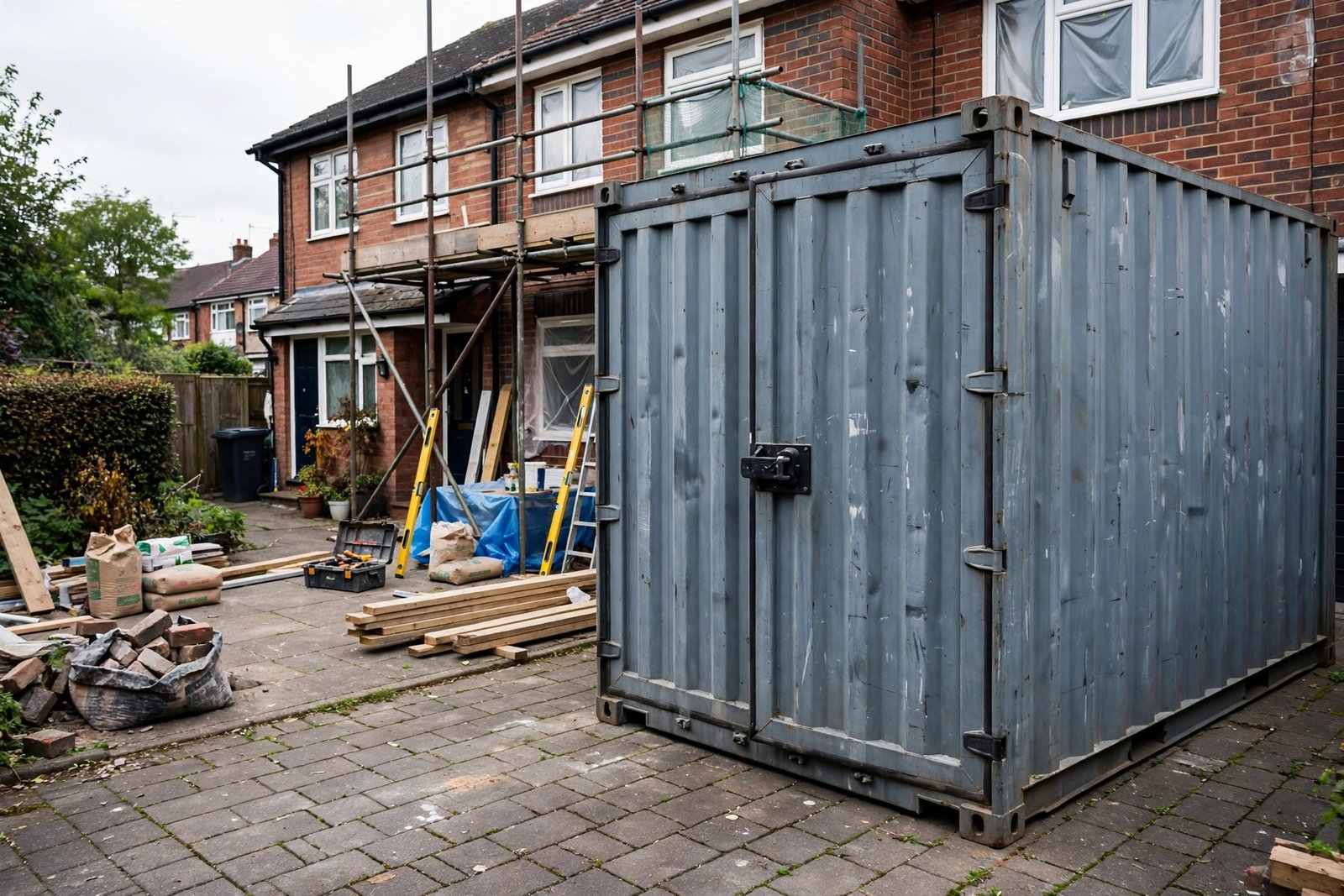
A steel container delivered directly to your driveway or garden gives constant access to your belongings throughout the renovation, useful if you need to retrieve items regularly. This option works best where there is suitable space and access for a delivery lorry.
Off-Site Self Storage Units
Self storage facilities collect your items, or you drop them off, and store them securely off-site for the duration of the project. This frees up space on your property entirely, which matters for smaller homes or renovations involving scaffolding and skips that already take up the driveway or garden.
Portable Storage Pods
Portable pods are delivered, loaded at your own pace, then collected and either stored at a facility or kept on-site, offering a middle ground between the two options above.
How Much Space Do You Need?
| Property Size | Typical Container Size Needed |
|---|---|
| 1-2 bedroom flat | Small unit, roughly 50 to 75 sq ft |
| 3 bedroom house | Medium unit, roughly 100 to 150 sq ft |
| 4+ bedroom house | Large unit or multiple containers, 150+ sq ft |
These are rough guides only. A full house renovation clearing every room needs considerably more space than a single kitchen or bathroom project where most furniture stays in place.
Cost of Storage During a Home Renovation
| Option | Typical Cost |
|---|---|
| Small self storage unit | £25 to £60 per week |
| Medium self storage unit | £60 to £120 per week |
| On-site container hire | £30 to £80 per week plus delivery |
| Portable storage pod | £40 to £100 per week plus collection fees |
What to Consider Before Booking Storage
- Access needs: Will you need to retrieve items regularly, or can everything stay packed away until the project finishes?
- Duration: Longer renovations often get better weekly rates with a fixed term contract rather than rolling short term hire
- Delivery access: Confirm a lorry can actually reach and place a container on your property before booking
- Insurance: Check whether your home contents insurance covers items in storage, or whether the storage provider’s own insurance is needed
- Climate control: Delicate furniture, electronics, or artwork may need a climate controlled unit rather than a standard steel container
Can You Put a Storage Container on Your Driveway or the Road?
A storage container on your own driveway almost never needs planning permission, but the practical question is whether a delivery lorry can actually reach the spot. Containers arrive on a flatbed or HIAB lorry, and the driver needs a straight, firm approach with enough room to offload. Measure the route before you book, including gate widths, overhanging branches and the turning space the lorry needs.
| Container size | Footprint | Delivery access needed |
|---|---|---|
| 10ft container | 3m x 2.4m | Standard flatbed; fits most driveways |
| 20ft container | 6m x 2.4m | Large flatbed or HIAB; needs a clear straight run of around 15m |
| Portable pod | Varies, roughly 2.4m x 2.4m | Smaller lorry; best option for tight access |
If the container must sit on the road, pavement or verge, you will usually need a licence from your local council, similar to a skip permit. Rules and fees vary by authority, and some councils refuse containers on narrow residential streets altogether. Apply at least two weeks before delivery. Also tell your neighbours in advance; a container can block light and views, and a heads-up avoids most complaints.
Packing Tips for Renovation Storage
- Label every box clearly with contents and the room it belongs to, making unpacking after the renovation far quicker
- Disassemble large furniture where possible to save significant space
- Wrap furniture corners and fragile items well, since items may shift during loading or if the container is moved
- Keep an inventory list, particularly for anything going into off-site storage you will not see for weeks or months
- Store items you will need during the renovation, such as clothing or kitchen essentials, separately and accessibly rather than packed at the back
Alternatives to a Storage Container
For smaller renovations, moving furniture to a single unaffected room in the house, or asking family or friends to store a few items temporarily, can avoid the cost of external storage altogether. This works well for single room projects like a bathroom or kitchen refit where the rest of the house remains liveable.
Frequently Asked Questions
How long can you rent a storage container for?
Most providers offer flexible terms from a single week up to many months, with better rates typically available for renovations booked on a fixed longer term rather than rolling week to week.
Is on-site or off-site storage better for a renovation?
On-site storage suits projects where you need regular access to belongings, while off-site storage is often better when driveway or garden space is needed for skips, scaffolding, or deliveries during the work.
Do storage containers need planning permission?
Temporary storage containers for a short term renovation project generally do not need planning permission, though check with your local authority if the container will remain on-site for an extended period or on a shared or restricted access road.
How do I choose the right size storage unit?
Most storage providers offer a size guide based on the number of rooms being cleared, but when in doubt, sizing up slightly avoids the hassle and cost of needing a second unit partway through the project.
Is my furniture insured while in storage?
This varies by provider and your own home insurance policy, so always confirm coverage details before moving valuable items into any storage container or unit.
Do I need permission to put a storage container on my driveway?
No, not normally. A container on your own driveway for a temporary renovation is generally permitted development. You only need to involve the council if it will sit on the road, pavement or verge, where a highway licence similar to a skip permit is usually required.
How much space does a 20ft storage container need?
The container itself is about 6m by 2.4m, but the delivery lorry needs a straight, firm approach of around 15m to offload it. Check gate widths, overhanging trees and turning space before booking, and confirm the ground can take the weight without sinking.
Can I store building materials in a storage container?
Yes. As well as furniture, containers are commonly used to hold tools, building materials and new fixtures like sanitaryware and kitchen units securely before installation. Keep materials off the floor on pallets and leave an access path to items you will need first.
Is there a minimum hire period for a storage container?
Most UK providers hire on a rolling monthly basis with no long fixed term, though some require a minimum spend, often around £75. For renovations it is worth asking about fixed-term rates, which can work out cheaper per week than rolling hire.
Does home insurance cover belongings in a storage container?
Not always. Some home contents policies extend to items in storage, but many exclude it or cap the amount. Most storage providers require your belongings to be insured for their replacement value and offer their own cover schemes, so confirm the position before anything goes into the container.
Expert Insight
Renovation project managers consistently recommend booking storage before finalising a renovation timeline, rather than after, since last minute availability for larger containers can be limited in busy periods, particularly over spring and summer when renovation projects peak.
Final Thoughts
Storage containers take one significant stress out of a home renovation, protecting your belongings and keeping the work site clear for tradespeople. Choosing the right size and access type for your specific project, and booking early, will make the whole process considerably smoother.
Planning a renovation? Book storage as soon as your start date is confirmed, since availability for larger on-site containers can tighten quickly during busy renovation seasons.
Related Guides
- Home Renovation Costs UK: Complete Guide
- Home Renovation Checklist: Order of Work
- Do You Need a Home Renovation Project Manager?
Written by the HometoWorld editorial team, covering home improvement, renovation, and property maintenance across the UK.
About the Author