Quick Answer: What Are UPVC Door Hinges and How Do You Replace Them?
UPVC door hinges are the adjustable metal hinges that connect a uPVC door panel to its frame, typically flag hinges or butt hinges designed to be adjustable in three directions to correct alignment issues over time. Replacing a worn or damaged hinge usually involves supporting the door, removing the old hinge screws, and fitting a matching replacement, a task manageable for a confident DIYer with the right screwdriver and door support.
Types of UPVC Door Hinges
Flag Hinges
Flag hinges are the most common type on modern uPVC doors, named for their flag like shape, and are adjustable in height, lateral position, and compression, allowing fine tuning of how the door sits and seals within the frame.
Butt Hinges
Butt hinges, more traditional in design, are still used on some uPVC doors, particularly older installations, though flag hinges have largely become the standard on newer door systems due to their easier adjustability.
Signs Your UPVC Door Hinges Need Attention
- The door drags along the frame or floor when opening or closing
- Visible gaps appear at the top or bottom of the door when closed
- The door feels loose or wobbles slightly on its hinges
- Draughts are noticeable around the door edge that were not previously present
- Difficulty locking the door smoothly, since hinge misalignment affects how the locking mechanism engages
Adjusting UPVC Door Hinges Before Replacing Them
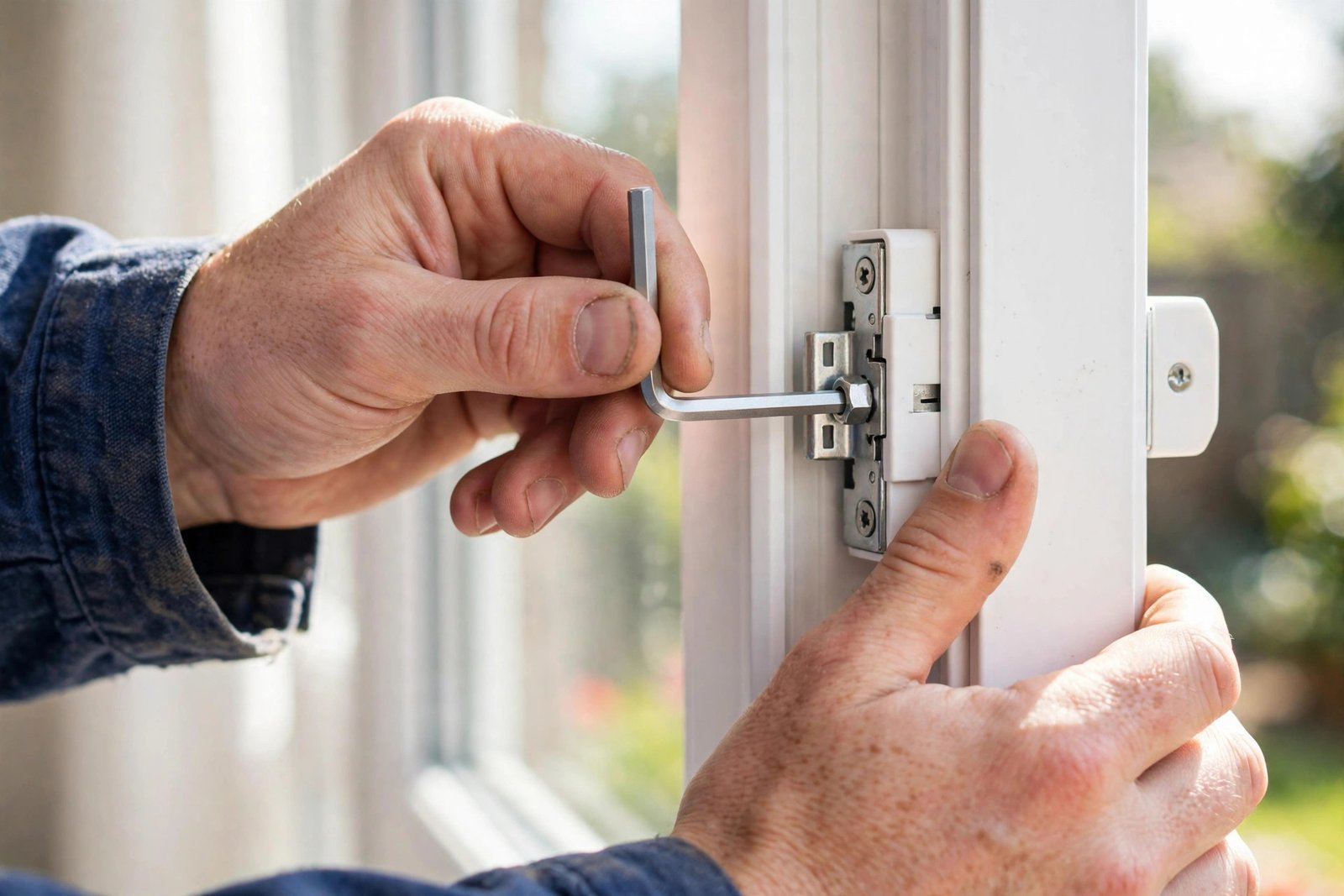
Many hinge related door problems can be resolved through adjustment rather than full replacement. Flag hinges typically have three adjustment points, accessed with an Allen key, allowing the door to be raised or lowered, moved side to side, and compressed more tightly against the seals. Trying adjustment first can save the cost and effort of a full hinge replacement if the hinge itself is not actually damaged.
When Hinge Adjustment Alone Will Not Fix a Dropped uPVC Door
Many homeowners turn every adjustment screw and still find the door dragging on the floor. The reason is that a dropped door is not always a hinge problem. Over time, the sealed glass unit inside the door can slip in its frame, letting the whole door sash sag out of square. When the sash itself is no longer rectangular, no amount of hinge adjustment will square it up.
A quick way to check is to look at the gap between the door and the frame. If the gap is wide at the top on the handle side but tight at the bottom, and the Allen key screws seem to have run out of travel, the sash has likely gone out of square. Fitters check by measuring the sash diagonally, corner to corner. If the two measurements differ by more than a few millimetres, the door needs re-packing, not just hinge tweaks.
The proper fix is called toe and heeling. A fitter removes the internal glazing beads, then places plastic packers around the glass unit so it braces the door diagonally from corner to corner. This pushes the sash back into square and stops it dropping again. It is skilled work, because wrongly placed packers can crack the glass. Most homeowners book a glazier or door repair specialist for a dropped door, with typical UK callout costs in 2026 of around £80 to £150 depending on the area.
Use this table to match your symptom to the likely cause before you spend money on parts.
| Symptom | Likely cause | Best first fix |
|---|---|---|
| Door drags on the floor at the handle side | Slight hinge drop | Adjust the vertical (height) screws on the flag hinges with a 4mm or 5mm Allen key |
| Adjustment screws have run out of travel, door still drops | Sash out of square, glazing has slipped | Toe and heeling: re-pack the glass unit, usually a job for a glazier |
| Door catches on the side and the lock is hard to lift | Lateral misalignment | Adjust the side-to-side screws on each hinge evenly, then check the keeps on the frame |
| Draughts around the door edge that adjustment does not cure | Compression lost, worn gaskets | Adjust the compression screws; if draughts persist, the door seals may need replacing |
If you adjust the hinges and the door keeps dropping week after week, stop and investigate the sash. Repeatedly forcing a dropped door shut strains the multipoint lock, the keeps, and the frame, turning a simple adjustment into a much bigger repair.
How to Replace a UPVC Door Hinge
- Support the door securely, either with a helper or a suitable door jack, before removing any screws
- Identify the exact hinge type and size, since uPVC door hinges vary between manufacturers and are not always universally interchangeable
- Remove the screws securing the worn hinge, keeping the door supported throughout
- Fit the replacement hinge, ensuring it matches the original mounting pattern exactly
- Reinsert and tighten the screws, then test the door’s operation and adjust as needed
Choosing the Right Replacement Hinge
UPVC door hinges are not always a simple universal fit, since different door manufacturers use slightly different hinge specifications. Taking the old hinge, or at least clear measurements and photos, to a specialist door hardware supplier significantly increases the chance of getting an exact match rather than a close but imperfect substitute.
UPVC Door Hinge Types Comparison
| Hinge Type | Adjustability | Typical Use | Replacement Difficulty |
|---|---|---|---|
| Flag hinge | 3-way adjustable | Most modern uPVC doors | Moderate, DIY friendly with care |
| Butt hinge | Limited adjustment | Older uPVC door installations | Moderate |
| Heavy duty flag hinge | 3-way adjustable, higher weight rating | Composite and heavier doors | Moderate to advanced |
When to Call a Professional
If a door has significant sag, if multiple hinges need replacing at once, or if the door frame itself appears to have moved or warped, it is often worth calling a glazing or door specialist rather than attempting a full DIY repair, since misdiagnosing the underlying cause can mean a hinge replacement does not fully resolve the problem. Persistent sagging can sometimes point to a wider issue worth checking against our composite doors guide if you are considering replacement rather than repair.
Frequently Asked Questions
Can I adjust uPVC door hinges myself?
Yes, most flag hinges are designed for straightforward adjustment using an Allen key, and this is often the first thing to try before assuming a hinge needs full replacement.
How much does it cost to replace uPVC door hinges?
Replacement hinges themselves typically cost £10 to £30 each for materials, with professional fitting adding £30 to £80 depending on the complexity and number of hinges being replaced.
Why does my uPVC door drag on the floor?
Dragging usually indicates the hinges have dropped slightly over time, which can often be corrected through hinge adjustment rather than requiring full replacement, provided the hinge itself is not damaged or worn out.
Are all uPVC door hinges the same size?
No, hinge specifications vary between door manufacturers, so it is important to match the exact type and size when replacing, rather than assuming any generic uPVC hinge will fit.
How long do uPVC door hinges last?
Well maintained uPVC door hinges typically last many years, often 10 to 20, though heavily used doors or those exposed to significant weather may need adjustment or replacement sooner.
Frequently Asked Questions (new additions)
How do I know if my uPVC door needs toe and heeling rather than hinge adjustment?
Measure the sash diagonally, corner to corner. If the two measurements differ by more than a few millimetres, the sash has gone out of square and hinge adjustment alone will not fix it. Re-packing the glass, known as toe and heeling, is the correct repair.
Can I toe and heel a uPVC door myself?
It is possible for a confident DIYer, but it carries real risk. You must remove the internal glazing beads, reposition plastic packers around the glass, and refit the beads without cracking the sealed unit. Most homeowners are better off paying a glazier, typically £80 to £150 in 2026.
How much does it cost to fix a dropped uPVC door in the UK?
A hinge adjustment costs nothing if you do it yourself with an Allen key. A professional callout to adjust or re-pack a dropped door typically costs £80 to £150 in 2026. If a hinge is damaged and needs replacing, expect £10 to £30 per hinge for parts, plus labour.
What are the signs that hinge adjustment has run out of travel?
The two halves of the hinge body sit hard against each other with no visible gap, or the Allen screw turns with no further effect. When adjustment is maxed out but the door still drops, the sash is usually out of square and needs toe and heeling instead.
Why does my uPVC door keep dropping after I adjust it?
The glazing has likely slipped inside the sash, so the door slowly returns to its sagging shape no matter how you set the hinges. Re-packing the glass (toe and heeling) braces the sash diagonally and holds it square. Check that all hinges still share the door’s weight evenly too.
Can a dropped uPVC door damage the locking mechanism?
Yes. A dropped door forces the multipoint hooks to meet their keeps at the wrong angle, which wears the gearbox and can make the handle stiff or impossible to lift. Fixing the drop early protects the lock and avoids a costlier repair bill later.
Expert Insight
Door fitters commonly report that many callouts for a sagging or difficult to close uPVC door are resolved through simple hinge adjustment rather than replacement, which reinforces the value of trying the adjustment screws first before assuming new hardware is needed.
Final Thoughts
UPVC door hinges are designed to be adjustable, and understanding how to fine tune them before jumping to full replacement can save both time and money. When replacement genuinely is needed, taking care to match the exact hinge specification will give the best, longest lasting result.
Dealing with a sticking or dragging door? Try the hinge adjustment screws first with an Allen key before ordering replacement parts, since this resolves the majority of everyday uPVC door alignment issues.
Related Guides
- Internal Bifold Doors: Complete Buying Guide
- Composite Doors: Complete Buying Guide
- Standard Door Sizes UK: Complete Guide
Written by the HometoWorld editorial team, covering home improvement, renovation, and property maintenance across the UK.
About the Author