Quick Answer: How Do You Polish and Care for Wood Furniture?
Wood furniture is best cared for with regular light dusting, an occasional application of furniture polish or wax suited to the specific wood finish, and prompt attention to spills or marks before they set into the surface. The right product depends heavily on whether the furniture has an oiled, waxed, lacquered, or painted finish, since using the wrong type of polish can dull or damage the surface over time.
Types of Furniture Polish
Wax Based Polish
Traditional wax polish suits furniture with an existing wax or oil finish, building up a protective layer over time that can be buffed to a soft sheen. It needs reapplying periodically, typically every few months for pieces in regular use.
Spray Furniture Polish
Spray polishes offer a quick, convenient way to dust and add shine in one step, suited to lacquered or varnished furniture, though they should not be used on raw or oiled wood since they can leave a residue that interferes with future oiling.
Furniture Oil
Oil based products, such as teak or Danish oil, penetrate the wood rather than sitting on the surface, and suit furniture with an oiled finish or bare wood pieces, particularly outdoor and hardwood furniture.
French Polish vs Wax Polish: Antique Furniture Care
The polish types above suit modern factory finishes, but antique and period furniture often carries one of two traditional finishes: French polish or wax polish. Knowing which one you have matters, because each needs different care.
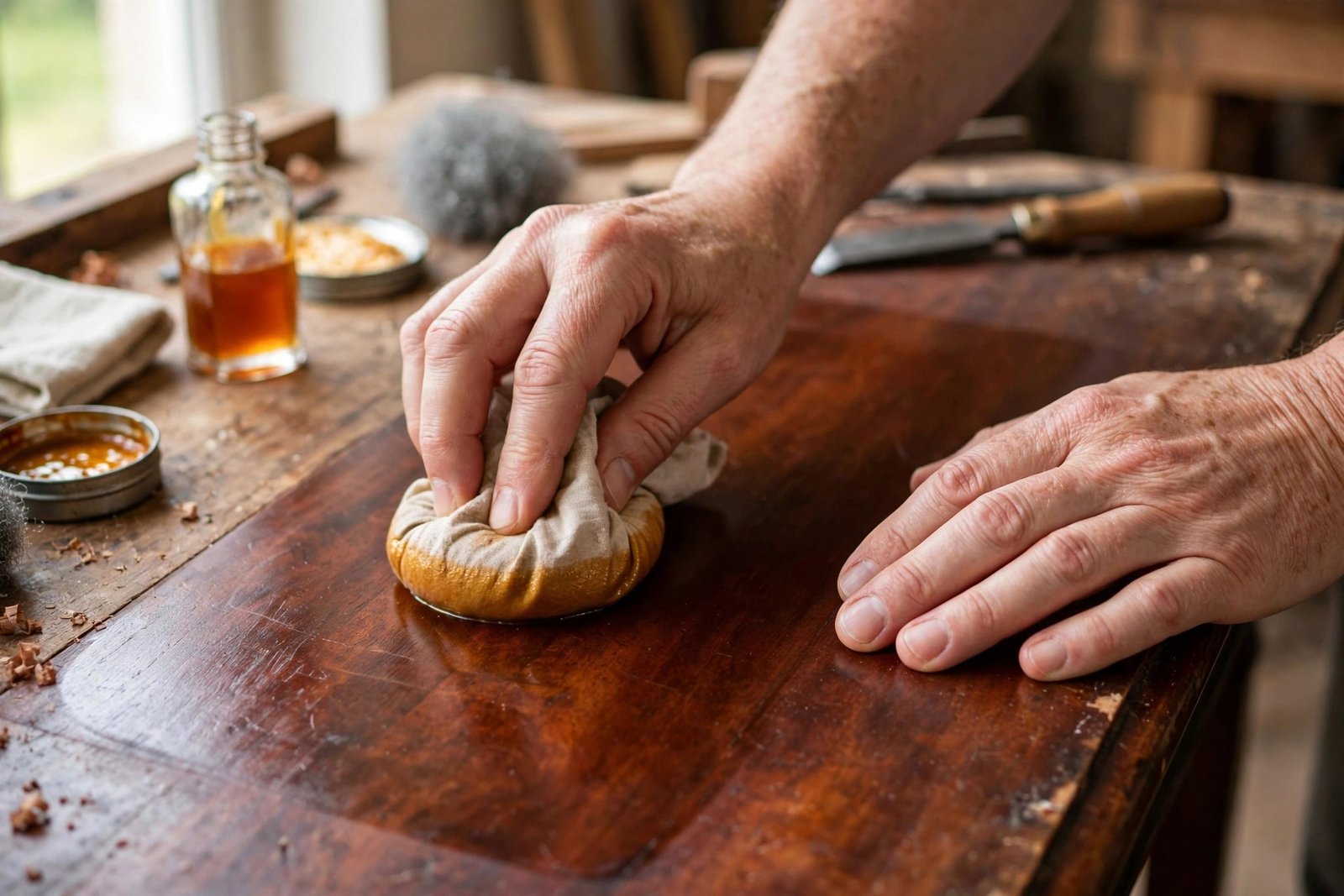
French polish is a method of applying shellac dissolved in methylated spirit with a pad known as a rubber, building up many thin layers to a deep, glassy shine. It was introduced to England around 1820 and became the standard finish for Victorian furniture. Before that, most pieces were finished with beeswax softened in turpentine, polished off with a cloth.
| Feature | French polish | Wax polish |
|---|---|---|
| Appearance | Deep, bright, glassy shine | Softer, mellow sheen |
| Best for | Post 1820 antiques, dining tables | Earlier pieces, preserving original patina |
| Water and alcohol | Marks very easily, needs prompt wiping | More forgiving, easier to revive |
| Maintenance | Occasional professional re-polishing | Rewax every year or two at home |
Restorers often favour wax for pre 1820 pieces, since it enhances the original patina rather than replacing it. French polish brings out wood colour dramatically, but it scratches easily and reacts badly to water rings and alcohol spills, so coasters and mats are essential on French polished tables.
To identify the finish, look at the shine: French polish has a distinctive deep reflective quality, while wax looks softer. A restorer can confirm with a small methylated spirit test, since shellac softens on contact. Never use silicone spray polishes on either finish, as the residue builds up and makes future refinishing far more difficult.
Light cleaning for both finishes is the same: a soft, dry cloth for dusting and prompt attention to spills. Leave any re-polishing of genuine antiques to a professional French polisher, who will charge per piece depending on size and condition.
How to Choose the Right Polish for Your Furniture Finish
| Finish Type | Recommended Product | Avoid |
|---|---|---|
| Waxed | Wax based polish | Silicone spray polish |
| Oiled | Matching furniture oil | Wax over an active oil finish |
| Lacquered/varnished | Spray polish or mild soap and water | Abrasive cleaners |
| Painted | Mild soap and water, soft cloth | Furniture oil or wax |
Caring for Dark Oak Furniture
Dark oak furniture shows dust and light scratches more visibly than lighter woods, so regular gentle dusting with a soft, slightly damp cloth followed by a dry buff is usually enough for day to day care, with an occasional wax or polish treatment to maintain the depth of colour and protect the surface.
Caring for Mango Wood Furniture
Mango wood furniture has become popular for its distinctive grain variation, and it generally has either an oiled or lacquered factory finish. Checking which finish your piece has before applying any product is important, since oiling a lacquered mango wood piece will not penetrate the sealed surface and can leave an uneven sheen.
Furniture Legs, Feet, and Floor Protection
Furniture with exposed wooden legs or feet benefits from felt pads or furniture risers to prevent both scuffing on hard flooring and pressure marks on carpet. This is a simple, low cost step that protects both the furniture and the floor beneath it, and is worth checking on dining chairs, sofas, and cabinets that get moved regularly.
How to Remove Common Marks From Wood Furniture
- Water rings: Gently buff with a small amount of non gel toothpaste on a soft cloth, then follow with your usual polish
- Light scratches: A matching wax filler stick can disguise minor surface scratches on waxed or oiled finishes
- Sticky residue: Warm, slightly damp cloth first, followed by a dry buff, avoiding solvents that can strip finish
- Dust build up in carved detail: A soft, dry paintbrush works well for reaching into decorative carving without scratching
How Often Should You Polish Furniture?
Most wood furniture benefits from light dusting weekly and a more thorough polish or wax treatment every one to three months, depending on how much daily use and sunlight exposure the piece receives. Furniture in direct sunlight, such as near a south facing window, may need more frequent attention as light exposure dries out natural oils faster.
Frequently Asked Questions
Can you use furniture polish on all wood finishes?
No, the right product depends on the specific finish. Wax suits waxed or oiled surfaces, spray polish suits lacquered finishes, and painted furniture generally only needs mild soap and water rather than any polish or wax.
How do you know if furniture is oiled or lacquered?
A lacquered surface typically feels smooth and slightly glossy with no visible wood grain texture underfoot, while an oiled finish usually shows more of the natural wood texture and feels less like a hard shell on the surface.
Does furniture polish damage wood over time?
Using the correct product for the finish generally protects wood, but repeated use of the wrong type, such as silicone spray on a waxed antique, can build up residue and eventually make refinishing more difficult.
How do you care for outdoor wood furniture differently?
Outdoor wood furniture generally needs a more weather resistant oil applied more frequently, alongside seasonal cleaning, which our dedicated garden furniture care guide covers in detail.
What is the best natural alternative to furniture polish?
A simple mix of a small amount of olive oil and lemon juice on a soft cloth can work as a light natural polish for oiled wood, though it should be used sparingly and tested on an inconspicuous area first.
What is French polish made from?
French polish is shellac, a natural resin, dissolved in methylated spirit. It is applied in many thin layers with a cotton pad called a rubber, building up to a deep glossy finish. The technique arrived in England around 1820 and became the standard finish for Victorian furniture.
Can I French polish furniture myself?
DIY French polishing kits exist and the basic technique improves with practice, but it is slow skilled work involving sealing, grain filling and dozens of thin coats. For valuable antiques, a professional French polisher is the safer choice, since mistakes can damage the original finish.
How do you clean French polished furniture?
Dust regularly with a soft dry cloth and wipe spills immediately, since water and alcohol mark shellac quickly. Avoid silicone spray polishes, which leave residues that complicate future refinishing. An occasional light application of quality beeswax helps protect the surface between professional treatments.
Is French polish better than wax polish?
Neither is universally better. French polish gives a richer, glassier shine that suits Victorian pieces and dining tables, while wax polish is more forgiving, easier to maintain at home and better for preserving the patina of earlier furniture. Many restorers use wax on pre 1820 pieces.
How do you remove white rings from French polished furniture?
White rings are moisture trapped in the shellac. Light marks sometimes respond to gentle buffing with a barely damp cloth followed by waxing, but deeper rings usually need professional attention. Avoid aggressive remedies on valuable pieces and consult a furniture restorer before attempting anything beyond light buffing.
Expert Insight
Furniture restorers consistently point out that most surface damage to wood furniture comes from using the wrong product for the finish, rather than from normal daily wear, which is why identifying the finish type correctly before treating a piece matters more than the specific brand of polish chosen.
Final Thoughts
Caring for wood furniture properly starts with correctly identifying the finish, then choosing the matching product and a consistent, gentle care routine. See our interior design guide for how furniture choice fits into your wider room styling.
Not sure what finish your furniture has? Test any new product on a small, hidden area first, such as the underside of a shelf, before treating the full visible surface.
Related Guides
- How to Clean and Restore Garden Furniture
- Interior Design Styles Explained
- Best Paint for Garden Furniture: Complete Guide
Written by the HometoWorld editorial team, covering home improvement, renovation, and property maintenance across the UK.
About the Author