
Quick Answer: Can You Paint a Garage Floor?
Yes, garage floor paint is one of the most cost effective ways to improve a concrete garage floor, typically costing £15 to £40 per square metre including materials for a DIY job. Epoxy based paints give the most durable, chemical and oil resistant finish, while single pack floor paints are cheaper and easier to apply but need reapplying more often.
Types of Garage Floor Paint
Epoxy Floor Paint
Epoxy is a two part system mixed immediately before application, forming a hard, chemical resistant coating that holds up well against oil, petrol, and heavy tyre traffic. It is the most durable option but requires careful surface preparation and correct mixing ratios to cure properly.
Concrete Floor Paint (Single Pack)
Single pack concrete floor paint is easier to apply straight from the tin, making it a popular DIY choice, though it generally wears faster than epoxy under heavy use and may need a fresh coat every two to three years in a busy garage.
Rubberised Floor Paint
Rubberised or rubber roof paint style coatings add a slightly textured, non slip finish, useful in garages that double as workshops where standing water or spilled liquids are more likely.
Garage Floor Paint Cost Breakdown
| Paint Type | Cost per sqm (materials) | Durability | Best For |
|---|---|---|---|
| Single pack concrete paint | £8 to £15 | 2 to 3 years | Light use, budget projects |
| Epoxy floor paint | £15 to £30 | 5 to 10 years | Heavy use, oil and chemical exposure |
| Rubberised floor paint | £20 to £35 | 5 to 8 years | Workshops, non slip requirement |
| Professional application | £25 to £40 total | Varies by product | Larger garages, guaranteed finish |
How to Prepare a Garage Floor for Painting
- Clear the garage completely and sweep thoroughly to remove loose debris
- Degrease the floor to remove any oil or fuel staining, since paint will not bond properly over contamination
- Repair any cracks or holes with a suitable concrete filler and allow to cure fully
- Etch or lightly abrade the surface if the concrete is very smooth or previously sealed, to help the new paint key properly
- Allow the floor to dry completely, ideally with at least 24 to 48 hours of good ventilation before painting
How to Test Your Garage Floor for Moisture Before Painting
Moisture rising through concrete is the single biggest cause of garage floor paint failure. It pushes the coating off from underneath, causing peeling and blistering that no amount of surface preparation can prevent. Before you buy any paint, run this simple test: tape a 60cm square of clear plastic sheeting tightly to the floor in the middle of the garage, sealing all four edges with duct tape, and leave it for 24 hours.
| What you see under the plastic | What it means |
|---|---|
| Dry, no condensation | The slab is dry enough to paint after normal degreasing and prep |
| Light condensation on the plastic | Some moisture is present; improve ventilation and retest in dry weather |
| Water droplets or a dark damp patch | The slab is too damp; use a moisture-tolerant primer or a breathable sealer instead of standard paint |
If the test shows persistent damp, painting over it will fail within weeks. The honest fix is either a damp-proof membrane system designed for garage floors, or a breathable concrete sealer that lets moisture pass through instead of trapping it. Also plan the job for dry weather with the garage door open for ventilation, and keep the floor temperature above 10°C while the paint cures.
One more failure mode worth knowing about is hot tyre pickup: hot car tyres can soften and lift cheaper paints, leaving tyre-shaped bare patches. Epoxy systems resist this far better than single pack paints, which is another reason epoxy is the safer choice for a garage that is actually used for parking.
How to Apply Garage Floor Paint
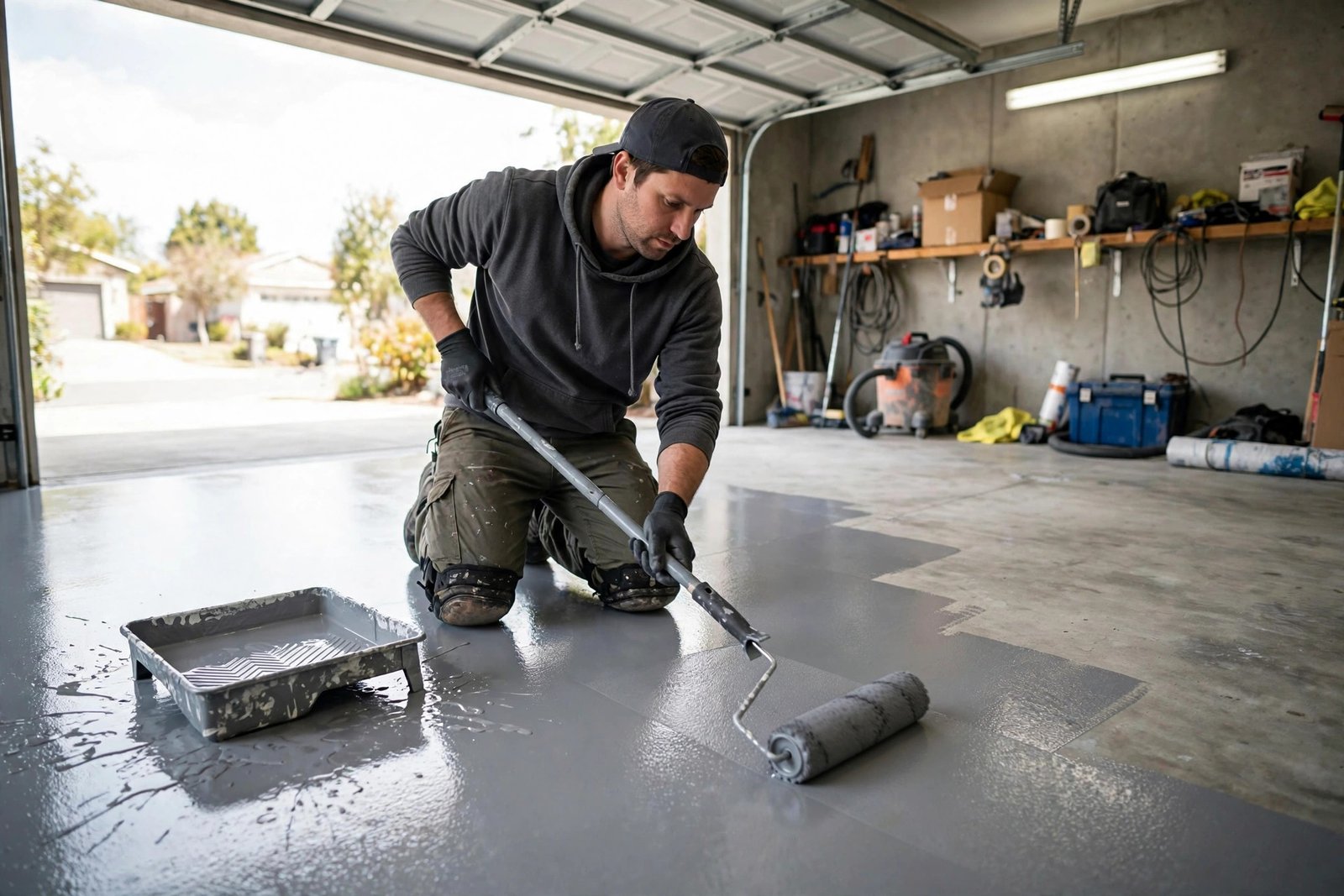
- Apply a primer coat first if using epoxy, following the manufacturer’s specific instructions
- Work in manageable sections starting from the far corner and finishing at the door
- Apply at least two coats for even coverage and durability
- Allow full cure time before driving a vehicle onto the floor, which can be several days for epoxy systems even though it may feel dry to the touch sooner
Concrete Floor Sealer vs Floor Paint
A concrete floor sealer penetrates the surface and protects against moisture and dusting without significantly changing the floor’s appearance, while floor paint sits on top as a visible coating. For other flooring options beyond concrete, see our types of flooring guide. Sealer is a lower cost, lower maintenance option if appearance matters less than protecting the concrete itself, while paint gives a more finished, brighter look.
Common Garage Floor Paint Mistakes
- Painting over oil stains without properly degreasing first, causing the paint to lift within months
- Applying paint in cold or damp conditions, which affects curing and adhesion
- Skipping the primer coat on epoxy systems
- Driving on the floor before the manufacturer’s recommended full cure time has passed
Frequently Asked Questions
How long does garage floor paint last?
Epoxy floor paint typically lasts 5 to 10 years in a domestic garage, while single pack concrete paint usually needs reapplying every 2 to 3 years under regular vehicle use.
Do I need to prime a garage floor before painting?
Epoxy systems generally require a primer coat for proper adhesion. Many single pack concrete paints are formulated to apply directly without a separate primer, but always check the specific product instructions.
Can you paint a damp garage floor?
No, the floor must be fully dry before painting. Painting over residual damp will trap moisture beneath the coating and cause it to fail prematurely, often within weeks.
Is epoxy or concrete paint better for a garage?
Epoxy offers significantly better durability and chemical resistance, making it worth the extra cost for a garage used regularly for parking, DIY, or as a workshop. Concrete paint suits garages used mainly for storage.
How much paint do I need for a garage floor?
Coverage varies by product, but as a rough guide, one litre typically covers 4 to 6 square metres per coat, so measure your floor area and check the manufacturer’s coverage rate before buying.
How do I test if my garage floor is too damp to paint?
Tape a 60cm square of clear plastic tightly to the floor and leave it for 24 hours. If there is condensation under the plastic or the concrete looks dark and damp, the slab is too wet for standard paint. Use a moisture-tolerant primer or a breathable sealer instead.
What is hot tyre pickup on a garage floor?
Hot tyre pickup is when heat and chemicals from car tyres soften a painted coating and lift it off the concrete, leaving tyre-shaped bare patches. It mainly affects cheaper single pack paints; two-part epoxy systems resist it far better, which is why epoxy suits garages used for parking.
Can I paint a garage floor in winter in the UK?
It is risky. Most garage floor paints need the floor and air temperature above 10°C to cure properly, and winter damp makes adhesion problems more likely. If you must paint in winter, heat the garage, ventilate well, and allow extra curing time before use.
How long before I can park on a newly painted garage floor?
Single pack paints are usually ready for light use in 24 to 48 hours. Two-part epoxy may feel dry sooner but needs 5 to 7 days for a full cure before a car should be parked on it. Driving on too early is one of the most common causes of permanent tyre marks.
Do I need to etch new concrete before painting?
Yes, if the concrete is smooth, power-floated or previously sealed. Paint needs a slightly roughened surface to grip. A light mechanical abrasion or a concrete etch solution opens the surface so the coating bonds properly; skipping this step is a leading cause of peeling.
Expert Insight
Trade decorators consistently identify poor surface preparation, not the paint product itself, as the leading cause of early garage floor paint failure. Time spent degreasing and repairing the concrete before the first coat goes on makes a bigger difference to the final result than paint brand choice.
Final Thoughts
Garage floor paint is one of the most affordable ways to transform a dull concrete garage into a clean, functional space, whether it is used for parking, storage, or as a workshop. Epoxy is worth the extra investment for heavy use, while single pack paint suits lighter, more occasional use garages on a tighter budget.
Planning to paint your garage floor? Test a small hidden area first to confirm the paint bonds properly to your specific concrete before committing to the full floor.
Related Guides
- Types of Flooring for Your Home: The Complete Guide
- How to Fit Laminate Flooring: DIY Guide
- Driveway Cost UK: Complete Guide
Written by the HometoWorld editorial team, covering home improvement, renovation, and property maintenance across the UK.
About the Author