
Quick Answer: What Type of Garden Fencing Should You Choose?
The right garden fencing depends on your priority: closeboard and featheredge panels offer strong privacy and durability, picket fencing suits a decorative front garden look, and trellis works well for adding height to an existing boundary while supporting climbing plants. Cost typically ranges from £20 to £80 per metre installed depending on fence type, height, and material quality.
Types of Garden Fencing
Closeboard Fencing
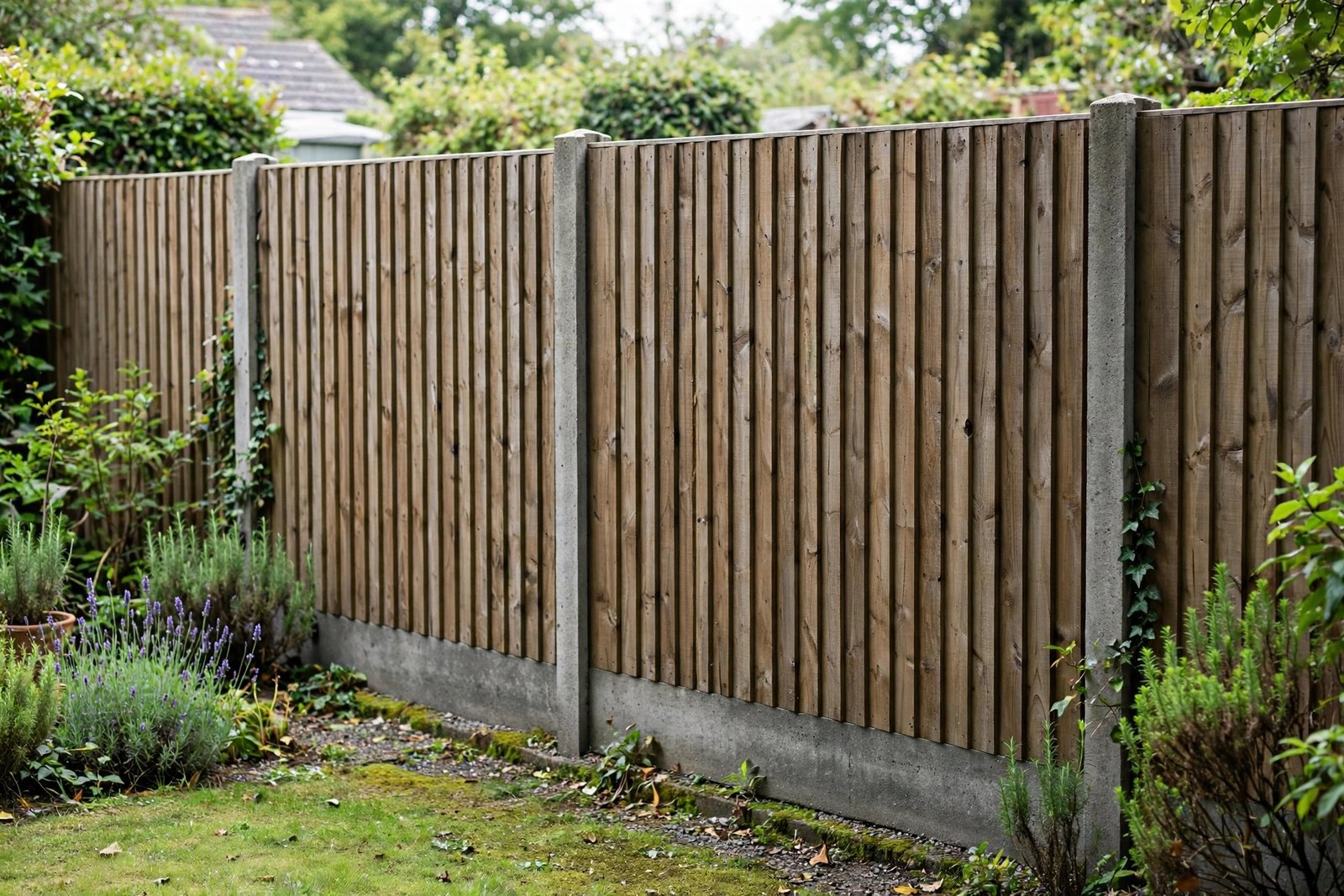
Closeboard fencing uses overlapping vertical timber boards fixed to horizontal rails, offering excellent privacy and strength, making it one of the most popular choices for UK back gardens needing a secure, private boundary.
Featheredge Fencing
Similar in appearance to closeboard, featheredge panels use tapered boards that overlap slightly, providing good privacy and a traditional appearance at a generally lower cost than full closeboard construction.
Panel Fencing
Pre-made fence panels, available in various styles including lap and waney edge, offer the quickest and often most affordable installation method, fitting between fence posts in standard width sections.
Picket Fencing
Picket fencing uses evenly spaced vertical boards with visible gaps, offering a decorative, traditional look well suited to front gardens where full privacy is less of a priority than kerb appeal.
Trellis
Trellis panels, often used atop an existing solid fence, add height and support climbing plants, offering a way to increase privacy or screening without a full fence replacement.
Garden Fencing Materials
| Material | Lifespan | Maintenance | Typical Cost |
|---|---|---|---|
| Pressure-treated softwood | 15 to 20 years | Periodic treatment/staining | £20 to £40 per metre |
| Hardwood | 25 to 30 years | Occasional oiling | £40 to £70 per metre |
| Composite | 25 to 30 years | Minimal, occasional cleaning | £50 to £80 per metre |
| Metal (steel/wrought iron) | 20 to 40 years | Rust checks, occasional repainting | £40 to £90 per metre |
What Does a Garden Fence Cost Supplied and Fitted? Worked Examples
The per-metre material prices above only tell part of the story. Most UK homeowners buy a fence supplied and fitted, and in 2026 a standard timber fence typically costs around £70 to £150 per metre installed, with difficult or higher specification projects reaching £150 to £180 per metre. The wide range exists because a fence quote covers far more than panels: posts, gravel boards, foundations, fixings, gates, old fence removal and labour.
The table below gives realistic supply and fit budgets by fence length for standard timber panel or featheredge fencing.
| Fence length | Typical supply and fit budget | Notes |
|---|---|---|
| 5 metres | £350 to £750 | Short runs cost more per metre because travel, setup and waste removal are fixed costs |
| 10 metres | £700 to £1,500 | The most common single-boundary job for a terraced or semi-detached garden |
| 15 metres | £1,050 to £2,250 | A typical full side boundary; most quotes cluster around £1,500 |
| 20 metres | £1,400 to £3,000 | Longer runs benefit slightly from economies of scale on labour |
| 30 metres | £2,100 to £4,500 | Full garden perimeter jobs for detached properties |
Beyond the fence itself, budget for the extras that catch homeowners out. Old fence removal and disposal usually adds £4 to £9 per metre. Concrete posts with gravel boards add roughly £15 to £25 per post but extend lifespan considerably in wet ground. A pedestrian garden gate costs £200 to £700 fitted and is worth combining with a full fence run. Restricted access, sloping ground, tree roots and concrete breaking all push a quote towards the top of the range.
When comparing quotes, ask for materials and labour as separate line items so you can compare like for like. A complete quote should list panels or boards, posts, gravel boards, concrete, fixings, gate if included, old fence removal, labour and VAT. Three written quotes from local fencing contractors will quickly show you what is realistic for your garden.
Fence Height and Boundary Rules
In England and Wales, a garden fence generally does not need planning permission if it is under 2 metres in height, or under 1 metre where it borders a road used by vehicles. Taller fences, or those in front of a property facing a highway, may require planning permission, so checking with your local authority before installing an unusually tall boundary is worthwhile.
Who Owns the Fence? Boundary Responsibility
Fence and boundary ownership is often assumed based on which side the fence posts face, but this is not a reliable legal indicator on its own. Property deeds sometimes specify boundary ownership explicitly, and where unclear, discussing responsibility directly with a neighbour before replacement work begins helps avoid disputes.
Installing a Garden Fence: Key Steps
- Mark out the fence line accurately and check for any underground services before digging post holes
- Dig post holes to an adequate depth, typically at least 600mm for standard garden fence panels, and set posts in concrete for stability
- Allow concrete to cure fully before fitting panels or boards to avoid disturbing newly set posts
- Fit panels, boards, or featheredge timber according to your chosen fence type, ensuring level and even spacing throughout
- Apply any recommended timber treatment or preservative before the fence is exposed to weather long-term
Maintaining Garden Fencing
- Re-treat or stain timber fencing every two to three years to maintain weather resistance and appearance
- Check posts periodically for movement or rot at the base, particularly where they meet the ground
- Clear vegetation and debris away from the base of timber fencing to reduce moisture retention and rot risk
- Address any loose or damaged boards promptly before minor damage worsens into a larger repair
Frequently Asked Questions
How much does garden fencing cost per metre?
Basic pressure-treated softwood fencing typically costs £20 to £40 per metre installed, while hardwood, composite, or metal fencing can range from £40 to £90 per metre depending on material and style.
How deep should fence posts be set?
Fence posts should generally be set at least 600mm deep for a standard garden fence, with taller or more exposed fences sometimes requiring deeper footings for adequate stability.
Who is responsible for fence maintenance?
This depends on boundary ownership, which should ideally be confirmed via property deeds or agreement with the neighbouring property, since assumptions based on fence post positioning are not always legally reliable.
Do I need planning permission for a garden fence?
Fences under 2 metres in most locations, or under 1 metre where adjacent to a road, generally do not need planning permission, though checking specific local rules is advisable for anything unusual or particularly tall.
What is the most durable fencing material?
Composite fencing and quality hardwood generally offer the longest lifespan with the least maintenance, though metal fencing can also last several decades with appropriate rust prevention.
Why do garden fence quotes vary so much?
Quotes vary because of ground conditions, access, post type and what is included. A simple panel swap on easy ground can cost half as much per metre as a full dig out with concrete posts, old fence removal and a new gate on a sloping garden.
Is it cheaper to buy a fence supply only and fit it myself?
Supply only panels cost £30 to £60 each, so DIY saves the labour portion of a quote. It only pays off if you already own the tools and can dig proper 600mm post holes. Poorly set posts are the main reason DIY fences lean within a few years.
How much does old fence removal cost?
Most UK contractors charge £4 to £9 per metre for removing and disposing of an old fence. It is often left off the headline quote, so always ask whether removal is included before you compare prices.
Are concrete posts worth the extra cost?
Yes for most UK gardens. Concrete posts add £15 to £25 per post but do not rot at ground level the way timber posts do, which is the most common point of fence failure in wet conditions.
How much does a garden gate cost fitted?
A standard timber pedestrian gate costs £200 to £700 supplied and fitted depending on size, style and lock type. Adding one during a full fence run is cheaper than a standalone gate job.
Expert Insight
Fencing contractors consistently identify inadequate post depth and poor concrete setting as the most common causes of fence failure, more so than the choice of timber or panel type itself, reinforcing the importance of proper installation over material selection alone.
Final Thoughts
Choosing the right garden fencing comes down to balancing privacy needs, budget, and maintenance tolerance, while proper installation, particularly post depth and setting, matters more to long-term durability than most homeowners initially expect. Confirming boundary ownership before replacement work also helps avoid unnecessary disputes with neighbours.
Planning a fence replacement? Confirm boundary ownership and discuss plans with neighbouring properties before work begins, particularly for shared or ambiguous boundaries.
Related Guides
- Patio Ideas and Cost: Complete Guide
- How to Clean and Restore Garden Furniture
- Driveway Cost UK: Complete Guide
Written by the HometoWorld editorial team, covering home improvement, renovation, and property maintenance across the UK.
About the Author