Quick Answer: How Do You Use Patterned Floor Tiles Effectively?
Patterned floor tiles work best as a deliberate focal point rather than an afterthought, typically used in hallways, kitchens, or bathrooms where they can define the space without competing with busy wall colours or heavily patterned soft furnishings elsewhere in the room. Herringbone, hexagon, and encaustic style patterns are currently the most popular choices in UK homes.
Popular Patterned Floor Tile Layouts
Herringbone Tile Pattern
Herringbone remains one of the most enduringly popular tile layouts, arranging rectangular tiles in a zigzag formation that adds visual movement and a sense of craftsmanship to a floor. It works particularly well in hallways and kitchens, drawing the eye along the length of the space.
Hexagon Floor Tiles
Hexagon tiles create a distinctive honeycomb effect and suit both period and contemporary properties, depending on the colour and finish chosen. Small hexagon mosaics work well in bathrooms, while larger format hexagon tiles suit open plan kitchen and dining spaces.
Encaustic and Victorian Style Patterned Tiles
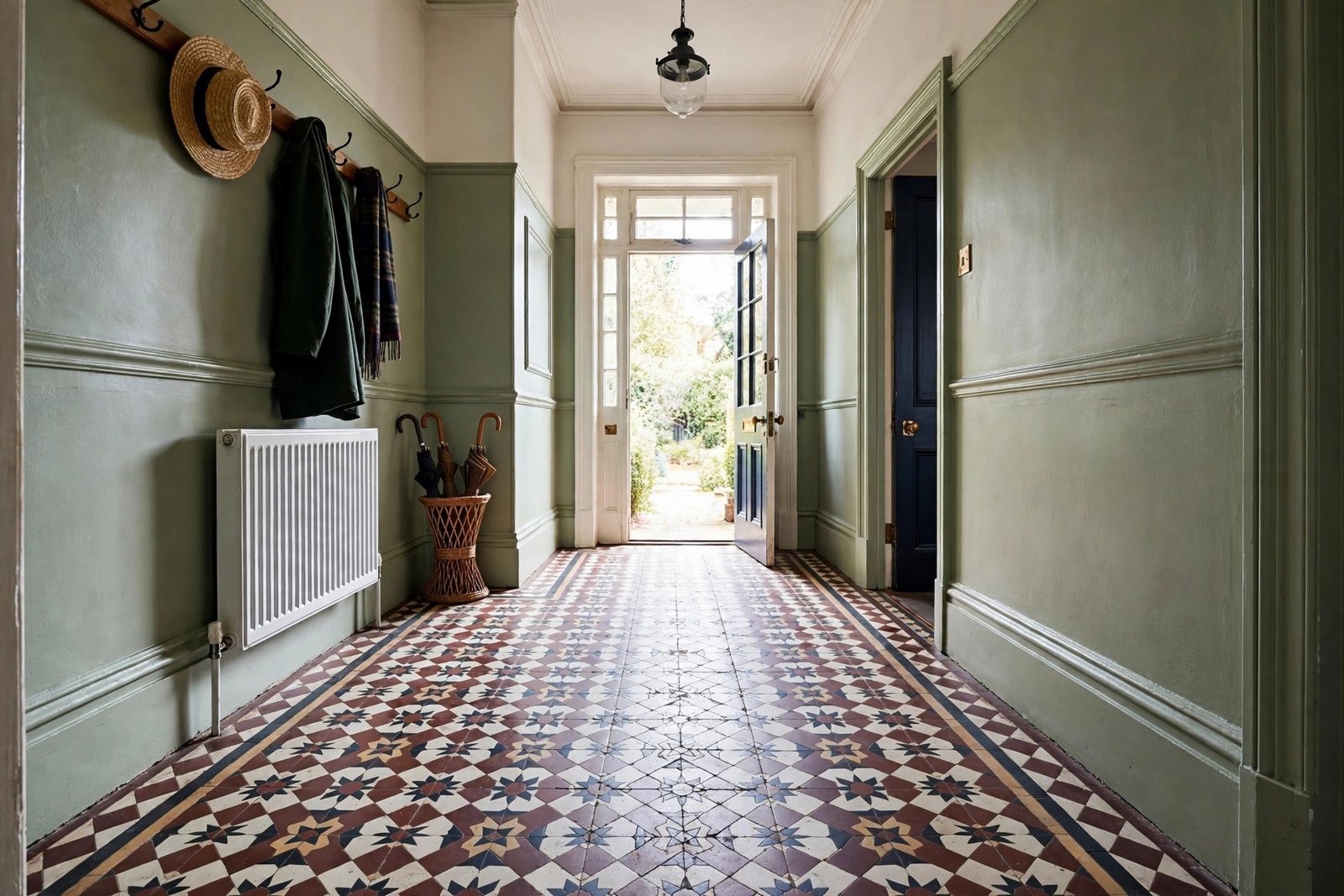
Encaustic style tiles, featuring intricate geometric or floral patterns, are a popular choice for period properties and hallways, echoing the traditional Victorian tiled entrance common in UK terraced housing. Modern porcelain versions replicate the look with far greater durability and easier maintenance than genuine antique encaustic tiles.
Where to Use Patterned Floor Tiles
| Room | Recommended Pattern | Why It Works |
|---|---|---|
| Hallway | Herringbone or encaustic | Creates immediate impact, handles heavy foot traffic |
| Kitchen | Herringbone, hexagon, or geometric | Durable, defines a zone within an open plan space |
| Bathroom | Small hexagon or geometric mosaics | Adds interest without overwhelming a smaller room |
| Living room | Large format subtle pattern | Adds texture without dominating the space |
Choosing Colours for Patterned Floor Tiles
Black floor tiles and grey tile flooring offer a versatile neutral base that works with almost any colour scheme above floor level, while more distinctive choices such as green floor tiles or pink floor tiles make a stronger design statement and work best in smaller feature areas such as a downstairs cloakroom or utility room, where the bold choice does not have to coordinate with an entire open plan space.
How to Avoid Patterned Tiles Looking Dated
- Choose a limited colour palette of two to three tones within the pattern, rather than a busy multi colour design
- Keep surrounding walls and cabinetry simple to let the floor pattern be the focal point
- Consider where the pattern will be visible from adjoining rooms in an open plan layout, so it reads as intentional rather than isolated
- Order physical samples and lay them out in the room under your actual lighting before committing
Practical Considerations for Patterned Tile Flooring
Patterned tiles, particularly smaller formats such as hexagon and herringbone, generally require more grout lines than large format plain tiles, which means more maintenance to keep grout looking clean over time. Choosing a grout colour close to the tile tone, and applying a grout sealer at installation, both help reduce this maintenance burden.
Cost of Patterned Floor Tiles
Patterned porcelain tiles typically cost slightly more than plain tiles of equivalent quality, generally £30 to £80 per square metre for materials, reflecting the more complex manufacturing process. Installation costs are also often higher for intricate patterns such as herringbone, since more cutting and precise alignment is required compared to a simple grid layout.
Victorian-Style Floor Tiles: What Do They Cost in the UK?
The encaustic and Victorian look from the layouts above comes at very different prices depending on how authentic you go. Every current ranking result is a retailer product page, so here is the neutral cost picture no seller gives you in one place.
| Option | Materials per sqm (typical) | Fitting per sqm (typical) | Notes |
|---|---|---|---|
| Genuine Victorian mosaic pattern sets | £180 to £230 | £50 to £80 | Individual unglazed tiles; needs sealing |
| Porcelain Victorian-effect tiles | £40 to £70 | £40 to £60 | Printed pattern; usually no sealing needed |
| Self-adhesive vinyl Victorian-effect | £15 to £25 | DIY | Budget look; shortest lifespan |
Worked example: a 6 sqm hallway
Porcelain replica tiles at £55 per sqm (£330), professional fitting at £50 per sqm (£300), plus adhesive, grout and sealer (around £80) comes to roughly £710 all in. The genuine mosaic equivalent at £200 per sqm (£1,200) with specialist fitting at £65 per sqm (£390) lands around £1,670 or more before borders. Victorian borders are priced per linear metre on top, so measure and cost them separately.
What pushes the price up
- Pattern complexity: intricate geometric mosaics need far more cutting and alignment time than a simple printed tile
- Borders and corners: priced per linear metre; easy to forget in the budget
- Sealing: genuine unglazed Victorian tiles must be sealed before grouting and periodically afterwards
- Wastage: allow 10 percent extra for cuts and spares, more for awkward hallway shapes
- Subfloor work: period properties often need levelling before tiling starts
The budget route that still looks right
Porcelain Victorian-effect tiles are the sweet spot for most UK homes: roughly a third of the genuine article’s price, no sealing, and far easier fitting. Self-adhesive vinyl versions at £15 to £25 per sqm suit renters and quick refreshes, but expect to replace them within a few years in a hardworking hallway.
Frequently Asked Questions
Are patterned floor tiles hard to clean?
Patterned tiles with more grout lines require slightly more maintenance than large format plain tiles, but a sealed grout line and regular cleaning keep them looking sharp with minimal extra effort.
Do patterned floor tiles make a room look smaller?
A busy, multi colour pattern in a small room can feel overwhelming, but a subtle two tone pattern such as herringbone in a consistent colour palette generally does not shrink the perceived space and can actually add visual interest without closing it in.
What is the most timeless patterned tile layout?
Herringbone is widely considered one of the most timeless patterns, having remained popular across multiple design eras from traditional parquet flooring through to contemporary kitchen and hallway tiling.
Can you fit patterned tiles yourself?
Simple grid based patterned tiles are achievable for confident DIYers, but intricate layouts like herringbone or hexagon generally benefit from professional fitting to ensure accurate alignment and consistent grout lines.
Do patterned tiles work in small bathrooms?
Yes, particularly small scale patterns such as mini hexagon mosaics, which add character without visually overwhelming a compact bathroom.
Victorian Floor Tile Cost FAQs
How much do Victorian floor tiles cost per square metre?
Genuine Victorian mosaic pattern sets cost £180 to £230 per sqm for materials. Porcelain Victorian-effect replicas cost £40 to £70 per sqm, and self-adhesive vinyl versions cost £15 to £25 per sqm.
Are replica Victorian tiles cheaper than originals?
Yes, substantially. Porcelain replicas give the same geometric look at roughly a third of the price of genuine mosaic sets, with no sealing required and simpler fitting.
How much does it cost to fit Victorian floor tiles?
Professional fitting typically costs £40 to £80 per sqm in the UK, with genuine mosaic patterns at the top end because of the cutting and alignment involved. Borders are priced per linear metre on top.
Do Victorian-style tiles need sealing?
Genuine unglazed Victorian mosaic tiles need sealing before grouting and periodic resealing afterwards. Glazed porcelain replicas do not need sealing.
Can I get the Victorian tile look on a budget?
Yes. Self-adhesive vinyl Victorian-effect tiles cost £15 to £25 per sqm and are DIY friendly, making them ideal for renters and quick hallway refreshes.
Expert Insight
Tile fitters consistently note that pattern alignment, particularly for herringbone layouts, is the single biggest factor separating a professional looking finish from an amateur one. Careful planning of the starting point and centre line before any tiles are cut makes a significant visible difference to the finished floor.
Final Thoughts
Patterned floor tiles offer one of the most effective ways to add character and visual interest to a room without relying on wall colour or furniture alone. Choosing the right pattern and colour palette for the specific room, and investing in careful installation, will give a result that stays looking intentional and current for years. For a full comparison against other flooring types, see our types of flooring guide.
Choosing a patterned tile? Lay out a small sample area on the actual floor before ordering the full quantity, since patterns can read very differently at full scale compared to a small showroom sample board.
Related Guides
- Types of Flooring for Your Home: The Complete Guide
- Vinyl Flooring Guide: Types, Cost and Best Rooms
- How to Fit Laminate Flooring: DIY Guide
Written by the HometoWorld editorial team, covering home improvement, renovation, and property maintenance across the UK.
About the Author