Quick Answer: What Should You Look for in a Home CCTV Camera?
A good home CCTV camera should offer at least 1080p resolution, night vision, motion detection with smartphone alerts, and either local or cloud storage for footage. Wireless, WiFi connected cameras have become the most popular choice for UK homes, offering easier installation and remote viewing compared to older wired CCTV systems.
Types of Home CCTV Cameras
Wired CCTV Systems
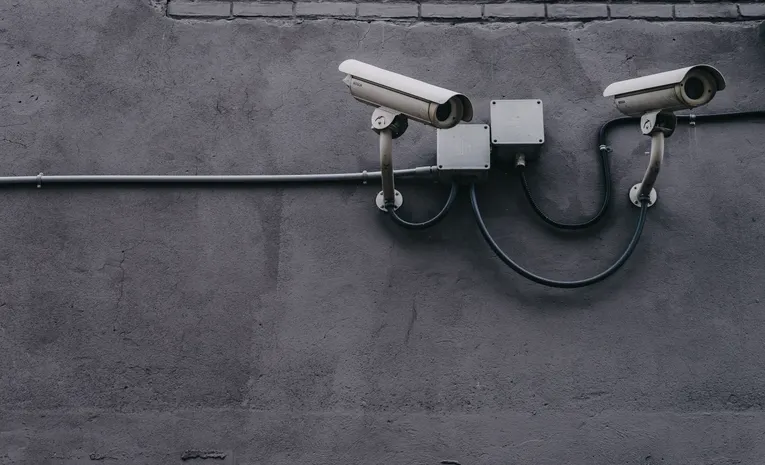
Traditional wired systems connect cameras to a central recorder via cabling, offering a highly reliable connection unaffected by WiFi interference, though installation is more involved and less flexible to reposition later.
Wireless/WiFi Cameras
Wireless cameras connect via your home WiFi network, are generally much easier to install, and often integrate with a smartphone app for live viewing and alerts, making them the most common choice for homeowners installing CCTV themselves.
Video Doorbells
A specific category of camera fitted at the front door, combining a doorbell function with motion detection and two-way audio, covering one of the most important entry points on most properties.
Key Features to Consider
| Feature | Why It Matters |
|---|---|
| Resolution | 1080p minimum for clear identification; 2K or 4K for better detail at distance |
| Night vision | Essential for detecting activity after dark, when many break-ins occur |
| Motion detection | Triggers alerts and recording only when needed, saving storage and reducing false alerts |
| Field of view | Wider angles cover more area but can distort footage at the edges |
| Weatherproofing | An IP65 rating or higher is recommended for any outdoor camera in the UK climate |
| Two-way audio | Allows you to speak through the camera, useful for deterring intruders or greeting visitors |
Cloud Storage vs Local Storage
Cloud storage keeps footage on a remote server, accessible from anywhere and safe even if the camera itself is damaged or stolen, but usually requires a monthly subscription. Local storage, typically via an SD card or connected hard drive, avoids ongoing fees but means footage is lost if the storage device is damaged, and it is not accessible remotely without additional setup.
Where to Position CCTV Cameras
- Front door and driveway, covering the most common entry point and any vehicles
- Back door and garden access points, particularly gates or side passages
- Ground floor windows not overlooked by neighbours or the street
- Garage and outbuildings, if they contain valuable items or provide access to the main house
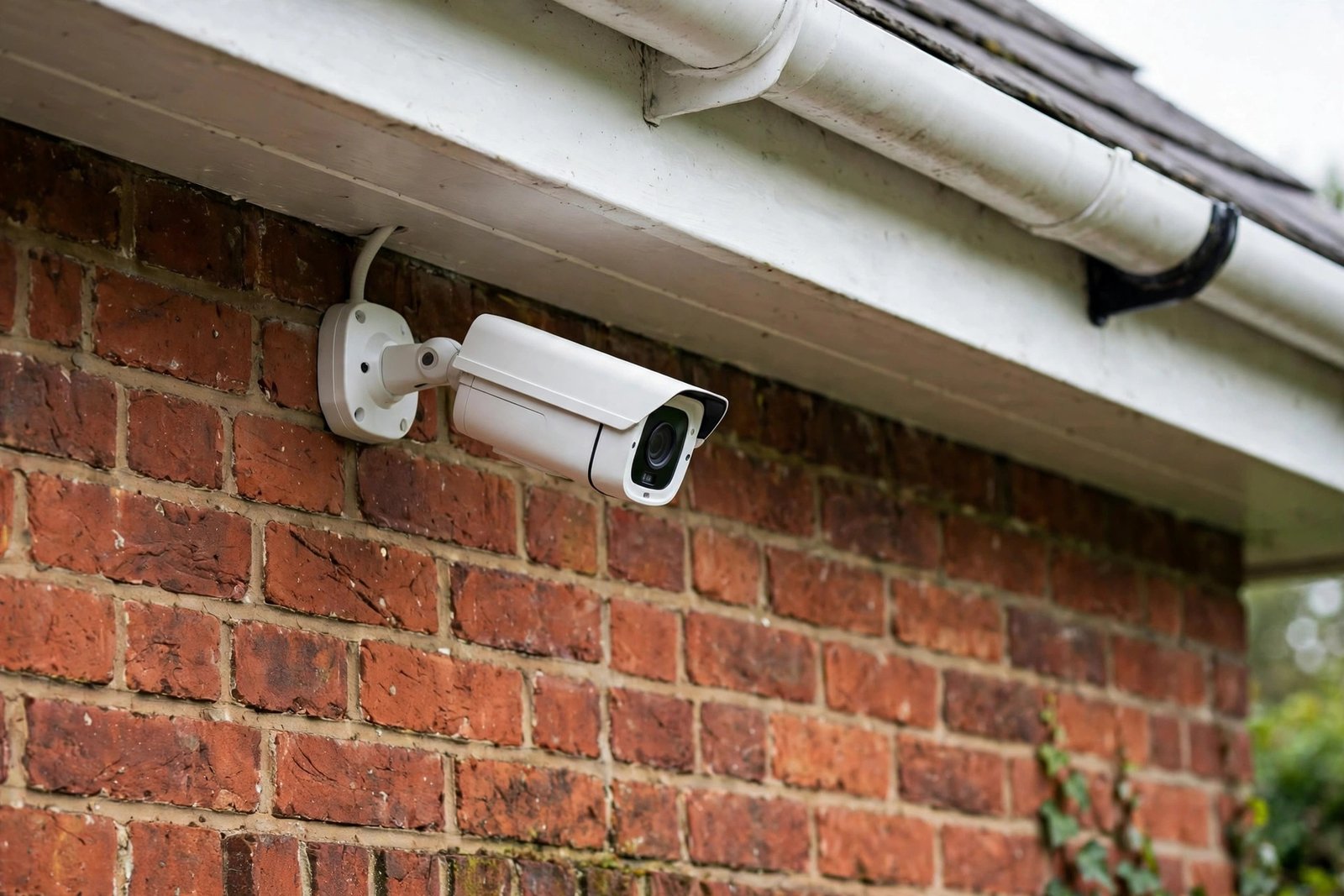
Cameras should be positioned high enough to avoid easy tampering while still capturing clear facial detail at typical approach distances.
How Many CCTV Cameras Does a UK Home Need?
Most UK homes need three to six cameras: enough to cover every ground-floor entry point without paying for overlap. Fewer than three usually leaves a blind side, while more than six on a standard house tends to duplicate coverage. The right number depends on your property type and layout, not on the size of the kit the retailer wants to sell you.
| Property type | Typical camera count | Positions |
|---|---|---|
| Flat / maisonette | 1 to 2 | Front door, balcony or accessible window |
| Terraced house | 3 to 4 | Front door and street, back door and garden |
| Semi-detached | 4 to 5 | Front door, driveway, back door, side passage or garden |
| Detached house | 5 to 8 | All of the above, plus garage and any secluded side access |
Walk your property’s perimeter before buying and mark every realistic approach: front door, back door, side gates, ground-floor windows hidden from the street, the driveway, and outbuildings with valuables. Each approach wants one camera. A video doorbell can cover the front-door position, reducing the count by one. Remember the privacy rule from the section below: angle each camera to minimise capture of neighbours’ property and public pavements.
Home CCTV and UK Privacy Law
Homeowners installing CCTV should be mindful of neighbouring properties and shared or public spaces within camera view. While domestic CCTV covering your own property is generally permitted without registration, cameras capturing significant footage of a neighbour’s property or public pavements can raise data protection considerations, and adjusting camera angles to minimise this is good practice.
Cost of Home CCTV Systems
| System Type | Typical Cost |
|---|---|
| Single WiFi camera | £30 to £100 |
| Multi-camera wireless kit (4 cameras) | £150 to £400 |
| Professionally installed wired system | £500 to £1,500+ |
| Cloud storage subscription | £3 to £10 per month per camera |
DIY Installation Tips
- Check your WiFi signal strength at each proposed camera location before committing to a position
- Mount cameras at a height that balances a clear view with resistance to tampering
- Angle cameras to cover key approach paths rather than wide, unfocused views
- Test motion detection sensitivity to reduce false alerts from passing traffic, pets, or moving foliage
Frequently Asked Questions
Do I need a licence for home CCTV?
No licence is needed for domestic CCTV covering your own property, though you should be considerate of footage capturing neighbouring properties or public areas.
How long does CCTV footage typically get stored?
This varies by system and storage plan, but many cloud services retain footage for 7 to 30 days by default, with longer retention available on higher tier subscriptions.
Can CCTV cameras work without WiFi?
Wired systems can operate without WiFi by recording to a local device, but most wireless cameras rely on a WiFi connection for both operation and remote viewing.
Do fake or dummy cameras deter burglars?
Dummy cameras can provide some visual deterrent, but real, functioning cameras with visible recording indicators and connected alerts offer significantly better protection and evidence value.
What is the best camera position for a front door?
A camera positioned above the door at a height that captures facial detail of anyone approaching, angled slightly downward, generally gives the clearest identification footage.
CCTV Camera Count FAQs
How many CCTV cameras do I need for my house?
Most UK homes need three to six cameras. A terraced house typically needs three to four, a semi-detached four to five, and a detached house five to eight. Count your ground-floor entry points and approaches: one camera per approach is the rule.
Is four cameras enough for a house?
Yes for most terraced and semi-detached homes: front door, back door, driveway or front street, and garden or side passage. Larger detached properties with garages or secluded sides usually need more.
Where should I put CCTV cameras outside?
Cover the front door, back door, driveway, side passages and any ground-floor windows hidden from neighbours or the street. Mount high enough to resist tampering but low enough to capture facial detail.
Do I need cameras at the back of the house?
Yes. Back doors and gardens are common entry points precisely because they are hidden from the street. A rear camera covering the back door and garden is one of the highest-value positions.
Can one camera cover the front and back of my house?
No. No single domestic camera sees through a house. Budget one camera per side of the property with an approach route. Wide-angle lenses help, but they cannot replace a second position.
Expert Insight
Security professionals frequently note that camera placement matters more than camera specification, since even a high resolution camera positioned too high or at the wrong angle can fail to capture usable facial detail, while a modest camera correctly positioned often performs better in practice.
Final Thoughts
Choosing the right home CCTV setup comes down to matching resolution, storage type, and camera count to your property’s actual layout and risk points, rather than simply buying the most expensive option available. Careful positioning at key entry points delivers far more practical security value than camera count alone.
Setting up home CCTV? Test footage from each proposed camera position at different times of day, including after dark, before finalising placement, to confirm image quality meets your expectations.
Related Guides
- Home Security Systems: Complete Guide
- Video Doorbells: Complete Buying Guide
- Burglar Alarm Cost UK: Complete Guide
Written by the HometoWorld editorial team, covering home improvement, renovation, and property maintenance across the UK.
About the Author