Quick Answer: How Do You Clean and Restore Garden Furniture?
Garden furniture is best cleaned with warm soapy water and a soft brush for regular maintenance, while restoring faded or worn pieces usually involves sanding back the surface, treating any mould or algae, and reapplying a suitable paint, oil, or protective finish depending on the material. The right method depends heavily on whether your furniture is rattan, wood, or metal, covered separately below.
Cleaning Rattan Garden Furniture
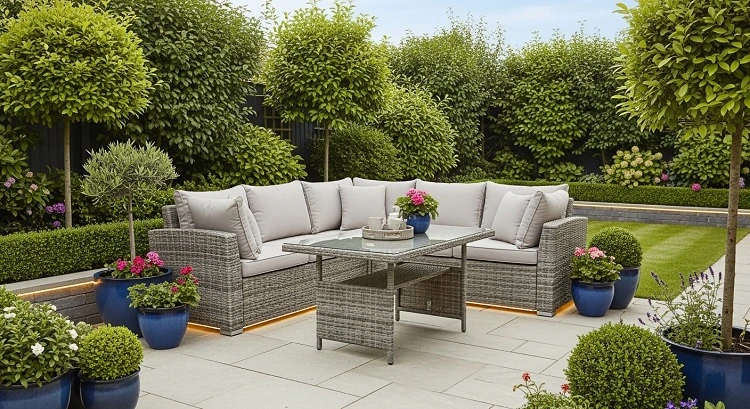
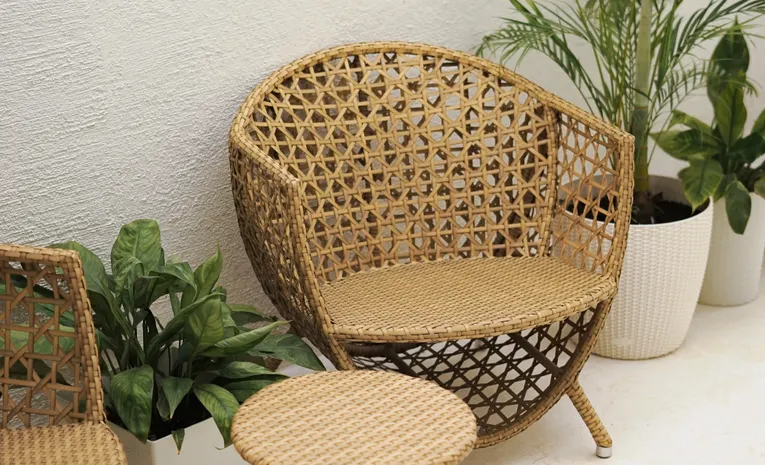
Rattan garden furniture, whether natural or synthetic, should be cleaned with a soft brush and mild soapy water, working into the weave pattern where dirt tends to collect. Rinse thoroughly and allow to air dry fully before covering, since trapping moisture against synthetic rattan can encourage mould growth over time. For a full buying guide covering rattan quality and durability, see our rattan garden furniture guide.
Cleaning and Restoring Wooden Garden Furniture
Wooden garden furniture, particularly hardwoods such as teak, naturally weathers to a silver grey colour over time. This is not damage and many owners prefer the look, but if you want to restore the original tone, the process is straightforward.
- Clean the wood thoroughly with a stiff brush and mild soap solution to remove surface dirt and algae
- Sand lightly with fine grit sandpaper along the grain to remove the greyed surface layer
- Apply a teak oil or suitable exterior wood oil in thin, even coats, allowing full drying time between coats
- Reapply oil annually, or every six months for furniture left outdoors year round, to maintain the finish
Painting Furniture Outside: What to Use
Painting furniture outside requires exterior grade paint specifically formulated to withstand UV exposure, rain, and temperature changes. Standard interior paint will crack and peel quickly outdoors.
- Use exterior furniture paint or specialist outdoor wood paint rather than interior products
- Always apply a suitable primer first on bare or previously unpainted wood
- Choose a day with mild temperatures and low humidity for painting, since extreme heat or damp both affect how paint cures
- Allow full cure time before placing cushions or covers back on painted furniture
Can You Spray Paint Rattan Garden Furniture?
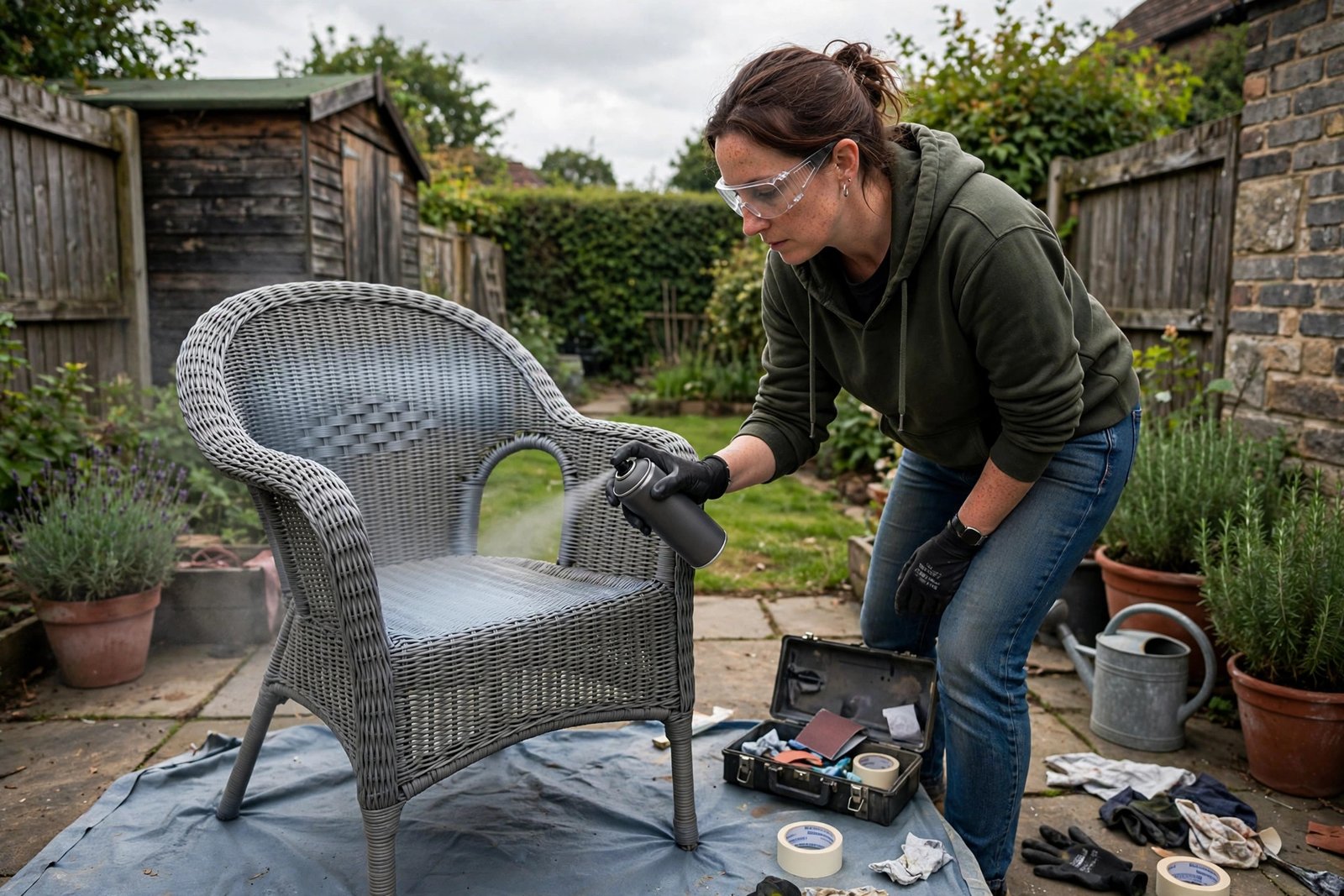
Yes, faded synthetic rattan garden furniture can be refreshed with spray paint, and it is the method most UK furniture retailers and restorers recommend because a spray finish follows the woven texture far better than a brush. It will not make cheap rattan indestructible, but it hides sun fading and scuff marks convincingly and adds a protective coat that slows further UV damage.
The table below gives the proven step by step process. Preparation matters far more than the paint brand: most failed rattan paint jobs fail because of poor cleaning, not poor paint.
| Step | What to do | Why it matters |
|---|---|---|
| 1. Clean | Wash thoroughly with warm water and washing up liquid using a soft brush, then rinse and leave to dry completely | Dirt and grease stop paint bonding to the plastic weave |
| 2. Sand lightly | Rub over glossy areas with 220 grit sandpaper or a sponge sanding block, then wipe off dust with a damp cloth | Roughening the surface gives primer and paint something to grip |
| 3. Prime | Apply a spray primer designed for plastic, working in thin coats | Extra adhesion and a more even finish, especially on darker rattan |
| 4. Paint | Apply two to three light coats of UV resistant spray paint, letting each coat dry fully | Light coats avoid drips pooling in the weave; UV resistance slows re-fading |
| 5. Protect | Finish with a clear outdoor sealant if your paint does not already include one | Seals the colour against rain and sun for longer |
Do not use a pressure washer before painting: the jet can gouge and split the soft plastic strands. If your rattan is simply dull rather than damaged, a restoration product such as Polytrol can revive shine and colour without paint at all, which is worth trying first on lightly faded sets. For natural rattan rather than synthetic, use oil based stain or rattan specific products instead of plastic spray paint.
A spray painted finish typically looks good for two to three UK seasons before touch ups are needed, depending on sun exposure. Painting costs a fraction of replacement: a few cans of quality spray paint and primer usually come in well under £50 for a full dining set.
Cleaning Metal Garden Furniture
Metal garden furniture, whether powder coated aluminium or wrought iron, should be checked regularly for rust spots, particularly at joints and welds. Light rust can be treated with a wire brush and rust converter, followed by a matching touch up paint, while powder coated surfaces generally just need a wipe down with soapy water to stay in good condition.
Protecting Garden Furniture Between Seasons
- Use a fitted cover for garden furniture during autumn and winter to reduce weather exposure
- Store cushions and soft furnishings indoors or in a waterproof storage box over winter
- Raise furniture slightly off the ground where possible to prevent moisture wicking up from wet paving or grass
- Check covers periodically for pooling water, which can actually trap more moisture against the furniture than no cover at all
Furniture Material Care Comparison
| Material | Main Risk | Recommended Care | Frequency |
|---|---|---|---|
| Rattan (synthetic) | Mould, UV fading | Soapy water, full drying before covering | Monthly during use |
| Hardwood (teak) | Greying, splitting | Clean, sand, oil | Annually or biannually |
| Softwood (painted) | Peeling, rot | Repaint with exterior paint | Every 2 to 3 years |
| Metal (powder coated) | Chipping, rust at joints | Wipe clean, touch up chips promptly | Seasonal check |
When to Replace Rather Than Restore
Restoration is usually worthwhile for structurally sound furniture with surface wear, such as faded finish or minor rust. If a wooden frame has soft, rotten timber, or a metal frame has significant structural rust at joints, replacement is generally safer and more cost effective than attempting a full restoration.
Frequently Asked Questions
How often should you clean garden furniture?
A light clean every few weeks during the main outdoor season is enough for most furniture, with a more thorough clean and inspection at the start and end of the season.
Can you pressure wash garden furniture?
Pressure washing can damage rattan weave and strip protective finishes from wood, so a soft brush and hand washing is generally safer, particularly for synthetic rattan and painted surfaces.
What paint is best for outdoor wooden furniture?
Specialist exterior wood paint or furniture paint formulated for outdoor use gives the best durability, since it is designed to flex with temperature changes and resist UV fading better than standard interior paint.
How do you remove mould from garden furniture covers?
Covers can usually be cleaned with a diluted mild detergent solution and a soft brush, then rinsed and fully air dried before reuse to prevent the mould returning.
Does teak oil actually protect the wood?
Teak oil primarily restores colour and provides some water resistance, but it needs reapplying regularly, typically every six to twelve months, to maintain its protective effect against UK weather.
What spray paint is best for synthetic rattan?
Use a spray paint formulated for plastic or multi surface use with UV resistance, such as the plastic specific ranges from Rust-Oleum or PlastiKote. Standard metal spray paint does not flex with the plastic weave and cracks more quickly.
Do I need primer before spray painting rattan?
Some plastic spray paints claim direct adhesion, but a dedicated plastic primer gives noticeably better durability and a more even finish. Given primer is inexpensive, skipping it is a false economy on a project you want to last.
What is Polytrol and does it work on rattan?
Polytrol is a deep penetrating oil based restoration product designed for faded plastic and synthetic materials. Wiped on with a cloth, it revives colour and shine on lightly faded rattan without painting, though it needs reapplying periodically.
How long does spray painted rattan furniture last?
A well prepared spray paint job typically looks good for two to three seasons of UK weather before touch ups are needed. Storing furniture under cover in winter extends the finish considerably.
Can you stain natural rattan instead of painting it?
Yes. Natural rattan takes oil based wood stain well: clean, sand lightly along the weave, apply thin coats and finish with a clear outdoor sealant. Avoid plastic spray paints on natural rattan, which need to breathe.
Expert Insight
Garden furniture retailers report that the single biggest cause of premature furniture failure is leaving cushions and covers on through winter without checking for trapped moisture, which accelerates mould growth and fabric breakdown far more than leaving items uncovered but well drained.
Final Thoughts
Regular light cleaning through the season, combined with proper end of season care, will keep most garden furniture looking good and lasting years longer, whatever the material. Restoration is worthwhile for structurally sound pieces with surface wear, while significant structural damage is usually better addressed with replacement.
Getting your garden ready for the season? Clean and inspect furniture before the weather warms up, so any repairs or touch up painting has time to fully cure before regular outdoor use begins.
Related Guides
- Best Paint for Garden Furniture: Complete Guide
- Rattan Garden Furniture: The Buyer’s Guide
- Garden Fencing: Types and Cost Guide
Written by the HometoWorld editorial team, covering home improvement, renovation, and property maintenance across the UK.
About the Author