Quick Answer: Is Vinyl Flooring Good for a UK Home?
Vinyl flooring is one of the best value, fully waterproof flooring options for UK homes, typically costing £20 to £50 per square metre for materials and lasting 10 to 20 years. It performs particularly well in kitchens, bathrooms, and hallways where moisture resistance and easy cleaning matter more than the premium feel of natural wood or stone.
Sheet Vinyl vs LVT: What Is the Difference?
Sheet vinyl comes in large rolls that are cut and fitted in one continuous piece, minimising seams and making it highly water resistant, which is why it remains popular for bathrooms and utility rooms. LVT (luxury vinyl tile) is fitted in individual planks or tiles, usually with a click lock or glue down system, and gives a more realistic wood or stone appearance with visible grout lines or plank joints.
| Feature | Sheet Vinyl | LVT |
|---|---|---|
| Cost per sqm | £15 to £35 | £25 to £60+ |
| Water resistance | Excellent, minimal seams | Very good, seams at joints |
| Appearance | Printed pattern | Realistic wood or stone effect, often embossed |
| Installation | Professional fitting recommended | DIY friendly with click systems |
| Best for | Bathrooms, utility rooms | Kitchens, living areas, hallways |
Vinyl Flooring in the Kitchen
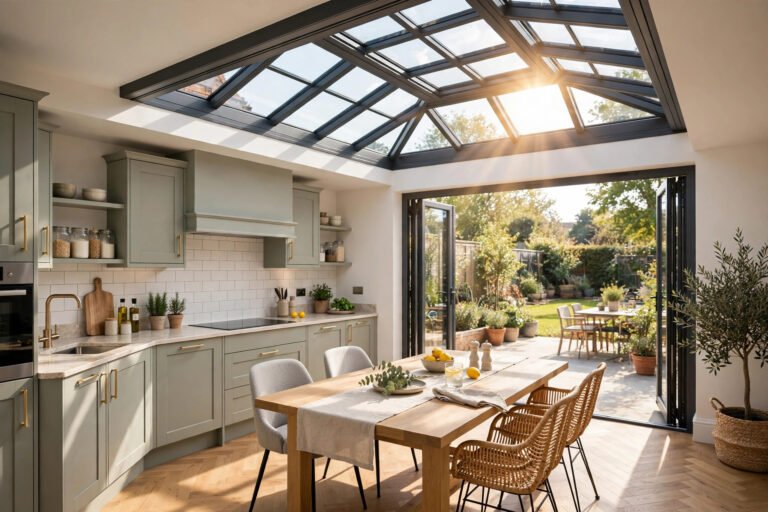
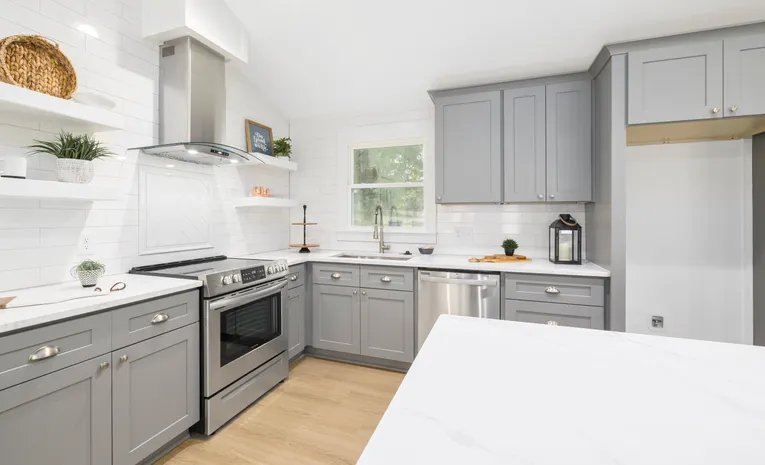
Vinyl flooring in the kitchen has become one of the most requested renovation choices in the UK, and for good reason. It handles spills, dropped items, and heavy foot traffic far better than laminate or carpet, and modern LVT ranges are available in convincing wood, stone, and concrete effect finishes that suit both traditional and contemporary kitchens.
- Fully waterproof, unlike laminate
- Compatible with underfloor heating in most ranges
- Warmer and softer underfoot than tile
- Easier and cheaper to replace than natural stone if damaged
Vinyl Flooring for Bathrooms and Wet Rooms
Wet room flooring has specific requirements beyond a standard bathroom, since the floor is exposed to direct water contact rather than occasional splashes. Sheet vinyl with heat welded seams is the safest choice for a genuine wet room, since a fully sealed surface prevents water tracking underneath and causing damp in the subfloor below.
Herringbone and Patterned LVT Flooring
Herringbone LVT flooring has grown significantly in popularity, offering the visual impact of a traditional parquet floor at a fraction of the cost and with the practical waterproofing of standard vinyl. It works particularly well in hallways and open plan kitchen diners where a striking floor pattern helps define the space.
Underlay for Vinyl Flooring
Most rigid click LVT products include an attached acoustic underlay layer, but sheet vinyl and some flexible LVT ranges need a separate underlay to smooth out minor subfloor imperfections and improve comfort underfoot. Always check the manufacturer’s specification, since fitting the wrong underlay type can void the product guarantee.
How to Clean and Maintain Vinyl Flooring
- Sweep or vacuum regularly to remove grit that can scratch the surface
- Use a pH neutral vinyl floor cleaner rather than harsh degreasers or bleach
- Wipe up spills promptly, even though vinyl is waterproof, to avoid staining
- Use felt pads under furniture legs to prevent indentation marks over time
- Avoid steam mops on cheaper vinyl, since excess heat can affect the adhesive bond
Vinyl Flooring Cost Breakdown
| Item | Typical Cost |
|---|---|
| Budget sheet vinyl (materials) | £15 to £25 per sqm |
| Mid range click LVT (materials) | £25 to £40 per sqm |
| Premium LVT (materials) | £40 to £60+ per sqm |
| Professional fitting | £10 to £20 per sqm |
| Subfloor levelling, if needed | £15 to £30 per sqm |
How Much Does It Cost to Fit Vinyl Flooring in the UK?
Materials are only half the bill. Labour-only fitting for vinyl flooring typically costs £10 to £25 per square metre in the UK (2026), depending on the vinyl type, the state of your subfloor and where you live. London and the South East sit at the top of the range; smaller towns in the North and Midlands sit at the bottom.
| Vinyl type | Labour-only fitting | Supply and fit | Notes |
|---|---|---|---|
| Sheet vinyl | £10 to £15 per sqm | £25 to £45 per sqm | Usually needs a pro: one wrong cut ruins the sheet |
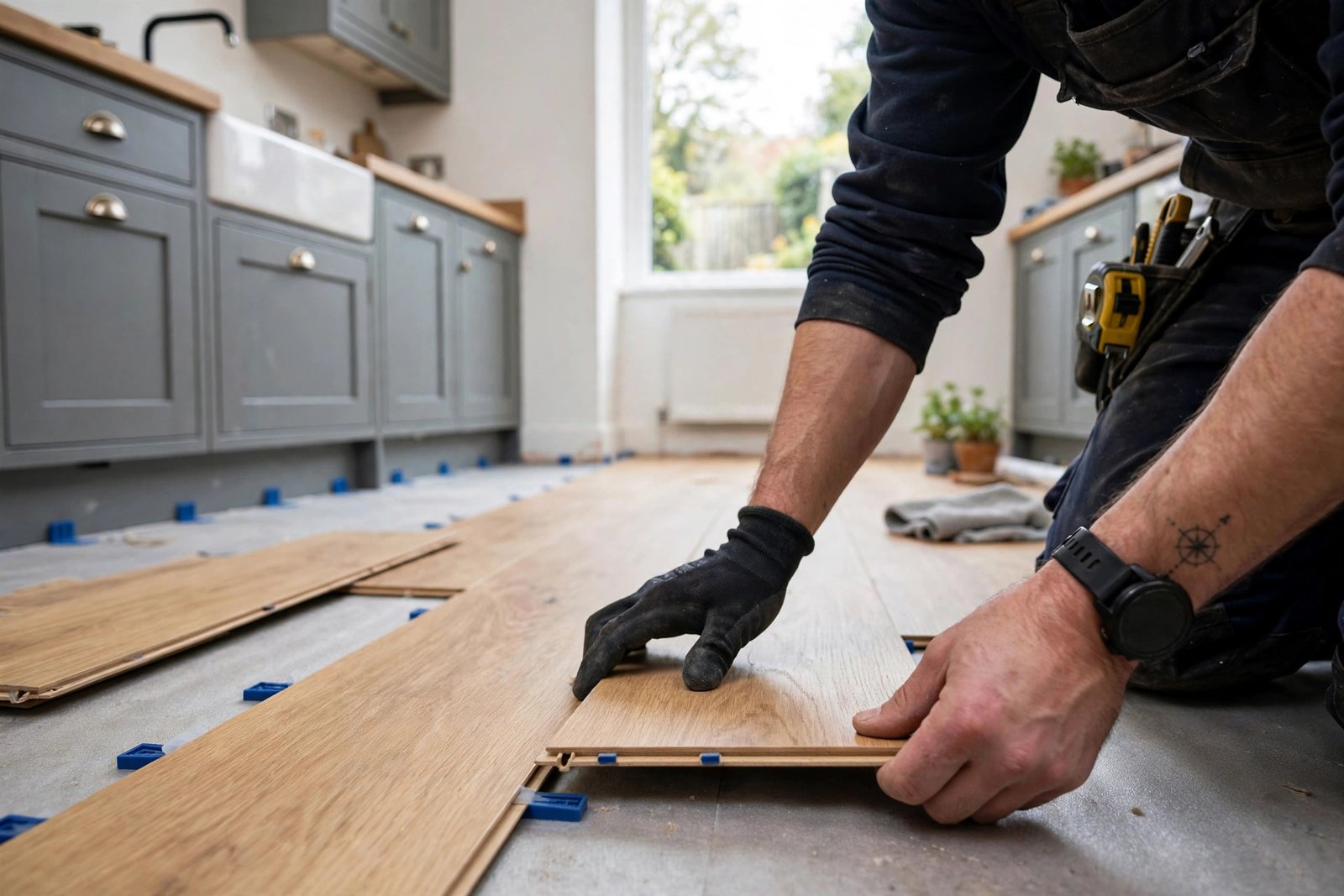
| Click LVT | £12 to £20 per sqm | £35 to £55 per sqm | DIY friendly, so labour is optional |
| Glue-down LVT | £15 to £25 per sqm | £40 to £60 per sqm | Needs a near-perfect subfloor |
| Herringbone LVT | £20 to £35 per sqm | £50 to £80 per sqm | Pattern premium: far more cuts and layout time |
Hidden extras fitters charge for
The quote that looks cheapest often excludes the extras. Budget for these on top of the per-metre rate:
- Uplift and disposal of old flooring: around £120 flat, or £5 to £7 per sqm
- Subfloor levelling: £15 to £30 per sqm where needed (most manufacturers void the warranty on poorly prepared subfloors)
- Underlay: £3.50 to £15 per sqm where a separate underlay is required
- Door trimming: around £15 per door
- Thresholds and door bars: around £10 each
- Delivery: around £30 if you supply materials yourself
Worked example: 20 sqm kitchen, mid-range click LVT
Materials at £30 per sqm (£600), fitting at £15 per sqm (£300), underlay at £5 per sqm (£100), two thresholds (£20) and delivery (£30) come to roughly £1,050 all in. Add subfloor levelling (£15 to £30 per sqm) if the floor underneath is uneven, which is the single most common budget surprise.
Quote checklist: how to compare like with like
- Is labour itemised separately from materials?
- Is subfloor preparation included, or priced after inspection?
- Are uplift, disposal, door trimming and thresholds listed?
- Is there a minimum charge for small rooms?
- What guarantee comes with the fitting work?
Is Vinyl Flooring Worth It Compared to Other Types?
Against laminate, vinyl wins on waterproofing but usually costs slightly more for an equivalent quality tier. Against natural tile, vinyl is significantly cheaper, warmer underfoot, and far easier to fit or replace, though tile will generally outlast it. For a full side by side comparison across all flooring categories, see our types of flooring guide.
Frequently Asked Questions
Is vinyl flooring completely waterproof?
Sheet vinyl and most rigid LVT ranges are waterproof at the surface. Full wet room performance depends on correct installation with sealed or heat welded seams, so always fit to the manufacturer’s wet room specification if that is the intended use.
Can vinyl flooring be laid over old flooring?
In many cases yes, provided the existing floor is flat, stable, and free of damp, though a professional fitter should confirm suitability before installation.
How long does vinyl flooring last?
Good quality LVT typically lasts 10 to 20 years in a domestic setting, while budget sheet vinyl may need replacing after 8 to 12 years depending on foot traffic.
Does vinyl flooring work with underfloor heating?
Most modern LVT and many sheet vinyl products are rated for underfloor heating, but always check the maximum operating temperature specified by the manufacturer before installation.
Is LVT more expensive than laminate?
Mid range LVT and mid range laminate are often similarly priced, though premium LVT can cost more than premium laminate. The key difference is that LVT is fully waterproof while laminate is not.
Vinyl Fitting Cost FAQs
How much does it cost to fit vinyl flooring per square metre in the UK?
Labour-only fitting typically costs £10 to £25 per sqm in 2026, depending on vinyl type and region. Supply and fit ranges from £25 to £45 per sqm for sheet vinyl to £50 to £80 for herringbone LVT.
Is it cheaper to fit vinyl flooring yourself?
Click LVT is genuinely DIY friendly and fitting it yourself saves £12 to £20 per sqm. Sheet vinyl and glue-down LVT are best left to professionals: mistakes are expensive and can void the product warranty.
What is usually not included in a vinyl fitting quote?
Uplift and disposal of old flooring, subfloor levelling, door trimming, thresholds and delivery are the most common exclusions. Always ask for an itemised quote.
How long does it take to fit vinyl flooring?
A professional fits an average room in a day. Subfloor preparation can add another day, and glue-down installations need curing time before furniture goes back.
Does vinyl flooring need underlay?
Most rigid click LVT includes an attached acoustic layer. Sheet vinyl and flexible LVT usually need a separate underlay. Fitting the wrong type can void the manufacturer’s guarantee, so check the specification.
Expert Insight
Flooring suppliers report that LVT has become the fastest growing flooring category in UK renovations over the past several years, largely driven by open plan kitchen diner projects where homeowners want one continuous, waterproof floor running from the kitchen into the living space.
Final Thoughts
Vinyl flooring, and LVT in particular, offers one of the best balances of cost, durability, and waterproofing available for UK homes today. It suits kitchens, bathrooms, and hallways especially well, and modern ranges have closed much of the visual gap with natural wood and stone.
Choosing vinyl for your next project? Order physical samples before buying in bulk, since vinyl colours and textures can look noticeably different under your home’s lighting compared to in a showroom.
Related Guides
- Types of Flooring for Your Home: The Complete Guide
- How to Fit Laminate Flooring: DIY Guide
- Underfloor Heating Under Carpet
Written by the HometoWorld editorial team, covering home improvement, renovation, and property maintenance across the UK.
About the Author