Quick Answer: How Much Does a Kitchen Renovation Cost?
A kitchen renovation in the UK typically costs £8,000 to £25,000 for a mid-range fitted kitchen in an average sized room, with budget kitchens starting around £5,000 and high-end bespoke kitchens running £30,000 to £60,000 or more. Cost depends heavily on cabinet quality, worktop material, appliance specification, and whether the layout is changing or staying the same.
Kitchen Renovation Cost by Specification Level
| Specification | Typical Cost (Average Kitchen) | What’s Included |
|---|---|---|
| Budget | £5,000 to £10,000 | Flat-pack or entry-level fitted units, laminate worktop, basic appliances |
| Mid-range | £10,000 to £25,000 | Rigid built cabinets, quartz or solid wood worktop, mid-tier appliances |
| High-end/Bespoke | £30,000 to £60,000+ | Bespoke joinery, natural stone worktop, integrated premium appliances |
What Drives Kitchen Renovation Cost
Layout Changes
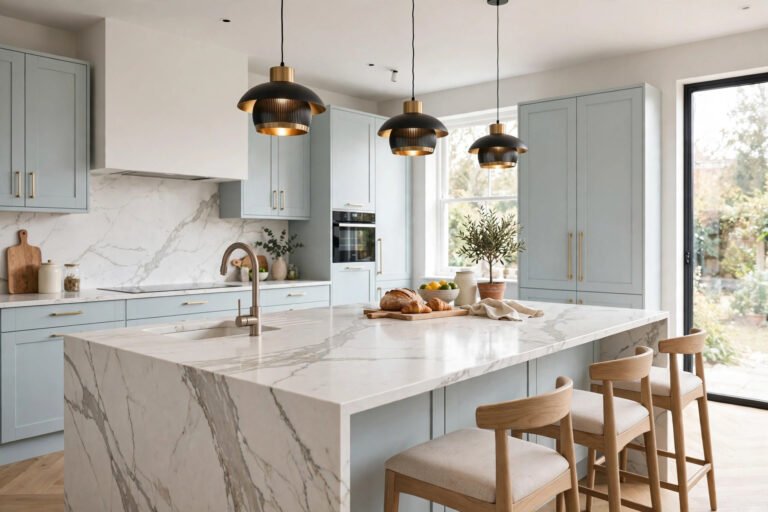
Keeping the existing layout, with units in the same positions as before, is significantly cheaper than moving plumbing and electrics for a new layout, such as relocating a sink or adding a kitchen island, which requires new pipework and wiring runs.
Cabinet Construction
Flat-pack cabinets cost less than rigid, pre-built units, which in turn cost less than fully bespoke joinery. Rigid units generally offer a noticeably more solid feel and longer lifespan than flat-pack for a moderate price increase.
Worktop Material
Laminate worktops are the most affordable option, while quartz and granite sit in the mid to premium range, and natural stone or solid wood command the highest prices. Worktop choice alone can shift the total kitchen budget by several thousand pounds.
Appliances
Integrated appliances that sit flush within cabinetry cost more than freestanding equivalents, both in the appliance itself and the cabinetry needed to house it.
Kitchen Renovation Cost Breakdown
| Item | Typical Share of Budget |
|---|---|
| Cabinets and units | 30 to 40% |
| Worktops | 10 to 15% |
| Appliances | 15 to 25% |
| Flooring | 5 to 10% |
| Plumbing and electrical work | 10 to 15% |
| Installation labour | 15 to 20% |
Small Kitchen Renovation Cost UK
Small kitchens cost less in absolute terms, but fixed costs such as design, delivery and a fitter’s minimum charges are spread over fewer units, so the saving is smaller than the size difference suggests. The table below shows typical 2026 supply-and-fit costs for kitchens of different sizes at each specification level.
| Kitchen size | Budget | Mid-range | High-end |
|---|---|---|---|
| Small (8 to 10 sqm) | £5,000 to £8,000 | £8,000 to £12,000 | £12,000 to £20,000 |
| Medium (10 to 15 sqm) | £7,000 to £10,000 | £12,000 to £18,000 | £18,000 to £30,000 |
| Large (15 to 20 sqm) | £9,000 to £14,000 | £16,000 to £25,000 | £25,000 to £45,000 |
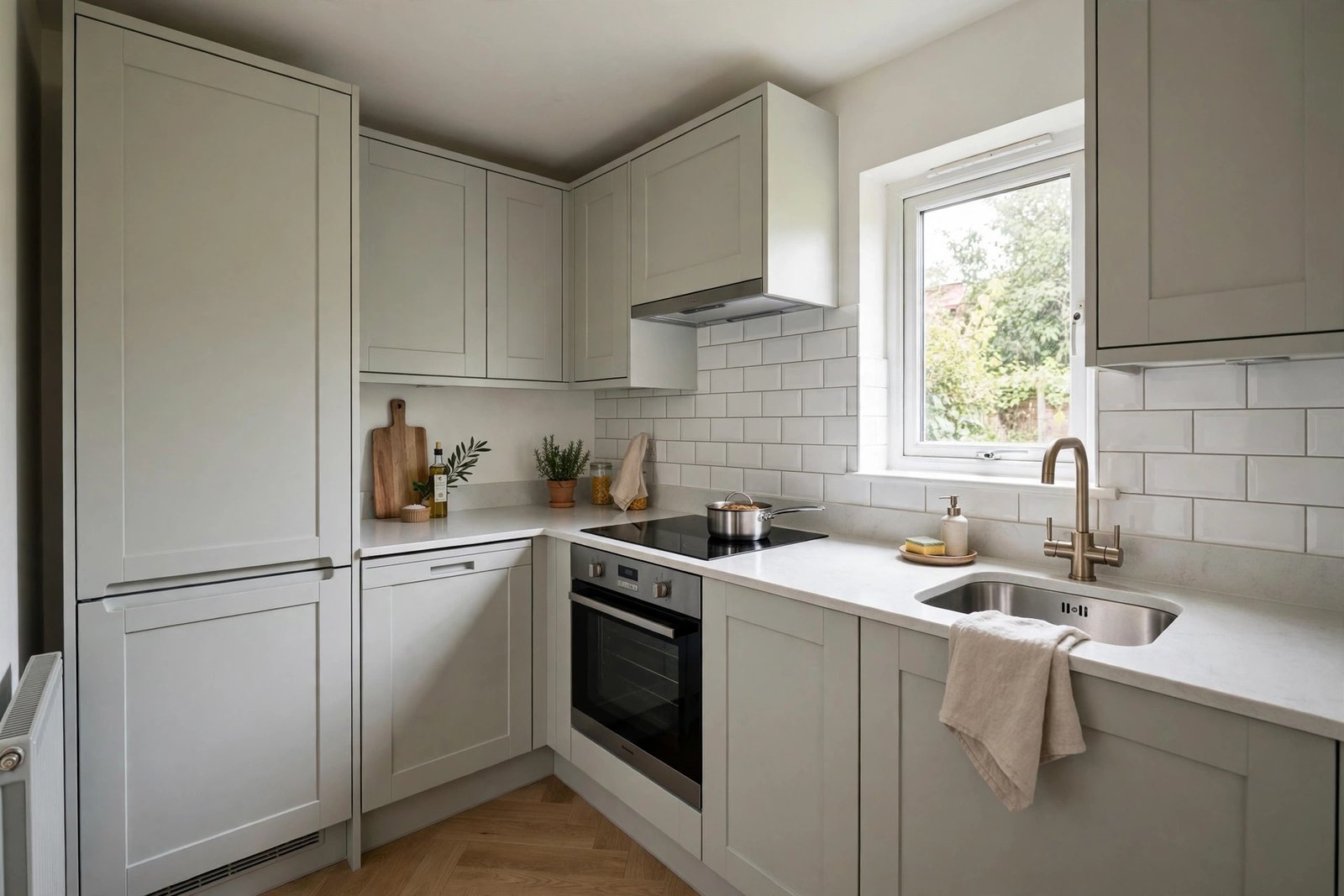
Small kitchens reward clever specification choices. Space-saving fittings such as a compact dishwasher, a 600mm hob and a single bowl sink free up worktop without a layout change. Keeping the existing layout matters even more in a small room: moving plumbing in a tight space is fiddly, slow work that fitters charge a premium for.
Where to spend in a small kitchen: invest in storage (deep drawers, pull-out larders and tall units use every centimetre), decent lighting, and one quality focal point such as the worktop. Where to save: mid-range laminate or compact quartz instead of natural stone, and standard appliances rather than designer brands, since the eye notices layout and light far more than badges in a compact space.
Open Plan vs Keeping the Existing Layout
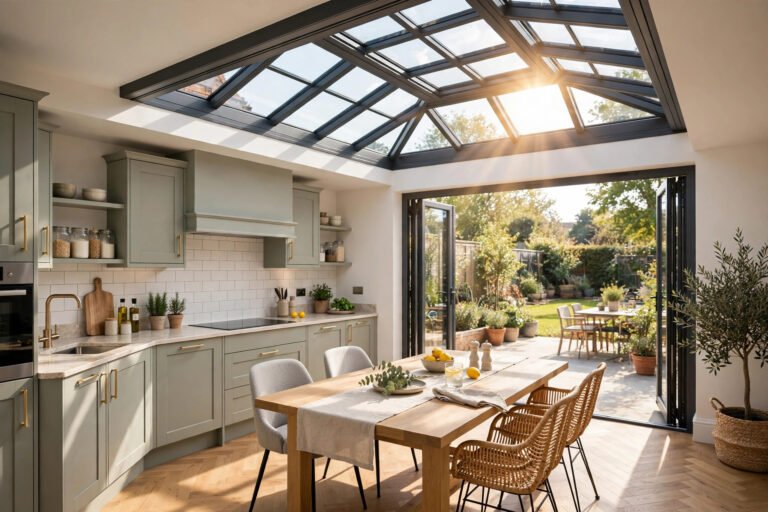
Knocking through to create an open plan kitchen diner adds structural cost, typically requiring a steel beam and Building Regulations sign-off, on top of the kitchen fit-out itself. For a full breakdown of layout options, see our house extension cost guide if you are considering extending rather than reconfiguring existing space.
Flooring for Kitchen Renovations
Kitchen flooring needs to handle spills, heavy foot traffic, and often underfloor heating. Our vinyl flooring guide and types of flooring guide both cover the best options for kitchens in detail.
DIY vs Professional Kitchen Fitting
Fitting flat-pack cabinets is a realistic DIY project for a confident, patient homeowner, but plumbing, electrical work, and worktop templating and fitting, particularly for stone worktops, generally require qualified tradespeople both for safety and to meet Building Regulations.
How to Reduce Kitchen Renovation Cost
- Keep the existing layout to avoid moving plumbing and electrics
- Choose laminate or a mid-range quartz worktop instead of natural stone
- Reface existing cabinet carcasses with new doors rather than replacing the whole unit
- Get at least three itemised quotes and compare labour and materials separately
- Fit some elements yourself, such as painting or simple flooring, while leaving plumbing and electrics to professionals
Frequently Asked Questions
How long does a kitchen renovation take?
A straightforward kitchen renovation keeping the same layout typically takes two to three weeks, while a full renovation involving structural changes or an extension can take six to twelve weeks.
Is it cheaper to reface or replace kitchen cabinets?
Refacing, which involves fitting new doors and panels to existing cabinet carcasses, is generally significantly cheaper than a full replacement, provided the existing carcasses are structurally sound.
Do I need planning permission for a kitchen renovation?
A kitchen renovation within the existing footprint generally does not need planning permission, though structural changes such as removing a wall will need Building Regulations approval regardless of planning status.
What adds the most value to a kitchen renovation?
A well-planned layout, quality worktops, and good storage design tend to add more perceived value than premium appliances alone, since these are the elements most visible to potential buyers.
Should I renovate the kitchen before selling my house?
A full renovation rarely recoups its full cost purely for resale, but a lighter refresh, such as repainting cabinets and updating handles, often offers strong value for money before selling.
How much does a small kitchen renovation cost in the UK?
In 2026, renovating a small kitchen of 8 to 10 square metres typically costs £5,000 to £8,000 at budget specification, £8,000 to £12,000 mid-range, and £12,000 to £20,000 for a high-end finish, all supplied and fitted.
Is a small kitchen cheaper to renovate per square metre?
Not necessarily. Fixed costs such as delivery, design time and a fitter’s minimum charge stay the same whatever the kitchen size, so small kitchens often carry a higher cost per square metre than medium ones, even though the total is lower.
What is the cheapest way to renovate a small kitchen?
Keep the existing layout, choose flat-pack or entry-level rigid units, fit a laminate worktop, and handle painting and simple flooring yourself. Refacing existing carcasses with new doors can cut the cabinet bill by half or more if the carcasses are sound.
How much does a 10 square metre kitchen cost to renovate?
A 10 square metre kitchen typically costs £5,000 to £10,000 at budget specification, £10,000 to £15,000 mid-range, and £15,000 to £25,000 for a premium finish in 2026, supplied and fitted. Keeping the layout unchanged keeps you at the lower end of each band.
Can you renovate a small kitchen for under £5,000?
It is possible with a cosmetic refresh rather than a full renovation: repaint or reface cabinets, fit a new laminate worktop, update taps and handles, and refresh the flooring yourself. A full strip-out with new units and appliances rarely comes in under £5,000.
Expert Insight
Kitchen fitters consistently note that budgeting an additional 10 to 15 percent contingency is essential for any kitchen renovation in a property over 20 years old, since old pipework and wiring behind existing units is a common source of unexpected cost once work begins.
Final Thoughts
Kitchen renovation cost in the UK varies enormously based on specification and whether the layout changes, but understanding where your budget goes will help you prioritise the elements that matter most to you and avoid overspending on areas with less lasting impact.
Planning a kitchen renovation? Decide early whether you are keeping the existing layout, since this single decision has the biggest effect on your overall budget.
Related Guides
- Bathroom Renovation Cost UK: What to Budget For
- Open Plan vs Closed Kitchen Layouts
- Kitchen Wall Panels: Complete Guide
Written by the HometoWorld editorial team, covering home improvement, renovation, and property maintenance across the UK.
About the Author